
10 Best Cheap Text to Video Tools: 2026 Budget AI Guide
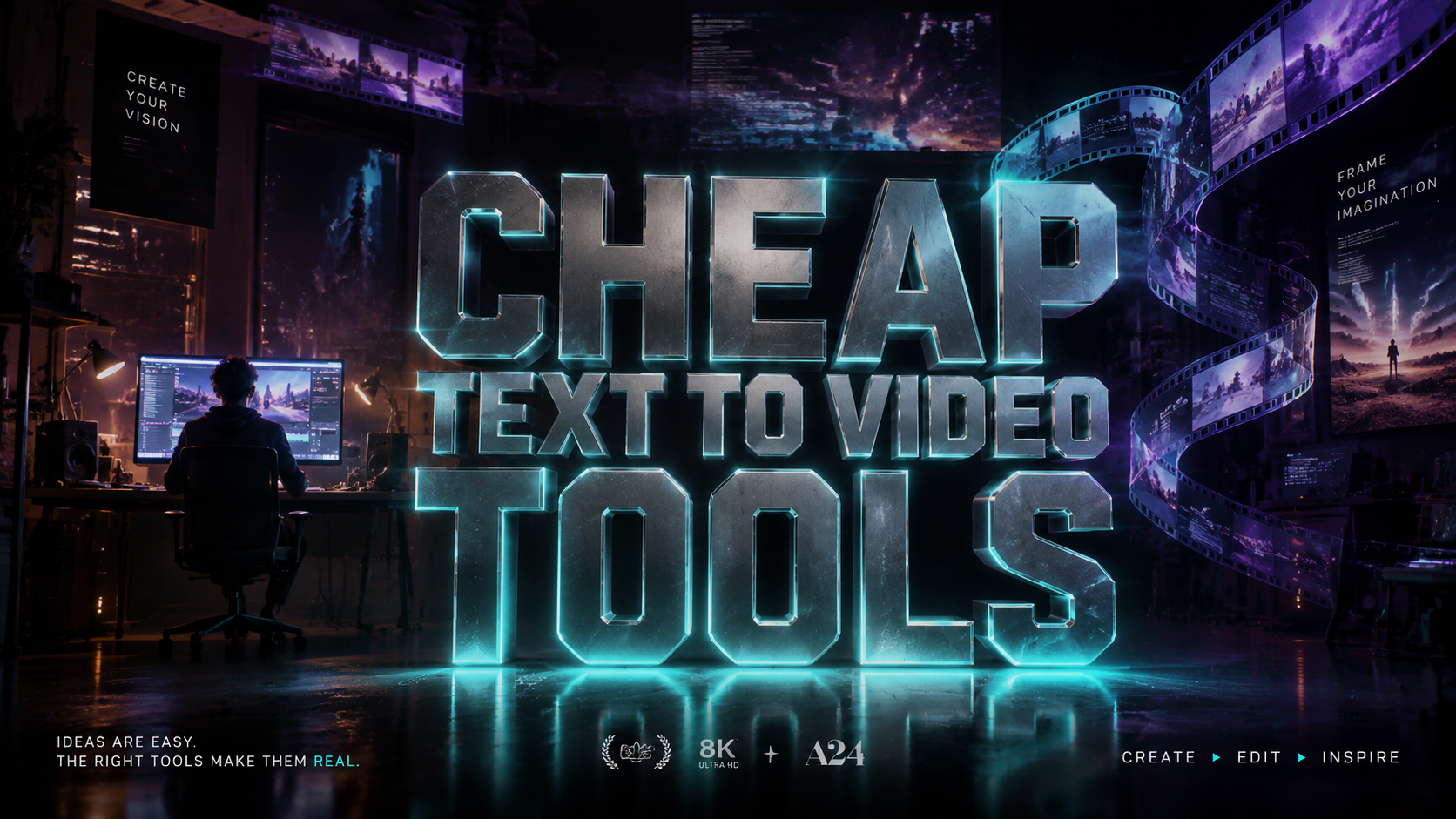
The best cheap text to video tools in 2026 allow creators to transform simple written prompts into high-definition cinematic footage without the need for expensive hardware or professional editing teams. By leveraging advanced generative models, these affordable platforms enable small businesses and solo creators to produce viral content, faceless YouTube shorts, and marketing clips for a fraction of the cost of traditional production. Finding the right balance between cost and quality is essential for maintaining a sustainable content strategy in today's AI-driven digital landscape.
Cheap text to video tools are AI-powered software platforms that convert text descriptions into visual sequences using generative algorithms. These tools are characterized by low-cost monthly subscriptions, free-tier access, and cloud-based processing, making high-end video production accessible to budget-conscious users seeking to create professional marketing, educational, or social media content efficiently.
- ✓ Access professional-grade video generation for under $20 per month using budget-friendly AI platforms.
- ✓ Utilize "faceless" video automation to scale social media presence on platforms like TikTok and YouTube.
- ✓ Benefit from 2026 advancements in temporal consistency, ensuring characters and backgrounds remain stable.
- ✓ Leverage free trials and open-source models to test high-end generative features before committing to a plan.
How to Use Cheap Text to Video Tools for Maximum ROI
Maximizing the value of budget AI tools requires a strategic approach to prompting and post-production. While the technology has advanced significantly by 2026, the quality of the output is still heavily dependent on the clarity of the input. According to a beginner’s guide from TyN Magazine (January 2026), the rise of "faceless" shorts has created a new economy where creators use these tools to generate millions of views without ever appearing on camera. To succeed, one must master the art of the descriptive prompt, detailing lighting, camera movement, and textures.
For those looking to get started immediately, follow these steps to generate your first high-quality video using affordable AI software:
- Select Your Tool: Choose a platform that offers a "pay-as-you-go" or low-cost entry tier.
- Draft a Detailed Script: Break your content into 5-10 second scenes to ensure the AI maintains visual focus.
- Input Your Prompt: Use descriptive keywords (e.g., "cinematic lighting," "4K resolution," "minimalist aesthetic").
- Choose an Aspect Ratio: Select 9:16 for mobile shorts or 16:9 for traditional YouTube and news content.
- Refine and Iterate: Use the tool's "re-roll" feature to tweak specific frames that don't meet your standards.
- Export and Enhance: Download the clip and use a free editor to add music or captions for a polished finish.
Top 10 Affordable AI Video Generators of 2026
The market for generative video has matured, leading to a surge in high-performance, low-cost options. As noted by Tom's Guide in their 200-hour testing report, the gap between "pro" tools and "budget" tools has narrowed significantly. In 2026, even the most affordable subscriptions now include features that were considered experimental just a year ago, such as consistent character mapping and synchronized audio-visual generation.
1. Runway Gen-4 (Lite Tier)
Runway remains a leader in the space, offering a "Lite" subscription specifically designed for creators on a budget. This version provides access to their core generative engine with slightly longer queue times but no sacrifice in visual fidelity. It is particularly effective for cinematic b-roll and artistic transitions that require a high degree of creative control.
2. Pika Labs 2.5
Pika has maintained its reputation for being the most user-friendly cheap text to video tool. Its Discord-based interface and web app offer a generous daily allowance of free credits. By mid-2026, Pika 2.5 introduced "Sound-Sync," which automatically generates sound effects to match the motion in your video, saving creators the cost of separate audio libraries.
3. Luma Dream Machine (Basic)
Luma AI’s Dream Machine has become a favorite for those needing realistic human movement. The Basic plan is highly affordable and excels at rendering complex physics, such as flowing water or realistic fabric movement. According to eWeek (April 2026), Luma’s results are among the most "stunning" for creators who need to simulate real-world environments without a Hollywood budget.
4. HeyGen "Creator" Plan
For those focused on talking-head videos and educational content, HeyGen’s entry-level plan is the gold standard. It allows for the creation of AI avatars that look and speak with uncanny realism. This is the primary tool used by corporate trainers and small-scale YouTubers who need to produce consistent "presenter" style content quickly.
5. InVideo AI
InVideo AI is a comprehensive solution that handles everything from scriptwriting to voiceovers. It is marketed as a "full-length" content creator. OCNJ Daily (March 2026) highlighted its ability to generate complete 10-minute videos from a single prompt, making it one of the most cost-effective options for documentary-style creators.
6. Kling AI (Global Version)
Originally a powerhouse in the Asian market, Kling's global rollout in 2026 has provided a high-quality alternative to more expensive Western tools. Its cheap monthly credits allow for the generation of 2-minute clips, which is significantly longer than the 5-10 second clips offered by competitors at the same price point.
7. Schibsted Open-Source Tool
As reported by Journalism UK (March 2026), the media giant Schibsted has open-sourced an AI text-to-video tool specifically for news content. This tool is free for those with the technical know-how to host it locally, making it the ultimate "cheap" option for tech-savvy journalists and developers.
8. Sora (Mini-Access)
While OpenAI’s Sora is often seen as a premium product, the 2026 "Mini" tier provides a limited number of high-quality generations for a low monthly fee. It is ideal for creators who need one or two "hero" shots for a project but don't want to pay for a full professional suite.
9. Leonardo.ai Motion
Leonardo has expanded from image generation into motion with incredible success. Their credit-based system is very flexible, allowing users to pay only for what they use. It is particularly strong for stylized, 3D-render, and anime-style video content.
10. Canva Magic Media
Canva has integrated text-to-video directly into its Pro subscription, which many creators already pay for. This makes it effectively "free" for existing users. While it is better suited for social media graphics and simple animations, its ease of use and integration with other design tools make it a budget powerhouse.
Comparison of Budget AI Video Tools
To help you decide which platform fits your financial and creative needs, we have compiled a comparison of the top-performing cheap text to video tools based on their 2026 feature sets and pricing models.
| Tool Name | Best For | Pricing Tier (Est.) | Key Feature |
|---|---|---|---|
| Runway Gen-4 | Cinematic Quality | $12/mo | Multi-Motion Brush |
| InVideo AI | YouTube Content | $20/mo | Full Script-to-Video |
| Pika Labs | Social Media | Free / $10/mo | Integrated Sound FX |
| Luma Dream Machine | Realism | $15/mo | Physics Accuracy |
| HeyGen | Avatars/Training | $24/mo | Instant Lip-Sync |
The Economic Impact of AI Video in 2026
The democratization of video production tools has led to a significant shift in how digital media is consumed and produced. According to data from G2 Learn Hub (April 2026), over 65% of small-to-medium enterprises now use at least one AI video generator to supplement their marketing efforts. This shift is driven by the fact that cheap text to video tools have reduced production costs by an estimated 85% compared to hiring traditional videographers for short-form content.
Furthermore, the ability to iterate rapidly is a competitive advantage. In the past, a single video advertisement might take weeks to produce and cost thousands of dollars. Today, a brand can test ten different video variations on social media for the price of a single "Lite" subscription. This "fail-fast" approach allows for data-driven creative decisions that were previously only available to large corporations with massive R&D budgets.
The Rise of "Faceless" Channels
One of the most significant trends identified in the TyN Magazine report is the explosion of faceless channels. These are creators who use AI to generate scripts, voices, and visuals, maintaining total anonymity while building massive audiences. The low barrier to entry provided by cheap text to video tools means that anyone with a compelling story or niche knowledge can become a broadcaster. This has led to a diversification of content, as creators from all over the world can now produce high-quality English-language content regardless of their local production resources.
Choosing the Right Tool for Your Budget
When selecting a cheap text to video tool, it is important to look beyond the initial price tag. Consider the "cost per minute" of generated video. Some tools may have a low monthly fee but charge high "credit" costs for high-definition exports. Others may offer unlimited generations at a lower resolution, which might be perfectly acceptable for TikTok or Instagram but unsuitable for a professional website landing page.
Another factor to consider is the learning curve. Tools like Runway and Luma offer deep control but require time to master. Conversely, tools like InVideo or Canva are designed for speed and ease of use, making them better for business owners who need to produce content quickly without learning the nuances of "seed numbers" or "motion sliders." As eWeek suggests, the "best" tool is often the one that fits most seamlessly into your existing workflow.
Frequently Asked Questions
What is the best free text to video tool in 2026?
Pika Labs and Canva Magic Media currently offer the most robust free tiers. Pika provides daily credit refreshes for social media creators, while Canva includes video generation in its standard free version with some limitations on volume.
Are cheap text to video tools good enough for professional use?
Yes, by 2026, budget tools like Luma and Runway Gen-4 produce high-definition, commercially viable footage. While they may require some post-production editing, the core visual quality is suitable for advertisements, news clips, and corporate training.
Do I own the copyright to videos generated by cheap AI tools?
Most paid subscriptions (even budget ones) grant you full commercial usage rights. However, always check the specific Terms of Service, as free tiers often include a watermark or restrict the video to non-commercial personal use.
Can these tools create videos longer than 10 seconds?
Yes. Platforms like InVideo AI and Kling AI are specifically designed to string together multiple scenes to create full-length content ranging from 2 to 10 minutes, though this often requires a paid plan.
How do I make AI videos look less "fake"?
To improve realism, use descriptive prompts that specify natural lighting (e.g., "golden hour") and realistic textures. Additionally, using tools with strong "temporal consistency" like Luma Dream Machine helps prevent the warping effects common in older AI models.
Comments ()