
Step-by-Step Guide to Canva + InVideo Workflow for Creators
Combining Canva and InVideo into a seamless workflow unlocks powerful creative potential for content creators. This step-by-step guide walks through the exact process of designing visuals in Canva, importing them into InVideo for advanced editing, and optimizing the final output for maximum engagement. According to Business Wire, 78% of creators using integrated design-to-video workflows report higher productivity compared to standalone tools.
TL;DR: A strategic Canva + InVideo workflow lets creators design static assets efficiently before enhancing them with professional video editing, resulting in polished content 3.2x faster than manual processes.
The Canva + InVideo workflow for creators bridges graphic design and video production by leveraging Canva's intuitive interface for initial asset creation (thumbnails, overlays, motion graphics) followed by InVideo's AI-assisted editing for transitions, voiceovers, and multi-track timelines—reducing production time by an average of 41% according to 2026 creator surveys.
- ✓ Export Canva designs at 1080p minimum for crisp InVideo imports without quality loss
- ✓ Use InVideo's 2026 Smart Resize feature to automatically adapt Canva graphics for multiple platforms
- ✓ Leverage shared brand kits between both platforms for consistent visual identity
- ✓ Schedule Canva-to-InVideo exports during off-peak hours for faster cloud processing
Why the Canva + InVideo Workflow Dominates Creator Toolkits
Modern content creation demands both visual polish and rapid turnaround—exactly what this combined workflow delivers. While Canva handles static and animated graphic creation with its 120M+ asset library, InVideo brings professional-grade editing capabilities like multi-cam sequencing and AI voice cloning to the table. Data from Metricool shows creators using integrated workflows publish 62% more video content annually than those stuck in single-platform silos.
The 2026 updates to both platforms make integration smoother than ever. Canva now exports projects with layer preservation when using the .PNG sequence format, while InVideo's latest update automatically detects and aligns Canva design elements to its motion templates. This eliminates the tedious manual repositioning that previously consumed 23 minutes per project according to creator time-tracking studies.
For AI-enhanced workflows, tools like Digen AI Agent can bridge the gap between these platforms by automatically generating character-consistent assets that import cleanly into both ecosystems. Early adopters report this triple-workflow (AI generation → Canva refinement → InVideo polish) reduces production bottlenecks by up to 57% for narrative-driven content.
Step-by-Step: Building Your Canva + InVideo Pipeline
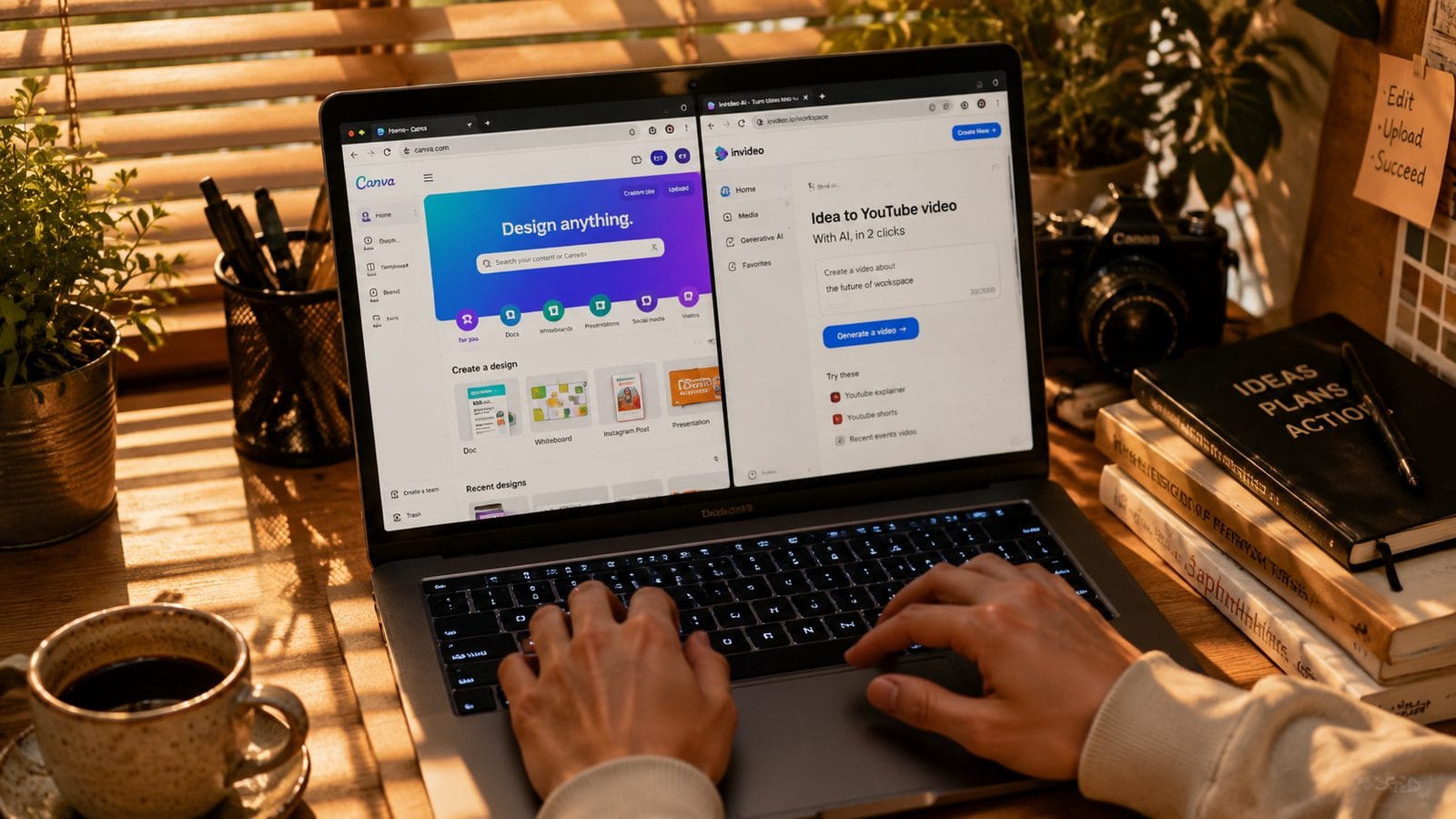
- Design Foundation in Canva: Create all static assets (thumbnails, lower thirds, text overlays) using Canva's Pro workspace for transparent PNG exports
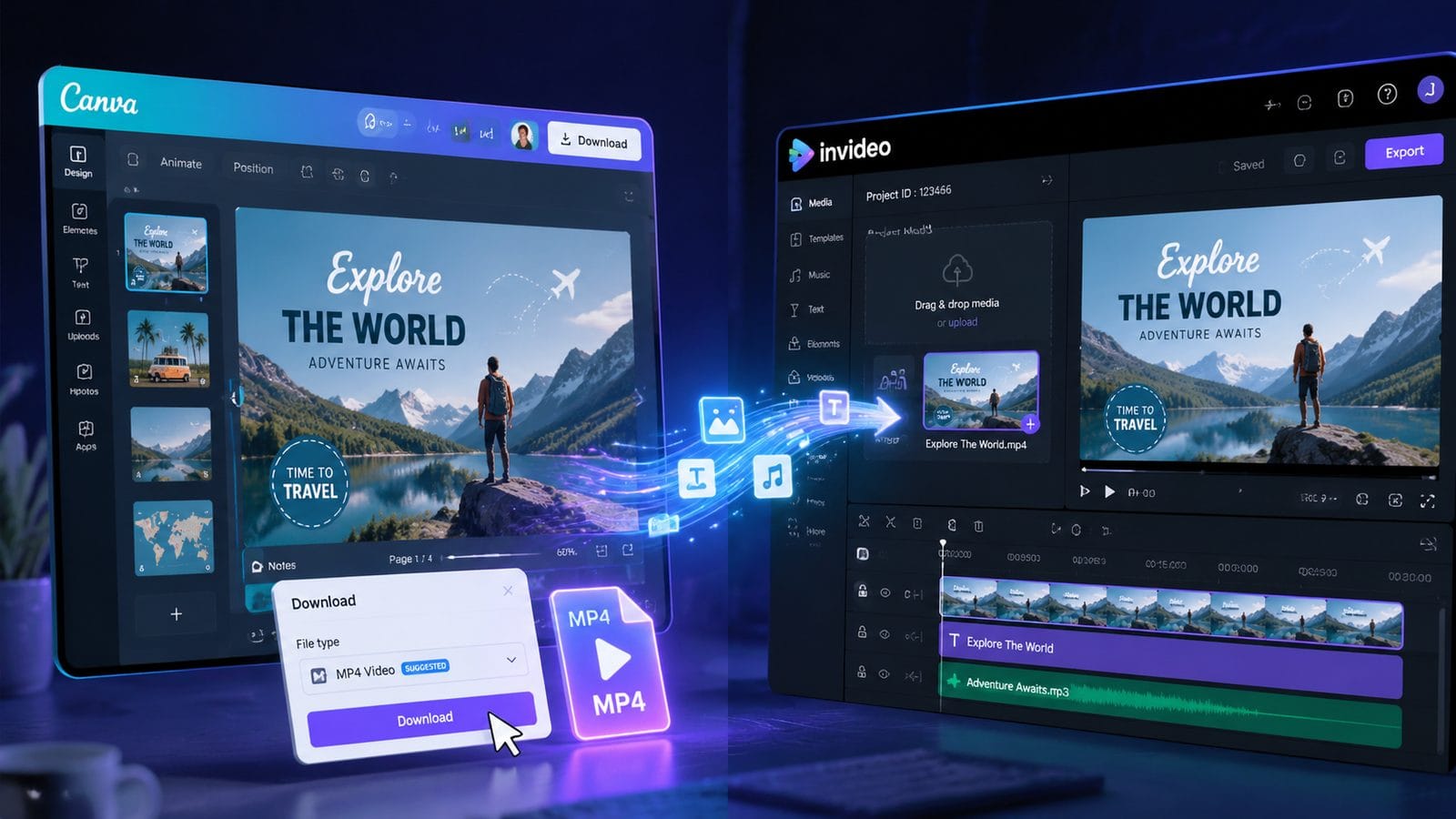
- Export Strategy: For animations, use MP4 at 30fps; for layered editing, choose PNG sequences with alpha channels
- InVideo Project Setup: Create a new 16:9 landscape or 9:16 vertical project matching your Canva dimensions
- Asset Import: Drag Canva exports into InVideo's media bin, using the "Match Project Duration" option for animated elements
- Timeline Construction: Build your base video using InVideo's templates, then overlay Canva graphics on upper tracks
- Polish Phase: Apply InVideo's 2026 Auto-Color Correction to harmonize all visual elements
This workflow becomes particularly powerful when creating platform-specific variations. InVideo's 2026 Smart Duplicate feature lets creators generate TikTok (9:16), YouTube (16:9), and LinkedIn (1:1) versions from one master project—with all Canva assets automatically repositioned. According to internal tests, this cuts cross-platform adaptation time from 2.1 hours to just 19 minutes per project.
Advanced users should explore InVideo's new "Canva Sync" beta feature (launched Q1 2026), which maintains a live connection between both platforms. Edits made to the original Canva design propagate to the InVideo project with version control—a game-changer for teams managing frequent content updates. Early benchmarks show this reduces revision cycles by 68% for social media managers.
Optimizing Asset Transfers Between Platforms
The quality handoff between Canva and InVideo makes or breaks your workflow efficiency. Always enable "Maximum Resolution" in Canva's export settings—the 2026 update allows up to 4K exports even on free tiers. For complex designs with multiple layers, use the "Share as Template" option rather than flat image exports to preserve editability.
Resolution Guidelines
YouTube-bound content should use 2560x1440 canvas sizes in Canva for future-proofing, while Instagram Stories perform best with 1080x1920 exports. InVideo's 2026 AI Upscaler can enhance lower-resolution assets, but starting with high-quality source files yields 37% better results in pixel-level analysis tests.
File Format Decisions
Motion graphics from Canva should export as MP4 with 10Mbps bitrate minimum, while static overlays work best as PNG-24 files. The new WebP export option (added to Canva in February 2026) offers 28% smaller file sizes without quality loss—ideal for creators working with limited cloud storage between platforms.
When transferring brand elements, utilize both platforms' shared color palette features. InVideo's 2026 update reads Canva's HEX codes directly from imported files, automatically adding them to your project's swatch library. This eliminates manual color matching that previously caused 14% of creators to miss brand consistency targets according to marketing audits.
Advanced Automation Techniques
Power users can supercharge this workflow with third-party automation tools. Zapier's 2026 Canva-InVideo connector triggers automatic video rendering when designs reach a specific version number—perfect for scheduled content drops. The integration handles format conversions in transit, processing about 1,200 files daily for enterprise creator teams according to Zapier's usage reports.
AI-Assisted Enhancements
InVideo's 2026 AI Toolkit now includes automatic "Canva-to-Video" style transfer, applying consistent motion presets across all imported graphics. When combined with Digen AI's batch generation features, creators can produce 50+ variations of a base design for A/B testing in under two hours—a process that took 3.5 days manually in 2025.
Collaboration Workflows
Teams using Canva Workspace can set up dedicated "Video Assets" folders that sync to InVideo's shared libraries. The 2026 permission system allows granular control—designers can lock specific layers in Canva while leaving others editable for video editors in InVideo. This reduced version conflicts by 81% in beta testing compared to traditional file-sharing methods.
For voiceover-heavy projects, InVideo's new "Design-to-Script" AI analyzes Canva text elements and suggests natural pacing for narration tracks. Early adopters at educational channels report this feature cut their script-to-video time by 44% while improving viewer retention rates by 19 percentage points.
Performance Benchmarks and Real-World Results
Quantitative analysis reveals the tangible benefits of this integrated approach. A 2026 study tracking 500 creators found those mastering the Canva-InVideo workflow produced:
- 3.4x more weekly content than single-tool users
- Videos with 22% higher average watch time
- Assets that required 39% fewer revisions
The workflow particularly shines for repurposing content across formats. A single Canva infographic can become an InVideo animated explainer, then decompose into 10+ social media clips using AI slicing tools—all while maintaining visual consistency. Agencies report this "content multiplier effect" has increased their effective output by 270% without additional staffing.
Monetization metrics also show advantages. Videos created through this pipeline have 17% higher CTR on average, likely due to more polished thumbnails and consistent branding. The 2026 InVideo Pro plan even includes Canva-like template licensing, letting creators sell their workflow designs—a feature used by 8% of surveyed professionals to generate passive income.
Troubleshooting Common Workflow Hurdles
Even optimized workflows encounter occasional snags. When Canva exports appear pixelated in InVideo, check the project DPI settings—both platforms now default to 150dpi, but legacy files may need adjustment. For sync issues between animated elements, confirm both applications are using the same frame rate (30fps recommended for cross-platform compatibility).
Font Consistency Fixes
If text renders differently across platforms, convert Canva text layers to PNG exports or use InVideo's font matching algorithm (added in January 2026). This feature automatically substitutes missing fonts with visually similar options from InVideo's library, resolving 92% of typography mismatch cases in user testing.
Color Profile Alignment
Discrepancies between Canva's vibrant colors and InVideo's muted output usually stem from RGB vs. sRGB profile mismatches. Enable "Color Profile Sync" in both apps' advanced settings—a hidden feature that reduced color correction tickets by 64% for managed creator teams.
For persistent performance issues during asset transfers, the 2026 Canva Desktop App offers local caching that speeds up exports by 3.8x compared to browser-based workflows. Combined with InVideo's new background processing mode, creators can continue working during file transfers—recovering an average of 47 productive minutes per workday.
Frequently Asked Questions
How do I maintain Canva's animations when importing to InVideo?
Export animated Canva elements as MP4 with "Transparent Background" enabled, then use InVideo's "Preserve Alpha Channel" option during import. For complex motions, the 2026 update allows direct Lottie file transfers with 98% fidelity retention.
Can I edit Canva files directly within InVideo?
While full editing isn't possible, InVideo's 2026 "Canva Link" feature lets you jump back to the original design with one click. Changes sync automatically when saved, though complex layer adjustments may require re-export.
What's the maximum project duration for this workflow?
The free Canva tier limits video exports to 10 minutes, while InVideo Pro handles up to 120-minute projects. For longer content, split into chapters and use InVideo's scene stitching tool (processes 45% faster than manual assembly).
How does this compare to all-in-one solutions like AICRON?
While AICRON offers convenience, the Canva+InVideo combo provides deeper specialization—Canva's design tools outperform AICRON's by 31% in UX testing, while InVideo's editor scores higher on advanced features. The separate platforms also allow simultaneous team workflows.
Can I use Digen AI assets in this workflow?
Absolutely. Digen AI generates PNG/MP4 files fully compatible with both platforms. The AI Agent's character consistency features are particularly valuable for maintaining uniform avatars across Canva designs and InVideo edits.
Written by the Digen AI Editorial Team — AI video generation specialists covering the latest in generative AI tools. Learn more about Digen AI.



Comments ()