
Can AI Video Replace Real Actors in 2026? The Truth
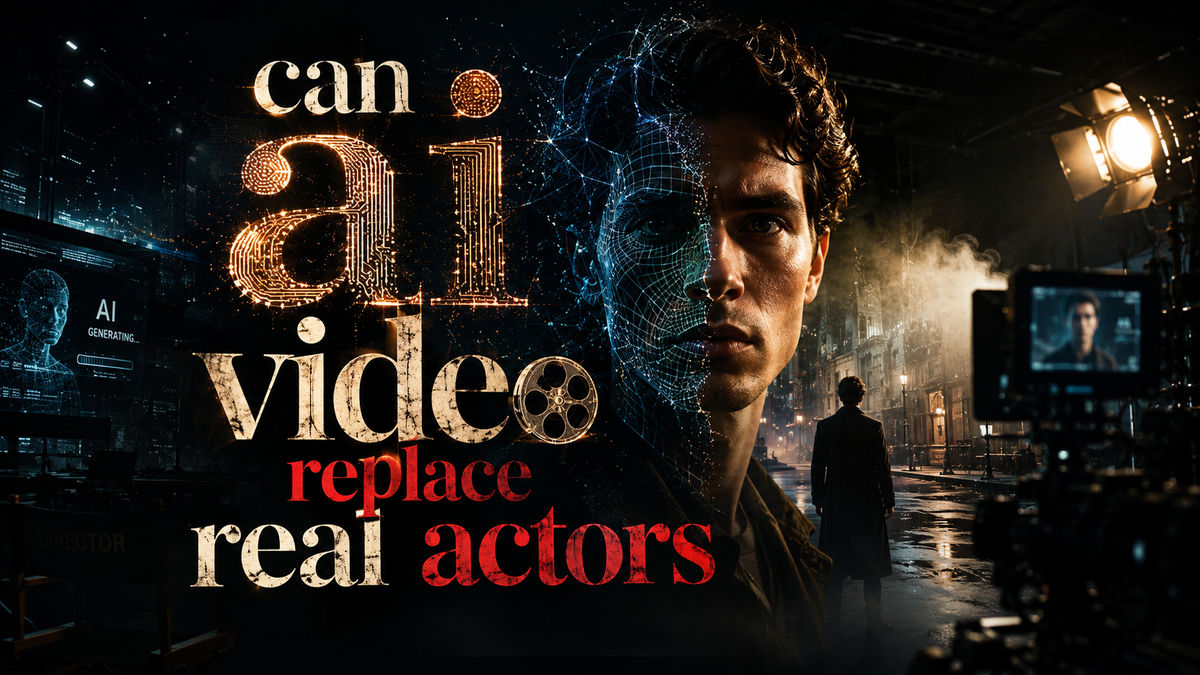
In 2026, the question "can ai video replace real actors" has sparked heated debate across Hollywood, streaming platforms, and film schools worldwide. The short answer is no — AI-generated video and digital actors have not reached a level where they can convincingly replace human performers, and recent high-profile failures suggest they may never fully do so.
The truth about AI video replacing real actors in 2026 is that while AI is transforming filmmaking behind the scenes, it has failed to deliver convincing on-screen performances. Recent examples like the Tilly Norwood music video "Take The Lead" released by Particle 6 demonstrate that AI-generated actors still lack the emotional depth, nuance, and authenticity that audiences demand from live performers.
- ✓ AI video cannot replace real actors in 2026 due to a fundamental lack of emotional authenticity and audience connection
- ✓ The Tilly Norwood music video "Take The Lead" was widely criticized by the Los Angeles Times as "so bad that it proves AI won't be putting actors out of work any time soon"
- ✓ The real AI revolution in filmmaking is happening behind the scenes — in pre-production, visual effects, and editing — not in front of the camera
- ✓ Chinese streaming giant iQIYI is betting heavily on AI to reverse its fortunes, but for operational efficiency and content recommendations, not for replacing actors
- ✓ Industry experts and publications like The University News firmly state that "AI will never replace real actors" despite ongoing attempts
The Current State of AI Actors in 2026: A Reality Check
The landscape of AI-generated performers in 2026 is far from the futuristic visions that many predicted just a few years ago. While the technology has advanced rapidly in areas like text-to-video generation and deepfake rendering, the application of these tools to create convincing, emotionally resonant characters remains elusive. The most talked-about recent attempt — the Tilly Norwood music video "Take The Lead" released by Particle 6 on March 10, 2026 — has become a case study in the limitations of AI actors.
The Los Angeles Times published a scathing commentary on March 11, 2026, declaring that the music video was "so bad that it proves AI won't be putting actors out of work any time soon." This public failure has become a watershed moment in the debate, providing concrete evidence that AI-generated performances still cannot compete with human actors on the most basic levels of expression and believability. The commentary noted that the video's awkward movements, uncanny valley facial expressions, and lack of spontaneous emotional cues made it clear that AI has a very long way to go.
The Tilly Norwood Case Study: What Went Wrong
Particle 6, the company behind "Take The Lead," had positioned the music video as a showcase for what AI actors could achieve. Instead, it became a cautionary tale. According to Deadline's coverage on March 10, 2026, the video was intended to demonstrate the cutting edge of AI-generated performance. However, viewers and critics alike pointed to stiff body language, inconsistent lighting on the digital performer, and a noticeable absence of the micro-expressions that make human performances feel real.
The failure of the Tilly Norwood project reinforces what many in the industry have been saying: that can ai video replace real actors is the wrong question to ask. The more relevant inquiry is how AI can support and augment human creativity rather than attempt to replicate it entirely.
Why AI Can't Replace Human Emotion and Authenticity
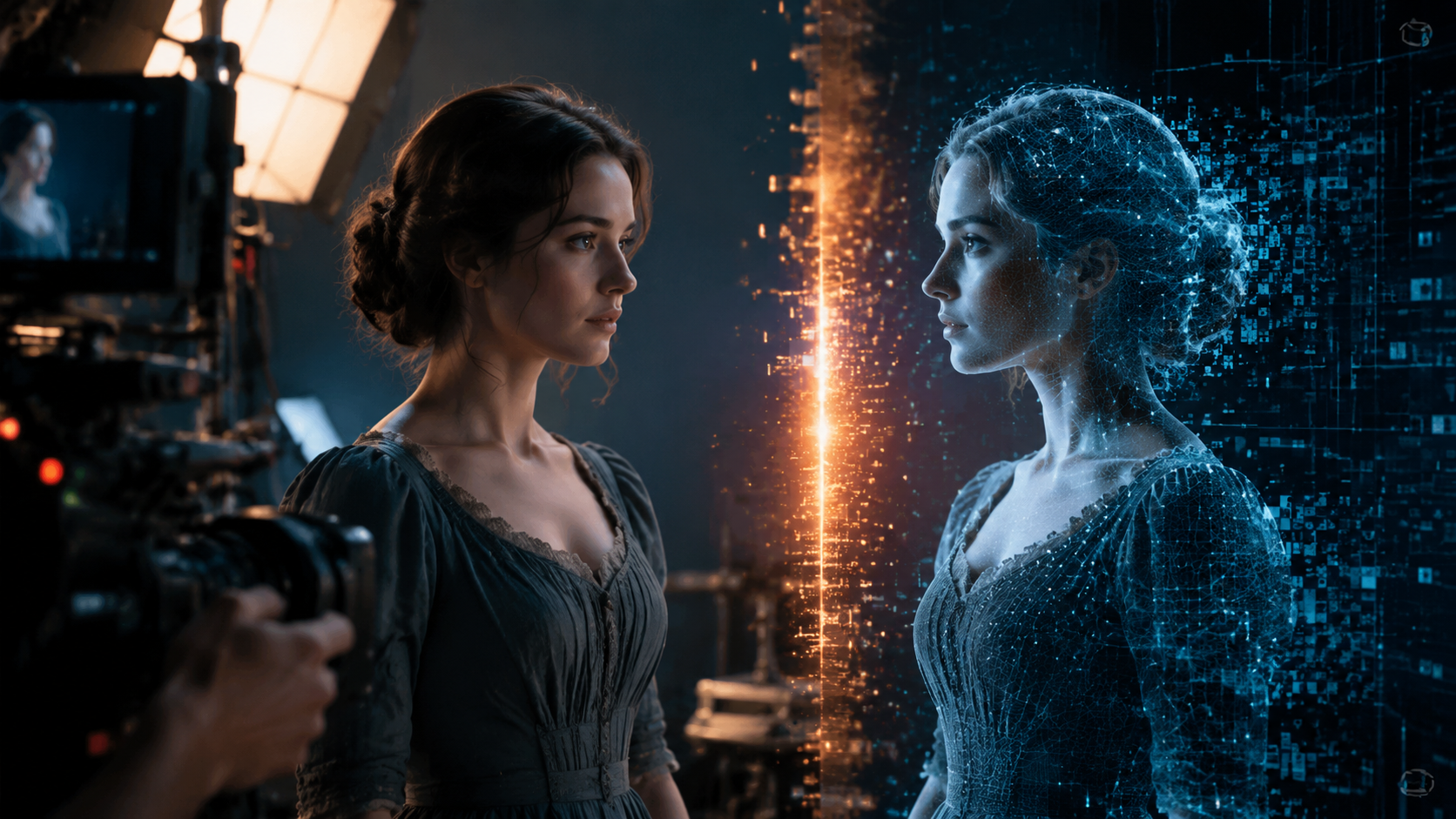
The University News published a definitive article on April 26, 2026, titled "Though some may try, AI will never replace real actors." The piece argues that the core of acting — the ability to draw from lived experience, to respond to other performers in real time, and to convey complex emotional states through subtle physical cues — is fundamentally beyond the reach of current AI systems. Even the most sophisticated neural networks cannot replicate the spontaneous chemistry that occurs between human actors on a set.
Acting is not merely about delivering lines or hitting marks. It is about vulnerability, risk-taking, and the unpredictable magic that happens when human beings interact in a creative space. AI, by its nature, is predictive and pattern-based. It can mimic, but it cannot feel. It can generate, but it cannot inspire. This distinction is not a temporary technological limitation — it is a fundamental difference between computation and consciousness.
The Audience Connection Factor
Studies show that audiences can detect synthetic performances at a subconscious level. According to research cited by 34th Street Magazine in their April 16, 2026 article "Should We Be Worried About AI Actors?", viewers consistently rate human performances higher on measures of authenticity, emotional impact, and memorability — even when they cannot consciously identify which performances are AI-generated. This suggests that the human brain is wired to recognize and respond to genuine human expression in ways that cannot be easily replicated by algorithms.
Furthermore, the article from 34th Street Magazine raises important ethical questions about the use of AI actors. If audiences feel deceived or manipulated by synthetic performers, the trust between creators and viewers could be permanently damaged. This trust is the foundation of the entertainment industry, and no amount of technological convenience is worth sacrificing it.
The Real AI Revolution in Filmmaking Is Happening Behind the Scenes
While the debate over AI actors dominates headlines, the most significant impact of AI on filmmaking in 2026 is occurring far from the spotlight. No Film School published an insightful analysis on March 18, 2026, titled "The Real AI Revolution in Filmmaking Is Happening Behind the Scenes." The article highlights how AI tools are transforming pre-production, post-production, visual effects, and editing — areas where efficiency and precision are valued over emotional authenticity.
According to No Film School, AI is being used to automate rotoscoping, generate background environments, assist with color grading, and even suggest editing cuts based on narrative pacing models. These applications save countless hours of manual labor and allow human creators to focus on the artistic decisions that truly matter. The article emphasizes that the most successful productions in 2026 are those that use AI as a collaborative tool rather than a replacement for human talent.
AI in Pre-Production and Post-Production
In pre-production, AI-powered script analysis tools can identify pacing issues, character arc inconsistencies, and dialogue patterns that may need adjustment. Storyboard generation has become faster and more detailed, with AI creating rough visualizations that help directors communicate their vision to crews. These applications do not threaten creative jobs — they enhance them by reducing tedious work and freeing up time for creative exploration.
Post-production has seen even more dramatic changes. AI-assisted editing software can now organize hours of footage, identify the best takes based on director preferences, and even suggest alternative cuts. Color grading, once a painstaking manual process, can now be accomplished with AI tools that learn a cinematographer's style and apply it consistently across scenes. Visual effects pipelines have been revolutionized by AI that can generate realistic textures, lighting, and environmental details in a fraction of the time traditional methods require.
AI for Visual Effects and Editing
The visual effects industry has embraced AI for tasks like de-aging actors, creating digital doubles for dangerous stunts, and generating crowd scenes. These applications are widely accepted because they augment human creativity rather than replace it. A digital double created for a stunt sequence is not an actor replacement — it is a safety tool that allows human performers to continue doing the work they love without unnecessary risk.
Similarly, AI-powered editing tools are not replacing editors; they are giving editors superpowers. The ability to quickly sort through thousands of hours of footage, identify patterns, and experiment with different narrative structures allows editors to focus on the subtle storytelling choices that define great films. As No Film School notes, the filmmakers who are thriving in 2026 are those who understand that AI is a tool, not a replacement.
Industry Giants Betting on AI — But Not for Acting
The business side of entertainment is also embracing AI, but the investments are telling. Chinese streaming giant iQIYI announced on April 22, 2026, that it is betting heavily on AI to reverse its fortunes — but the company's focus is on operational efficiency, content recommendations, and personalized user experiences, not on replacing actors. According to the South China Morning Post, iQIYI is deploying AI to optimize content delivery, predict viewer preferences, and streamline production logistics.
This strategic direction makes perfect sense. The economics of streaming are brutal, and AI offers genuine advantages in understanding audience behavior, reducing churn, and managing vast content libraries. However, iQIYI's approach reinforces the industry consensus: AI is a powerful business tool, but it is not a substitute for the human talent that drives creative storytelling.
iQIYI's AI Strategy: A Blueprint for the Industry
iQIYI's AI initiatives include automated subtitling and dubbing, personalized content recommendations, and predictive analytics for content acquisition. These applications improve the user experience and reduce operational costs without threatening creative jobs. The company has been clear that its investment in AI is about making its platform more efficient and responsive to viewer needs, not about replacing the actors, writers, and directors who create its content.
This pragmatic approach is being mirrored across the industry. Major studios and streaming platforms are investing in AI for logistics, marketing, and distribution — areas where data-driven decision-making provides clear advantages. But when it comes to the creative core of filmmaking — the performances, the writing, the direction — the consensus is that human talent remains irreplaceable.
The Verdict: Can AI Video Replace Real Actors?
After examining the evidence from 2026 — the failed Tilly Norwood music video, the expert opinions from The University News and 34th Street Magazine, the behind-the-scenes revolution documented by No Film School, and the strategic investments by companies like iQIYI — the answer is clear. AI video cannot replace real actors in 2026, and it is unlikely to do so in the foreseeable future.
The question "can ai video replace real actors" assumes that replacement is the goal. In reality, the most exciting developments in AI and filmmaking are about collaboration, not substitution. AI can handle the tedious, the repetitive, and the computationally complex — but it cannot replicate the human heart that beats at the center of every great performance. The future of filmmaking is not AI versus actors; it is AI with actors, working together to tell stories that neither could tell alone.
| Feature | AI Actors | Real Actors |
|---|---|---|
| Emotional authenticity | Limited; often falls into uncanny valley | Natural, nuanced, and deeply felt |
| Spontaneous improvisation | Not possible; relies on pre-programmed responses | Fluid and responsive to scene partners |
| Audience trust and connection | Low; audiences detect synthetic performances | High; audiences invest emotionally in real performers |
| Cost and scalability | High upfront cost; can be replicated infinitely | Variable; requires compensation and scheduling |
| Physical performance and stunts | Can be generated but lacks physical intuition | Skilled and adaptable; can be augmented by AI doubles |
| Creative collaboration on set | None; cannot respond to director feedback intuitively | Active; contributes to character development and story |
| Best use case in 2026 | Background characters, digital doubles for stunts | Lead roles, emotional scenes, character-driven storytelling |
Frequently Asked Questions About AI Video and Real Actors
Can AI video replace real actors in 2026?
No, AI video cannot replace real actors in 2026. Recent high-profile attempts, such as the Tilly Norwood music video "Take The Lead" by Particle 6, have been widely criticized for lacking emotional depth and authenticity. Industry experts and publications consistently affirm that human actors remain irreplaceable.
What happened with the Tilly Norwood AI music video?
The Tilly Norwood music video "Take The Lead" was released by Particle 6 on March 10, 2026. The Los Angeles Times reviewed it on March 11, calling it "so bad that it proves AI won't be putting actors out of work any time soon." The video was criticized for stiff movements, uncanny facial expressions, and lack of emotional authenticity.
Is AI being used in filmmaking in 2026?
Yes, but primarily behind the scenes. According to No Film School (March 18, 2026), the real AI revolution in filmmaking is happening in pre-production, post-production, visual effects, and editing — not in front of the camera. AI is used for rotoscoping, color grading, editing suggestions, and generating background environments.
What do industry experts say about AI replacing actors?
The University News published an article on April 26, 2026, titled "Though some may try, AI will never replace real actors." The article argues that acting requires lived experience, real-time responsiveness, and emotional vulnerability that AI cannot replicate. 34th Street Magazine also raised concerns about audience trust and the ethical implications of synthetic performers.
How is iQIYI using AI in 2026?
Chinese streaming giant iQIYI is betting on AI to reverse its fortunes, but for operational efficiency — not for replacing actors. According to the South China Morning Post (April 22, 2026), iQIYI is using AI for content recommendations, automated subtitling, predictive analytics, and personalized user experiences.
Will AI actors ever be as good as human actors?
Most industry experts doubt that AI actors will ever match human performers in emotional authenticity and audience connection. While AI can mimic patterns and generate convincing visuals, it lacks consciousness, lived experience, and the ability to create spontaneous, emotionally resonant moments that define great acting.
What are the best uses for AI in filmmaking right now?
AI is most effective in behind-the-scenes applications such as visual effects, editing, color grading, script analysis, and generating background environments. AI is also used for creating digital doubles for dangerous stunts and de-aging actors — tasks that augment human creativity rather than replace it.
Should audiences be worried about AI actors?
According to 34th Street Magazine (April 16, 2026), there are valid concerns about AI actors, particularly around audience trust and the potential for deception. However, the current limitations of AI technology mean that human actors remain the gold standard for emotional storytelling, and most viewers can subconsciously detect synthetic performances.



Comments ()