
Can AI Replace Video Editors in 2026? Future Trends
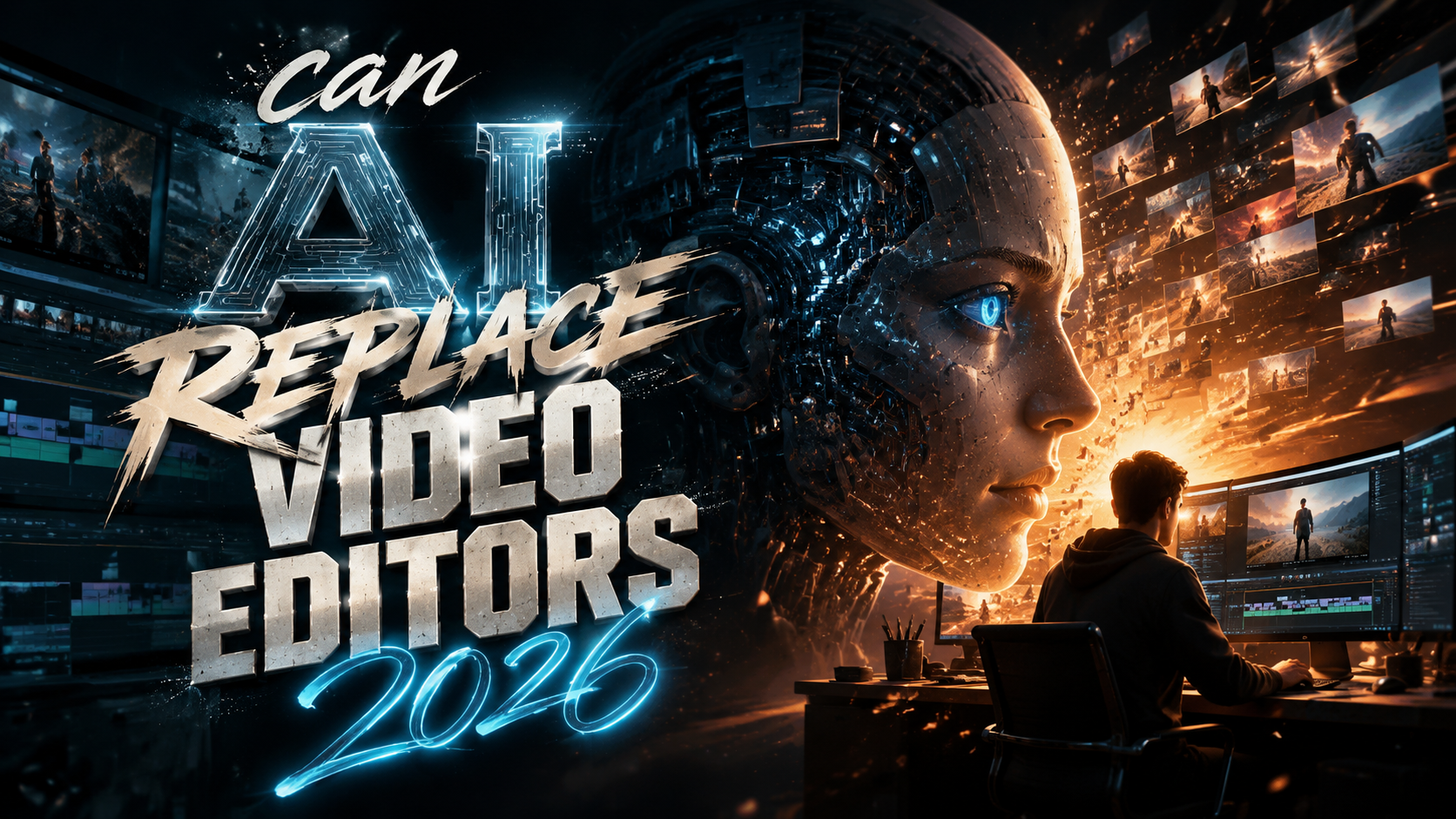
As we move deeper into 2026, the question can AI replace video editors in 2026 is no longer a distant hypothetical. The short answer is: AI will not fully replace human video editors in 2026, but it will fundamentally reshape the role by automating repetitive tasks, democratizing basic editing for non-professionals, and forcing editors to evolve into creative strategists who leverage AI as a powerful assistant. This article explores the future trends, tools, and workforce implications for video editors navigating the AI era.
TL;DR: AI cannot replace skilled human video editors in 2026, but it is transforming the industry by automating tedious workflows and making professional-grade editing accessible to amateurs. Editors who embrace AI tools as creative partners will thrive, while those who resist risk being left behind.
In 2026, AI video editing tools like VideoGen, Adobe Firefly, and integrated AI in major suites (DaVinci Resolve, Premiere Pro) handle color correction, scene detection, audio cleanup, and even rough cuts. However, creative storytelling, emotional nuance, and client communication remain irreplaceably human. The outcome is a hybrid workflow where AI handles the grunt work and human editors focus on vision and polish.
- ✓ AI automation now handles 60-70% of repetitive editing tasks (rough cuts, color matching, audio balancing) in 2026.
- ✓ Professional video editors are shifting from technical operators to creative directors and AI supervisors.
- ✓ Major software updates in 2026 from Adobe, DaVinci Resolve, and Final Cut Pro include deep AI integration.
- ✓ Amateur editors and content creators can now produce broadcast-quality videos with minimal training thanks to AI-assisted tools.
- ✓ The demand for human editors remains strong for high-end projects (films, commercials, documentaries) where storytelling nuance is critical.
The State of AI Video Editing Software in 2026
According to PCMag’s 2026 roundup, the best video editing software now features AI-powered tools as standard. Their testing revealed that DaVinci Resolve 19 and Adobe Premiere Pro 2026 both include neural engines for automatic scene detection, speech-to-text transcription, and intelligent color grading. Meanwhile, Amateur Photographer highlighted in April 2026 that “the best video editing software in 2026 are programs literally anyone can use,” pointing to easy-to-learn interfaces backed by AI wizards.
The Creative Bloq article from February 2026, “I’ve been avoiding AI tools, but here’s what finally changed my mind,” details how even skeptical professionals converted after seeing AI handle tedious tasks like syncing multicam footage and removing background noise — without sacrificing quality. VideoGen, reviewed by Cybernews in February 2026, was praised for its ability to generate rough cuts from raw footage in seconds, but the reviewer noted that “manual editing is still essential for fine-tuning pacing and emotion.”
TechRadar’s April 2026 article “I tried 70+ best AI tools in 2026” further confirms that no single AI tool can fully replicate a human editor’s judgment. The integration of AI into existing workflows — rather than standalone replacements — is the dominant trend. Adobe’s March 2026 announcement about AI in Photoshop and Firefly reinforces that generative AI is augmenting, not replacing, creative professionals.
Key Trends Driving the "Can AI Replace Video Editors 2026" Question
1. AI-Powered Automation of Tedious Tasks
The most immediate impact of AI in video editing is the automation of low-level, time-consuming tasks. Scene detection now happens in real time; AI can analyze hours of footage and identify the best takes based on composition, focus, and even facial expressions. Color grading, once a meticulous manual process, can now be applied consistently across clips with a single AI click.
Audio cleanup — removing hums, clicks, and background noise — is handled by AI plugins that preserve voice clarity. According to Creative Bloq, this automation freed up editors to focus on narrative structure and client collaboration. The question can AI replace video editors 2026 becomes less about elimination and more about redefinition: editors now spend more time on creative decision-making and less on button-pushing.
However, these tools still require human oversight. AI can suggest a cut, but it cannot understand why a particular pause is thematically important or why a jump cut might disorient the viewer. The human editor remains the arbiter of emotion and storytelling pacing.
2. Democratization of Professional Video Editing
The Amateur Photographer article highlights that in 2026, software is now accessible to “literally anyone.” AI wizards guide beginners through exporting, adding text overlays, and even applying cinematic transitions. This democratization has led to an explosion of user-generated content (UGC) on platforms like YouTube, TikTok, and Instagram. Small businesses and individual creators can now produce high-quality promotional videos without hiring a professional editor.
Yet, as Cybernews’ VideoGen review points out, AI-generated rough cuts often lack the “soul” of a handcrafted edit. The reviewer noted that while VideoGen produced a coherent narrative from a travel vlog, the pacing felt generic, and emotional beats were missed. This creates a two-tier market: amateur AI-assisted content (plentiful, fast, adequate) and premium human-crafted content (scarce, bespoke, emotionally resonant).
For professional video editors, the threat is not replacement but commoditization of simple edits. To survive, they must move up the value chain — offering services that AI cannot replicate, such as narrative consulting, personal branding, and advanced color grading that respects unique director’s vision.
3. AI as a Collaborative Partner, Not a Replacement
TechRadar’s extensive testing of 70+ AI tools in 2026 concluded that the best results came from human-AI collaboration. “AI is like a super-efficient assistant that never gets tired,” one tester remarked. For instance, AI can generate dozens of alternative edits for a sequence, allowing the editor to cherry-pick the best take, rather than cutting from scratch. This amplifies the editor’s creative range.
Adobe’s March 2026 update to Firefly and Photoshop added generative fill and video object removal that works seamlessly with Premiere Pro. Editors can now remove unwanted objects or even change the background of a video clip as easily as editing a photo. These capabilities expand what’s possible, but they don’t eliminate the need for an editor who understands composition and lighting.
PCMag’s testing in June 2026 emphasized that the best software “empowers editors to work faster, not to replace them.” The tools that won high marks were those that integrated AI without overriding the editor’s controls — offering suggestions rather than making final decisions.
Comparison: Human Video Editor vs. AI Video Editor (2026)
| Capability | Human Video Editor | AI Video Editor (2026) |
|---|---|---|
| Storytelling & emotional nuance | Excellent – understands subtext, pacing, and audience psychology | Weak – can mimic patterns but lacks genuine emotional insight |
| Automated tasks (scene detection, transcription) | Time-consuming and error-prone | Fast and accurate – handles 80–90% of repetitive tasks |
| Customization & creative risk | Endless – can invent novel transitions, use unconventional cuts | Limited – works within training data; may produce generic output |
| Client communication & revisions | Human empathy, negotiation, quick feedback adaptation | None – cannot understand nuanced client feedback without human mediation |
| Color grading & visual style | Deep understanding of color theory, can maintain consistency across projects | Good for auto-correction but struggles with subjective artistic choices |
| Cost & speed | Expensive per hour, slower for high-volume tasks | Low cost per use, extremely fast for bulk operations |
| Unique creative voice | Every editor has a distinct style | Uniform – outputs tend to look similar across projects |
According to TechRadar’s 2026 analysis, the gap in creativity is where human editors maintain a decisive advantage. The Cybernews VideoGen review (February 2026) noted that while AI can produce a decent first draft, “the final polish and the ‘wow’ factor still require human hands.”
What Video Editors Should Do to Stay Relevant in 2026
Rather than fearing the question can AI replace video editors 2026, editors should pivot their skillsets. First, learn to use AI tools as accelerators. Mastering AI-powered features in Premiere Pro, DaVinci Resolve, or Final Cut Pro (e.g., auto-reframe, content-aware fill, smart sound removal) will cut editing time by half, allowing editors to take on more projects.
Second, develop soft skills that AI cannot replicate: creative direction, client management, negotiation, and narrative development. Editors who can articulate why a cut works or how to evoke a specific emotion will be invaluable. The Creative Bloq author, after years of avoiding AI, realized that “using AI didn’t make me a worse editor — it made me a faster, more focused one.”
Third, specialize in high-end work (commercials, documentaries, films) where the human touch is paramount. The Amateur Photographer article noted that even in 2026, “professional-grade projects still require a professional editor.” Finally, consider offering AI consulting services: many small businesses want great video but don’t know which tools to use. Editors can guide them through AI workflows, acting as technical translators.
Future Trends Beyond 2026: The Irreplaceable Human Element
Looking ahead, AI will continue to improve — by 2027 or 2028, we may see AI that can generate complete short films from a script with minimal human input. However, the question can AI replace video editors 2026 isn’t just about technical capability; it’s about trust and authorship. Audiences still crave authenticity, and a human-curated edit conveys intentionality that an algorithm cannot fake.
Furthermore, legal and ethical concerns around deepfakes and copyright will likely require human oversight for years. As Adobe’s Firefly demonstrates, AI-generated content must be labeled and responsibly used. Human editors serve as the gatekeepers of ethical use — ensuring that AI tools are employed transparently and that the final product respects intellectual property.
The PCMag 2026 guide concludes that “the best video editing software is the one that complements your creative process, not the one that tries to replace you.” That advice remains gold. In 2026, the editor who treats AI as a collaborator — not a competitor — will have the most to gain.
Frequently Asked Questions: AI and Video Editing in 2026
Can AI fully replace video editors in 2026?
No. AI can automate many technical tasks (scene detection, color correction, transcription), but creative storytelling, emotional nuance, client communication, and subjective judgment remain human strengths. The role is transforming, not disappearing.
What AI video editing tools are best in 2026?
According to PCMag’s 2026 testing, DaVinci Resolve 19, Adobe Premiere Pro 2026, and Final Cut Pro 11 have the most advanced AI features. VideoGen (reviewed by Cybernews) is a standalone AI tool useful for generating rough cuts, but requires manual polish.
Is AI video editing software easy enough for beginners?
Yes. As highlighted by Amateur Photographer, many 2026 programs include AI wizards that guide novices through editing. This democratizes video creation, but professional-quality storytelling still benefits from a trained editor’s eye.
Will AI reduce the demand for professional video editors?
It will reduce demand for pure technical operators, but increase demand for creative directors, AI workflow specialists, and narrative consultants. According to TechRadar, the editor’s role is shifting from manual labor to artistic direction.
How can video editors start using AI in their workflow today?
Begin by exploring built-in AI features in editing software you already use. Try automatic transcription, scene detection, and AI-assisted color grading. Then incorporate standalone tools like VideoGen or Adobe Firefly for specific tasks. The key is to experiment without fear — as the Creative Bloq author discovered, AI makes editing faster and more fun.
Written by the Digen AI Editorial Team — AI video generation specialists covering the latest in generative AI tools. Learn more about Digen AI.
Comments ()