
Can AI Replace Animators in 2026? Truth Revealed
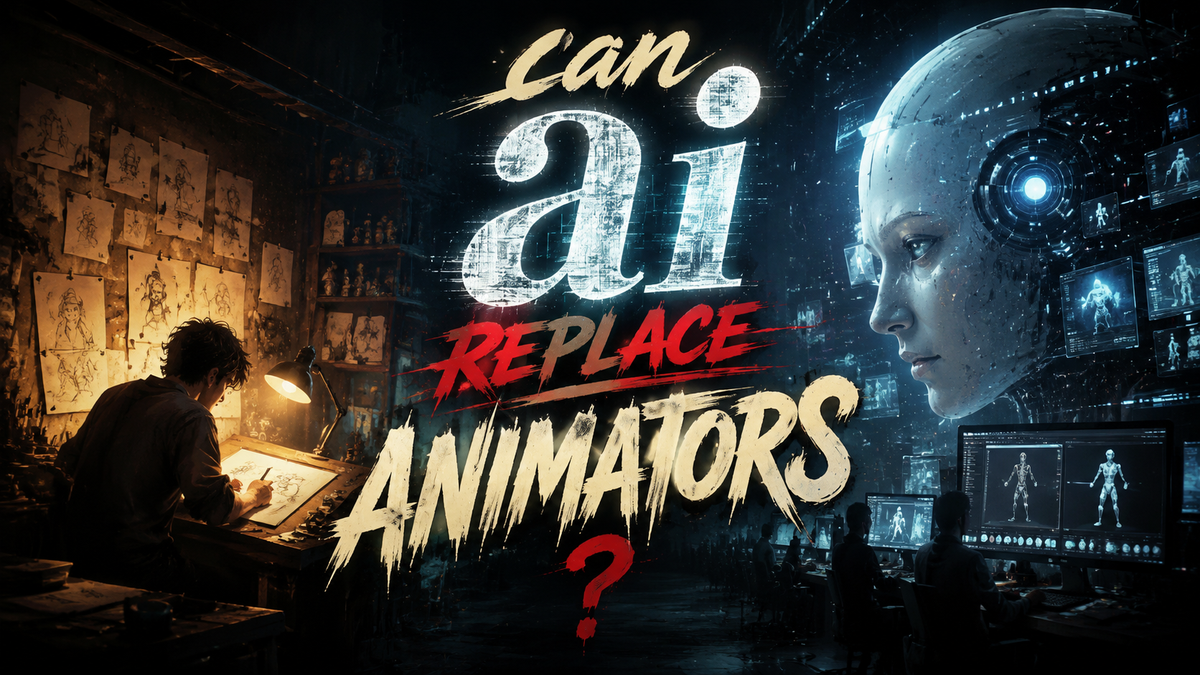
No, artificial intelligence will not replace animators in 2026 — but it is fundamentally redefining the craft of animation. According to a recent report from Campaign Middle East (April 2026), AI is not eliminating jobs; instead, it is reshaping how animators work, making the process faster and more iterative while preserving the irreplaceable human touch that gives animation its soul.
The quick answer is: AI is a powerful tool that automates repetitive tasks, generates rough drafts, and speeds up rendering, but it cannot replicate the creative intuition, emotional nuance, and artistic storytelling that human animators bring to every frame. In 2026, animators who embrace AI as a collaborator are thriving; those who ignore it may struggle to keep pace.
- ✓ AI is not replacing animators — it is redefining the craft, according to Campaign Middle East (April 2026).
- ✓ Pixar's chief creative officer calls AI "the least impressive blah average of things," emphasizing that AI lacks true creativity (Business Insider, July 2025).
- ✓ Disney is secretly using AI to speed up animation workflows, but human artists remain at the core (The DisInsider, November 2025).
- ✓ Adobe killed its Animate software in a major AI pivot, leaving some creators stranded (The Tech Buzz, February 2026).
- ✓ The industry is undergoing an "Animation Value Reset," where human artistry is being revalued, not devalued (Animation World Network, March 2026).
The Current State of AI in Animation (2026)
The animation industry in 2026 is a landscape of rapid change and cautious adaptation. Major studios like Disney have quietly integrated AI into their production pipelines. According to The DisInsider (November 2025), Disney is using AI to automate in-between frames, generate background textures, and even suggest color palettes — tasks that once consumed hundreds of artist hours. The result: faster turnaround times and lower production costs, but the creative decisions still rest firmly with human directors and animators.
Meanwhile, Adobe's decision to kill Animate in February 2026 sent shockwaves through the independent animator community. The Tech Buzz reported that Adobe pivoted entirely toward AI-driven animation tools, leaving many creators who relied on Animate's traditional frame-by-frame workflow scrambling for alternatives. This move highlights a key tension: while AI can accelerate production, it can also disrupt established tools and workflows that artists depend on.
Yet not everyone in the industry is sold on AI's creative potential. In July 2025, Pixar's chief creative officer told Business Insider that AI produces "the least impressive blah average of things" — a sharp critique that reinforces the belief that true artistic excellence comes from human imagination, not statistical patterns.
Why AI Cannot Replace Human Animators
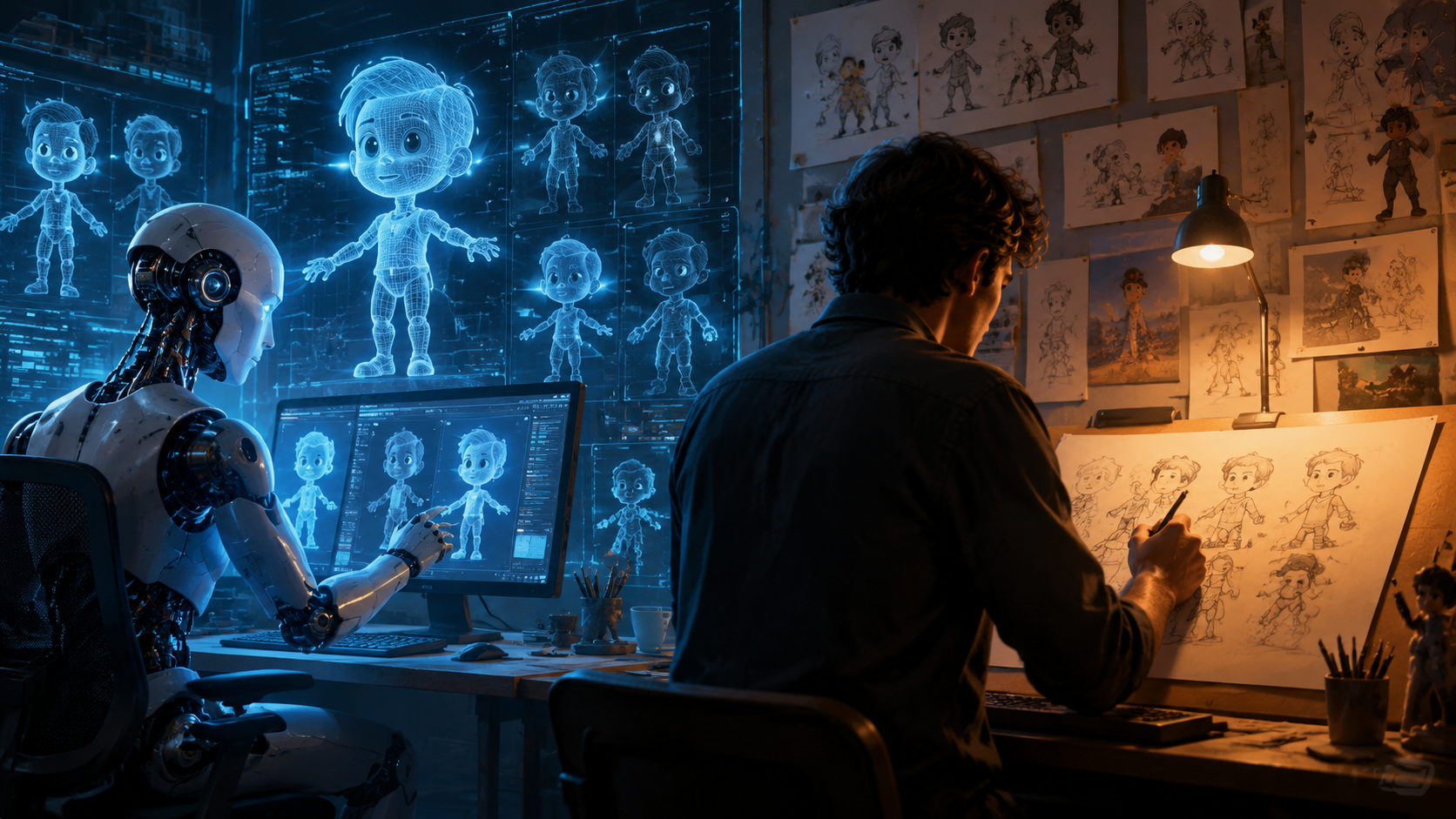
At its core, animation is about storytelling through movement, emotion, and timing. AI models, no matter how advanced, lack the lived experience and emotional intelligence to craft a genuinely moving performance. A machine can generate a perfectly smooth walk cycle, but it cannot decide that a character should pause for a beat before delivering a punchline — that timing comes from an animator's instinct.
Pixar's chief creative officer captured this sentiment perfectly when he described AI as "the least impressive blah average of things." His point: AI excels at producing the median output — the safe, predictable result — but animation's magic lies in the outliers, the quirky, imperfect, deeply human choices that make characters feel real. A 2025 report from Cartoon Brew on animation jobs and AI concluded that "the industry's future is changing, but not in the way many fear. AI handles the grunt work; humans handle the soul."
Furthermore, the emotional resonance of animation — a tear rolling down a cheek, the subtle shift in a character's posture when they feel hope — requires an understanding of human psychology that AI simply does not possess. As Campaign Middle East noted in April 2026, "AI is not replacing animators; it is redefining the craft of animation." That redefinition places human creativity at the center, with AI acting as an accelerator, not a replacement.
How AI Is Redefining the Animation Workflow
Rather than replacing jobs, AI is transforming the day-to-day tasks of an animator. Repetitive, time-consuming processes — such as in-betweening, rotoscoping, and background painting — are now being handled by AI tools, freeing artists to focus on higher-level creative decisions. For example, Disney's secret AI pipeline, as reported by The DisInsider (November 2025), uses machine learning to generate rough animation passes that human animators then refine, edit, and polish. This hybrid workflow can cut production time by 30–40% without sacrificing quality.
AI is also making inroads into pre-production. Storyboard artists can now feed text descriptions into generative AI to produce quick visual concepts, which they then iterate upon. Color scripts and lighting setups can be generated in seconds, allowing directors to explore multiple moods before committing to a final look. However, these tools still require a skilled human to guide them — an AI-generated storyboard without human direction often lacks narrative coherence.
The key takeaway: AI is not an artist; it is a tool. Like the transition from hand-drawn cels to digital animation in the 1990s, this shift will require animators to learn new skills — but it will not make them obsolete. Animation World Network (March 2026) called this shift "The Animation Value Reset," arguing that the industry is moving toward a model where human creativity is valued even more because AI handles the drudgery.
Comparison: AI vs. Human Animators in 2026
| Attribute | AI Tools | Human Animators |
|---|---|---|
| Creativity & Originality | Limited to patterns in training data; cannot invent new styles | Unlimited; can invent new visual languages and emotional beats |
| Emotional Depth | Lacks genuine empathy; produces generic expressions | Infuses characters with subtle, relatable emotions |
| Efficiency (repetitive tasks) | Extremely fast; can generate thousands of frames per hour | Slower but more precise and context-aware |
| Cost | Low marginal cost per frame after initial setup | Higher per-frame cost but delivers unique artistic value |
| Adaptability | Struggles with ambiguous direction or abstract concepts | Thrives on collaboration and creative feedback |
The Animation Value Reset: What It Means for Jobs
In March 2026, Animation World Network published a deep analysis titled "The Animation Value Reset," which argued that the industry is recalibrating how it values human labor versus automated output. According to the report, studios are realizing that while AI can produce "good enough" animation for background elements or crowd scenes, the heart of any successful animated project — whether a feature film, a TV series, or a commercial — still depends on human artistry. This has led to a bifurcation: entry-level grunt work is shrinking, but demand for senior animators, art directors, and creative leads is rising.
Cartoon Brew's September 2025 article on animation jobs and AI echoed this sentiment, noting that "the industry's future is changing" in ways that reward adaptability. Animators who learn to collaborate with AI — using it to generate roughs, test ideas, and handle repetitive passes — are finding themselves in high demand. Those who resist the change may find their roles marginalized. The message is clear: AI is not a threat to all animators, but it is a threat to animators who refuse to evolve.
Moreover, the "Value Reset" is also driving a renaissance in independent and boutique animation. Small studios can now produce high-quality work using AI tools that were previously only accessible to major studios with deep pockets. This democratization of animation technology is creating new opportunities for artists who can blend technical AI skills with strong storytelling instincts.
Will Your Animation Job Be Safe in 2026?
The short answer: yes, if you adapt. The long answer requires understanding which parts of the animation pipeline are most vulnerable to automation and which are most resilient. Jobs focused solely on rote in-betweening or simple background generation are at risk — these tasks are exactly what AI excels at. However, roles that require creative direction, character performance, visual development, and storytelling are more secure than ever.
To stay relevant, animators should invest in learning AI-assisted tools like generative storyboard software, AI-driven rigging systems, and machine learning–based compositing. But more importantly, they should double down on the skills that AI cannot replicate: emotional storytelling, unique visual style, and collaborative problem-solving. As Campaign Middle East concluded in April 2026, "AI is not replacing animators; it is redefining the craft of animation." That redefinition offers immense opportunity for those willing to embrace it.
Ultimately, the question "can ai replace animators" is best answered with a nuanced no. AI can replace certain tasks, but it cannot replace the artist. The animator of 2026 is not a dinosaur facing extinction — they are a hybrid creator, blending human imagination with machine efficiency to produce work that neither could achieve alone.
Frequently Asked Questions About AI and Animation
Can AI replace animators completely by 2026?
No. AI is a powerful tool that automates repetitive tasks, but it lacks the creativity, emotional intelligence, and storytelling ability that define great animation. The consensus among industry experts is that AI will augment, not replace, human animators.
What animation jobs are most at risk from AI?
Entry-level roles focused on in-betweening, rote background painting, and simple motion graphics are most vulnerable. However, senior creative roles such as character animators, art directors, and story artists remain in high demand because they require human intuition.
How is Disney using AI in animation in 2025/2026?
According to The DisInsider (November 2025), Disney is secretly using AI to speed up in-between frames, generate background textures, and suggest color palettes. Human animators still oversee all creative decisions and refine the AI output.
Why did Adobe kill Animate in 2026?
Adobe pivoted entirely toward AI-driven animation tools, discontinuing Animate in February 2026. The Tech Buzz reported that this left many traditional animators stranded, but also signaled the industry's rapid shift toward AI-assisted workflows.
What skills should animators learn to stay relevant in 2026?
Animators should learn AI-assisted tools like generative storyboard software, AI rigging, and machine learning compositing. They should also strengthen their storytelling, character performance, and creative direction abilities — skills that AI cannot replicate.
Is AI-generated animation cheaper than human-made animation?
Yes, for repetitive tasks AI is significantly cheaper. However, for projects requiring emotional depth, original style, and narrative nuance, human animators deliver superior value. The Animation Value Reset (Animation World Network, March 2026) shows that studios are recalibrating budgets to invest more in human creativity.



Comments ()