
Best Text to Video AI for Education: 2026 Guide for Teachers
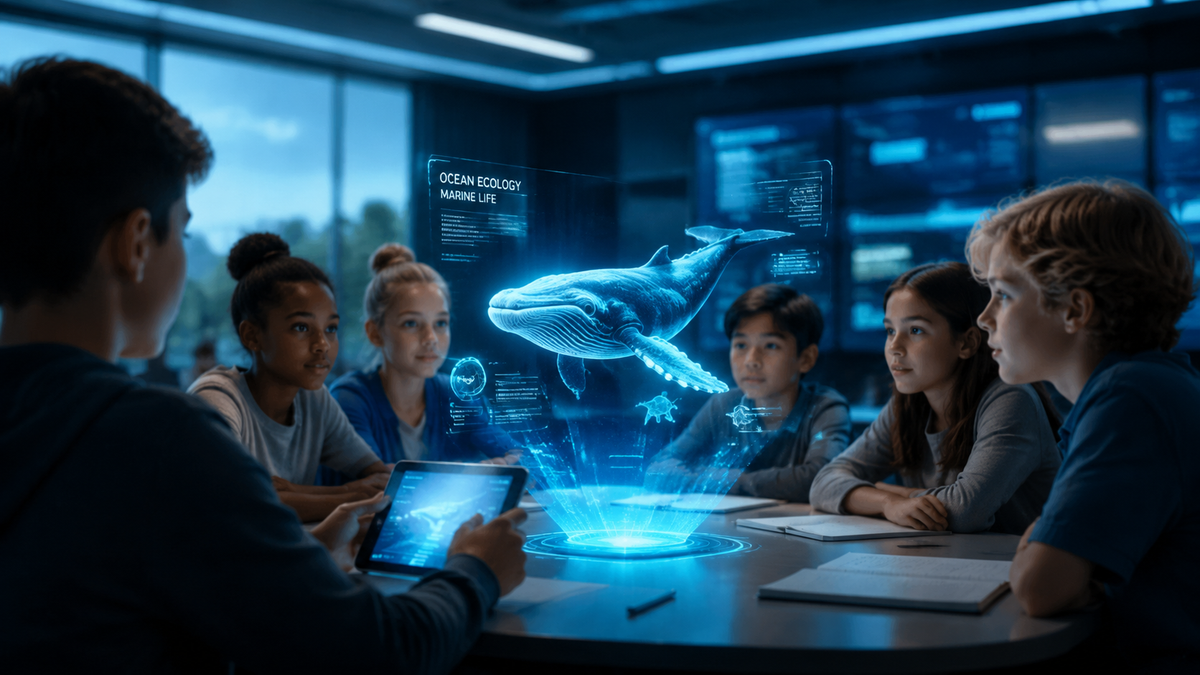
The best text to video AI for education in 2026 allows educators to transform static lesson plans into immersive, high-definition visual experiences that improve student retention and engagement. By leveraging advanced generative models like OpenAI’s Sora and Alibaba’s latest multimodal architectures, teachers can now visualize complex reading comprehension concepts and historical events in seconds. This technology bridges the gap between traditional literacy and modern digital storytelling, making personalized learning more accessible than ever before.
Text to video AI for education is a generative technology that converts written prompts, scripts, or lesson outlines into fully realized video content. In 2026, these tools are used to create personalized tutoring modules, visualize abstract science concepts, and assist students in demonstrating reading comprehension through AI-generated cinematic sequences.
- ✓ Enhanced Engagement: AI videos help students visualize reading comprehension by turning text into vivid imagery.
- ✓ Efficiency: Teachers can reduce content creation time by up to 80% using automated scripting and scene generation.
- ✓ Accessibility: Real-time translation and diverse avatar generation support inclusive classrooms and ESL learners.
- ✓ Innovation: Recent 2026 developments from OpenAI and Alibaba have pushed AI video quality to near-cinematic standards.
How to Implement Text to Video AI for Education in Your Classroom
Integrating generative video into the curriculum is no longer a futuristic concept but a practical reality for the 2026 academic year. As the World Bank Group recently highlighted in their expert analysis of the AI revolution in education, the goal is to augment the teacher's capability rather than replace it. By following a structured approach, educators can ensure that AI-generated content remains pedagogically sound and safe for student consumption.
For teachers looking to start today, here is the standard workflow for deploying this technology:
- Define the Learning Objective: Identify a complex topic that would benefit from visualization, such as the water cycle, a historical battle, or a physics law.
- Draft the Script: Input your lesson notes into a text to video AI for education platform. Ensure the language is age-appropriate and aligns with curriculum standards.
- Select Visual Style: Choose between realistic cinematography (ideal for history), 3D animation (ideal for science), or whiteboard styles (ideal for mathematics).
- Generate and Review: Run the AI model to produce the video. Always review the output for factual accuracy and "hallucinations" before presenting it to students.
- Interactive Assessment: Use the generated video as a prompt for class discussion or as a model for students to create their own visual comprehension projects.
Top Platforms for Text to Video AI for Education: 2026 Comparison
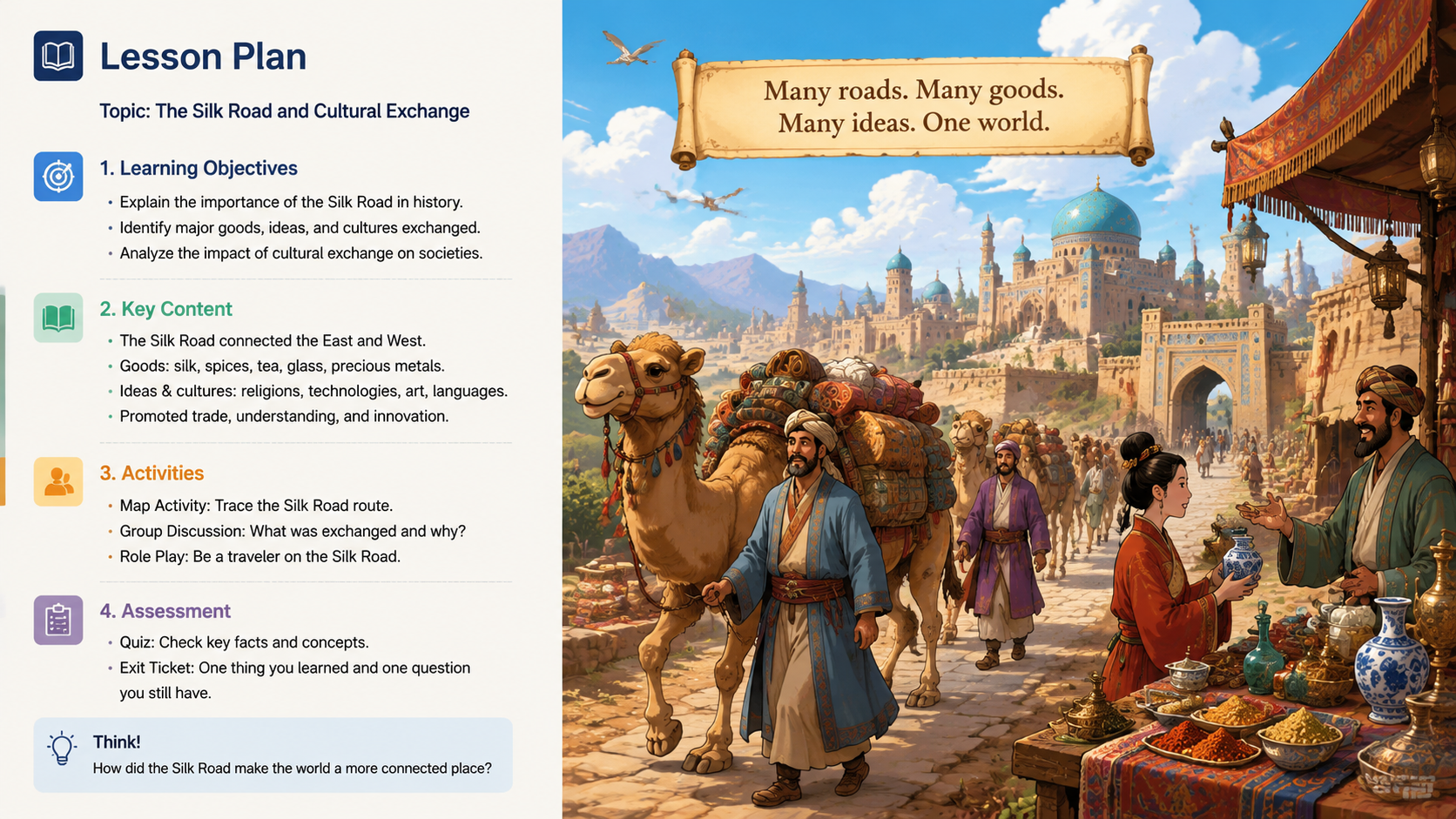
The landscape of generative video has shifted dramatically following significant investments in 2026. According to CNBC, Alibaba recently led a $290 million investment into a new kind of AI model designed to overcome the limits of traditional Large Language Models (LLMs), focusing on physical consistency in video. Meanwhile, OpenAI’s Sora has become a staple in higher education for its ability to follow complex narrative instructions.
When choosing a tool, educators must balance ease of use with the sophistication of the output. Some platforms focus on "talking head" avatars for lectures, while others focus on world-building and environmental simulation. The following table compares the leading options currently available for the 2026 school year.
| AI Platform | Primary Educational Use Case | Key Feature (2026 Update) | Learning Curve |
|---|---|---|---|
| OpenAI Sora | Narrative Storytelling & History | Physics-accurate simulations | Moderate |
| Alibaba Gen-V | Technical & STEM Visuals | Real-time 3D rendering | High |
| HeyGen / Synthesia | Virtual Lecturing & ESL | Instant Lip-Sync Translation | Low |
| Canva Magic Media | Student Presentations | Direct Classroom Integration | Very Low |
The Role of Generative AI in Visualizing Reading Comprehension
One of the most profound shifts in 2026 pedagogy is how students interact with literature. As reported by Education Week in late 2025, students are increasingly using AI to visualize their reading comprehension. Instead of writing a standard book report, students prompt AI models to generate scenes based on their interpretation of a text. This process requires a deep understanding of descriptive language, setting, and character development, effectively turning video generation into a new form of literacy.
This "visual-first" approach helps neurodivergent students and visual learners engage with complex texts that might otherwise feel inaccessible. By seeing their interpretations come to life, students receive immediate feedback on whether their understanding of the text's descriptive elements is accurate. For example, if a student prompts a video for "The Great Gatsby" and the AI generates a modern setting, the teacher can use that as a pivot point to discuss historical context and textual evidence.
Advanced Use Cases for Text to Video AI for Education
Beyond simple video creation, the 13 top use cases of generative AI in education, as identified by AIMultiple in March 2026, include personalized tutoring and automated content adaptation. Text to video AI for education is now being used to create "branching narratives" where students make choices, and the AI generates the resulting video sequence in real-time. This gamification of learning increases student agency and makes the curriculum feel more dynamic.
1. Virtual Field Trips to Impossible Locations
Teachers can now generate high-fidelity videos of the surface of Mars, the interior of a human cell, or the bustling streets of ancient Rome. These videos provide a sense of scale and presence that static images cannot match. Because the content is generated from text, teachers can customize the "tour" to focus specifically on the vocabulary and concepts being taught in that week's unit.
2. Modeling Soft Skills and Social-Emotional Learning (SEL)
Using AI-generated avatars, educators can create role-play scenarios to teach conflict resolution and empathy. These videos can demonstrate the subtle nuances of body language and tone, providing students with a safe environment to observe and analyze social interactions. This is particularly effective in special education settings where consistent social modeling is vital.
Addressing Ethics and "LLM Limits" in the 2026 Classroom
While the $290 million investment in new AI models reported by CNBC suggests a leap forward, educators must remain aware of the limitations. "LLM limits" often refer to the AI’s tendency to struggle with complex logic or long-term consistency in a video. A character might change clothes between shots, or a scientific process might be depicted with slight inaccuracies. This is why the World Bank Group emphasizes that the "AI Revolution" requires a high degree of teacher oversight.
According to experts at St. Bonaventure University, where students are already winning awards for AI-generated broadcast content, the focus should be on "AI Literacy." Students need to be taught how to critique AI output, identifying biases or errors in the generated video. This critical thinking skill is just as important as the ability to use the software itself. Educators are encouraged to use "flawed" AI videos as a teaching tool, asking students to "spot the errors" in a generated scientific simulation.
Future Outlook: The Evolution of Text to Video AI for Education
As we move further into 2026, the integration of text to video AI for education will likely move toward full interactivity. We are seeing the beginning of "live-prompting" during lectures, where a teacher can adjust a video's parameters on the fly based on student questions. If a student asks, "What would happen to the bridge if the wind speed doubled?", the teacher could potentially update the prompt and show the simulated result instantly.
The cost of these technologies is also decreasing as competition between Western and Asian AI firms intensifies. With Alibaba and OpenAI leading the charge, subscription models for schools are becoming more affordable, ensuring that the benefits of generative video are not restricted to elite institutions. The focus for the remainder of 2026 will be on standardizing these tools within the global "Education for All" frameworks to close the digital divide.
Frequently Asked Questions
What is the best text to video AI for education for beginners?
Canva’s Magic Media and HeyGen are currently the most user-friendly options for teachers. They offer intuitive interfaces and pre-built templates that require no prior video editing experience or technical knowledge of AI prompting.
Is AI-generated video content safe for the classroom?
Yes, provided teachers use "Education-Edition" tools that have built-in safety filters. Most leading platforms in 2026 have strict protocols to prevent the generation of inappropriate or biased content, but teacher review is always recommended.
How does text to video AI help students with reading comprehension?
As noted by Education Week, it allows students to transform their mental images of a story into actual visuals. This process reinforces their understanding of narrative structure, setting, and descriptive language through active creation.
Do I need an expensive computer to run these AI tools?
No, most text to video AI for education platforms are cloud-based. All the heavy processing is done on the provider's servers (like OpenAI or Alibaba), meaning you only need a standard laptop or tablet with a stable internet connection.
Can students use these tools for their own projects?
Absolutely. Many schools are now encouraging students to use AI video tools for presentations and creative writing. This helps them develop "prompt engineering" skills, which are becoming essential in the 2026 job market.



Comments ()