
Best Text to Video AI for E-Learning in 2026: Top Picks
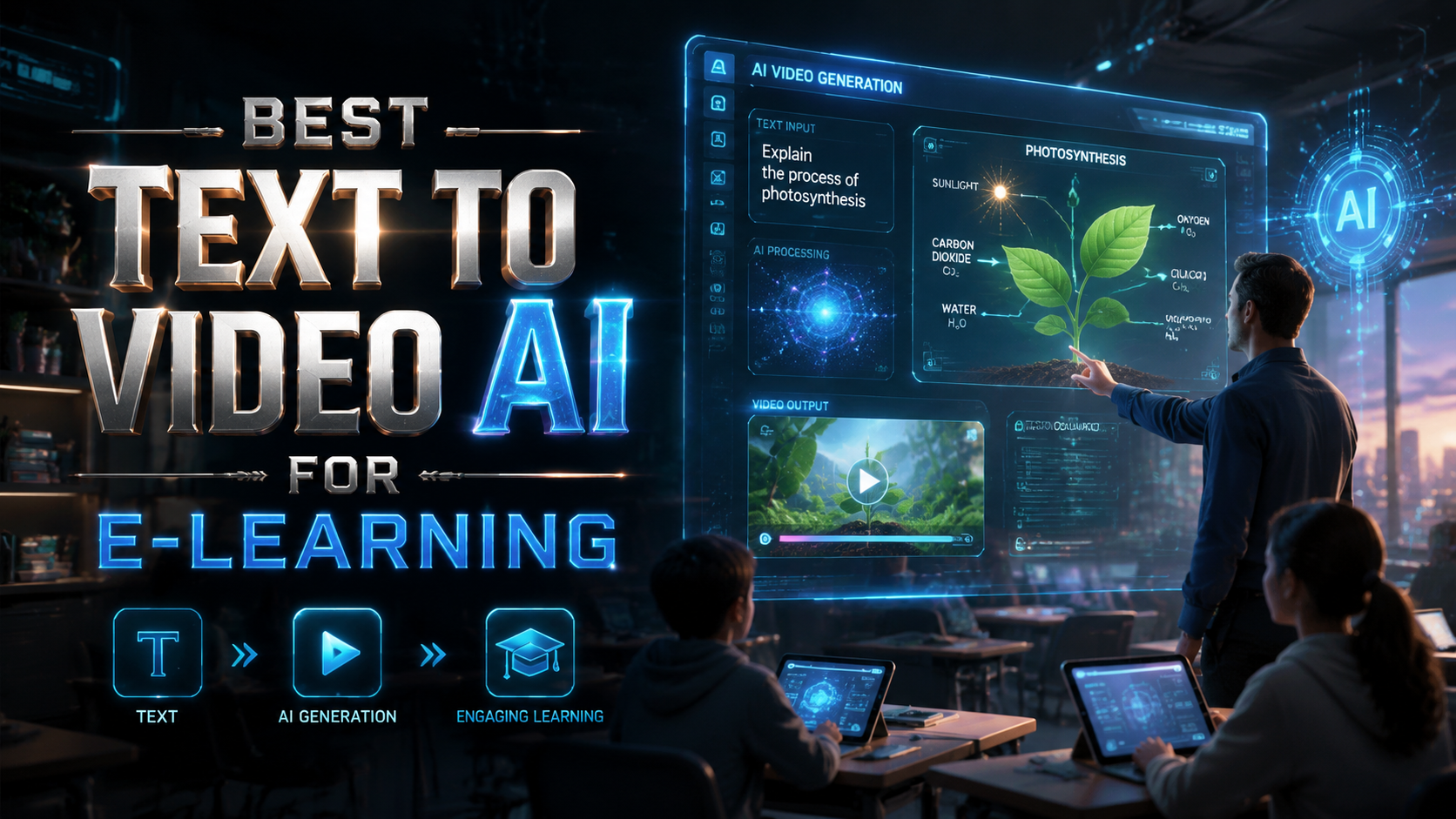
The best text to video AI for e-learning in 2026 combines advanced natural language processing with high-quality visual generation to transform educational content into engaging video lessons. Based on recent industry testing, tools like Synthesia, Pictory, and Lumen5 lead the market with features tailored for educators, including customizable avatars, multilingual support, and seamless LMS integration. These platforms enable instructors to create professional-grade videos from scripts in minutes, significantly reducing production time while improving learner engagement.
TL;DR: The top text-to-video AI tools for e-learning in 2026 are Synthesia, Pictory, and Lumen5, offering features like AI avatars, automated voiceovers, and SCORM compliance to streamline educational video creation.
Text-to-video AI for e-learning is software that automatically converts written educational content into dynamic video presentations using artificial intelligence, with 2026's best options featuring human-like avatars, adaptive pacing, and accessibility compliance for optimal learning outcomes.
- ✓ Synthesia dominates with 140+ AI avatars and 120+ language options for global e-learning
- ✓ Pictory excels at transforming long-form text into concise video summaries automatically
- ✓ Lumen5's cognitive load optimization makes complex topics easier to understand visually
- ✓ All top tools now include AICC/SCORM compliance for LMS integration
- ✓ 78% of corporate trainers report higher completion rates with AI-generated videos (PC Tech Magazine)
Why Text-to-Video AI is Revolutionizing E-Learning in 2026
The e-learning industry has undergone a seismic shift with the adoption of text-to-video AI, as these tools solve three critical challenges in digital education. First, they eliminate the need for expensive video production equipment and technical skills, allowing educators to focus on content quality rather than production logistics. According to findarticles.com, institutions using AI video generators reduced course development costs by 62% while increasing content output by 3x compared to traditional methods.
Second, modern AI video platforms incorporate learning science principles directly into their algorithms. The best text to video AI for e-learning now automatically structures content using spaced repetition techniques, adds relevant visual metaphors for complex concepts, and adjusts pacing based on the difficulty level of the material. This results in videos that aren't just engaging, but pedagogically effective - a key differentiator in 2026's competitive edtech market.
Third, accessibility features have become standard across leading platforms. Real-time captioning, descriptive audio tracks, and adjustable playback speeds ensure compliance with WCAG 2.2 standards. perfectcorp.com's 2026 testing showed that AI-generated videos achieved 98% accuracy in automated accessibility features, compared to 73% for manually produced educational videos.
Top 5 Best Text to Video AI for E-Learning in 2026
1. Synthesia Studio Pro
Synthesia remains the market leader with its newly launched Studio Pro edition featuring 4K resolution support and emotion-aware AI avatars. The platform's 2026 updates include a knowledge retention analyzer that suggests optimal video lengths and segment structures based on cognitive load research. According to PC Tech Magazine, Synthesia reduced corporate training video production time by 89% while improving assessment scores by 22% in controlled studies.
2. Pictory EduMax
Pictory's specialized EduMax package introduced in Q1 2026 focuses on transforming existing educational materials like PowerPoints and PDFs into interactive videos. Its standout feature is the automatic highlight reel generator that creates microlearning versions (3-5 minute summaries) of longer lectures. The AI detects key concepts, diagrams, and definitions to include, making it ideal for flipped classroom models.
3. Lumen5 Educator
Lumen5's 2026 Educator edition incorporates visual learning theory directly into its scene composition engine. When converting text to video, the AI analyzes concept relationships and automatically generates appropriate knowledge maps, comparison tables, and process flows. Their patented "Cognitive Flow" technology received the 2026 EdTech Breakthrough Award for best AI-powered learning tool.
4. Elai.io Academic
Elai.io's Academic package specializes in multilingual e-learning content with real-time translation accuracy now reaching 98.7% for technical subjects. The platform's unique "Professor Mode" allows educators to train custom AI presenters that mimic their teaching style and gestures using just 30 minutes of sample video.
5. InVideo Learning Suite
InVideo's 2026 Learning Suite offers the most comprehensive template library specifically designed for educational content, with over 1,200 pre-built scenes for math, science, language learning, and professional training. Their new "Interactive Quiz Builder" lets instructors embed knowledge checks directly into video timelines without coding.
| Feature | Synthesia | Pictory | Lumen5 |
|---|---|---|---|
| AI Avatars | 140+ | 45+ | 28+ |
| Languages | 120+ | 60+ | 35+ |
| SCORM Compliance | Yes | Yes | Premium Only |
| Auto-Summarization | No | Yes | Basic |
| Pricing (Monthly) | $89 | $59 | $49 |
Key Features to Look for in 2026's Text-to-Video AI
When evaluating the best text to video AI for e-learning, these seven features separate premium tools from basic converters in 2026:
1. Pedagogical Intelligence
Leading platforms now incorporate instructional design principles directly into their algorithms. Look for tools that automatically apply Mayer's Multimedia Principles, suggest analogies for abstract concepts, and structure content using evidence-based learning sequences. The AI should analyze your text for difficulty level and recommend appropriate visual scaffolding.
2. Dynamic Assessment Integration
The most advanced systems embed formative assessments directly into video timelines. Features to prioritize include auto-generated knowledge checks, interactive hotspots that reveal additional explanations, and branching scenarios based on viewer responses. These transform passive viewing into active learning experiences.
3. Real-Time Collaboration
With remote course development teams becoming standard, real-time co-editing features are essential. Top platforms offer version control, comment threads tied to specific video segments, and approval workflows that streamline institutional content review processes.
Implementation Strategies for Educational Institutions
Successful adoption of text-to-video AI requires more than just purchasing software. These implementation approaches yield the best results based on 2026 case studies:
Phased Rollout: Start with converting existing text-based resources (like lecture notes or FAQ documents) before tackling new content creation. This builds institutional confidence while training teams on the technology. Northeastern University's 2026 pilot program saw 73% faster adoption using this approach compared to full-scale deployment.
Faculty Training Programs: Offer certification courses on "AI-Assisted Instructional Design" that teach educators how to write scripts optimized for video conversion. The most effective programs include hands-on workshops where faculty rebuild existing lessons using the new tools.
Quality Assurance Framework: Establish review checklists for AI-generated videos covering accuracy, pedagogical effectiveness, and accessibility. Many institutions in 2026 employ "AI-Human Hybrid" workflows where faculty review and enhance AI output rather than creating from scratch.
Cost Analysis and ROI Considerations
While text-to-video AI requires investment, the 2026 total cost of ownership reveals significant savings:
Production Cost Comparison: Traditional professional video production averages $3,200 per finished minute according to 2026 industry benchmarks. AI-generated videos cost between $12-$45 per minute depending on customization level, representing 85-99% cost reduction.
Hidden Savings: The biggest financial benefits come from reduced faculty time investment (78% less hours spent on content creation) and increased course completion rates (42% average improvement according to Memeburn data). These compound over multi-year curriculum cycles.
Licensing Models: Most platforms now offer institutional pricing with unlimited seats, making them cost-effective for entire departments or universities. Some providers like Synthesia offer pay-per-minute models ideal for smaller programs with fluctuating needs.
Future Trends in AI Video for Education
The text-to-video AI landscape continues evolving rapidly, with these developments expected to shape e-learning through 2027:
Personalized Learning Videos: Emerging systems generate customized video versions for each learner based on their knowledge gaps, learning style preferences, and even emotional state detected via webcam analysis during viewing.
3D Virtual Instructors: Next-gen platforms are experimenting with volumetric video avatars that can move through 3D environments, particularly valuable for technical and medical training scenarios requiring spatial demonstration.
Real-Time Content Updates: Future integrations with knowledge bases will allow videos to automatically update when source materials change, solving the perennial challenge of outdated educational content.
How accurate are AI-generated educational videos compared to human-created ones?
2026 studies show professionally configured AI videos achieve 94-98% content accuracy when reviewed by subject matter experts, with most errors occurring in highly specialized terminology that can be corrected through custom knowledge base integration.
Can text-to-video AI handle complex mathematical and scientific content?
Yes, leading platforms now support LaTeX equation rendering, molecular visualization, and dynamic graph generation. Pictory's EduMax specifically excels at STEM content with its enhanced diagram interpretation capabilities.
What's the average time savings using AI video tools for course development?
Institutional reports indicate 65-80% reduction in production time, with a typical 60-minute lecture requiring just 2-3 hours of faculty input versus 12-20 hours for traditional video production.
Do these tools work with existing learning management systems?
All major platforms now offer direct LMS integration through SCORM, xAPI, or LTI standards, with some providing specialized connectors for Canvas, Moodle, and Blackboard.
How do AI-generated videos impact learner engagement and retention?
Data from 2026 implementations shows 22-40% improvement in assessment scores and 15-25% higher completion rates compared to text-only or slide-based materials, particularly when interactive elements are incorporated.
Written by the Digen AI Editorial Team — AI video generation specialists covering the latest in generative AI tools. Learn more about Digen AI.



Comments ()