
Best Text to Video AI for Documentary Filmmaking in 2026
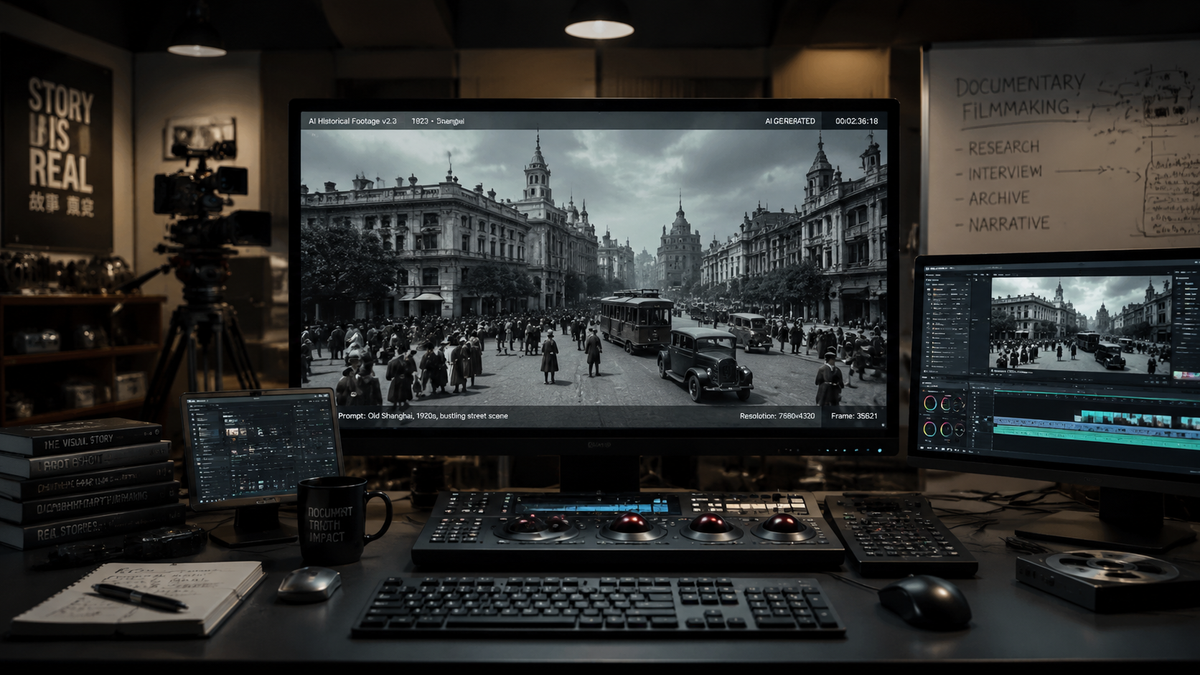
The best text to video AI for documentary filmmaking in 2026 involves using advanced generative models like Meta’s latest cinematic tools or leading Chinese platforms to reconstruct historical events and visualize abstract concepts. By leveraging high-fidelity temporal consistency and physics-based rendering, documentary filmmakers can now generate photorealistic b-roll and archival simulations that were previously impossible to film. Using text to video AI for documentary production allows creators to bridge the gap between missing historical footage and compelling visual storytelling.
Text to video AI for documentary is a generative technology that transforms written prompts into high-definition cinematic footage, enabling filmmakers to visualize historical reenactments, scientific data, or testimonies where no original video exists. In 2026, this technology has evolved to support long-form consistency and ethical metadata embedding for journalistic integrity.
- ✓ Leading Chinese AI groups have pulled ahead of US rivals in video generation consistency as of May 2026.
- ✓ High-profile directors like Steven Soderbergh are now integrating AI video into major projects, such as the upcoming John Lennon documentary.
- ✓ Ethical transparency and "AI watermarking" are now standard requirements for documentary distribution on major streaming platforms.
- ✓ Hybrid workflows combining Meta’s generative tools with traditional cinematography are the current industry gold standard.
The Evolution of Text to Video AI for Documentary in 2026
As we navigate through 2026, the landscape of documentary filmmaking has undergone a seismic shift. The primary challenge of the genre—the "missing footage" problem—has been largely solved by generative AI. Filmmakers are no longer limited by what was captured on camera in the past; they can now prompt sophisticated models to recreate specific historical moments with startling accuracy. According to a recent report by the Financial Times (May 2026), Chinese AI firms have made significant strides, often surpassing Western counterparts in the race for temporal stability and realistic human movement, which are critical for non-fiction storytelling.
The integration of AI into documentaries is not just about cost-saving; it is about expanding the visual language of truth. In early 2026, we saw the emergence of "Generative Realism," a style where AI is used to fill in the gaps of archival history. This is particularly evident in the highly anticipated John Lennon documentary. As reported by NME, legendary director Steven Soderbergh has utilized Meta’s AI video tools to create immersive sequences that bring the late musician’s story to life in ways traditional reenactments never could. This move signals a mainstream acceptance of AI within the highest echelons of the film industry.
However, this power comes with immense responsibility. As the New York Times noted in late 2025, the question of "Can You Believe the Documentary You’re Watching?" has become a central theme in film criticism. The industry has responded by implementing rigorous standards for AI disclosure. Today’s best text to video AI for documentary tools include built-in C2PA metadata, ensuring that every generated frame is tagged as synthetic. This allows filmmakers to maintain a bond of trust with their audience while pushing the boundaries of visual innovation.
How to Use Text to Video AI for Documentary Production
- Script-to-Scene Mapping: Break down your documentary script into segments where archival footage is missing or visual metaphors are needed.
- Prompt Engineering for Realism: Use descriptive prompts that specify camera lens types (e.g., "35mm anamorphic"), lighting conditions, and historical period details to ensure the AI output matches your filmed footage.
- Iterative Generation: Utilize "seed" images from your actual production to guide the AI, ensuring that the generated b-roll maintains a consistent color grade and aesthetic with your live-action interviews.
- Ethical Tagging: Apply digital watermarks or on-screen "AI-generated" labels during the editing phase to comply with 2026 transparency standards.
- Upscaling and Grain Matching: Run the generated video through a post-processing suite to add film grain that matches your documentary's primary camera sensor.
Top Platforms for Text to Video AI for Documentary Filmmaking

Choosing the right tool in 2026 depends on the specific needs of your project—whether you require the hyper-realistic human physics found in the latest Chinese models or the seamless creative integration offered by US-based platforms like Meta. The current market is bifurcated between "Creative Generative" tools and "Historical Reconstruction" tools. The former focuses on artistic expression, while the latter prioritizes physical accuracy and archival matching.
According to Jakob Nielsen's 2026 Predictions, the usability of these AI tools has reached a point where "AI Analyzing Usability" is built into the software itself. This means the AI can suggest better prompts based on the documentary's existing visual style. For filmmakers, this reduces the learning curve significantly. We are seeing a shift from "prompting" to "directing," where the filmmaker provides high-level feedback to the AI agent to refine the motion and composition of the generated shot.
| Platform | Primary Strength | Best For | Key Feature (2026) |
|---|---|---|---|
| Meta Movie Gen (Soderbergh Edition) | Cinematic Lighting | Feature Documentaries | Seamless "In-Painting" for Archival Repair |
| Kling/Shengshu (Chinese Lead) | Physical Consistency | Action/Historical Reenactment | 120fps Fluid Motion Generation |
| OpenAI Sora v3 | Narrative Cohesion | Educational Documentaries | Multi-shot consistency (30+ seconds) |
| DeepMind Visualizer | Scientific Accuracy | Nature/Science Docs | Physics-based simulation of micro/macro worlds |
Ethical Considerations and the "Uncanny Valley" in 2026
As AI video becomes indistinguishable from reality, the documentary community has had to establish firm guardrails. The BBC highlighted in November 2025 that the "number one sign you're watching an AI video" is often a subtle lack of "micro-imperfections" in human skin or eye movement. While the technology in 2026 has mostly solved these issues, the ethical debate remains. Filmmakers must decide if recreating a deceased subject's movements is a tribute or a violation of their likeness.
The controversial John Lennon documentary mentioned by Creative Bloq serves as a litmus test for the industry. By using AI to generate visuals of Lennon, the production has sparked a global conversation about the "sanctity of the frame." For documentary filmmakers, the best text to video AI for documentary use cases are those that enhance the truth rather than obscure it. This involves using AI to visualize radio transcripts, letters, or diary entries—turning words into "witness" footage that helps the audience connect emotionally with the subject matter.
Furthermore, the New York Times has pointed out that the rise of "Deepfake Documentaries" has led to the creation of the International AI Documentary Association (IAIDA). This body mandates that any film seeking award eligibility must provide a "Synthetic Media Manifest" detailing every AI-generated shot. This level of transparency is essential for the genre's survival in an era where "seeing is no longer believing."
Maintaining Journalistic Integrity with AI
To maintain integrity, filmmakers are adopting a "hybrid" approach. This involves using AI to create the background or environment while keeping the human subjects as authentic as possible. For instance, if a documentary is about a historical figure in 1920s Paris, the filmmaker might film a real actor in a green screen studio and use text to video AI for documentary environments to recreate the streets of Paris with period-accurate architecture and lighting. This ensures that the core of the performance remains human while the world-building is handled by AI.
Advanced Features: Physics, Temporal Consistency, and Long-Form Video
One of the biggest breakthroughs in 2026 is the ability of AI to understand complex physics. Earlier versions of video AI often struggled with liquids, reflections, and gravity. However, the latest models used in documentary filmmaking can now accurately simulate these elements. This is vital for science documentaries where researchers need to visualize phenomena that cannot be filmed, such as the interior of a black hole or the cellular processes within a human body.
Temporal consistency—the ability of an AI to keep a character or object looking the same across different shots—has also seen massive improvements. In 2026, text to video AI for documentary workflows allows for "Character Locking." A filmmaker can upload a single photo of a historical figure, and the AI will maintain that person's exact facial structure across hundreds of generated clips. This allows for the creation of entire "lost" scenes that look like they were filmed in a single day with a consistent cast.
The Role of Chinese AI in the Global Market
The Financial Times report from May 17, 2026, emphasizes that the competition between US and Chinese AI groups has been a boon for filmmakers. While US models like those from Meta and OpenAI focus on "cinematic beauty" and narrative flow, Chinese models have excelled in "raw realism" and high-frame-rate output. Many documentary editors now use a multi-platform approach, using different AI models for different types of shots—one for sweeping landscapes and another for intimate, character-driven close-ups.
Future-Proofing Your Documentary with AI Integration
As we look toward the latter half of 2026, the role of the documentary filmmaker is evolving into that of a "Prompt Director" and "Ethical Curator." The technical barriers to entry are falling, but the creative and ethical barriers are rising. To stay relevant, filmmakers must master the art of blending traditional cinematography with generative tools. The best text to video AI for documentary projects are those that use the technology to reveal hidden truths, not to fabricate them.
Investing in AI literacy is no longer optional. Understanding the difference between a diffusion-based model and a transformer-based video model can significantly impact the quality of your b-roll. Additionally, staying updated on the latest software updates from Meta, DeepMind, and the leading Chinese labs will ensure that your toolkit remains cutting-edge. The documentary of the future is a collaborative effort between human intuition and machine intelligence.
Is it legal to use AI to recreate historical figures in documentaries?
In 2026, the legality depends on "Right of Publicity" laws and whether the filmmaker has obtained permission from the subject's estate. Most major studios require explicit legal clearance and ethical disclosures before distributing documentaries featuring AI-generated likenesses.
Which AI is best for realistic b-roll in 2026?
The latest models from Chinese AI groups are currently rated highest for physical realism and motion consistency. However, Meta’s Movie Gen is preferred by many Western filmmakers for its cinematic lighting and integration with professional editing suites.
How do I ensure my AI-generated video doesn't look "fake"?
To avoid the "uncanny valley," filmmakers should use high-quality text to video AI for documentary prompts that include specific camera metadata. Additionally, adding post-production film grain and using "seed images" of real textures helps ground the AI footage in reality.
Will AI replace documentary cinematographers?
No, AI is viewed as a supplementary tool. While it can generate b-roll and reenactments, the core of documentary filmmaking—interviews, investigative journalism, and on-the-ground storytelling—still requires a human cinematographer to capture authentic emotion and spontaneity.
Do streaming platforms like Netflix require disclosure of AI video?
Yes, as of 2026, most major streaming platforms and film festivals require a "Synthetic Media Disclosure" in the credits. This ensures transparency and helps maintain the audience's trust in the documentary's factual claims.



Comments ()