
Best Text to 3D Video AI Tools in 2026: Top Rated Software
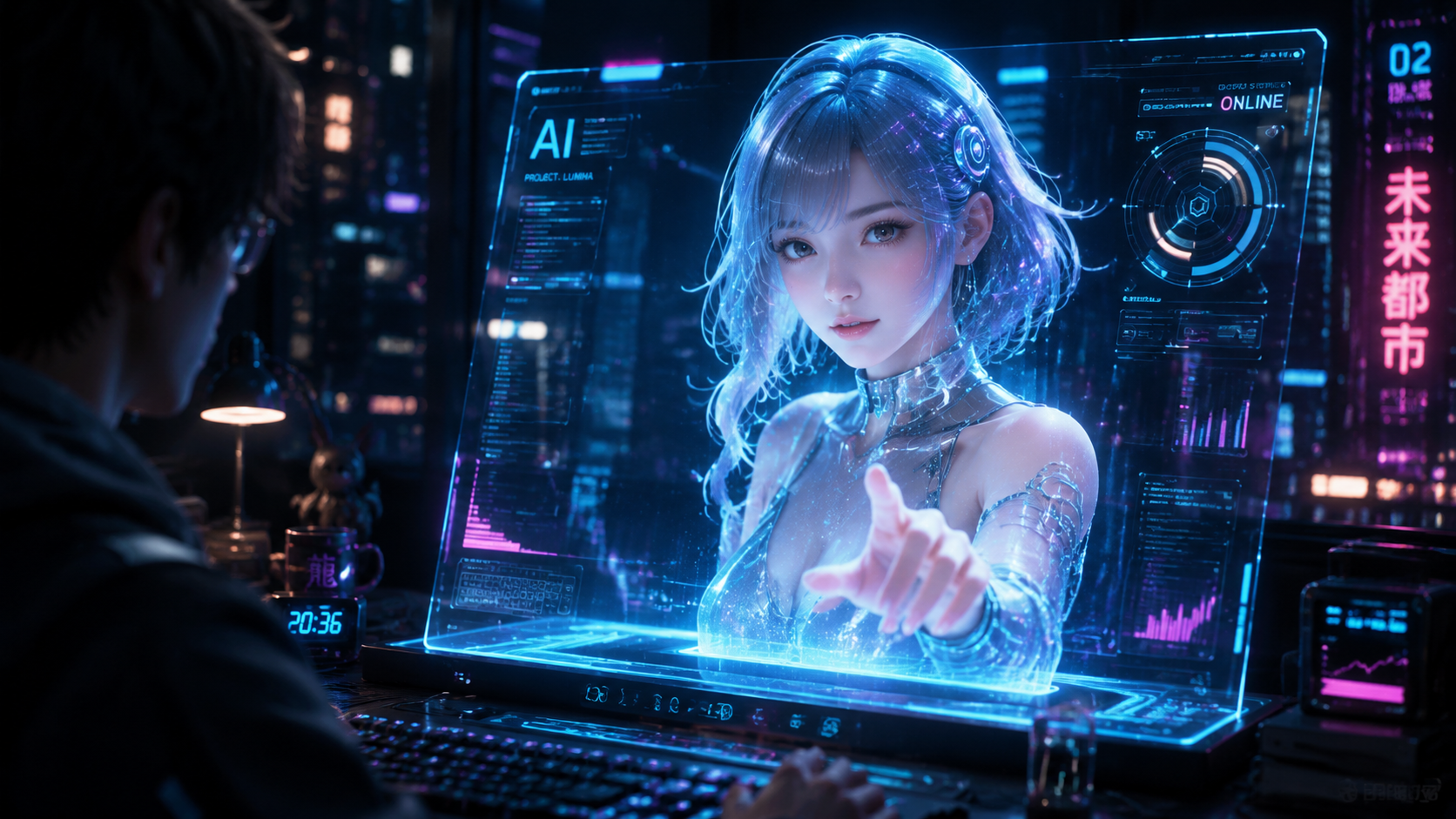
Text to 3d video ai tools are advanced generative artificial intelligence systems that convert natural language descriptions into three-dimensional assets, environments, or cinematic sequences. In 2026, these tools have evolved from generating static meshes to producing fully explorable, high-fidelity 3D worlds and editable game-ready assets. The current market is defined by a shift toward professional-grade integration, allowing creators to bypass traditional modeling bottlenecks through sophisticated neural rendering and diffusion-based geometry generation.
The best text to 3d video ai tools in 2026 include Autodesk Wonder 3D for professional asset creation, Alibaba’s Happy Oyster for generating playable 3D worlds, and Tencent’s Hunyuan 3D Engine. These platforms utilize generative AI to transform text prompts into high-quality, editable 3D meshes and cinematic environments suitable for gaming, 3D printing, and immersive storytelling.
- ✓ Autodesk Wonder 3D has revolutionized the industry by creating high-quality, editable 3D assets from simple text and image prompts.
- ✓ Alibaba’s Happy Oyster model allows for the creation of interactive, playable 3D environments directly from text.
- ✓ Tencent’s Hunyuan 3D Engine provides a comprehensive global suite for advanced 3D creation and creator empowerment.
- ✓ Integration with 3D printing and game engines like Unreal Engine 5 is now a standard feature for top-tier AI tools.
How to Use Text to 3D Video AI Tools for Professional Projects
Navigating the landscape of 3D generative AI requires a strategic approach to prompting and post-processing. As of 2026, the workflow has shifted from experimental hobbyist use to standardized professional pipelines. Whether you are a game developer or a digital artist, understanding the sequence of operations is vital for achieving high-fidelity results that meet industry standards for topology and texture mapping.
- Define the Prompt: Start with a detailed textual description, specifying geometry, texture styles (e.g., PBR materials), and lighting conditions.
- Select the Generation Model: Choose between asset-centric models like Wonder 3D or world-building models like Happy Oyster based on your project needs.
- Refine via Image Prompts: Use the multi-modal capabilities of 2026 tools by uploading a reference image alongside your text to guide the AI’s spatial understanding.
- Adjust Topology and Rigging: Utilize the "editable" features found in tools like Autodesk's latest releases to clean up the mesh for animation.
- Export and Integrate: Export the generated 3D video or asset in formats like USDZ or GLB for use in game engines or 3D printing software.
The Evolution of Text to 3D Video AI Tools in 2026
The year 2026 marks a significant milestone in the democratization of 3D content creation. According to reports from 3D Printing Industry, the launch of Autodesk Wonder 3D in March 2026 has fundamentally changed how editable 3D assets are produced. Unlike previous iterations that produced "frozen" meshes, modern tools now generate assets with clean topology that can be immediately manipulated by professional artists. This leap forward ensures that AI is no longer just a conceptual tool but a foundational part of the production stack.
Furthermore, the scale of generation has expanded. We are no longer limited to single objects. As noted by Ars Technica, recent AI models have gained the ability to turn simple photos and text descriptions into entire explorable 3D worlds. While some caveats regarding edge-case physics remain, the ability to walk through a generated environment in real-time has bridged the gap between static 3D modeling and immersive video production. This capability is particularly useful for rapid prototyping in architecture and film pre-visualization.
Autodesk Wonder 3D: Setting the Industry Standard
Autodesk’s entry into the generative AI space with Wonder 3D has been described by Creative Bloq as an effort to open game art and 3D printing to everyone. Launched in early March 2026, Wonder 3D focuses on high-quality asset generation. It excels at interpreting complex text prompts to create meshes that are not only visually stunning but also functional for 3D printing. The tool’s primary strength lies in its "editable" nature, allowing users to tweak the AI's output within the familiar Autodesk ecosystem.
Alibaba Happy Oyster: From Text to Playable Worlds
In April 2026, Alibaba introduced Happy Oyster, a model that pushed the boundaries of what text to 3d video ai tools can achieve. According to Mint, Happy Oyster doesn't just create a video; it creates a "playable" 3D world. This means the output is an interactive environment where users can navigate a camera or character through the scene generated by the prompt. This tool is specifically designed for the gaming industry, allowing developers to generate level mockups in seconds rather than weeks.
Comparison of Leading 3D AI Software
To help you choose the right platform for your specific needs, the following table compares the top-rated software available in 2026 based on their core functionality, primary user base, and unique selling points.
| Tool Name | Primary Focus | Key Feature | Target Audience |
|---|---|---|---|
| Autodesk Wonder 3D | High-Quality Assets | Editable meshes & 3D printing prep | Game Artists & Engineers |
| Alibaba Happy Oyster | Interactive Worlds | Text-to-Playable environments | Indie Devs & Metaverses |
| Tencent Hunyuan 3D | Advanced Creation Suite | Global engine for creators | Content Creators & Studios |
| Ars Technica Featured Models | Photo-to-World Conversion | Explorable cinematic scenes | Filmmakers & Architects |
Tencent Hunyuan 3D Engine and Global Accessibility
Tencent’s global launch of the Hunyuan 3D Engine in late 2025 set the stage for the innovations we are seeing throughout 2026. As reported by Tencent, this engine was designed to empower creators with advanced tools that simplify the transition from 2D concepts to 3D realities. The Hunyuan engine is particularly notable for its integration with social media and mobile platforms, making 3D video generation accessible to a broader audience beyond the traditional Hollywood or AAA gaming spheres.
The engine utilizes a proprietary diffusion model that specializes in spatial consistency. One of the biggest challenges for text to 3d video ai tools has been maintaining the "identity" of an object as the camera moves around it. Tencent’s research has largely solved this, providing a stable 360-degree view that is essential for high-quality video production. This has made Hunyuan a favorite for marketing agencies looking to create product videos without the need for expensive physical shoots or manual 3D modeling.
Future Trends: The Convergence of AI and 3D Printing
One of the most exciting developments in 2026 is the direct link between generative AI and physical manufacturing. All3DP highlights that Autodesk’s Wonder 3D is specifically optimized for high-quality 3D assets from AI, which includes the necessary structural integrity for 3D printing. This means a designer can describe a complex mechanical part via text, have the AI generate the 3D video preview, and then send the finalized mesh directly to a printer.
This convergence is reducing the "skill floor" required to participate in the creator economy. Statistical data from 2026 industry surveys suggests that the time-to-market for custom 3D-printed consumer goods has decreased by nearly 60% since the integration of these AI tools. As the software continues to improve, we expect to see even more sophisticated material simulations, allowing the AI to predict how a generated 3D object will behave in the physical world before it is ever printed.
Advanced Textures and PBR Materials
Modern text to 3d video ai tools in 2026 now include automated PBR (Physically Based Rendering) material generation. When a user prompts for a "weathered copper statue," the AI doesn't just create the shape; it generates the roughness, metallic, and normal maps required for realistic light interaction. This level of detail is what separates the top-rated software from early experimental models seen in previous years.
Real-time Collaboration in AI Spaces
Another emerging trend is the ability for multiple users to prompt and edit a 3D scene simultaneously. Tools like the Hunyuan 3D Engine have introduced "Multi-user Prompting," where a director and a concept artist can collaboratively refine a 3D world in real-time. This collaborative aspect is transforming AI from a solitary tool into a virtual studio environment, further accelerating the production cycles of digital media.
What are the best text to 3d video ai tools for beginners in 2026?
For beginners, the Tencent Hunyuan 3D Engine and Autodesk Wonder 3D are highly recommended due to their intuitive interfaces and robust preset libraries. These tools offer "one-click" generation options that handle the complex technical aspects of 3D modeling automatically.
Can I use AI-generated 3D videos for commercial purposes?
Yes, most professional tools like Wonder 3D and Happy Oyster provide commercial licenses, though it is essential to check the specific terms of service for each platform. In 2026, these tools are widely used in commercial game development and marketing.
Do these tools require a high-end computer?
Most modern 3D AI tools are cloud-based, meaning the heavy processing is done on the provider's servers. However, for real-time exploration of "playable worlds" like those from Alibaba's Happy Oyster, a modern GPU is recommended for the best experience.
How accurate is the text-to-3D conversion?
As of 2026, the accuracy is exceptionally high for common objects and environments. While highly specific or abstract mechanical parts may still require minor manual adjustments, the "editable" nature of tools like Wonder 3D makes these corrections quick and easy.
What file formats do these AI tools export?
Standard export formats in 2026 include GLB, USDZ, OBJ, and STL. These formats ensure compatibility with major 3D software like Blender, Maya, and Unreal Engine 5, as well as 3D printing slicers.



Comments ()