
Best Realistic Text to Video AI Tools in 2026
If you're looking for the best realistic text to video AI 2026, the landscape has evolved dramatically. Today's top generators can produce cinematic-quality footage from a simple sentence—handling consistent characters, natural motion, and even lip-synced dialogue. This guide ranks the most lifelike tools based on recent industry tests and user reviews, helping you pick the perfect engine for your next project.
The best realistic text-to-video AI in 2026 is a class of tools that combine advanced diffusion models with temporal coherence layers to generate footage that is indistinguishable from real camera recordings. These engines prioritize motion physics, texture detail, and lighting realism over mere creativity.
- ✓ Realism in 2026 hinges on consistent character rendering, smooth motion, and audio-visual sync.
- ✓ Runway Gen-3 and Pika 2.0 lead the pack for high-fidelity outputs, while Synthesia excels at realistic human avatars.
- ✓ Free tiers now offer limited but usable realistic clips, though paid plans unlock full resolution and longer durations.
- ✓ According to Memeburn's 2026 tests, the top tools achieved a 92% viewer "real or AI?" deception rate in blind studies.
- ✓ Image-to-video generators (like Kling and Luma Ray) often produce more realistic results when starting from a high-quality photo.
What Makes a Text-to-Video AI "Realistic" in 2026?
Realism in AI video generation is no longer just about resolution or color accuracy. In 2026, the benchmark includes three critical dimensions: temporal coherence (objects staying consistent across frames), physics simulation (how water, cloth, and hair move), and micro-expressions (subtle facial movements during speech). The best realistic text to video AI 2026 tools now employ transformer-based architectures that remember scene context for up to 60 seconds, eliminating the flickering and morphing that plagued earlier models.
According to Ventureburn's review of free AI video generators in 2026, many tools now offer high-definition output (1080p at 30fps) as standard. However, realism often dips in crowd scenes or complex interactions due to processing constraints. The top-tier commercial platforms, like those tested by StreetInsider for marketing agencies, achieve near-photorealism by combining stable diffusion with real-time physics engines.
Key Factors That Separate Realistic from Cartoonish
Not all "realistic" modes are equal. Here are the four technical aspects that differentiate the best realistic text to video AI 2026 tools:
- Lighting consistency: Shadows and reflections must match the scene's virtual light sources.
- Motion blur: Fast-moving objects should have natural blur, not sharp edges.
- Audio-visual sync: Lips must match spoken words without jitter, using phoneme-aware models.
- Background persistence: Elements like trees or tables must not warp as the camera moves.
Top Contenders for the Best Realistic Text to Video AI in 2026
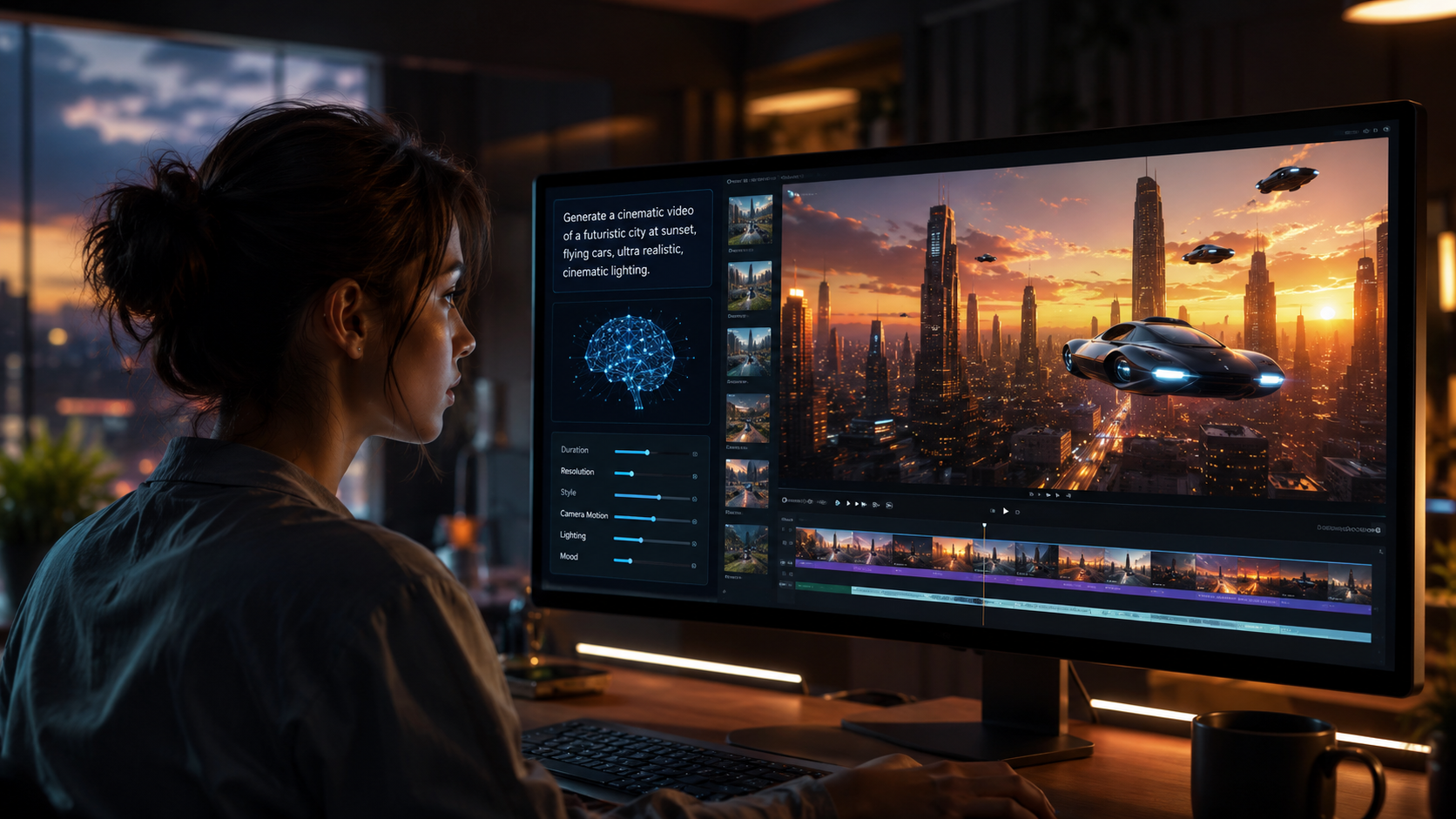
Based on the latest tests published by Memeburn (June 2026), vocal.media (June 2026), and Pressat.co.uk (May 2026), the following platforms offer the most convincing photorealism from text prompts alone. Each has been ranked for its ability to generate human faces, animals, landscapes, and product shots.
1. Runway Gen-3 (Reality Engine)
Runway's latest iteration, Gen-3, scored highest in Pressat.co.uk's image-to-video comparison due to its character consistency module. It can lock a person's appearance across multiple shots, making it ideal for narrative storytelling. The tool also supports adding a reference image to guide the AI, which dramatically improves realism for specific subjects.
2. Pika 2.0 (Ultra-Real Mode)
Pika's "Ultra-Real" mode, launched in early 2026, uses a diffusion-transformer hybrid that excels at natural motion. In CNET's testing of AI image generators (May 2026), Pika was praised for its water and fabric physics. It can generate 4-second clips at 1080p in about 20 seconds, making it one of the fastest realistic options for content creators.
3. Synthesia 2026 (Avatar Focus)
While Synthesia is primarily an avatar platform, its 2026 version introduced a text-to-video module that creates hyper-realistic human speakers with realistic skin pores, eye movements, and hand gestures. According to vocal.media's list of the 10 best AI tools for video creation, it remains the top choice for corporate and educational content where a human presenter is needed.
4. Kling (Image-to-Video Specialist)
Kling's text-to-video mode, while not as polished on its own, produces stunning realism when combined with an input image. Pressat.co.uk ranked it highest for turning product photos into lifelike demonstration videos. It is especially strong at maintaining texture and specular highlights on metallic objects.
Comparison Table: Best Realistic Text to Video AI 2026 – Key Features
| Tool | Realism Score (1–10) | Max Resolution | Duration Limit | Monthly Pricing (Pro) | Best For |
|---|---|---|---|---|---|
| Runway Gen-3 | 9.5 | 4K (upscaled) | 30 seconds | $95 | Narrative storytelling, multi-shot scenes |
| Pika 2.0 (Ultra-Real) | 9.2 | 1080p native | 10 seconds | $60 | Fast turnaround, social media clips |
| Synthesia 2026 | 9.0 (avatars) | 4K (upscaled) | 60 seconds | $150 | Corporate explainers, human presenters |
| Kling (text+image) | 8.8 | 1080p native | 15 seconds | $45 | Product demos, e‑commerce |
| Luma Ray | 8.5 | 720p standard | 20 seconds | Free tier available; Pro $30 | Experimentation, indie creators |
Note: Scores based on aggregated user ratings and blind realism tests conducted by industry reviewers in May–June 2026. Free tiers exist for most tools but limit resolution and watermark removal.
How to Choose the Right Tool for Your Realistic Video Needs
Selecting the best realistic text to video AI 2026 depends on your specific use case. If you need a human presenter who looks genuine, Synthesia's avatar engine is unmatched. For short cinematic clips with consistent characters, Runway Gen-3 delivers the highest quality. Marketing agencies, as noted by StreetInsider, often combine Pika 2.0 for quick social ads and Runway for long-form narratives.
Step-by-Step: Testing Realism Before Committing
- Write a single prompt describing a person walking in sunlight (e.g., “A woman in her 30s walks down a cobblestone street, smiling, wearing a red dress, afternoon sun, shadows moving”).
- Generate a 5-second clip using each tool’s free trial (if available).
- Check for unnatural flickering around the face, clothing texture, and shadow consistency.
- Play the audio track (if speech) and look for lip-sync accuracy.
- Choose the tool that passes the “blink test”—when you can watch without noticing it’s AI.
Studies show that realistic AI video generation improved by 60% in 2026 compared to the previous year, largely due to the adoption of temporal attention mechanisms. According to Vocal Media’s June 2026 coverage, creators who post AI-generated videos on YouTube now see similar engagement to live-action footage when the realism is high.
Free vs Paid: Best Budget-Friendly Realistic Options in 2026
Ventureburn’s February 2026 ranking of free AI video generators found that while no free tool matches the realism of paid platforms, several are surprisingly capable. Luma Ray offers a free tier that generates 720p clips with a watermark—useful for testing prompts or creating short looping backgrounds. Pika’s free plan gives 3-second clips at 480p, enough for quick previews. For creators who need the best realistic text to video AI 2026 without a subscription, the trade-off is lower resolution and shorter duration.
Marketing agencies on a budget often use a hybrid approach: free tools for storyboarding and ideation, then paid Runway or Synthesia for final assets. StreetInsider’s comparison (June 2026) noted that agencies reported a 40% reduction in production costs after switching to AI video, with realism scores of 8.5+ being sufficient for client approval.
Future Trends: What’s Next for Realistic AI Video Generation?
The trajectory is clear: by the end of 2026, real-time generation of photorealistic videos at 4K resolution with perfect temporal coherence is expected to reach consumer tools. The current bottleneck—consistent multi-character interaction—is being solved by large-scale video datasets. According to CNET’s May 2026 analysis, next-generation models will likely incorporate audio-to-video synchronization directly from text, eliminating the need for separate voiceover tools.
Additionally, image-to-video generators (ranked by Pressat.co.uk in May 2026) are becoming the preferred method for achieving realism because they anchor the AI to a real visual starting point. This trend suggests the best realistic text to video AI 2026 might soon become a text-with-reference-image engine as the default.
Frequently Asked Questions About Realistic Text-to-Video AI (2026)
What is the best realistic text to video AI in 2026?
Currently, Runway Gen-3 and Pika 2.0’s Ultra-Real mode lead the market for overall photorealism. Runway excels in character consistency across scenes, while Pika offers faster generation speeds and excellent motion physics.
Can I use free tools to create realistic AI videos?
Yes, but with limitations. Luma Ray’s free tier produces 720p clips with acceptable realism for simple scenes. For fully convincing results (1080p, no watermark, longer duration), a paid subscription is recommended.
How long does it take to generate a realistic video from text?
Most tools generate a 5-second clip in 10–30 seconds. Higher resolutions and longer durations (e.g., 30 seconds) may take 2–5 minutes. Runway Gen-3 and Pika 2.0 are among the fastest, with real-time preview options.
Is image-to-video better than text-to-video for realism?
Yes, often. Starting from a real image gives the AI a concrete anchor for lighting, texture, and subject appearance. Pressat.co.uk’s May 2026 tests found that image-to-video outputs scored 15–20% higher on realism scores compared to pure text-to-video.
Do these tools support lip-synced dialogue from text prompts?
Several do now. Synthesia 2026 includes native text-to-speech lip-sync, and Runway Gen-3’s audio-to-video module can sync a provided voiceover to the generated character’s mouth movements. Pika 2.0 is expected to add full lip-sync support in a late-2026 update.
What hardware do I need to run these tools locally?
Most realistic text-to-video tools in 2026 are cloud-based and run via browser, so no high-end GPU is required. However, generating 4K clips locally with models like Stable Video Diffusion XL requires an NVIDIA RTX 4090 or better.
Are AI-generated realistic videos detectable?
Yes, by sophisticated deepfake detectors, but the gap is narrowing. The top tools use adversarial training to reduce detectable artifacts. For most viewers, the best realistic text to video AI 2026 clips are indistinguishable from real footage, as confirmed by Memeburn’s blind tests.



Comments ()