
Top Open Source Text to Video Tools: 2026 AI Guide
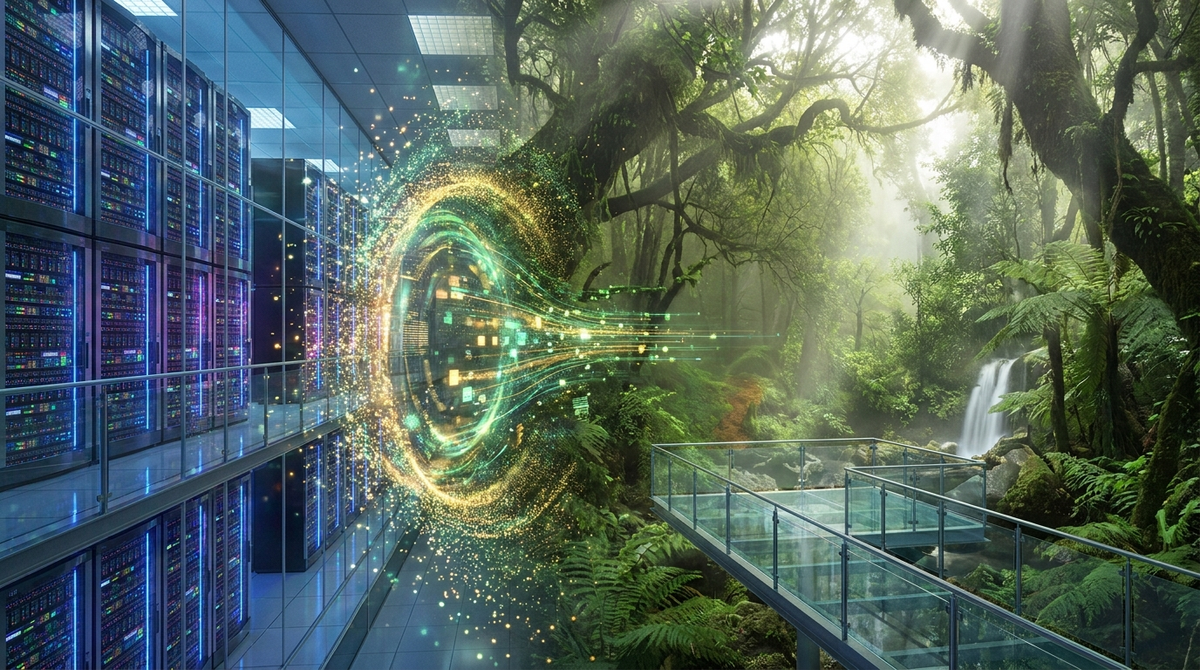
The landscape of open source text to video technology has reached a transformative milestone in 2026, offering creators and developers the ability to generate high-fidelity cinematic content without the restrictions of proprietary ecosystems. By leveraging decentralized computing and optimized diffusion models, the latest open-source tools allow for the creation of realistic motion, synchronized audio, and complex visual storytelling directly from a text prompt. Whether you are a developer looking to integrate video generation into an application or a creator seeking privacy and customization, the open-source community now provides models that rival or exceed the capabilities of closed-source alternatives.
Open source text to video is a category of generative AI models where the underlying code and weights are publicly accessible, allowing users to generate video files from text descriptions. In 2026, these tools focus on efficiency, enabling high-quality video production on consumer-grade hardware through advanced architectures like LTX-2 and HappyHorse-1.0.
- ✓ HappyHorse-1.0 is currently the top-ranked open-source video generator on the Artificial Analysis Global Leaderboard.
- ✓ The LTX-2 model has revolutionized the field by integrating speech, ambiance, and motion into a single pipeline.
- ✓ NVIDIA's new plug-and-play diffusion offerings have significantly accelerated inference speeds for open models.
- ✓ Modern open-source tools are now optimized to run on consumer GPUs rather than requiring enterprise-grade server clusters.
How to Get Started with Open Source Text to Video
Deploying an open source text to video model has become significantly more streamlined in 2026 thanks to containerization and unified model loaders. While proprietary systems offer a simple web interface, open-source tools provide the flexibility to tune parameters such as motion buckets, seed consistency, and frame interpolation. To begin, you generally need a system with at least 16GB of VRAM and a Linux-based environment or a specialized Windows wrapper.
- Select Your Model: Choose a base model like HappyHorse-1.0 or LTX-2 based on your hardware capabilities and desired output style.
- Configure the Environment: Install the necessary dependencies, typically via Docker or a Conda environment, ensuring you have the latest NVIDIA drivers for CUDA acceleration.
- Download Model Weights: Fetch the pre-trained weights from repositories like Hugging Face, ensuring you have sufficient disk space for the multi-gigabyte files.
- Input Your Prompt: Craft a detailed descriptive prompt, including camera movement instructions (e.g., "cinematic pan left") and lighting preferences.
- Execute and Iterate: Run the inference script to generate the video, then adjust the guidance scale or sampling steps to refine the visual quality.
The Evolution of Open Source Text to Video in 2026
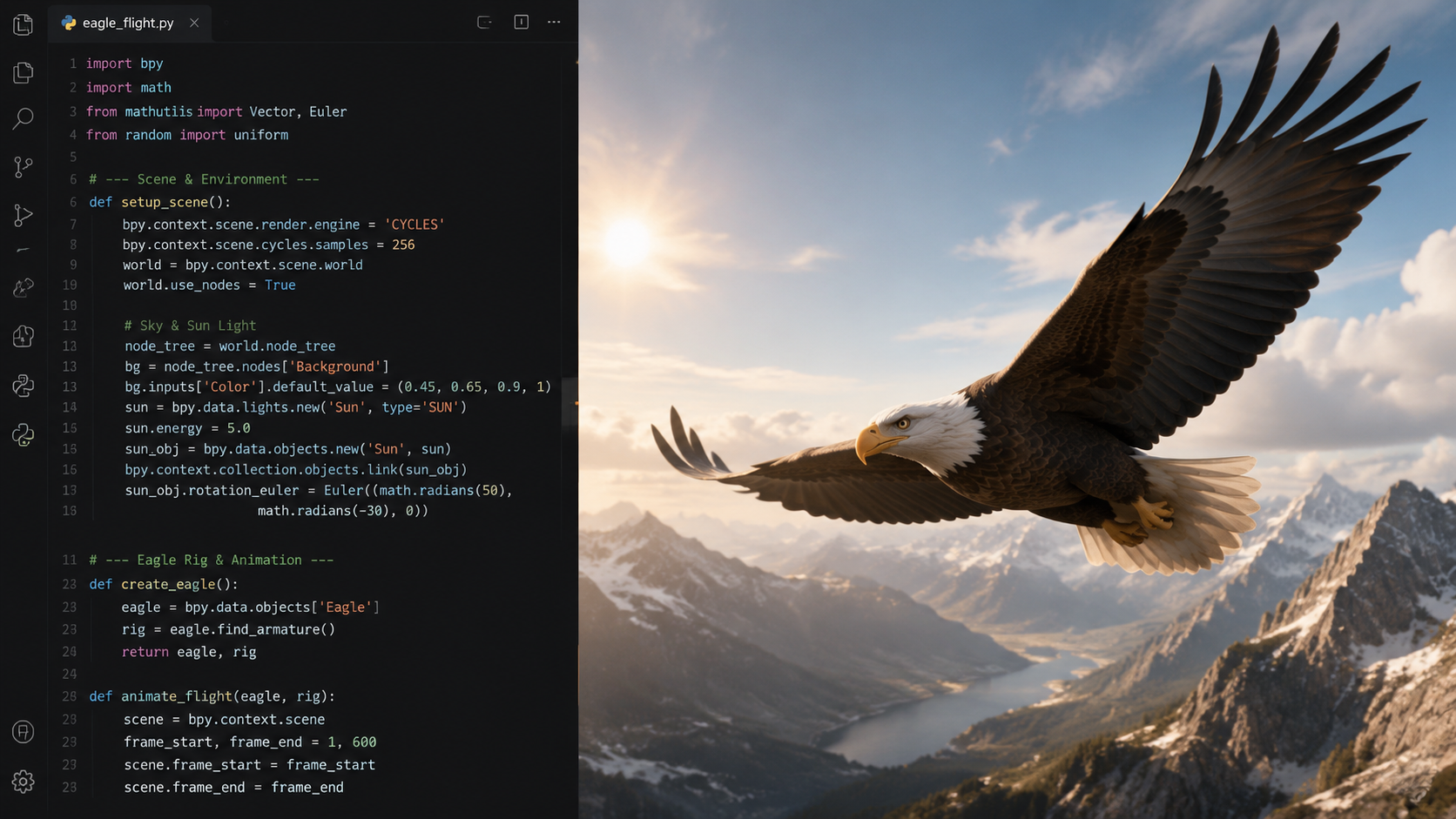
The current year marks a paradigm shift where "open source" no longer implies a compromise in quality. According to the 24-7 Press Release Newswire, the release of HappyHorse-1.0 in April 2026 saw an open-source model take the #1 spot on the Artificial Analysis Global Leaderboard, surpassing several well-funded proprietary competitors. This shift is largely due to the democratization of training data and the refinement of Video Joint-Embedding Predictive Architectures (V-JEPA).
Furthermore, the integration of multi-modal capabilities has become standard. Unlike earlier models that only generated silent clips, the latest open source text to video frameworks now handle what researchers call "holistic generation." This includes the simultaneous creation of the visual track, background ambiance, and even synchronized speech, providing a turnkey solution for content creators who need ready-to-use assets for social media or film pre-visualization.
The Rise of HappyHorse-1.0
HappyHorse-1.0 has become the gold standard for the community. Its architecture is specifically designed to handle long-range temporal consistency, meaning characters and objects do not "morph" or disappear during longer clips. Its crowning as the top generator in April 2026 validated the community's effort to prioritize motion physics and anatomical correctness, which were previously the weak points of open-source video generation.
NVIDIA's Contribution to Diffusion Speed
Hardware optimization has also played a critical role. According to the NVIDIA Technical Blog, new plug-and-play offerings for accelerating diffusion models have reduced generation times by up to 40% on RTX 40-series and 50-series GPUs. This allows users to generate 10-second 1080p clips in under two minutes, a feat that previously required high-end A100 or H100 data center cards.
Comparison of Top Open Source Video Models
Choosing the right tool depends on your specific hardware and the level of control you require. The following table compares the leading models available in mid-2026 based on the latest industry research and performance benchmarks.
| Model Name | Key Strength | Hardware Requirement | Audio Support | Release Date |
|---|---|---|---|---|
| HappyHorse-1.0 | Visual Fidelity & Physics | High (24GB VRAM) | No (Visual Only) | April 2026 |
| LTX-2 | All-in-one Generation | Medium (16GB VRAM) | Yes (Speech & Ambiance) | January 2026 |
| Stable Video XT | Fast Iteration | Low (12GB VRAM) | No | Late 2025 |
| Open-Sora v3 | Long Duration Clips | High (Multi-GPU) | Optional | February 2026 |
Key Features of Modern Open Source Text to Video Tools
One of the most significant advancements in 2026 is the ability to run these models on consumer-grade hardware. As reported by Geeky Gadgets, the LTX-2 model is a breakthrough because it delivers high-quality motion and synchronized ambiance specifically optimized for consumer GPUs. This removes the "cloud tax" associated with video generation, allowing for unlimited experimentation without per-minute billing cycles.
Another critical feature is the "Plug-and-Play" modularity. Modern frameworks allow users to swap out different components of the generation pipeline. For instance, you can use one model for the base visual generation and another specialized "Refiner" model to enhance facial details or textures. This modularity is a hallmark of the open source text to video ecosystem, fostering a collaborative environment where developers build upon each other's breakthroughs in real-time.
Temporal Consistency and Motion Control
Earlier iterations of video AI often suffered from "jitter" or "hallucinations" where the background would change arbitrarily between frames. The 2026 generation of models uses advanced temporal attention mechanisms to ensure that the scene remains stable. Users can now define specific motion paths using "motion brushes" or coordinate-based prompts, giving them directorial control over the camera and the actors within the frame.
Integrated Audio and Speech Synthesis
The LTX-2 model stands out for its ability to generate speech and ambiance that matches the visual context. If the prompt describes a "rainy street in Tokyo," the model doesn't just generate the visuals; it generates the pitter-patter of rain and the muffled sounds of city traffic. This level of integration is a significant step toward full automation in video production, making open-source tools a viable threat to traditional stock footage libraries.
The Role of AI Agents in Video Production
The intersection of AI agents and video generation is another major trend for 2026. According to AIMultiple, which recently listed over 50 top open-source AI agents, these autonomous entities are now being used to manage the entire video production workflow. An agent can be tasked with writing a script, breaking it down into scenes, and then calling an open source text to video model to generate each segment automatically.
This automation allows for the creation of personalized video content at scale. For example, an agent could monitor news feeds and automatically generate short-form news videos with relevant visuals and voiceovers, all using open-source components. This synergy between "thinking" agents and "creating" video models is defining the next era of digital content creation, where the barrier between an idea and a finished video is virtually non-existent.
Scalability and Decentralized Rendering
As models grow in complexity, the community has turned to decentralized rendering networks. By using open-source protocols, creators can pool their GPU resources to render high-resolution films that would be impossible on a single machine. This "community cloud" approach ensures that open source text to video remains accessible even as the computational requirements for 4K and 8K video generation increase.
Future Outlook: Beyond 2026
The trajectory of open-source video AI suggests that we are moving toward real-time interactivity. While current models take seconds or minutes to generate a clip, the optimization techniques introduced by NVIDIA and others are pushing us toward a future where video can be generated at 24 frames per second in real-time. This will have profound implications for gaming and virtual reality, where environments can be generated on-the-fly based on player actions.
Moreover, the ethical considerations of open-source video are being addressed through community-led initiatives. Open-source models are increasingly incorporating built-in metadata and digital watermarking to ensure transparency. As these tools become more powerful, the focus is shifting from "can we generate this?" to "how can we generate this responsibly?" while maintaining the core tenets of open-access software.
What is the best open source text to video model in 2026?
As of mid-2026, HappyHorse-1.0 is widely considered the best model due to its top ranking on the Artificial Analysis Global Leaderboard. It offers superior visual fidelity and temporal consistency compared to other open-source alternatives.
Can I run open source text to video on a standard laptop?
While possible on high-end gaming laptops with at least 12GB-16GB of VRAM, these models perform best on desktop systems with dedicated NVIDIA GPUs. Models like LTX-2 are specifically optimized to run on consumer-grade hardware rather than enterprise servers.
Does open source video generation include sound?
Yes, newer models like LTX-2 have integrated audio capabilities, allowing for the simultaneous generation of motion, speech, and background ambiance within a single model framework.
How long does it take to generate a video using open source tools?
Thanks to NVIDIA's plug-and-play acceleration, generating a high-quality 10-second clip typically takes between 60 to 120 seconds on a modern consumer GPU like the RTX 5080.
Are there any costs associated with using these open source models?
The models themselves and their code are free to download and use. However, you must cover the cost of the hardware or the electricity used during the intensive computation process required for video generation.



Comments ()