
8 Best Open Source AI Video Models to Use in 2026

The best open source ai video models in 2026 are led by breakthrough architectures like HappyHorse-1.0, Stable Video Diffusion 3, and the multimodal Gemma 4 framework. These models provide developers and creators with the ability to generate high-fidelity, cinematic video content without the restrictive licensing or costs associated with proprietary platforms. By leveraging decentralized computing and community-driven optimizations, these open-source tools now rival industry leaders in temporal consistency and motion accuracy.
The best open source ai video models are community-accessible neural networks designed to generate or edit video frames based on text or image prompts. In 2026, the landscape is dominated by HappyHorse-1.0 for its leaderboard-topping quality, Google’s Gemma 4 for multimodal versatility, and evolving versions of Stable Video Diffusion that allow for deep local customization and fine-tuning.
- ✓ HappyHorse-1.0 is currently ranked as the #1 open-source video generator globally by Artificial Analysis.
- ✓ Open-source models are significantly reducing production costs for creative workflows and independent studios.
- ✓ Google’s Gemma 4 has expanded the boundaries of open-source AI by integrating advanced video reasoning and generation.
- ✓ Local deployment of these models ensures data privacy and removes the recurring subscription fees of "black box" AI services.
How to Deploy the Best Open Source AI Video Models
Setting up an open-source video model requires a combination of robust hardware and the right software environment. Unlike closed systems, these models give you full control over the weights and parameters, but they demand a systematic approach to installation to ensure optimal performance. Most modern models in 2026 utilize the ComfyUI or Automatic1111 interfaces, which have been updated to support the massive parameter counts of the latest releases.
- Hardware Verification: Ensure your system has at least 24GB of VRAM (such as an NVIDIA RTX 5090 or equivalent) to handle the 4K temporal consistency requirements of models like HappyHorse-1.0.
- Environment Setup: Install Python 3.11+ and Git, then create a virtual environment to prevent dependency conflicts with other AI tools.
- Clone the Repository: Use Git to clone the official model weights from platforms like Hugging Face or GitHub. For example, the Gemma 4 repository includes specific scripts for video-to-video translation.
- Download Model Weights: Place the large .safetensors or .ckpt files into the designated "checkpoints" folder within your UI of choice.
- Initial Execution: Run the launch script and access the web interface via your local browser to begin generating your first frames.
According to The AI Journal, the shift toward these open-source workflows is reshaping creative industries by allowing small teams to produce Hollywood-quality visual effects at a fraction of the traditional cost. This democratization of technology ensures that the "best open source ai video models" are not just tools for tech enthusiasts, but essential components of the modern digital economy.
Comparison of the Top Open Source Video Models in 2026
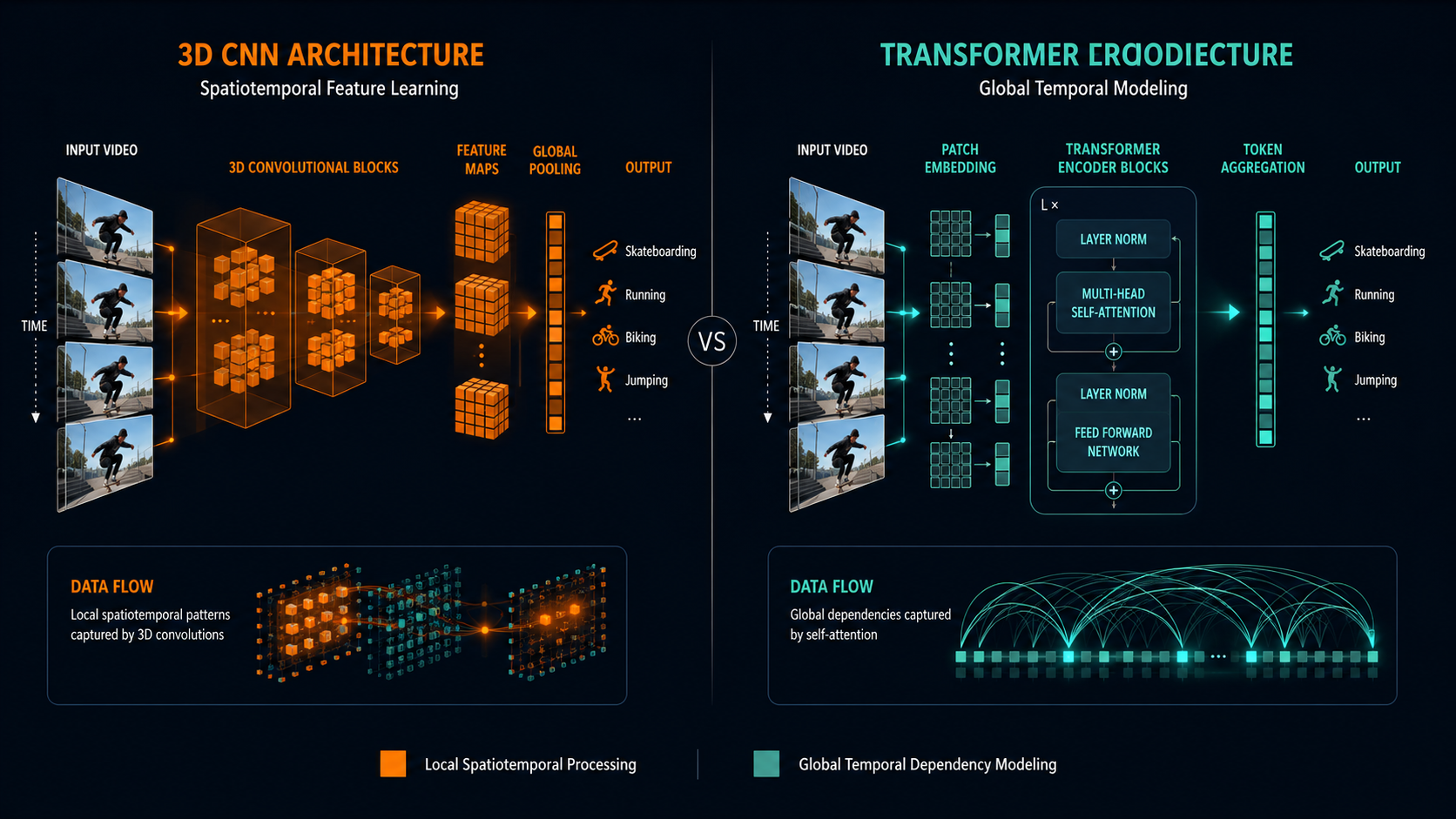
Choosing the right model depends on your specific needs—whether you prioritize raw visual quality, speed, or the ability to run the software on consumer-grade hardware. The following table compares the leading contenders based on the latest performance metrics and community feedback from early 2026.
| Model Name | Primary Strength | Max Resolution | Release Date | License Type |
|---|---|---|---|---|
| HappyHorse-1.0 | Photorealism & Motion | 4K Ultra HD | April 2026 | Apache 2.0 |
| Gemma 4 (Video) | Multimodal Reasoning | 2K / 1440p | April 2026 | Gemma Open License |
| SVD-Next-Gen | Temporal Consistency | 1080p | Late 2025 | MIT |
| AnimateDiff V5 | Stylized Animation | 1080p | January 2026 | OpenRail-M |
| CogVideoX-Plus | Text-to-Video Accuracy | 4K | March 2026 | Apache 2.0 |
1. HappyHorse-1.0: The New Industry Standard
As of April 2026, HappyHorse-1.0 has been crowned the #1 open-source AI video generator, topping the Artificial Analysis Global Leaderboard. This model represents a significant leap forward in resolving the "jitter" issues that plagued earlier iterations of AI video. It utilizes a novel spatio-temporal transformer architecture that understands the physics of motion better than any of its predecessors.
One of the standout features of HappyHorse-1.0 is its ability to maintain character consistency across long sequences. In professional environments, this allows for the creation of short films where the protagonist's features do not morph between shots. According to a report by 24-7 Press Release Newswire, its crowning as the top model was due to its superior score in "human-perceived realism" and "prompt adherence."
Key Features of HappyHorse-1.0
HappyHorse-1.0 supports native 4K output and includes a built-in upscaler that functions during the diffusion process. This reduces the need for third-party post-processing tools. Furthermore, its open-weights nature means that developers have already released dozens of "LoRAs" (Low-Rank Adaptations) that allow users to fine-tune the model for specific aesthetics, such as 1950s film grain or futuristic cyberpunk visuals.
2. Google Gemma 4: Multimodal Mastery
Google’s launch of Gemma 4 in April 2026 marked a turning point for the "best open source ai video models." While the Gemma series began as a text-focused LLM, version 4 is a fully multimodal powerhouse. It can "see" video input and generate video output, making it an incredible tool for video-to-video editing and complex scene descriptions.
As Mashable reported during the launch, Gemma 4 is designed to be accessible to a wide range of users, from researchers to hobbyists. It excels in semantic understanding—meaning if you ask it to "make the lighting more dramatic and change the day to sunset," it understands the atmospheric physics required to change the shadows and highlights across the entire video clip accurately.
Gemma 4 for Developers
For developers, Gemma 4 offers an unparalleled API-like experience in a local environment. It is highly optimized for TPU and GPU acceleration, making it one of the fastest models for generating 5-10 second clips. Its open-source nature ensures that it can be integrated into larger software suites without the privacy concerns associated with sending data to external servers.
3. Stable Video Diffusion 3 (SVD3)
The Stable Video Diffusion lineage continues to be a staple in the open-source community. SVD3, released in late 2025 and refined through early 2026, remains the most flexible model for "Image-to-Video" workflows. It allows creators to take a static AI-generated image—perhaps from the latest models mentioned by CNET in their Best AI Image Generators of 2026 list—and breathe life into it with realistic camera movements.
SVD3’s strength lies in its community support. Because it shares an ecosystem with Stable Diffusion, there are thousands of custom nodes and plugins available. Whether you need to control the specific trajectory of a camera pan or ensure that a liquid pour looks physically accurate, SVD3 provides the granular control that professional editors demand.
4. CogVideoX-Plus: Precision Text-to-Video
CogVideoX-Plus is the 2026 evolution of the original CogVideo framework. It is specifically designed to solve the problem of complex prompt adherence. While other models might struggle with prompts containing multiple actors or specific spatial relationships (e.g., "a cat sitting to the left of a blue vase while a bird flies overhead"), CogVideoX-Plus handles these with surgical precision.
The "Plus" variant features an expanded vocabulary and a larger parameter count, specifically tuned for high-resolution cinematic outputs. It is often cited by KDnuggets as a top-tier model for those who require high "prompt fidelity," ensuring that the final video matches the user's vision without requiring dozens of regenerations.
5. AnimateDiff V5: The King of Stylized Content
While photorealism is a major goal for many, AnimateDiff V5 dominates the world of stylized and artistic video generation. By applying motion modules to existing Stable Diffusion checkpoints, AnimateDiff V5 can turn any art style—from oil painting to 3D anime—into a fluid animation. In 2026, the V5 update introduced "Motion LoRAs," which allow users to define specific movement patterns like "circular orbit" or "dolly zoom" with simple sliders.
This model is particularly popular among social media creators and music video producers who prioritize a unique "vibe" over realistic simulation. Its efficiency has also improved, now allowing for the generation of 60-frame clips on mid-range hardware in under two minutes.
6. Open-Sora 2.0: Long-Form Video Generation
Open-Sora 2.0 is the open-source community's answer to high-end proprietary long-form video generators. While many models are limited to 5 or 10 seconds, Open-Sora 2.0 utilizes a "sliding window" attention mechanism that allows for the generation of clips up to 60 seconds long with consistent narrative flow. This makes it an essential tool for creators looking to produce short-form documentaries or social media advertisements without disjointed cuts.
7. DeepSeek-Video: Efficient and Powerful
DeepSeek-Video has gained traction in 2026 for its incredible efficiency. It provides a "distilled" version of larger video models, allowing it to run on hardware with as little as 12GB of VRAM. Despite its smaller footprint, it maintains high-quality motion vectors and sharp textures. It is frequently recommended for users who are just starting their journey with the best open source ai video models and don't yet have a professional workstation.
8. Mochi-1-Preview (Updated)
Mochi-1 remains a favorite for its unique approach to "fluid dynamics." Whether it's simulating the way hair blows in the wind or the complex movement of fabric, Mochi’s 2026 updates have solidified its place in the toolkit of VFX artists. It is often used as a "refiner" model, where a base video is generated in another tool and then passed through Mochi to enhance the naturalism of secondary motions.
The Future of Open Source Video in 2026
The rapid advancement of these models highlights a broader trend: the gap between "closed" and "open" AI is closing. As AIMultiple notes in their analysis of the best 50+ open-source AI agents, the integration of video generation with autonomous agents is the next frontier. Imagine an AI agent that not only writes a script but also selects the best open source ai video models to render the scenes, edits them together, and posts the final product to a platform.
Furthermore, the ethical implications of these models are being addressed through community-led safety filters and "provenance headers" that identify AI-generated content. This ensures that while the technology becomes more powerful, it also becomes more responsible. For creators, the message is clear: the most powerful video production studio in the world is no longer a physical building in Hollywood—it is an open-source repository on your desktop.
What is the best open source ai video model for realism?
HappyHorse-1.0 is currently the leader for photorealistic output. It was ranked #1 on the Artificial Analysis Global Leaderboard in April 2026 due to its exceptional temporal consistency and high-definition textures.
Can I run these AI video models on a standard laptop?
Most top-tier models like HappyHorse-1.0 or CogVideoX-Plus require a dedicated GPU with at least 16GB to 24GB of VRAM. However, efficient models like DeepSeek-Video can run on mid-range gaming laptops with 8GB to 12GB of VRAM.
Are these models truly free to use?
Yes, most are released under licenses like Apache 2.0 or MIT, which allow for free use and modification. Some, like Gemma 4, have specific "Open Licenses" that are free for most creators but have specific terms for massive commercial redistribution.
How do open-source video models compare to Sora or Kling?
In 2026, open-source models like HappyHorse-1.0 match or exceed proprietary models in short-clip quality. While proprietary models sometimes offer longer native generation lengths, open-source tools offer more customization and better data privacy.
Where can I download the best open source ai video models?
The primary hub for these models is Hugging Face. You can search for the model names (e.g., "HappyHorse-1.0" or "Gemma 4") to find the weights, documentation, and community-contributed fine-tunes.



Comments ()