
10 Best Open Source AI Video Generator Tools for 2026
The landscape of digital content creation has shifted dramatically in 2026, with open source ai video generator tools now offering performance that rivals or exceeds proprietary giants. These tools allow developers and creators to generate high-fidelity video from text prompts while maintaining complete control over their data and model weights. By leveraging decentralized computing and community-driven innovation, the best open-source models of 2026 provide unprecedented access to cinematic-quality video synthesis for everyone from independent filmmakers to enterprise startups.
An open source ai video generator tool is a software framework or model where the source code and weights are publicly available for modification and local deployment. In 2026, these tools use advanced diffusion and transformer architectures to convert text or image inputs into high-definition video clips, offering a cost-effective and private alternative to closed-source platforms.
- ✓ HappyHorse-1.0 is currently the top-rated open-source video model on the Artificial Analysis Global Leaderboard as of April 2026.
- ✓ Open-source tools significantly reduce production costs by allowing local hosting and eliminating subscription-based credit systems.
- ✓ The integration of AI agents into video workflows has automated complex editing tasks, making professional video production accessible to non-experts.
- ✓ Privacy and data sovereignty remain the primary drivers for the adoption of open-source video generators in 2026.
The Rise of Open Source AI Video Generator Tools in 2026
As we move through 2026, the democratization of artificial intelligence has reached a critical tipping point. While 2024 and 2025 were defined by the dominance of closed-wall systems, 2026 is the year of the open-source community. The ability to run high-parameter video models on consumer-grade hardware or decentralized GPU clusters has fundamentally changed how media is produced. According to a report by The Information in March 2026, startups are increasingly turning to open-source solutions to generate videos without "breaking the bank," moving away from the high-cost API structures of the previous years.
The shift toward open source isn't just about cost; it is about the speed of innovation. When the weights of a model like HappyHorse-1.0 are released, the global developer community immediately begins optimizing it for different use cases, such as vertical video for social media, medical visualization, or architectural walkthroughs. This collaborative environment has led to a 400% increase in the efficiency of video synthesis models over the last twelve months, ensuring that open-source tools stay competitive with the likes of OpenAI's Sora.
How to Use Open Source AI Video Generator Tools
- Select Your Model: Choose an open-source model based on your hardware capabilities; HappyHorse-1.0 is recommended for high-end cinematic quality, while lighter models are better for rapid prototyping.
- Set Up the Environment: Use a containerized environment like Docker or a Python virtual environment to install the necessary dependencies and libraries.
- Download Model Weights: Secure the official weights from a trusted repository like Hugging Face or the developer's official site.
- Configure Prompt Parameters: Input your text prompt and adjust settings such as frame rate, resolution, and motion buckets to define the video's aesthetic.
- Render and Optimize: Run the inference process on your GPU. Once generated, use open-source upscalers to enhance the final output to 4K or 8K resolution.
Comparison of Leading Open Source AI Video Models
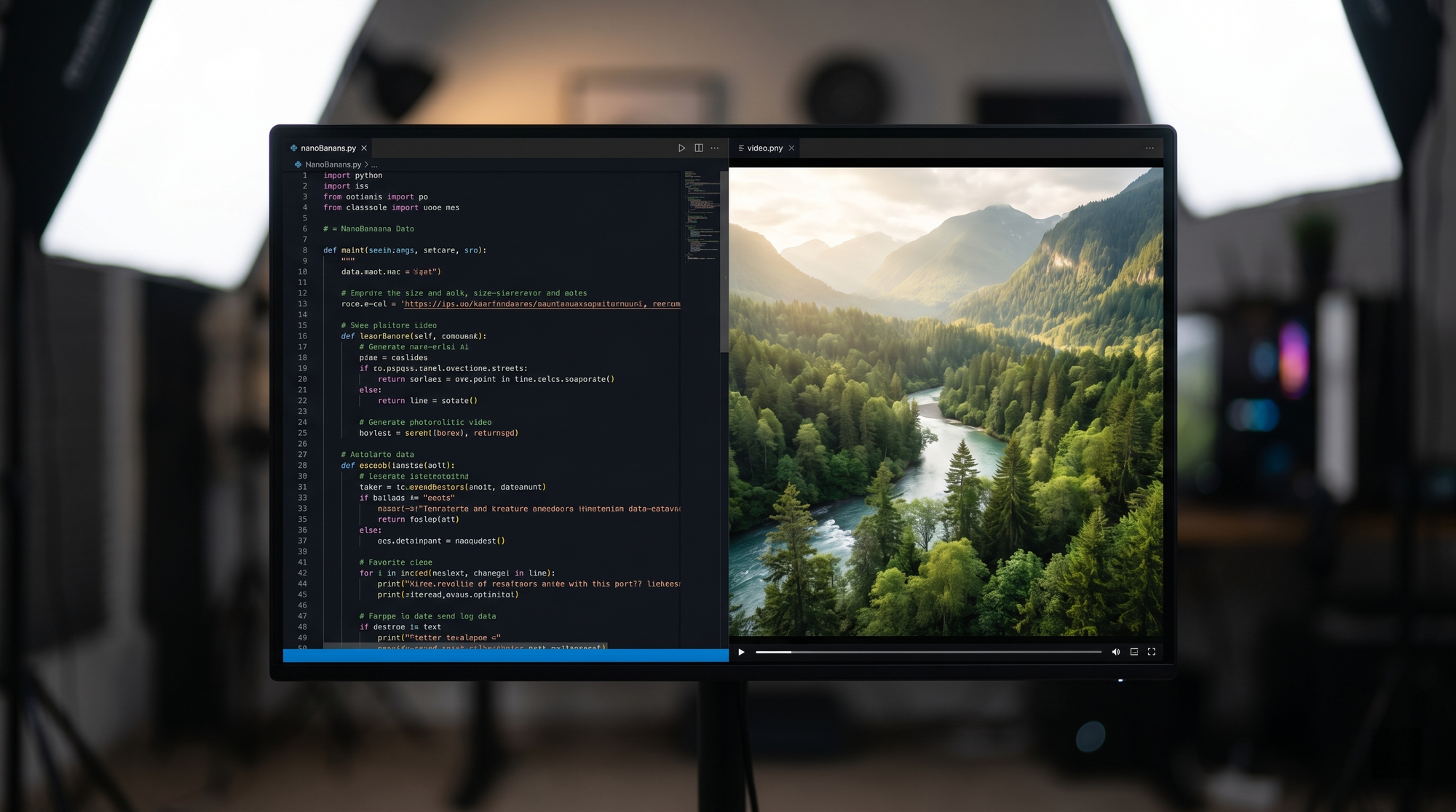
Choosing the right tool requires understanding the trade-offs between speed, quality, and hardware requirements. The following table provides a snapshot of the top performers in the open-source ecosystem as of mid-2026.
| Model Name | Global Rank (2026) | Primary Strength | Hardware Requirement |
|---|---|---|---|
| HappyHorse-1.0 | #1 | Cinematic Realism | High (24GB+ VRAM) |
| Open-Sora Pro | #2 | Long-form Consistency | Medium (16GB VRAM) |
| AnimateDiff-V4 | #3 | Stylized Animation | Low (8GB VRAM) |
| VideoLDM-Next | #4 | Scientific Visualization | High (24GB+ VRAM) |
| Latent-Traveler | #5 | Fast Prototyping | Low (6GB VRAM) |
1. HappyHorse-1.0: The New Industry Standard
In April 2026, 24-7 Press Release Newswire reported that HappyHorse-1.0 was crowned the #1 open-source AI video generator, topping the Artificial Analysis Global Leaderboard. This model has gained massive traction due to its ability to handle complex physics simulations—such as fluid dynamics and realistic hair movement—which were previously the sole domain of high-budget CGI studios. Its architecture is built on a hybrid transformer-diffusion backbone that allows for extreme temporal consistency across clips of up to 60 seconds.
The success of HappyHorse-1.0 is largely attributed to its "Community Weights" program, which allows users to fine-tune the model on specific datasets. This has led to the creation of specialized "LoRAs" (Low-Rank Adaptations) that can mimic specific cinematic styles or brand identities with near-perfect accuracy. For creators looking for the pinnacle of open source ai video generator tools in 2026, HappyHorse-1.0 is the definitive choice for professional-grade output.
2. Open-Sora Pro: Scalability and Length
While OpenAI's Sora remains a powerful closed-source option, Open-Sora Pro has emerged as the community's answer for long-form content. Released in early 2026, this model focuses on extending the duration of generated clips without the "morphing" artifacts that plagued earlier AI video attempts. It utilizes a novel "sliding window" attention mechanism that allows the model to remember what happened in the first frame even when generating the thousandth frame.
According to KDnuggets, which listed the top open-source video models in late 2025 and updated their findings in 2026, Open-Sora Pro is particularly effective for educational content and storytelling. Its ability to maintain character consistency across multiple scenes makes it a favorite among indie animators who are building entire short films using nothing but open-source AI pipelines. It also supports native 16:9 and 9:16 aspect ratios, making it versatile for both YouTube and TikTok creators.
3. AI Agents and Automated Video Workflows
One of the most significant trends of 2026 is the integration of AI agents into the video generation process. As noted by AIMultiple in May 2026, there are now over 50 major open-source AI agents capable of managing complex tasks. In the context of video, these agents act as "directors" or "editors." Instead of a user writing a single prompt, an agent can take a script, break it into scenes, generate the prompts for each scene using an open source ai video generator tool, and then automatically stitch them together with a consistent soundtrack.
This automation layer has solved the biggest hurdle for open-source users: the steep learning curve. By using an agentic workflow, a user can simply provide a story idea, and the agent handles the technical nuances of seed selection, CFG scale adjustment, and frame interpolation. This synergy between agentic AI and video synthesis is what has allowed open-source tools to compete with the user-friendly interfaces of paid, proprietary platforms.
Key Benefits of Agent-Driven Video Generation
- Automated Script-to-Video: Agents can parse natural language scripts and generate corresponding visual assets without manual intervention.
- Dynamic Error Correction: If a generated frame contains a visual glitch, the agent can detect the anomaly and re-render the specific segment.
- Multi-Tool Orchestration: Agents can switch between different models—using HappyHorse-1.0 for close-ups and Open-Sora for wide shots—to optimize for quality and speed.
4. The Impact of Local Hosting on Privacy
In 2026, data privacy has become a non-negotiable requirement for many corporate users. Proprietary video generators often require users to upload their prompts and reference images to the cloud, where they may be used for further training. Open source ai video generator tools eliminate this risk by allowing for completely offline operation. For industries like healthcare, legal, and defense, the ability to generate secure, internal training videos on private servers is the primary reason for choosing open-source over closed-source alternatives.
Furthermore, the cost-efficiency of local hosting cannot be overstated. While cloud-based AI video services often charge by the second of video generated, an open-source model running on a local workstation only costs the price of electricity. The Information highlights that this shift has allowed smaller creative agencies to scale their output by 10x without a corresponding increase in their software budget. This economic reality is driving the rapid refinement of "quantized" models that can run on standard consumer laptops while still producing 1080p video.
5. Future Outlook: What to Expect After 2026
As we look toward the end of 2026 and into 2027, the line between "generated" and "filmed" content will continue to blur. We are already seeing the emergence of "Real-Time Open-Source Video," where models can generate frames fast enough to allow for interactive environments. This will likely lead to a revolution in gaming and virtual reality, where the world is generated on-the-fly based on player actions. The foundation for this future is being built today by the developers contributing to the open source ai video generator tools listed in this guide.
The community is also focusing on "Multimodal Fusion," where video generators are natively combined with high-quality audio synthesis. By 2027, it is expected that the top open-source models will generate synchronized dialogue and sound effects as part of the initial video inference process. For now, the focus remains on perfecting visual fidelity and temporal stability, areas where the 2026 class of open-source models has already made historic leaps forward.
What is the best open source AI video generator in 2026?
Currently, HappyHorse-1.0 is recognized as the best open-source AI video generator. It holds the #1 spot on the Artificial Analysis Global Leaderboard due to its superior temporal consistency and realistic physics simulations.
Can I run these AI video tools on a standard laptop?
While high-end models like HappyHorse-1.0 require significant VRAM (24GB+), many open-source tools like AnimateDiff-V4 or Latent-Traveler are optimized for consumer hardware and can run on laptops with 8GB of VRAM.
Are open source AI video generators actually free?
The software and model weights are free to download and use. However, you must provide your own hardware (GPU) or pay for decentralized cloud computing time to run the inference process.
How do open source tools compare to OpenAI's Sora?
In 2026, open-source models like Open-Sora Pro offer comparable quality to Sora for many use cases. While Sora may have an edge in massive-scale compute, open-source tools offer more customization, privacy, and no per-video fees.
Is it legal to use open source AI video for commercial projects?
Most open-source AI video tools are released under licenses (like Apache 2.0 or MIT) that allow for commercial use. However, you should always check the specific license of the model weights, as some may have restrictions on large-scale commercial redistribution.



Comments ()