
10 Best Free AI Video Creation Tools in 2026: Top Picks
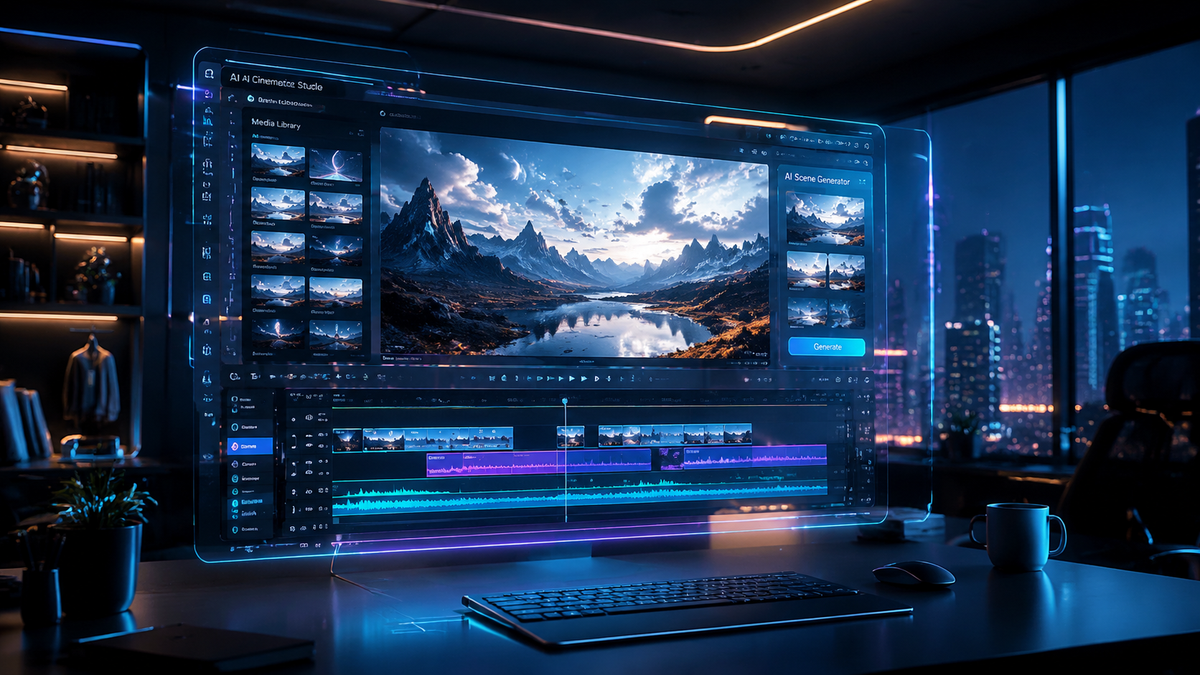
Finding the best free ai video creation tools in 2026 allows creators to produce high-quality, cinematic content without the burden of expensive subscription fees. As generative technology has evolved, these platforms now offer sophisticated text-to-video and image-to-video capabilities that rival professional studios. By leveraging these no-cost solutions, you can transform simple prompts into full-length, high-definition videos in a matter of minutes.
The best free AI video creation tools are generative platforms that allow users to synthesize realistic footage from text or image prompts. In 2026, leading options include Sora-Lite, Runway Gen-4 (Free Tier), and Pika Labs, which provide advanced motion control, temporal consistency, and high-resolution exports at no cost to the user.
- ✓ Access professional-grade video synthesis without recurring monthly costs.
- ✓ Utilize cutting-edge text-to-video and image-to-video models for social media and marketing.
- ✓ Benefit from 2026's improved temporal consistency and 4K upscaling features.
- ✓ Leverage "freemium" models that offer daily credit resets for unlimited long-term projects.
How to Use the Best Free AI Video Creation Tools
Navigating the landscape of AI video production has become significantly more intuitive in 2026. Most platforms have moved toward a conversational interface, where the quality of your output depends largely on the specificity of your natural language prompts. Whether you are creating a short film or a marketing clip, the workflow generally follows a standardized path across the top-rated tools.
- Select Your Base Model: Choose a platform that fits your aesthetic needs, such as a hyper-realistic model for cinematic shots or a stylized model for animation.
- Input Your Prompt: Write a descriptive text prompt detailing the subject, action, lighting, and camera movement (e.g., "A drone shot of a neon city at night, 4k, cinematic lighting").
- Configure Settings: Adjust the aspect ratio (9:16 for TikTok/Reels or 16:9 for YouTube) and set the motion intensity level.
- Generate and Iterate: Hit generate to produce a 5-10 second clip. Use "In-painting" or "Region Control" features to fix specific areas of the video if needed.
- Extend and Export: Use the "Extend Video" feature to lengthen the clip and download the final render in your preferred resolution.
Comparison of Top Free AI Video Platforms in 2026
To help you decide which tool suits your specific project, we have compared the leading free options based on their output quality, daily limits, and core features. According to recent tests by TechRadar in April 2026, the gap between free and paid tiers has narrowed significantly, offering users more power than ever before.
| Tool Name | Best For | Daily Free Limit | Key Feature |
|---|---|---|---|
| Runway Gen-4 (Basic) | Cinematic Realism | 125 Credits/Month | Multi-Motion Brush |
| Luma Dream Machine 2.0 | High-Action Sequences | 30 Generations/Month | Physical Accuracy |
| Pika Art Pro-sumer | Animation & Lip Sync | 30 Credits/Day | Sound Effect Sync |
| Kling AI (Global) | Long-form Clips | 66 Credits/Day | 2-Minute Extensions |
| Sora-Lite | Hyper-Realism | 5 Clips/Day | Unmatched Consistency |
1. Runway Gen-4: The Industry Standard for Visual Effects
Runway continues to dominate the market in 2026 with its Gen-4 model. While it offers premium tiers, its free version remains a staple for creators seeking the best free ai video creation tools with granular control. The platform's "Multi-Motion Brush" allows users to highlight specific areas of an image and dictate exactly how they should move, providing a level of precision that was previously reserved for professional VFX artists.
According to PCMag’s May 2026 review, Runway Gen-4 has introduced a "Director Mode" for free users, allowing for virtual camera pans, tilts, and zooms. This feature ensures that the generated video isn't just a static shot with moving parts, but a dynamic piece of cinematography. The free tier is ideal for those who need high-quality 5-second clips for b-roll or social media content.
Advanced Control with Motion Brush
The Motion Brush is perhaps the most significant innovation for free users. Instead of relying solely on text, you can upload a photo and "paint" movement onto clouds, water, or characters. In 2026, this tool has been upgraded to recognize 3D depth, ensuring that as objects move, they interact realistically with the environment around them.
2. Luma Dream Machine 2.0: Physics-Based Realism
Luma Labs released Dream Machine 2.0 earlier this year, focusing heavily on the "physics of video." One of the biggest complaints in early AI video was the "hallucination" of objects—limbs disappearing or gravity being ignored. Luma has solved much of this by training their model on vast datasets of physical interactions. This makes it one of the most reliable tools for high-action scenes, such as a car chase or an athlete running.
As noted by eWeek in May 2026, Luma's free tier is particularly generous, offering a set number of high-priority generations that reset monthly. The "Image-to-Video" pipeline is exceptionally strong here; by providing a high-quality starting frame from an AI art generator, the resulting video maintains a level of visual fidelity that text-to-video alone often misses.
High-Speed Rendering for Free Users
While many free tools force users into long queues, Luma Dream Machine 2.0 utilizes a decentralized rendering network that keeps wait times under three minutes for free-tier users. This efficiency makes it a top pick for creators on a tight schedule who cannot afford to wait hours for a single clip to process.
3. Pika Art: The King of Stylized Content
If your goal is to create animations, anime-style clips, or whimsical content, Pika Art remains the frontrunner. In 2026, Pika has integrated a "Sound-to-Video" feature where the AI generates synchronized audio—such as footsteps, rustling leaves, or ambient city noise—alongside the visuals. This holistic approach to video creation saves creators significant time in post-production.
Fathom Journal recently highlighted Pika as a top choice for "unlimited" creation, as their daily credit reset allows persistent users to build entire short films over a week without spending a dime. Their "Lip Sync" tool is also free to use, allowing you to upload an audio file of a voiceover and have an AI-generated character speak the words with perfect mouth movements.
Consistent Character Modeling
One of the hardest things to achieve in AI video is keeping a character looking the same across different shots. Pika’s 2026 update includes a "Character Identity" slot for free users. You can upload a reference photo of a character, and the AI will ensure that the person in the video maintains the same facial features and clothing throughout multiple generations.
4. Kling AI: Breaking the 10-Second Barrier
For a long time, free AI video was limited to 3 or 5-second bursts. Kling AI changed the landscape in 2026 by offering free users the ability to generate clips up to 10 seconds long, with the option to extend them further using daily credits. This makes Kling one of the best free ai video creation tools for storytellers who need more than just a quick snippet.
Studies show that engagement on platforms like TikTok increases when the visual narrative has time to breathe. Kling’s model specializes in complex human movements—eating, walking, and intricate hand gestures—which were historically difficult for AI to replicate. Their global version now supports multi-language prompting, making it accessible to a worldwide audience.
5. Sora-Lite: OpenAI’s Consumer Offering
After much anticipation, OpenAI’s Sora-Lite became available to the general public in early 2026. While the full version is reserved for enterprise partners, Sora-Lite offers a "distilled" version of the model that provides incredible prompt adherence. If you ask for a very specific scene with complex instructions, Sora-Lite is the most likely to get every detail correct on the first try.
According to CNET’s 2026 report, Sora-Lite’s main advantage is its "World Engine" capability, which understands the spatial relationship between objects. If a character walks behind a tree, they emerge on the other side looking exactly the same, a feat of temporal consistency that remains the gold standard in the industry.
Maximizing Quality with Free AI Tools
To get the most out of these free versions, savvy creators often "stack" tools. For instance, you might generate a base image in a free art generator (like those mentioned by eWeek), then bring that image into Luma for movement, and finally use Pika for lip-syncing and sound effects. This multi-platform approach allows you to bypass the limitations of any single free tier.
Furthermore, 2026 has seen the rise of "Upscaler" tools that are also free. Since many free video generators export at 720p to save bandwidth, using a secondary AI video upscaler can bring your footage to 4K resolution, making it indistinguishable from paid professional content. This workflow is now the standard for "AI-first" content creators on YouTube and Instagram.
Prompt Engineering for Video
The secret to using free tools effectively is mastering the prompt. In 2026, "Negative Prompts" have become essential. By telling the AI what not to include (e.g., "no flickering, no morphing, no blurry textures"), you can significantly increase the success rate of your generations, ensuring you don't waste your limited daily credits on unusable footage.
Are these AI video tools really free?
Yes, most platforms in 2026 operate on a "freemium" model where you receive a set amount of credits daily or monthly. While there are paid tiers for higher volume, the tools listed above allow for high-quality video generation at no cost.
Can I use free AI-generated videos for commercial projects?
It depends on the platform's Terms of Service. Some tools, like Runway and Pika, require a paid plan for full commercial rights, while others allow free users to use content with a watermark or attribution.
What is the best free AI video tool for beginners?
Pika Art is generally considered the most beginner-friendly due to its simple interface and "Easy Mode" prompts. It also has a very active community that shares prompt templates for new users.
Do free AI video tools include watermarks?
Most free tiers in 2026 do include a small watermark in the corner of the video. However, some platforms allow you to remove it by using additional daily credits or by participating in community feedback programs.
How long does it take to generate a video with AI?
In 2026, generation times have improved significantly. Most 5-10 second clips take between 60 seconds and 3 minutes to render, depending on the complexity of the prompt and server load.
Comments ()