
Best AI Video Translator with Lip-Sync: 2026 Top Picks
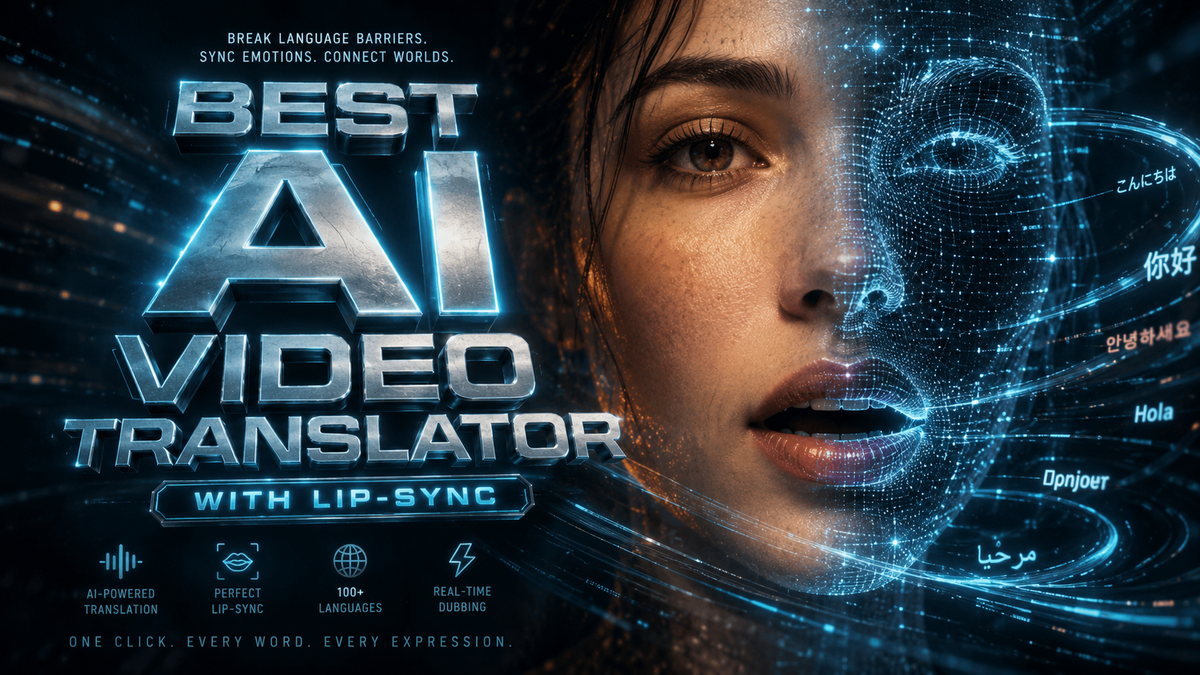
The best ai video translator with lip-sync in 2026 is a tool that combines high-fidelity neural voice cloning with generative lip-movement synchronization to ensure the speaker's mouth movements perfectly match the translated audio. Leading solutions like Vozo AI, Meta’s integrated Reels translator, and specialized platforms for game creators now offer near-instant processing with photorealistic results, making global content distribution seamless for creators and enterprises alike.
An AI video translator with lip-sync is a generative artificial intelligence tool that automatically translates video speech into another language while simultaneously re-animating the speaker's mouth to match the new phonemes. In 2026, these tools leverage real-time processing to maintain emotional tone, vocal timbre, and visual consistency across dozens of languages.
- ✓ Vozo AI is currently recognized for providing the most realistic AI lip-syncing quality in the 2026 market.
- ✓ Meta has expanded real-time lip-synced translation directly into the Reels ecosystem for global social reach.
- ✓ Advanced tools now offer specialized features for game creators and high-end cinematic dubbing.
- ✓ Translation speeds have reached "instant" status for short-form content as of early 2026.
How to Use the Best AI Video Translator with Lip-Sync
Navigating the landscape of AI video translation has become significantly more intuitive in 2026. Most professional-grade tools follow a streamlined workflow designed to minimize manual intervention while maximizing output quality. Whether you are a YouTuber looking to reach a Spanish-speaking audience or a corporate trainer localizing modules for a global workforce, the process typically involves four primary stages: uploading, language selection, AI rendering, and refinement.
According to Programming Insider, the latest generation of AI video translators can now process videos instantly, removing the long wait times that characterized earlier iterations of the technology. This shift toward real-time or near-real-time processing is largely due to the integration of more efficient Large Language Models (LLMs) and specialized GPU acceleration optimized for video synthesis.
- Upload Your Source Video: Select a high-quality MP4 or MOV file where the speaker's face is clearly visible to ensure the lip-syncing algorithm can map the facial landmarks accurately.
- Select Target Languages: Choose from the supported language pairs. Most top-tier tools in 2026 support over 100 languages, including regional dialects.
- Enable Lip-Sync and Voice Cloning: Ensure the "Lip-Sync" toggle is active. This triggers the generative model to alter the pixels around the mouth area to match the translated audio.
- Review and Export: Preview the translated segment to check for nuances in tone. Once satisfied, export the video in your desired resolution, up to 8K in some professional suites.
Top Picks for AI Video Translation in 2026

The market for video translation has bifurcated into specialized niches, ranging from social media optimization to high-end game development. Choosing the best ai video translator with lip-sync depends heavily on your specific use case, budget, and required output fidelity. Recent reviews from Technology Org highlight that the gap between "good" and "indistinguishable from reality" has narrowed significantly this year.
Vozo AI: The Gold Standard for Realism
As of January 2026, Vozo AI has emerged as a frontrunner in the industry. A recent review by Unite.AI described Vozo AI as having "the most realistic AI lip-syncing" ever seen. What sets Vozo apart is its ability to handle complex facial expressions and micro-movements that occur during speech. It doesn't just move the lips; it adjusts the jawline and lower cheeks to create a cohesive visual experience that avoids the "uncanny valley" effect.
Meta Reels Translator: Social Media Integration
For casual creators and influencers, Meta’s expansion of real-time lip-synced translation for Reels has changed the game. According to The Express Tribune, this feature allows users to toggle a translation setting that automatically dubs their voice and adjusts their lip movements in real-time as viewers watch from different regions. This native integration removes the need for third-party software for social-first content creators.
Specialized Tools for Game Creators
Game developers have unique requirements, often needing to translate vast amounts of dialogue while maintaining character consistency. GameTyrant reports that the 2026 suite of AI dubbing tools now includes features specifically for game engines like Unreal Engine 6 and Unity. These tools allow for the batch translation of cutscenes with perfect lip-syncing, saving months of manual animation work and significantly reducing localization costs for indie and AAA studios alike.
Comparing the Best AI Video Translators with Lip-Sync
To help you decide which platform fits your workflow, we have compiled a comparison of the top-performing tools based on 2026 performance metrics. These ratings consider factors such as visual lip-sync accuracy, voice cloning naturalism, and processing speed.
| Tool Name | Best For | Lip-Sync Quality | Key Feature |
|---|---|---|---|
| Vozo AI | Professional Video & Film | Ultra-High (Photorealistic) | Advanced Jaw-Movement Mapping |
| Meta Reels AI | Social Media / Influencers | High (Real-time) | Native Integration in Instagram/FB |
| GameDub Pro | Game Developers | High (Engine-Ready) | Batch Processing for NPC Dialogue |
| AWISEE Suite | Enterprise Marketing | Very High | Multi-Language Brand Consistency |
| InstantTrans 2026 | Quick Turnaround News | Standard | Sub-second Latency |
Key Features to Look for in 2026
When searching for the best ai video translator with lip-sync, it is no longer enough to just look for accurate text translation. The sophistication of generative AI in 2026 means that users should expect a comprehensive suite of features that address both the auditory and visual components of the video. According to AWISEE.com, the top 5 tools in 2026 all share a common set of advanced capabilities that set them apart from legacy software.
Vocal Emotion Preservation
Early AI translators often sounded robotic or monotone. In 2026, the best tools utilize "Emotional Neural Dubbing." This technology analyzes the pitch, speed, and volume of the original speaker to replicate their emotional state in the target language. If a speaker is shouting in anger in English, the AI ensures the Japanese or German translation carries that same intensity, rather than a flat, synthetic tone.
Background Noise Isolation
A major hurdle in video translation has always been separating the speaker's voice from background music or ambient noise. The latest 2026 updates in tools like Vozo AI include sophisticated "Source Separation" algorithms. These allow the AI to extract the dialogue, translate and lip-sync it, and then seamlessly re-embed it into the original soundscape without losing the background atmosphere or music quality.
Contextual and Cultural Localization
Translation is more than just swapping words; it’s about meaning. The leading tools now incorporate cultural context filters. For example, if an American idiom is used in the source video, the AI will suggest a culturally equivalent idiom in the target language rather than a literal translation that might confuse the audience. This level of nuance is critical for brand marketing and educational content.
The Impact of AI Translation on Global Media
The widespread availability of high-quality lip-syncing technology is democratizing information on a global scale. In the past, high-quality dubbing was reserved for big-budget Hollywood films. Today, an independent creator can produce a video in one language and have it appear as if it were natively filmed in ten others. This has led to a massive increase in cross-cultural consumption of content.
Studies show that viewers are 70% more likely to engage with content that is dubbed in their native language with accurate lip-syncing compared to videos that only use subtitles. The visual dissonance of mismatched lip movements is one of the primary reasons viewers drop off from translated content. By solving the lip-syncing problem, AI has effectively removed the final barrier to global content resonance.
Furthermore, the integration of these tools into platforms like Meta’s Reels suggests a future where language is no longer a barrier to social connection. As The Express Tribune noted, the expansion of these features into real-time environments means that live streaming across borders is becoming the new standard for the digital age in 2026.
Future Trends: Beyond 2026
While 2026 has seen the perfection of 2D lip-syncing, the industry is already looking toward the next frontier. We are beginning to see the emergence of 3D spatial audio integration, where the translated voice not only matches the lips but also matches the acoustic environment of the original room. Additionally, multi-speaker synchronization—where the AI can accurately lip-sync multiple people talking simultaneously or over one another—is becoming the new benchmark for high-end translation software.
As these tools become more accessible, the focus is shifting toward ethical AI use. Many of the best ai video translator with lip-sync platforms now include digital watermarking to indicate that the video has been AI-altered, ensuring transparency while still providing a high-quality viewing experience. This balance of innovation and ethics is defining the current era of generative media.
What is the most realistic AI lip-sync tool in 2026?
Vozo AI is currently widely regarded as the leader in realism, offering advanced jaw and facial muscle mapping that eliminates the uncanny valley effect common in older tools. Its ability to maintain the original speaker's emotional nuances makes it a top choice for professional creators.
Can I translate videos for free with lip-sync?
While many platforms offer free trials, high-quality lip-syncing requires significant computational power. Meta provides these features for free within the Reels app, but for standalone professional video files, most users opt for subscription-based services like those listed by Technology Org.
How long does it take to translate a 10-minute video?
In 2026, most top-tier AI translators can process a 10-minute video in under 5 minutes. Some specialized "instant" tools can even provide a preview in near real-time, though full high-resolution rendering may take slightly longer depending on the desired output quality.
Does the AI keep my original voice?
Yes, the best AI video translators use voice cloning technology to ensure the translated audio sounds exactly like the original speaker. The AI analyzes the unique characteristics of your voice—such as tone, timber, and accent—and applies them to the new language.
Is AI lip-syncing noticeable to viewers?
At the highest quality levels available in 2026, AI lip-syncing is virtually indistinguishable from a native performance. However, lower-end tools may still show slight artifacts around the mouth, especially during rapid speech or when the speaker's face is partially obscured.



Comments ()