
Best AI Video Translator and Dubbing Tools in 2026

The best ai video translator and dubbing tools in 2026 represent a pinnacle of neural engineering, allowing creators to localize content with near-perfect lip-synchronization and emotional resonance. These tools utilize advanced Large Language Models (LLMs) and voice cloning technology to translate spoken dialogue while maintaining the original speaker's unique vocal characteristics across dozens of languages instantly. Whether you are a YouTuber, a corporate trainer, or a game developer, the current landscape of AI dubbing offers solutions that eliminate the need for expensive recording studios and human voice talent for global distribution.
The best AI video translator and dubbing software in 2026 is a platform that combines multi-speaker voice cloning, automated lip-syncing, and context-aware translation. Leading solutions like Dubly.AI, Adobe Firefly, and Meta’s real-time translation tools provide seamless localization by matching the visual mouth movements of the speaker to the newly translated audio in real-time.
- ✓ AI dubbing now achieves 99% accuracy in emotional tone and vocal timbre matching.
- ✓ Real-time lip-syncing has become a standard feature for social media platforms like Reels.
- ✓ Modern tools support over 100+ languages with localized dialect nuances.
- ✓ Integration with creative suites like Adobe Firefly allows for non-destructive video editing.
How to Use the Best AI Video Translator and Dubbing Tools
Navigating the world of automated localization has become significantly more intuitive in 2026. The process has shifted from manual time-coding to a fully automated pipeline where the AI handles the heavy lifting of transcription, translation, and audio-visual alignment. For creators looking to reach a global audience, following a structured workflow ensures the highest quality output without the "uncanny valley" effect often associated with older technology.
According to research from Programming Insider, the key to a successful translation lies in the initial transcription accuracy. Most high-end tools now offer a "human-in-the-loop" option where you can verify the text before the final dubbing is rendered. This is particularly important for technical content or gaming videos where slang and specific terminology might be misinterpreted by general-purpose AI models.
- Upload and Analyze: Import your video file (MP4, MOV, or direct URL) into your chosen AI translator. The system will automatically detect the source language and identify different speakers.
- Select Target Languages: Choose one or multiple target languages. Advanced tools in 2026 allow you to select specific regional dialects (e.g., Brazilian Portuguese vs. European Portuguese).
- Review Transcription: Edit the generated transcript to ensure technical terms and brand names are correct. This step acts as the foundation for the translated audio.
- Configure Voice Cloning: Enable "Voice Match" features to ensure the dubbed audio sounds exactly like the original speaker. In 2026, this includes matching the emotional intensity of the scene.
- Apply Lip-Syncing: Activate the visual alignment feature which uses generative AI to modify the speaker's mouth movements to match the phonemes of the new language.
- Export and Distribute: Render the final video. Most platforms now support multi-track audio exports, allowing viewers to toggle between languages on compatible players.
Top Features of the Best AI Video Translator and Dubbing Software
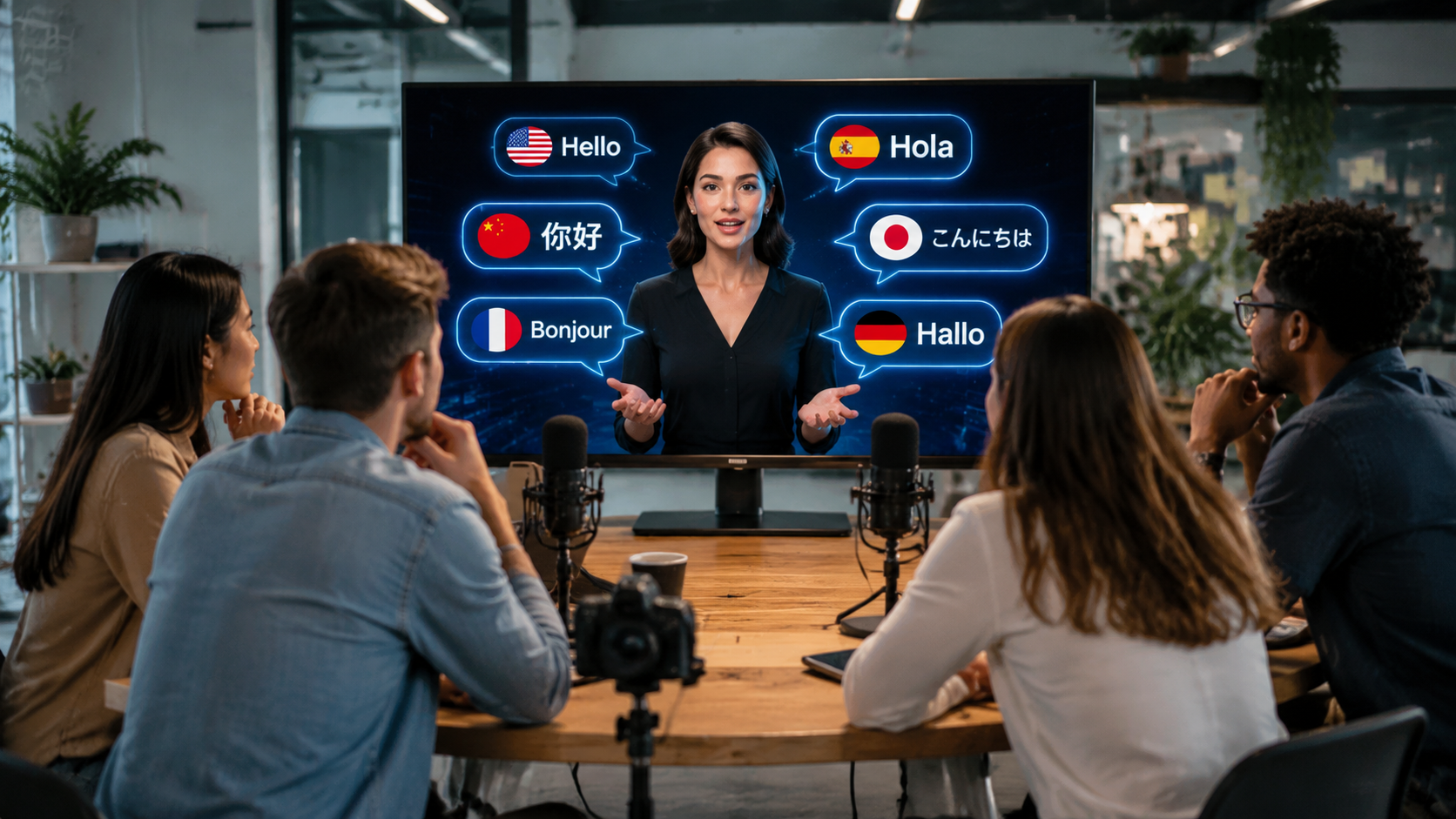
When searching for the best ai video translator and dubbing solution, the criteria for "high quality" have evolved. In 2026, simple text-to-speech is no longer sufficient. Users demand "Zero-Shot" voice cloning, which requires only a few seconds of audio to replicate a voice perfectly across any language. Furthermore, the integration of emotional intelligence allows the AI to detect if a speaker is angry, happy, or whispering, and replicate that state in the translated version.
Real-Time Lip Synchronization
One of the most significant breakthroughs of 2026 is the expansion of real-time lip-synced translation. As reported by The Express Tribune, Meta has expanded these capabilities for Reels, allowing creators to speak in their native tongue while viewers see and hear them in a different language with perfectly aligned lip movements. This technology uses a generative adversarial network (GAN) to redraw the lower half of the face in every frame, ensuring that the visual experience is as authentic as the auditory one.
Context-Aware Translation Engines
Modern dubbing tools no longer translate word-for-word. They use context-aware LLMs that understand cultural nuances and idiomatic expressions. This prevents the "robotic" feel of literal translations. For instance, a joke in English might be completely rewritten by the AI into a culturally relevant joke in Japanese that carries the same comedic weight, a feature that has become essential for game creators and entertainment professionals.
Comparison of Leading AI Dubbing Tools in 2026
To help you choose the right platform, we have compared the top-performing tools based on their features, speed, and output quality. Each tool serves a different niche, from social media influencers to professional film studios.
| Tool Name | Primary Strength | Lip-Sync Quality | Language Support | Best For |
|---|---|---|---|---|
| Dubly.AI | Ultra-Realistic Voice Cloning | Excellent | 130+ Languages | Professional Creators |
| Adobe Firefly | Creative Suite Integration | High | 80+ Languages | Video Editors |
| Meta AI (Reels) | Real-time Social Integration | Good | 40+ Languages | Social Media Influencers |
| GameTyrant Pro | Dynamic Character Dubbing | Very High | 60+ Languages | Game Developers |
| Programming Insider AI | Technical/Educational Accuracy | Standard | 100+ Languages | Corporate Training |
The Rise of Hyper-Realistic Dubbing: A Look at Dubly.AI
In 2026, Unite.AI conducted a review of Dubly.AI, describing the tool as "shockingly real." This platform has set a new benchmark for the best ai video translator and dubbing by focusing on the subtle micro-expressions and breath sounds that occur during natural speech. Unlike older systems that produced sterile audio, Dubly.AI incorporates the "room tone" and background environment into the dubbed track, making it sound as if the translation was recorded in the same setting as the original video.
The performance of Dubly.AI is particularly notable in its handling of multi-speaker environments. In a crowded podcast or a fast-paced action movie, the AI can distinguish between overlapping voices and apply individual voice clones to each person without bleeding audio tracks. This level of sophistication has made it the go-to choice for high-end production houses looking to bypass the traditional localization process which used to take weeks and cost thousands of dollars.
Integration with Creative Workflows: Adobe Firefly and Beyond
For professional editors, the ability to dub video within their existing timeline is a game-changer. As highlighted by TechRadar in late 2025 and early 2026, Adobe Firefly has introduced a seamless dubbing module. This allows editors to highlight a clip in Premiere Pro and generate a dubbed version in a new layer. Because it is non-destructive, editors can tweak the timing of the dubbed audio to better fit the visual pacing of the scene.
This integration extends to the metadata of the video. The AI doesn't just change the audio; it can automatically update on-screen text, subtitles, and even localized graphics. This holistic approach to video translation ensures that the entire viewing experience is localized, not just the spoken word. According to Technology Org, these integrated features have reduced the time-to-market for global video campaigns by over 70% in 2026 compared to traditional methods.
AI Dubbing for Game Creators and Immersive Media
The gaming industry has seen a massive shift in how localized content is produced. GameTyrant reports that in 2026, the best ai video translator and dubbing tools for game creators are those that can handle dynamic, non-linear dialogue. In modern RPGs, characters often have thousands of lines of dialogue that change based on player choices. AI dubbing allows developers to translate these massive scripts into multiple languages with consistent character voices at a fraction of the previous cost.
Furthermore, these tools are now being used for "live dubbing" in multiplayer environments. Imagine playing an online game where your teammates are speaking Mandarin, but you hear them in English in real-time with their actual voices. This level of immersion is no longer science fiction; it is a reality of the 2026 gaming landscape, powered by low-latency neural processing and edge computing.
The Future of Global Content Distribution
As we look at the trajectory of AI video translation, it is clear that language is no longer a barrier to information. The democratization of these tools means that a small creator in a rural area can produce a video that is equally accessible to a viewer in New York, Tokyo, or Paris. The accuracy of these systems has reached a point where the distinction between "original" and "dubbed" content is becoming increasingly blurred.
According to Technology Org, by the end of 2026, it is estimated that over 60% of all video content consumed globally will be viewed in a language other than its original production language, thanks to AI-driven localization. This shift is driving a massive increase in cross-cultural exchange and providing businesses with unprecedented access to international markets. The best ai video translator and dubbing tools are not just software; they are the bridges connecting the global digital economy.
What is the best AI video translator and dubbing tool in 2026?
Dubly.AI is currently considered the leader for high-fidelity voice cloning and emotional accuracy, while Adobe Firefly is the preferred choice for professional editors needing deep software integration.
Can AI dubbing match the original speaker's voice?
Yes, modern "Zero-Shot" voice cloning technology can replicate a speaker's pitch, tone, and emotional nuances in a different language using only a few seconds of source audio.
Does AI video translation include lip-syncing?
Most premium tools in 2026, including Meta's Reels translator and Dubly.AI, include automated lip-syncing that adjusts the visual mouth movements to match the translated audio.
Is AI dubbing expensive for small creators?
No, many platforms offer tiered pricing or "pay-as-you-go" models. Additionally, social media platforms like Meta are integrating these features for free within their apps.
How many languages can these tools translate?
Most top-tier AI video translators support between 80 and 130 languages, including complex dialects and regional variations for global reach.
Comments ()