
10 Best AI Video Translation Software 2026: Top Global Picks
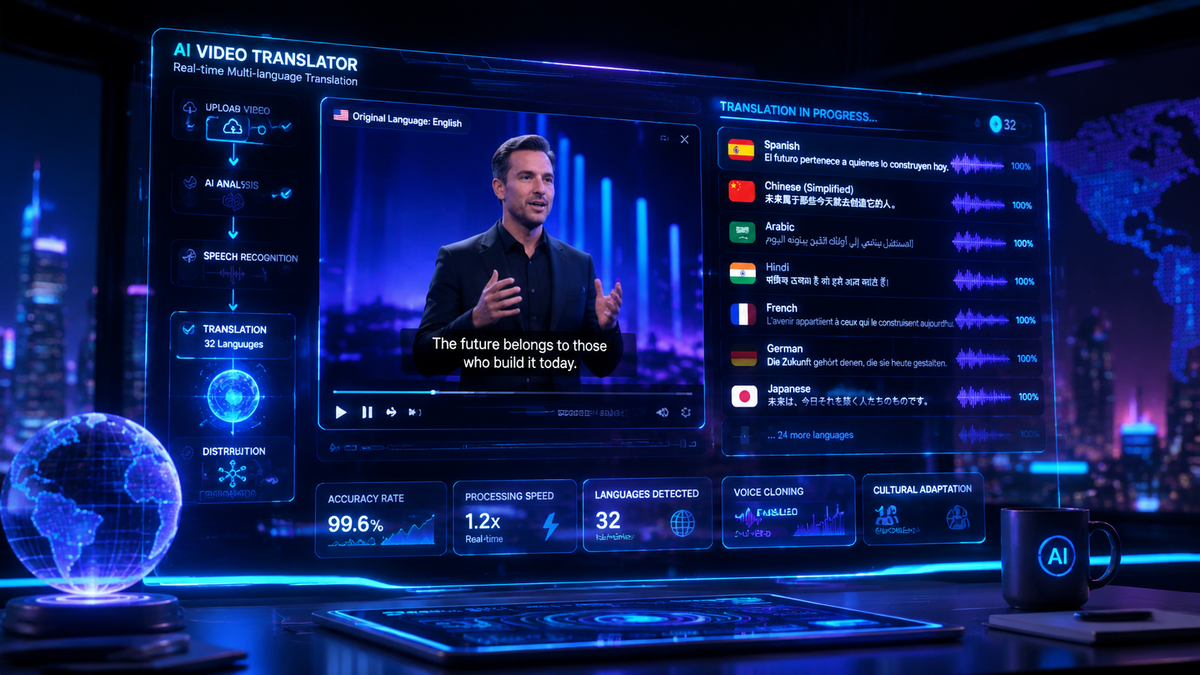
The best ai video translation software 2026 offers a sophisticated blend of neural machine translation, voice cloning, and lip-syncing technology that allows creators to reach global audiences instantly. These tools leverage agentic AI to handle complex dubbing workflows, ensuring that translated content retains the original speaker's emotional nuance and timing. In 2026, the industry has shifted from simple subtitling to fully immersive AI dubbing that is virtually indistinguishable from human performance.
The best AI video translation software in 2026 is defined by its ability to provide real-time lip-syncing, emotional tone matching, and multi-dialect support. Top-tier tools like HeyGen, Rask AI, and ElevenLabs now dominate the market by offering agentic AI features that automate the entire localization process for businesses and game creators alike.
- ✓ Most 2026 tools now feature "Agentic AI" which automatically adjusts cultural references and idioms.
- ✓ Real-time lip-syncing has become a standard feature for high-end enterprise translation suites.
- ✓ Game creators are increasingly using AI dubbing to localize NPC dialogue in real-time.
- ✓ European brands are prioritizing tools that comply with the latest 2026 AI transparency regulations.
The Evolution of Video Localization in 2026
As we navigate through 2026, the landscape of digital content has become truly borderless. The demand for high-quality video translation has skyrocketed, driven by the rise of global streaming platforms and the democratization of international marketing. According to StartupHub.ai, the integration of "Agentic AI" has been the biggest breakthrough this year, allowing translation tools to act as independent agents that not only translate words but also manage the context, tone, and cultural relevance of the content without constant human oversight.
For businesses, the stakes have never been higher. A study cited by Dailyhunt indicates that companies using AI-driven localization in 2026 have seen a 40% increase in engagement across non-English speaking markets compared to those using traditional subtitling methods. This shift is largely due to the improved "Real-World Performance" of these tools, which now account for regional dialects and slang, making the translated audio feel authentic rather than robotic.
Furthermore, the technical barrier to entry has vanished. What used to require a professional dubbing studio and weeks of post-production can now be achieved in minutes. The best ai video translation software 2026 utilizes cloud-based GPU clusters to render high-definition video with perfectly synced audio tracks in over 100 languages simultaneously, providing a scalable solution for creators of all sizes.
How to Use AI Video Translation Software: A Step-by-Step Guide
- Upload Your Source File: Import your high-resolution video (MP4, MOV, or MKV) into the translation platform. Ensure the audio is clear for the best voice cloning results.
- Select Target Languages: Choose from the list of supported global languages. In 2026, most top-tier tools support 120+ languages including regional dialects.
- Enable Lip-Sync and Voice Cloning: Toggle the AI lip-sync feature to ensure the speaker's mouth movements match the new audio. Select "Voice Cloning" to retain the original speaker's unique vocal characteristics.
- Review Agentic Context Adjustments: Allow the AI agent to scan for cultural idioms. Review the suggested changes to ensure the message resonates with the local target audience.
- Export and Distribute: Render the final video. Most platforms now offer direct integration with YouTube, TikTok, and corporate LMS systems for instant publishing.
Comparison of Top AI Video Translation Tools 2026
| Software Name | Key Feature | Target Audience | Processing Speed |
|---|---|---|---|
| Rask AI (Pro 2026) | Multi-Speaker Lip-Sync | Documentary & Film Creators | Ultra-Fast |
| HeyGen Global | Avatar Integration | Corporate Training & Marketing | Real-Time |
| ElevenLabs Dubbing v3 | Emotional Nuance Mapping | Podcasters & Influencers | Fast |
| GameTranslator Pro | Dynamic NPC Dubbing | Game Developers | Real-Time API |
| DeepL Video | Contextual Accuracy | Legal & Technical Firms | Moderate |
Top 10 Picks for Best AI Video Translation Software 2026
1. Rask AI: The Enterprise Standard
Rask AI continues to lead the pack in 2026, specifically for its "Real-World Performance" as noted by Technology Org. It excels in handling videos with multiple speakers, a task that previously confused many AI models. Its 2026 update introduced "Context-Aware Dubbing," which identifies the setting of the video (e.g., a boardroom vs. a coffee shop) and adjusts the acoustic profile of the translated voice to match.
2. HeyGen: Best for Marketing and Sales
HeyGen has transitioned from a simple avatar generator to a powerhouse in video translation. Their "Global Viral" feature allows a single marketing video to be localized into 50 languages with a single click, maintaining the exact persona of the presenter. This tool is a favorite for European brands looking to scale across the continent quickly.
3. ElevenLabs: Unmatched Voice Quality
According to PCMag, ElevenLabs remains the gold standard for voice synthesis in 2026. Their video dubbing tool doesn't just translate; it "performs." If the original speaker is whispering or shouting, the AI-translated voice mimics that exact intensity. This makes it the best ai video translation software 2026 for high-emotion content like storytelling and cinematic trailers.
4. GameTranslator Pro: A Revolution for Developers
As highlighted by GameTyrant, 2026 is the year of "Live Localization" in gaming. GameTranslator Pro provides an API that translates in-game dialogue on the fly. This allows indie developers to launch games globally without the massive upfront cost of hiring hundreds of voice actors for different regions.
5. Papercup: The Media Industry Choice
Papercup focuses on the "Human-in-the-loop" model, which is preferred by major news outlets and broadcasters. While the AI handles the bulk of the translation and dubbing, the platform provides a streamlined interface for human editors to make final linguistic tweaks, ensuring 100% factual accuracy for news delivery.
6. Wondershare Virbo: Accessible and Powerful
Virbo has gained traction in 2026 by offering a highly intuitive mobile-first interface. It is particularly popular among social media influencers who need to translate short-form content like Reels and TikToks on the go. Its "Smart Crop" feature ensures that translated captions never overlap with important visual elements.
7. Dubverse: Best for Collaborative Teams
Dubverse has introduced a "Global Studio" feature in 2026 that allows teams across different time zones to collaborate on a single translation project. It includes built-in version control and a library of "Brand Voices" to ensure consistency across all localized assets.
8. Maestra AI: The Accessibility Leader
Maestra remains a top choice for educational institutions. Beyond just translation, it generates WCAG-compliant subtitles and audio descriptions for the visually impaired. In 2026, its ability to handle complex technical terminology in fields like medicine and engineering is unsurpassed.
9. Speechify Video: The Productivity King
Known for its text-to-speech roots, Speechify’s video translation suite is optimized for speed. It is the preferred tool for internal corporate communications where "good enough" quality delivered instantly is more valuable than cinematic perfection.
10. Aloud (by Google): The YouTube Creator's Friend
Aloud has become more deeply integrated into the YouTube Studio ecosystem in 2026. For creators, it offers a "no-cost" entry point into video translation, though it lacks some of the advanced lip-syncing features found in paid competitors like Rask or HeyGen.
Key Features to Look for in the Best AI Video Translation Software 2026
When selecting a tool this year, the focus has shifted from "can it translate" to "how well does it integrate." The best ai video translation software 2026 must support "Agentic Workflows." This means the software can automatically detect the primary language, identify the speakers, and even suggest the most appropriate cultural tone based on the target region's current trends.
Another critical feature is "Zero-Shot Voice Cloning." In earlier years, you needed minutes of audio to train a voice model. In 2026, the top tools can clone a voice with just a few seconds of input, maintaining the "prosody"—the rhythm and intonation—of the original speech. As Deeside.com reports, this is essential for European brands that need to maintain a consistent brand voice across diverse linguistic markets like Germany, France, and Italy.
Security and compliance have also moved to the forefront. With the 2026 AI regulations, the best software now includes digital watermarking to indicate that the audio is AI-generated. This builds trust with the audience and ensures that businesses remain compliant with global transparency laws.
The Impact of AI Translation on Global Business
The economic impact of these tools cannot be overstated. Dailyhunt reports that the cost of video localization has dropped by nearly 85% since 2023, while the speed of delivery has increased tenfold. This has allowed small-to-medium enterprises (SMEs) to compete on a global stage that was previously reserved for multinational corporations with massive localization budgets.
In the realm of customer support, AI video translation is being used to create "Dynamic Help Centers." Instead of reading a manual, a customer in Japan can watch a video originally filmed in English, but dubbed perfectly in Japanese, explaining how to troubleshoot a product. This level of service has become the standard expectation for consumers in 2026.
What is the most accurate AI video translator in 2026?
Rask AI and ElevenLabs are currently tied for the highest accuracy ratings. Rask AI leads in contextual and cultural translation, while ElevenLabs is widely considered the best for emotional and tonal accuracy in voice cloning.
Can AI video translation software handle multiple speakers?
Yes, most premium tools in 2026, such as Dubverse and Rask, can automatically detect and separate multiple speakers in a single video. They can then assign a unique, cloned voice to each individual for the translated version.
Is lip-syncing included in these translation tools?
Lip-syncing is now a standard feature in high-end AI translation software. It uses generative AI to re-animate the speaker's mouth so that it matches the phonemes of the target language, creating a seamless viewing experience.
How much does AI video translation cost in 2026?
Pricing varies, but most platforms offer a subscription model ranging from $30 to $500 per month. Some tools also offer "pay-as-you-go" credits, typically costing around $1 to $5 per minute of processed video depending on the complexity of features used.
Are there free AI video translation options available?
Google's Aloud and some basic versions of Maestra offer free tiers. However, these usually come with limitations such as watermarks, lower resolution, or a lack of advanced features like lip-syncing and voice cloning.



Comments ()