
10 Best AI Video Tools for Educators in 2026: Top Reviews

The best ai video tools for educators are specialized software platforms that utilize generative artificial intelligence to automate the creation, editing, and localization of educational content. These tools allow teachers to transform text-based lesson plans into engaging video presentations, generate realistic digital avatars for lectures, and provide multilingual support to diverse student populations. In 2026, these technologies have become essential for maintaining student engagement in both remote and hybrid learning environments.
The best ai video tools for educators in 2026 are specialized platforms like Google Vids, HeyGen, and Runway, which streamline lesson delivery. These tools are characterized by their ability to generate high-quality educational videos from simple text prompts, offer real-time translation for global classrooms, and provide interactive elements that significantly improve student retention rates compared to traditional video methods.
- ✓ AI video tools reduce content creation time for educators by up to 80% compared to traditional editing.
- ✓ Modern platforms now support over 100 languages with perfect lip-syncing for inclusive learning.
- ✓ Integration with Learning Management Systems (LMS) is now a standard feature in 2026.
- ✓ Free access programs, such as Google's initiative for African universities, are expanding global educational equity.
How to Implement AI Video in Your Classroom
Adopting new technology requires a structured approach to ensure pedagogical goals are met. Educators should focus on tools that complement their existing curriculum rather than replacing the human element of teaching. By following a systematic implementation process, teachers can ensure that the best ai video tools for educators enhance the learning experience without becoming a distraction.
- Identify the Learning Objective: Determine if the video is for an introduction, a deep-dive explanation, or a summary of a complex topic.
- Select the Right Tool: Choose a platform based on whether you need a talking avatar, a screen recording, or a text-to-video animation.
- Draft a Script: Use generative AI text tools to outline your lesson, then refine it to ensure academic accuracy.
- Generate and Customize: Input your script into the AI video tool, select a professional educator avatar, and add relevant brand colors or school logos.
- Review for Accuracy: Always fact-check AI-generated content to ensure it aligns with current scientific and historical standards.
- Distribute and Gather Feedback: Upload the video to your LMS and use student analytics to see which sections were most engaging.
The Evolution of AI Video Tools in 2026
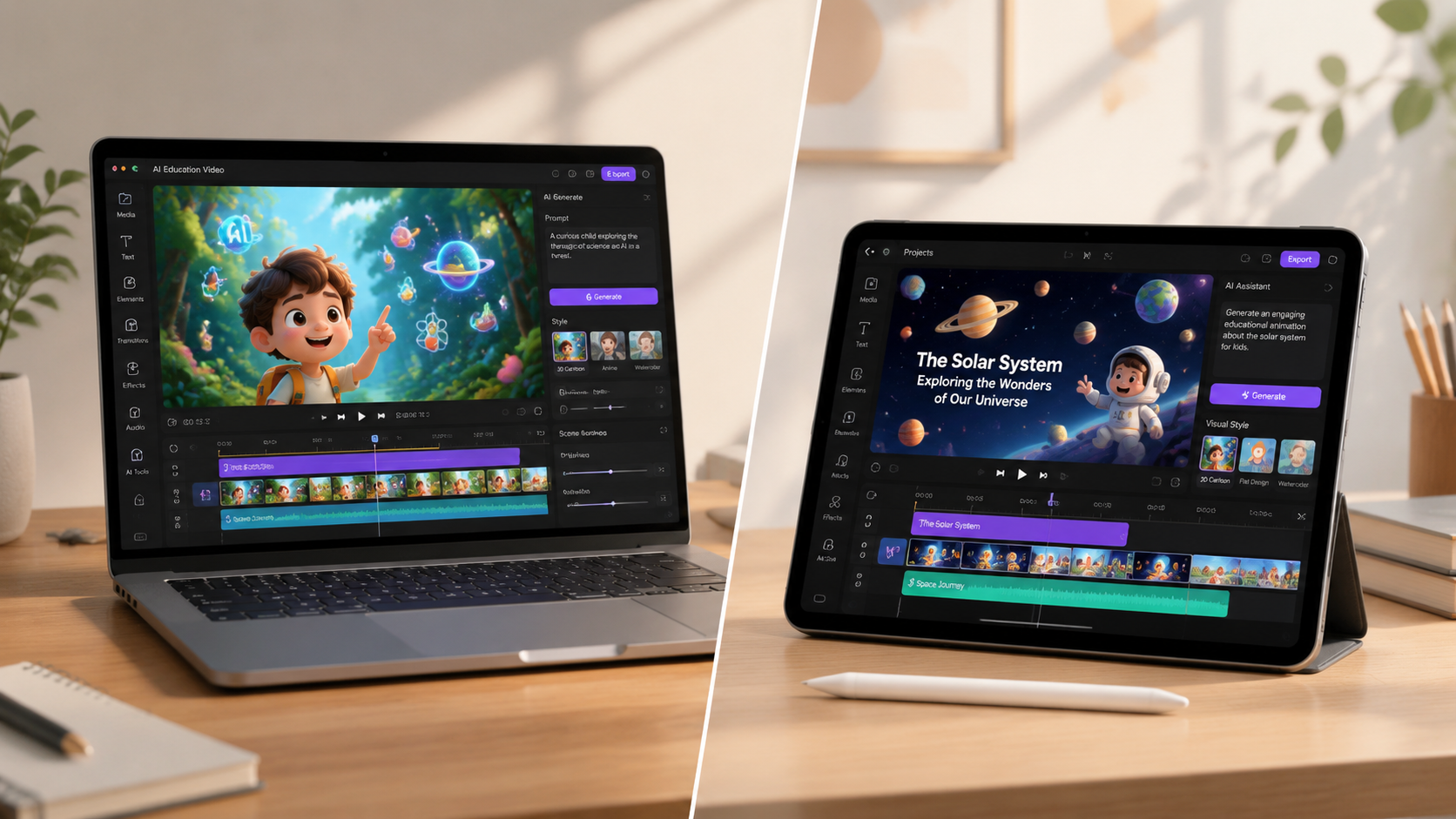
As we move through 2026, the landscape of educational technology has shifted from simple automation to deep personalization. According to AIMultiple, generative AI in education now encompasses 13 primary use cases, with video generation leading the way in terms of adoption for personalized learning paths. These tools are no longer just about "making a video"; they are about creating immersive environments where students can interact with historical figures or visualize complex physics simulations in real-time.
The democratization of these tools is a major theme this year. As reported by Google, the company has expanded its best AI tools to university students across Africa at no cost, ensuring that the digital divide is bridged through high-quality video and research resources. This global push means that the best ai video tools for educators are now accessible to a wider demographic than ever before, fostering a truly global classroom environment.
Top 10 AI Video Tools for Educators: 2026 Reviews
1. Google Vids (Education Edition)
Google Vids has become a cornerstone of the Google Workspace for Education suite in 2026. It allows teachers to create "video-first" documents. Instead of a static slide deck, educators can generate a full video presentation by simply linking a Google Doc or Sheet. The AI automatically suggests stock footage, generates a voiceover, and creates transitions that match the tone of the lesson.
2. HeyGen for Schools
HeyGen remains the leader in avatar-based instruction. Its 2026 update introduced "Live-Teacher" mode, where an AI avatar can answer student questions in a pre-recorded video format using a RAG (Retrieval-Augmented Generation) backend. This makes it one of the best ai video tools for educators who want to provide 24/7 tutoring support.
3. Runway Gen-4
For science and arts teachers, Runway Gen-4 offers unparalleled cinematic quality. It is primarily used for "Text-to-World" generation, allowing educators to create visual representations of abstract concepts, such as the inside of a black hole or a walk-through of ancient Rome, with photorealistic detail.
4. Canva Magic Media
Canva has solidified its place in the classroom by integrating video generation directly into its design interface. According to Built In, Canva is among the top AI apps to know in 2026 due to its user-friendly "Magic Switch" feature, which can turn a classroom poster into a short-form video for social learning platforms like TikTok or Instagram Education.
5. Synthesia 3.0
Synthesia focuses on professional-grade instructional design. In 2026, it introduced "Micro-Learning Automations," which take a long lecture and automatically chop it into 60-second "knowledge nuggets" perfect for students with shorter attention spans. Its lip-syncing technology is now indistinguishable from reality.
6. Descript "Underlord"
Descript has evolved from a simple podcast editor into a powerful video tool. Its AI assistant, "Underlord," can automatically remove filler words, generate B-roll based on the transcript, and even "eye-contact correct" a teacher who was looking at their notes instead of the camera during a recording.
7. Pictory.ai
Pictory is the best ai video tool for educators who have a large archive of text-based materials. It can take a 50-page textbook chapter and summarize it into a 5-minute highlight reel, complete with subtitles and relevant background music, making it an excellent tool for exam revision.
8. Sora for Education (OpenAI)
OpenAI’s Sora has released a restricted "Edu-Safe" version in 2026. It allows for the creation of complex 60-second scenes from highly detailed prompts. History teachers use it to "recreate" historical events with a focus on archival accuracy, providing a visceral connection to the past.
9. Adobe Express with Firefly
Adobe Express has integrated Firefly AI to allow for "Generative Fill" in video. Educators can change the background of their home-recorded lectures to a professional laboratory or a library with a single click, maintaining a professional aesthetic regardless of their physical location.
10. Loom AI
Loom has moved beyond simple screen sharing. Its 2026 AI features include "Auto-Chaptering" and "Action Item Extraction." When a teacher records a feedback video for a student, the AI automatically lists the steps the student needs to take to improve their grade, saving the teacher significant administrative time.
Feature Comparison of Top Education Video Tools
| Tool Name | Primary Use Case | Key 2026 Feature | Pricing Model |
|---|---|---|---|
| Google Vids | Collaborative Presentations | Workspace Integration | Free for EDU |
| HeyGen | Avatar-led Lectures | Real-time Q&A Avatars | Freemium / Per Seat |
| Runway Gen-4 | Visual Simulations | Text-to-World Rendering | Subscription |
| Descript | Lecture Editing | Eye-Contact Correction | Free / Pro Tier |
| Synthesia | Corporate/Vocational Training | Micro-Learning Automation | Enterprise/EDU |
Why Video is Essential for 2026 Pedagogy
The shift toward video-centric learning is backed by significant data. According to Simplilearn, video generation tools are no longer just for content creators; they are critical for use cases in professional training and academic education. In 2026, students expect information to be delivered in a format that is visually stimulating and easily digestible on mobile devices.
Furthermore, Hootsuite notes that the best AI tools for social media are increasingly being used by educators to reach students where they already spend their time. By using the best ai video tools for educators, teachers can create "edutainment" content that competes with high-production social media, ensuring that educational messages aren't lost in the noise of the digital age.
Expert picks for 2026 emphasize the importance of "ethical AI." Educators are encouraged to use tools that provide transparency about their training data and offer "opt-out" features for student data privacy. As AI continues to evolve, the focus is shifting from what the technology *can* do to how it can be used *responsibly* to foster a better learning environment.
Maximizing Student Engagement with AI Video
To truly leverage the best ai video tools for educators, one must look beyond the novelty of the technology. The most successful implementations in 2026 involve "Interactive Branching." This is where a video pauses and asks the student a question; the student's answer then determines which part of the video plays next. This creates a personalized learning path that mimics a one-on-one tutoring session.
Another emerging trend is the use of "AI Dubbing." For classrooms with English Language Learners (ELL), tools like HeyGen and Papercup allow a teacher to record a lesson in English and have it instantly dubbed into Spanish, Mandarin, or Arabic, while maintaining the teacher's original voice and tone. This level of accessibility was nearly impossible just a few years ago but is now a standard expectation in global education.
Frequently Asked Questions
What are the best ai video tools for educators with no budget?
Google Vids and Canva Magic Media offer robust free tiers for verified educational institutions. Additionally, Google has launched initiatives to provide high-end AI tools to universities in developing regions at no cost.
Is AI-generated video content accurate enough for teaching?
While AI tools in 2026 are highly advanced, they still require human oversight. Educators should always review AI-generated scripts and visuals to ensure they meet academic standards and are free from "hallucinations."
How do AI video tools help students with disabilities?
These tools provide automatic high-quality captioning, sign-language avatar overlays, and audio descriptions. This ensures that video content is accessible to students with visual or auditory impairments in compliance with modern accessibility laws.
Can I use AI to turn my existing PowerPoints into videos?
Yes, tools like Pictory and Google Vids are specifically designed to ingest slide decks and documents, automatically converting them into narrated videos with relevant stock imagery and transitions.
Do I need a powerful computer to run these AI video tools?
No, most of the best ai video tools for educators in 2026 are cloud-based. All the heavy processing happens on the provider's servers, meaning you only need a standard laptop and a stable internet connection.



Comments ()