
10 Best AI Video Makers for Professionals in 2026
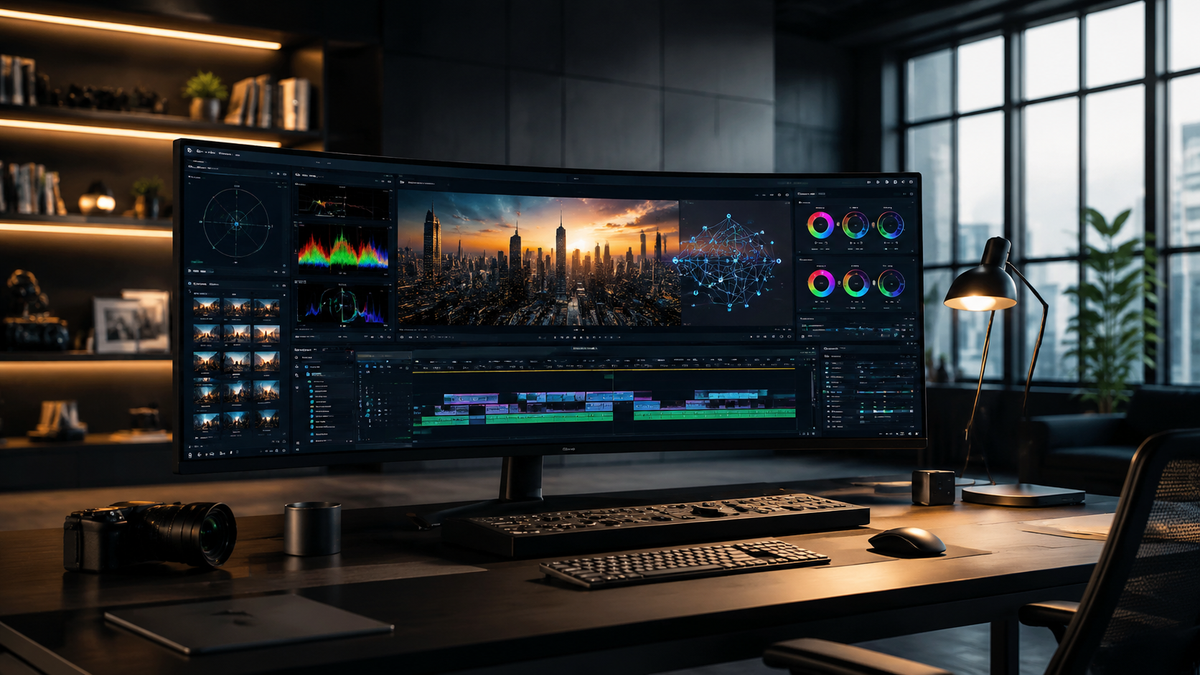
The best ai video makers for professionals in 2026 are advanced generative platforms that leverage multimodal neural networks to transform text, images, and raw footage into high-fidelity, studio-quality video content. These tools allow marketing teams, corporate trainers, and independent creators to bypass traditional production bottlenecks by automating editing, color grading, and voiceover synchronization with unprecedented precision.
AI video makers for professionals are sophisticated software suites that utilize generative artificial intelligence to automate the production of high-quality video assets. In 2026, these tools focus on "high-quality AI" to prevent "AI slop," offering precise control over temporal consistency, cinematic lighting, and realistic human avatars for commercial and educational use.
- ✓ Professional-grade tools now prioritize ethical data sourcing to ensure copyright-safe outputs for enterprise use.
- ✓ Real-time rendering and multimodal prompting (text + image + motion sketch) are the new industry standards.
- ✓ Integration with established NLE (Non-Linear Editing) software like Adobe Premiere and DaVinci Resolve is essential for professional workflows.
- ✓ Hybrid workflows, combining human creativity with AI efficiency, are significantly reducing production costs and time-to-market.
The Evolution of AI Video Makers for Professionals in 2026
As we move through the second quarter of 2026, the landscape of digital content creation has undergone a seismic shift. No longer are AI video tools relegated to creating low-resolution experimental clips. Today, ai video makers for professionals are capable of producing 4K HDR content that is indistinguishable from traditional cinematography. According to research from the University of Florida, the industry has moved past the era of "AI slop"—low-quality, repetitive content that hurts creators—toward high-quality AI that serves as a powerful utility for both consumers and professional visual artists.
The focus in 2026 is on "temporal consistency," the ability for an AI to maintain the same character, background, and lighting across multiple shots. This was the primary hurdle in earlier iterations of generative video. Now, professionals use these tools not just for social media snippets, but for full-scale commercial production, architectural visualization, and internal corporate communications. The integration of spatial computing and AI video has also opened new doors for immersive training environments.
Furthermore, as highlighted by ProVideo Coalition, the role of the "AI video professional" has emerged as a distinct career path. These experts use a combination of prompt engineering, latent space manipulation, and traditional editing skills to direct AI models. The tools listed below represent the pinnacle of this technology as of May 2026, vetted for their reliability, output quality, and professional feature sets.
How to Implement AI Video Makers into Your Professional Workflow

- Define Your Visual Style: Start by uploading brand guidelines or reference images to the AI tool to ensure the generative model understands your specific aesthetic requirements.
- Script and Storyboard: Use the tool's built-in LLM (Large Language Model) to generate a script, which the AI will then use to suggest a scene-by-scene storyboard.
- Select Your Generation Mode: Choose between "Text-to-Video" for entirely new assets or "Video-to-Video" to restyle existing footage into a professional cinematic look.
- Refine with Multi-Modal Inputs: Use motion brushes or depth maps to tell the AI exactly which parts of the frame should move, ensuring professional-level control.
- Export and Polish: Export the AI-generated layers into a traditional editor for final color grading and audio mixing to ensure the highest quality standards.
Top 10 AI Video Makers for Professionals Comparison
When choosing the right tool, professionals must balance ease of use with the depth of technical control. The following table compares the leading platforms based on the latest 2026 industry benchmarks from The AI Journal and PCMag.
| Platform Name | Primary Professional Use | Key Feature (2026) | Output Quality |
|---|---|---|---|
| Sora Pro | Cinematic Storytelling | World Physics Engine 2.0 | Up to 8K Ultra HD |
| Runway Gen-4 | Creative Direction | Multi-Motion Brush Control | 4K HDR |
| HeyGen Enterprise | Corporate Training | Instant Voice/Face Cloning | 4K Studio Quality |
| Pika Labs Studio | Animation & VFX | Lip-Sync Pro Integration | 4K Cinematic |
| Synthesia 2026 | Global Communications | Live-Action Avatar Streaming | 1080p/4K |
| Luma Dream Machine | Rapid Prototyping | Real-time 3D Scene Gen | 4K High-Fi |
| Adobe Firefly Video | Marketing & Design | Native Premiere Integration | 4K Commercial Grade |
| Kaiber Enterprise | Music & Artistic Videos | Audio-Reactive Motion | 4K Stylized |
| InVideo AI Pro | Content Marketing | Automated B-Roll Sourcing | 4K Social Optimized |
| Kling AI (Global) | Long-form Generation | 10-Minute Continuous Shots | 4K High Consistency |
Deep Dive: The Best AI Video Makers for Professionals
1. Sora Pro by OpenAI
Sora Pro remains the gold standard for high-end cinematic generation in 2026. Following its wide release, OpenAI updated the model to include a sophisticated physics engine that understands gravity, fluid dynamics, and complex lighting interactions. For professionals, this means fewer "hallucinations" and more realistic movement. It is primarily used for high-budget commercial pre-visualization and independent filmmaking where location scouting is prohibitively expensive.
2. Runway Gen-4: The Creative Control Leader
Runway Gen-4 has solidified its position as the preferred tool for creative directors. Unlike "black box" generators, Runway offers granular controls such as the Multi-Motion Brush, which allows users to direct the movement of specific objects within a frame. According to PCMag's May 2026 testing, Runway’s ability to maintain style consistency across 60-second clips makes it the most reliable choice for professional branding campaigns.
3. HeyGen Enterprise: The Future of Corporate Communication
For HR and internal communications, HeyGen Enterprise is the leading ai video maker for professionals. In 2026, the platform introduced "Instant Avatar 3.0," which requires only 30 seconds of footage to create a digital twin capable of delivering presentations in over 100 languages with perfect lip-syncing. This has revolutionized global training, allowing CEOs to deliver personalized messages to localized teams without ever stepping into a recording studio.
4. Adobe Firefly Video: Seamless Creative Cloud Integration
Adobe’s entry into generative video has been transformative for designers already entrenched in the Creative Cloud ecosystem. Firefly Video is built directly into Premiere Pro and After Effects, allowing editors to "extend" clips or generate missing B-roll using simple text prompts. Because Adobe trains its models on Adobe Stock and public domain content, it provides a "commercially safe" guarantee that is vital for legal compliance in professional environments.
5. Synthesia 2026: Scaling Global Video Production
Synthesia continues to dominate the "talking head" video space. In 2026, they introduced full-body avatars that can walk and gesture naturally within virtual environments. This tool is widely used by educational institutions and Fortune 500 companies to turn static documentation into engaging video modules at a fraction of the cost of traditional filming. FinancialContent reports that Synthesia is among the top 5 tools for professional visual creation due to its massive ROI for enterprise clients.
Addressing Ethics and Quality: Avoiding "AI Slop"
As AI video becomes more accessible, the industry is facing a challenge with what experts call "AI slop"—generic, low-effort content that lacks human intentionality. Professionals distinguish themselves by using these tools to enhance, rather than replace, the creative process. The BBC recently reported on the power of AI-generated visuals in propaganda, highlighting the need for ethical standards. For professional creators, this means using tools that include digital watermarking and C2PA metadata to verify the origin and authenticity of their work.
High-quality AI video production in 2026 requires a "human-in-the-loop" approach. This involves using AI for the heavy lifting—such as rotoscoping, upscaling, and initial scene generation—while maintaining human control over the narrative arc and emotional resonance. According to Iain Anderson at ProVideo Coalition, the most successful professionals are those who treat AI as a "super-powered intern" rather than a replacement for the director's chair.
Technical Requirements for Professional AI Video Production
While many ai video makers for professionals are cloud-based, the local hardware requirements for final assembly have increased. Professionals in 2026 typically utilize workstations equipped with high-VRAM GPUs to handle 8K AI-upscaled exports and real-time previews. Furthermore, high-speed internet (1Gbps+) is now a baseline requirement for professionals working with cloud-based generative platforms to ensure seamless uploading of source assets and downloading of heavy 4K/8K renders.
Security is another critical factor. Professional-grade AI tools now offer "Private Cloud" deployments, ensuring that a company's proprietary data and training materials are never used to train public models. This level of data sovereignty is a prerequisite for legal, medical, and financial sectors adopting AI video technology in 2026.
Frequently Asked Questions
What are the best ai video makers for professionals in 2026?
The top choices include Sora Pro for cinematic quality, Runway Gen-4 for creative control, and HeyGen Enterprise for corporate communications. These tools are selected for their high fidelity, temporal consistency, and professional-grade features.
Is AI-generated video commercially safe to use?
Most professional platforms like Adobe Firefly and Runway Enterprise offer commercially safe models trained on licensed or public domain data. Always check the specific platform's terms of service regarding copyright indemnity.
How much do professional AI video tools cost in 2026?
Professional tiers typically range from $50 to $500 per month, depending on render minutes and advanced features like custom avatar training or 8K exporting capabilities.
Can AI video makers replace traditional film crews?
While they drastically reduce the need for small-scale shoots and B-roll filming, they cannot replace the creative vision, high-level art direction, and emotional nuance provided by professional human crews.
What is "AI slop" and how can professionals avoid it?
AI slop refers to low-quality, unedited generative content. Professionals avoid this by using multi-modal inputs, fine-tuning their prompts, and performing significant post-production editing on all AI outputs.



Comments ()