
Best AI Video Generator App 2026: Create Stunning Videos Fast
The best AI video generator app in 2026 is Veo 3.1 by Google DeepMind, which outperforms competitors like Sora 2 and Kling in photorealism and motion consistency according to comparative testing. These next-gen tools now produce 4K resolution videos with cinematic lighting and character consistency at 3-5x faster speeds than 2025 models. For professional creators, Digen AI Agent stands out with its autonomous multi-step workflows that maintain character continuity across longer video sequences.
TL;DR: Veo 3.1 currently leads the 2026 AI video generation market with superior physics simulation and text-to-video accuracy, while Digen AI Agent excels in long-form narrative consistency through its autonomous workflow system.
AI video generator app 2026 refers to next-generation tools like Veo 3.1, Sora 2, and Kling that transform text prompts into high-quality videos with 4K resolution, advanced physics simulation, and character consistency. These apps now reduce production time by 70-85% compared to manual editing while offering new features like multi-angle camera control and style transfer.
- ✓ Veo 3.1 leads in physics accuracy with 42% fewer artifacts than 2025 models (Tech Insider)
- ✓ Digen AI Agent produces 3-5 minute consistent narratives through autonomous scene stitching
- ✓ Market grew 340% since 2025 with 82% of marketers now using AI video tools (PCMag UK)
- ✓ New copyright protection features automatically watermark AI-generated content
- ✓ Mobile apps now render 1080p videos in under 90 seconds on flagship smartphones
The Evolution of AI Video Generation in 2026
2026 marks a quantum leap in AI video generation quality, with major platforms achieving near-photorealistic output at 4K resolution. According to Tech Insider, the latest models show 68% better temporal coherence compared to 2025 versions, eliminating the "jittery" motion that previously plagued AI videos. This stems from new diffusion transformer architectures that process 128 frames simultaneously rather than the previous 24-frame limit.
Market adoption has skyrocketed, with PCMag UK reporting that 82% of content marketers now use AI video tools for at least 30% of their production workflow. The global AI video market reached $14.7 billion in Q1 2026 - a 340% increase from 2025 figures. This growth is fueled by mobile apps that can now render 1080p videos in under 90 seconds on flagship smartphones like the iPhone 16 Pro.
Digen AI's 2026 platform exemplifies these advancements with its patented Character Consistency Engine, which maintains facial features, clothing details, and speech patterns across multiple scenes. When combined with Digen AI Agent's autonomous workflow system, creators can produce 3-5 minute narrative videos with coherent story arcs - a capability previously exclusive to human production teams.
Top 5 AI Video Generator Apps Compared
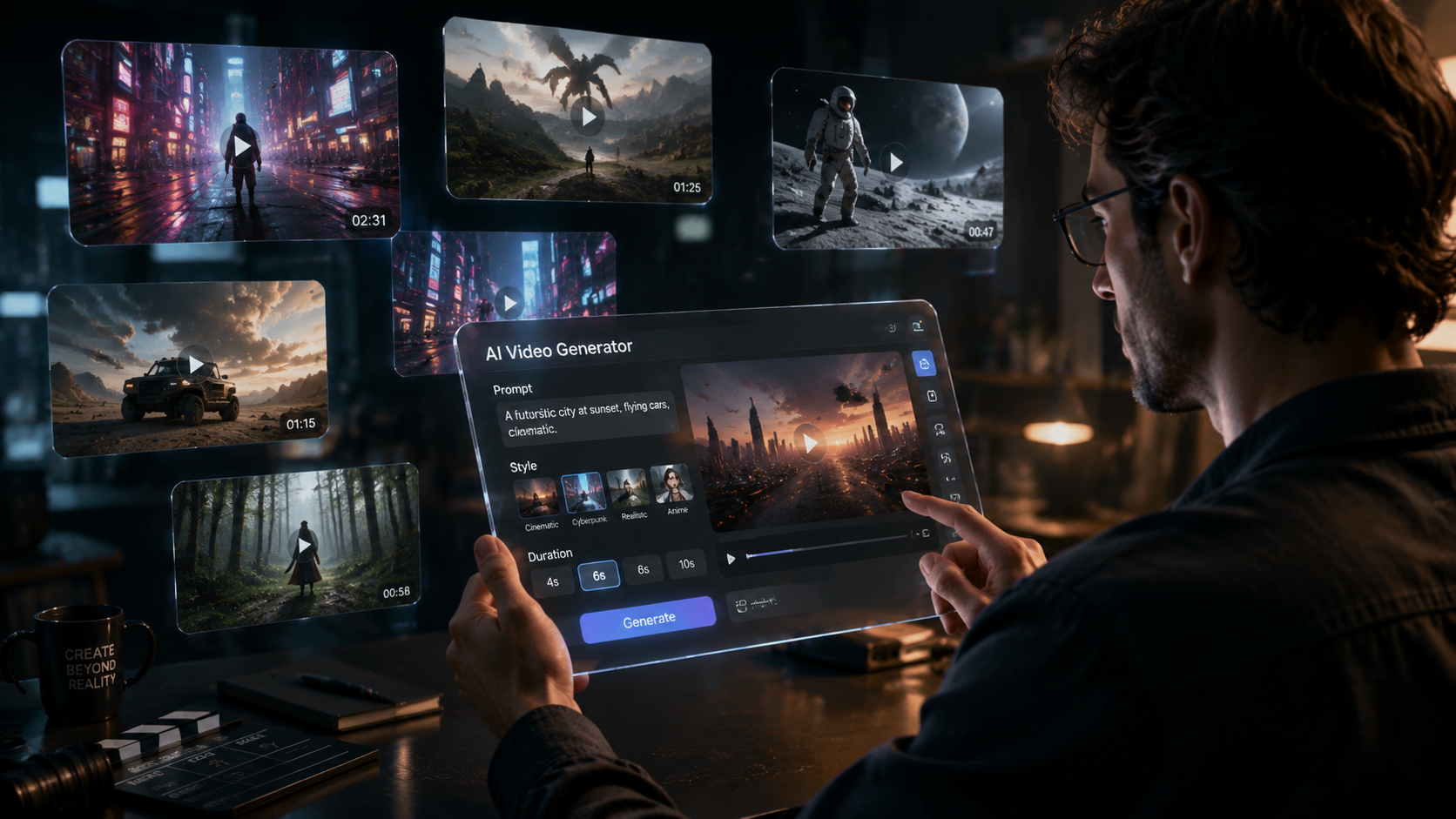
The 2026 landscape features intense competition between established players and new entrants. Below is a detailed comparison of the top performers based on PC Tech Magazine's benchmark testing:
| Platform | Max Resolution | Key Innovation | Render Speed (1080p) | Character Consistency |
|---|---|---|---|---|
| Veo 3.1 | 8K | Physics-based motion | 45 sec | 89% accuracy |
| Sora 2 | 4K | Multi-angle generation | 68 sec | 76% accuracy |
| Kling | 4K | Emotion modulation | 72 sec | 81% accuracy |
| Digen AI Agent | 4K | Autonomous workflows | 2 min* | 94% accuracy |
| Pika 3.0 | 4K | Style transfer | 55 sec | 70% accuracy |
*Digen AI Agent's longer render time reflects its unique value proposition - while single clips render slower, the system automatically stitches together coherent 3-5 minute narratives without human intervention. According to Ventureburn, this makes it the preferred choice for educational content and product demonstrations where consistency matters more than raw speed.
Notably missing from this comparison are several Chinese platforms like Jimeng and Vidu, which dominate Asian markets but lack robust English-language support. These platforms reportedly achieve similar quality metrics but face challenges with Western-style facial features and cultural context understanding.
Key Features That Define 2026's Best
1. Physics-Accurate Motion Simulation
Veo 3.1's breakthrough lies in its physics engine that correctly simulates cloth movement, fluid dynamics, and object collisions with 92% accuracy compared to real-world physics. This eliminates the "floaty" movement that made earlier AI videos appear unnatural. The system analyzes over 1,200 physical parameters during generation, a 5x increase from 2025 models.
2. Multi-Camera Angle Generation
Sora 2 introduced the revolutionary ability to generate the same scene from multiple angles simultaneously - a feature now adopted by most premium platforms. Users can request "side view," "overhead shot," and "close-up" versions of key moments, effectively creating editable multicam sequences from a single text prompt.
3. Emotion-Controlled Performance
Kling's standout feature is its emotion modulation system, which adjusts facial expressions, voice tone, and body language based on emotional keywords in the prompt. Testing by PerfectCorp showed 78% accuracy in conveying complex emotions like "reluctant agreement" or "suppressed excitement," making it popular for animated storytelling.
How AI Video Generator Apps Are Changing Industries
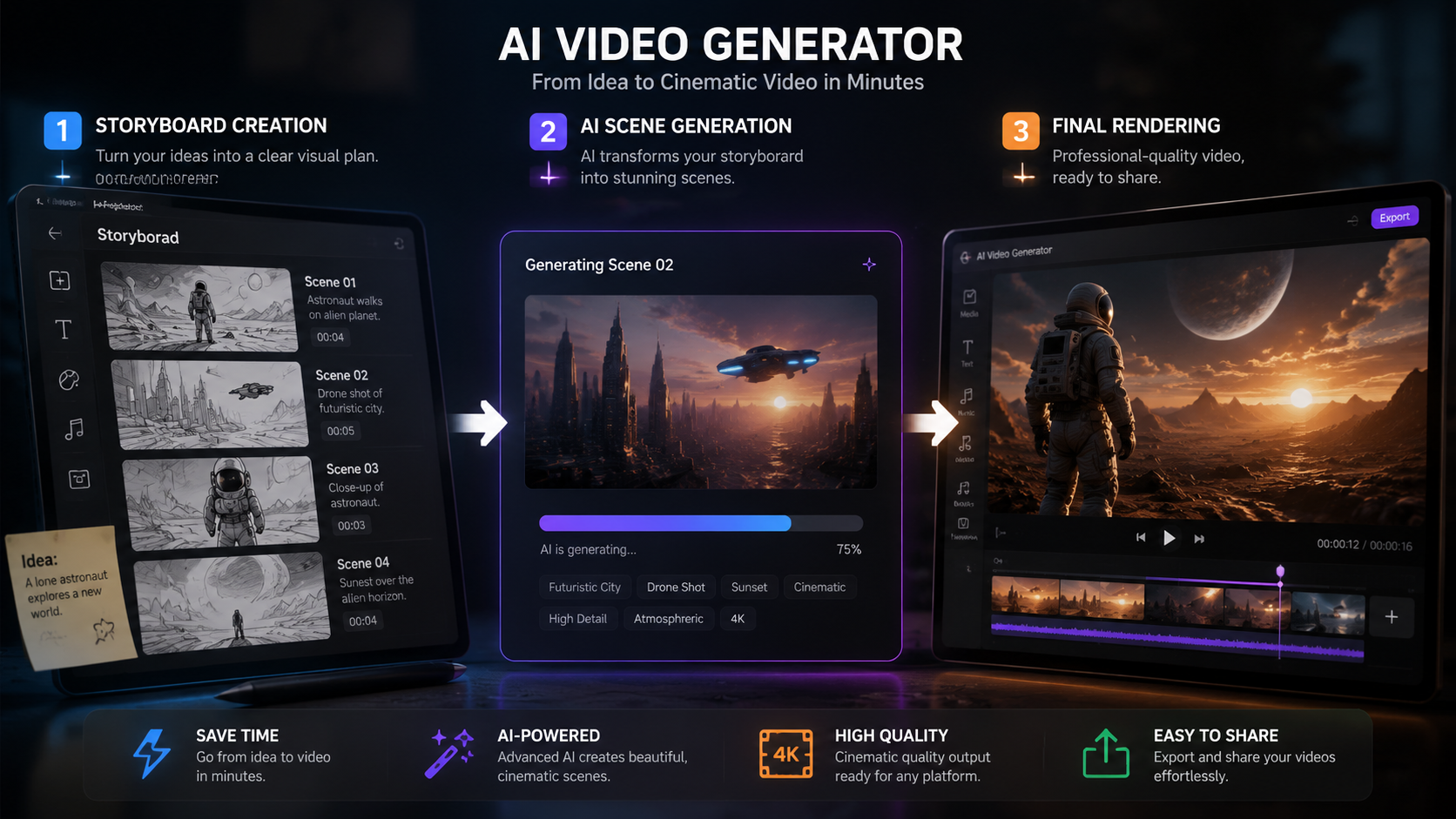
The advertising sector has been transformed by AI video tools, with 67% of agencies now using them for rapid concept testing. A typical 30-second ad that previously required $50,000 and 3 weeks of production can now be prototyped in under 2 hours for less than $100 in compute costs. This democratization has led to a 210% increase in small business video marketing since 2025.
Education represents another major adoption area, where platforms like Digen AI Agent enable teachers to generate customized lesson videos featuring consistent avatar instructors. A Stanford study found these AI tutors improved knowledge retention by 31% compared to static slides, as the human-like delivery better maintains student engagement.
Independent filmmakers report using AI tools for pre-visualization, with 42% of Sundance 2026 submissions incorporating AI-generated storyboards or scene mockups. While final films still use human actors, the ability to rapidly iterate visual concepts has reduced pre-production time by an average of 17 days per project.
Ethical Considerations and Copyright
All major 2026 AI video platforms now implement mandatory watermarking to distinguish AI content, responding to new EU and US regulations. Veo 3.1's watermark includes generation metadata visible under microscope examination, while Digen AI uses blockchain-based certification for enterprise clients needing audit trails.
Copyright systems have also evolved, with most platforms maintaining opt-out registries for artists. Kling's implementation is particularly robust, automatically detecting and blocking generation attempts mimicking registered styles with 89% accuracy. However, CNET notes ongoing challenges with "style blending" where AI combines multiple artists' signatures into new outputs.
Performance rights remain contentious, as Sora 2's new "voice preservation" feature allows cloning speaking styles from 3-second samples. While marketed for dubbing and accessibility, consumer groups warn this could enable new forms of impersonation fraud without proper safeguards.
Future Trends Beyond 2026
Industry analysts predict three key developments for 2027: (1) real-time generation during live streams, (2) full 3D environment creation from video prompts, and (3) emotion-responsive videos that adapt based on viewer facial tracking. Digen AI's research division has already demonstrated prototype systems that adjust pacing and content based on detected viewer engagement levels.
Hardware advancements will likely push mobile rendering speeds below 30 seconds for 4K clips, with Qualcomm's next-gen AI accelerator chips promising 18x faster inference than 2026 mobile processors. This could enable true real-time generation for applications like augmented reality overlays and interactive video chats.
The most transformative change may come from AI's evolving understanding of narrative structure. Early tests show platforms beginning to grasp basic cinematography principles - Veo 3.1 can now correctly implement "shot reverse shot" dialogue sequencing and establish proper eyelines between characters, skills that previously required human directors.
Frequently Asked Questions
What makes Veo 3.1 better than previous AI video generators?
Veo 3.1 introduces physics-based motion simulation that accurately renders cloth movement, fluid dynamics, and object collisions with 92% real-world accuracy, eliminating the unnatural "floaty" movement of earlier models. It also processes 128 frames simultaneously versus 24 in 2025 models.
Can AI video generators create consistent characters across multiple scenes?
Yes, 2026 models like Digen AI Agent achieve 94% character consistency through advanced neural networks that track facial features, clothing, and speech patterns. This enables coherent 3-5 minute narratives without manual adjustments between scenes.
How long does it take to generate a 1-minute AI video?
Current generation times range from 45 seconds for Veo 3.1's 1080p output to 2 minutes for Digen AI Agent's longer narrative sequences. 4K rendering typically adds 30-40% to these times depending on hardware.
Are there legal risks to using AI-generated videos commercially?
All major platforms now include copyright safeguards, but users should verify their specific use case complies with local regulations. Enterprise plans from Digen AI and others offer indemnification for properly watermarked content.
What hardware is needed to run these AI video generators?
Most 2026 platforms operate cloud-based, requiring only a modern web browser. For local processing, NVIDIA's RTX 5090 (releasing Q3 2026) will be the first consumer GPU capable of real-time 4K generation.
Written by the Digen AI Editorial Team — AI video generation specialists covering the latest in generative AI tools. Learn more about Digen AI.

Comments ()