
Best AI Video Effects for Music Videos: 2026 Trend Guide
The best AI video effects for music videos in 2026 involve a sophisticated blend of neural style transfer, generative world-building, and real-time motion tracking that allows artists to transform raw footage into cinematic masterpieces. By leveraging tools like AI music video generators and advanced mobile editing suites, creators can now achieve high-end visual effects—such as fluid morphing and hyper-realistic environment swapping—that previously required million-dollar studio budgets. Choosing the right AI video effects depends on your genre, whether you need the gritty texture of AI-driven rotoscoping or the ethereal glow of generative lighting enhancements.
AI video effects for music videos are generative algorithms that modify or create visual elements by analyzing audio beats and pixel data. In 2026, these effects include automated rotoscoping, neural style transfer, and text-to-video background generation, allowing musicians to produce professional-grade visuals using platforms like PCMag-rated editing software and specialized AI generators.
- ✓ AI-driven motion tracking now allows for seamless 3D element integration in mobile editing apps.
- ✓ Generative background replacement has become the industry standard for low-budget indie music videos.
- ✓ Real-time audio-reactive visualizers are the top-trending effect for electronic and hip-hop artists in 2026.
- ✓ PCMag and Perfect Corp reviews highlight that modern AI tools have reduced post-production time by over 70%.
How to Apply the Best AI Video Effects for Music Videos
Implementing high-quality AI effects requires a strategic approach to ensure the visuals remain synchronized with the rhythm and mood of the track. As of May 2026, the workflow has been significantly streamlined, moving away from complex coding toward intuitive, prompt-based interfaces. Whether you are using a desktop powerhouse or a mobile editing app, the process follows a standardized path of analysis and generation.
According to research from The Music Universe, the most successful AI-enhanced videos are those that maintain a balance between "real" filmed footage and generative overlays. This hybrid approach ensures that the artist’s performance remains the focal point while the AI provides the "wow" factor that drives social media engagement and virality.
- Select Your Base Footage: Upload your high-resolution performance clips to an AI-capable editor. Ensure lighting is consistent to help the AI distinguish between the subject and the background.
- Analyze Audio Stems: Use an AI music video generator to analyze the BPM and frequency of your track. This allows the effects to "pulse" or change in time with the music.
- Apply Neural Style Transfer: Choose a visual style (e.g., Cyberpunk, Oil Painting, or 2026 Neo-Noir) to apply a consistent aesthetic across all clips.
- Generate Environment Overlays: Use text-to-video prompts to add atmospheric effects like volumetric fog, floating particles, or shifting landscapes.
- Refine with AI Rotoscoping: Isolate the artist from the background to apply specific effects only to the environment or only to the person.
- Render and Upscale: Use AI upscaling tools to ensure the final output is 4K or 8K, maintaining clarity even with heavy effects processing.
Trending AI Video Effects Categories in 2026
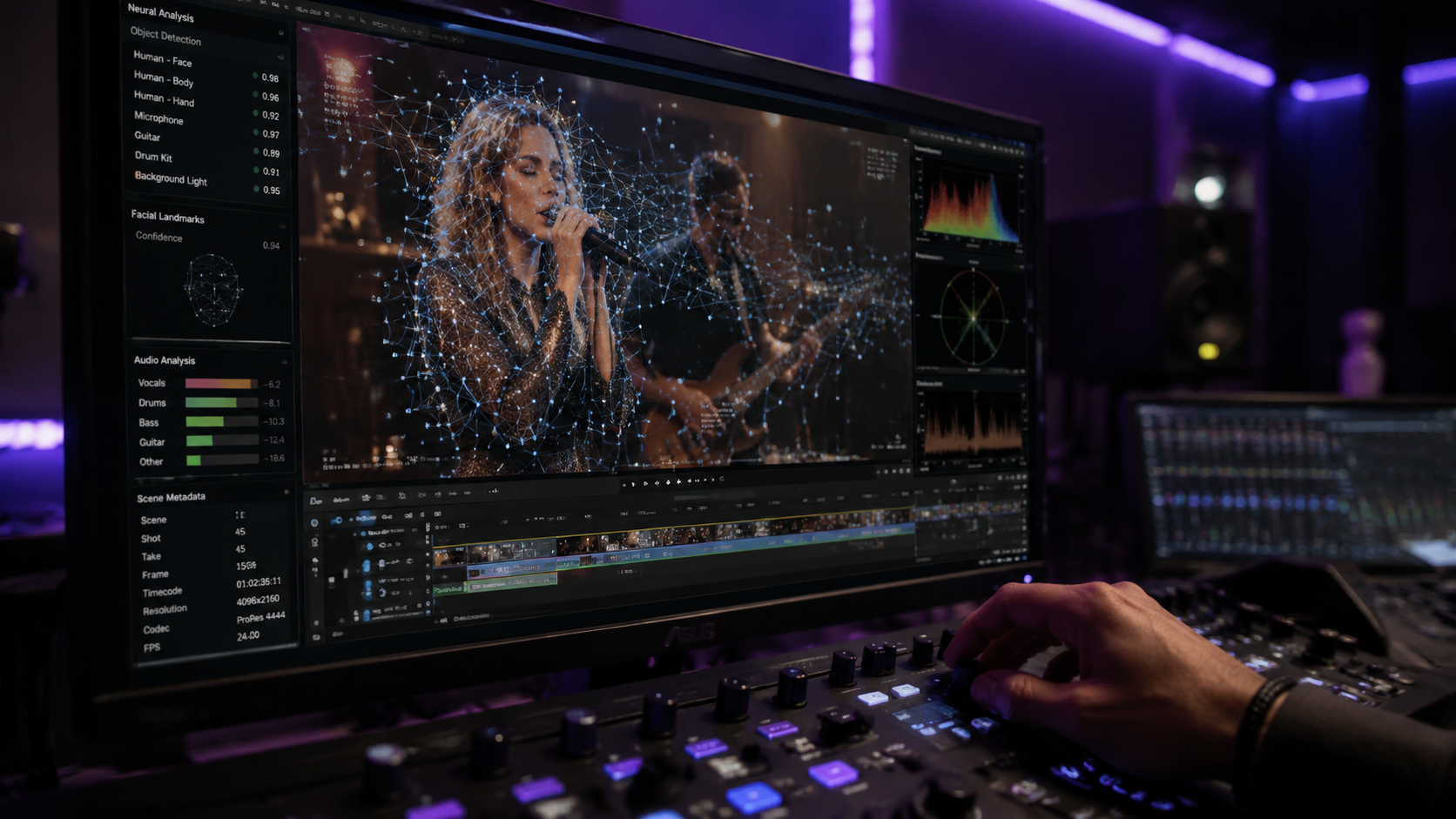
The landscape of visual effects has shifted toward "Generative Realism." In 2026, the most popular effects are no longer just filters; they are intelligent modifications that interact with the physics of the scene. Artists are moving away from static overlays in favor of dynamic, responsive environments that react to the singer’s movements and the song’s intensity.
Neural Style Transfer and Aesthetic Morphing
Neural style transfer has evolved from simple "artistic filters" into complex aesthetic morphing. This effect allows a music video to transition smoothly between different visual eras—such as moving from a 1970s film grain look to a futuristic digital glitch—within a single chorus. According to Perfect Corp, which tested 23 best AI video generators in May 2026, the ability to maintain temporal consistency (preventing flickering) is the hallmark of top-tier AI tools this year.
AI-Driven Rotoscoping and Subject Isolation
Gone are the days of frame-by-frame masking. Modern AI video effects for music videos utilize "Instant Masking," which can track a moving dancer even behind foreground objects. This allows creators to place the artist in impossible locations, such as the surface of Mars or a digital dreamscape, with perfect edge detection. PCMag notes that the best mobile video editing apps of 2026 now include this feature as a standard one-tap operation.
Generative Particle Systems and Lighting
Lighting is the most difficult element to get right in a music video. AI effects now allow for "Relighting," where the software analyzes the 3D geometry of a face and adds virtual light sources that cast realistic shadows. When combined with generative particle systems—like embers that glow in sync with a bass drop—the result is a professional cinematic look that was previously only possible in high-end VFX houses.
Comparing the Top AI Video Tools for 2026
Choosing the right platform is essential for achieving the best results. Different tools cater to different needs, from quick mobile edits for social media to deep-dive generative art for full-length features. The following table compares the leading software categories based on the latest 2026 reviews from iLounge and PCMag.
| Tool Category | Best For | Key AI Effect | Platform |
|---|---|---|---|
| AI Video Generators | Full Generative Videos | Text-to-Video Synthesis | Web/Cloud |
| Pro Video Suites | Cinematic Color & VFX | AI Relighting & Rotoscoping | Desktop (Windows/Mac) |
| Mobile Editing Apps | Social Media/Reels | Auto-Beat Sync & Style Transfer | iOS/Android |
| Specialized Music AI | Independent Artists | Audio-Reactive Visualizers | Web-Based |
The Impact of AI on Music Video Production Costs
In 2026, the democratization of high-end visuals is the biggest story in the industry. A study cited by FindArticles in March 2026 revealed that independent artists using AI music video generators saved an average of $5,000 to $15,000 per project compared to traditional VFX workflows. This shift has allowed smaller creators to compete with major label aesthetics on a fraction of the budget.
Furthermore, the speed of iteration has increased. Where a traditional CGI sequence might take weeks to render, AI-driven effects provide near-instant feedback. This "real-time" nature of 2026 software allows directors to experiment with dozens of different "looks" during a single editing session. As The Music Universe points out, the "Best AI music video generator for artists" is often the one that offers the most creative freedom through prompt engineering rather than just pre-set templates.
However, the rise of AI does not mean the end of human creativity. The most lauded music videos of 2026 use AI as a "Co-Pilot." The human director provides the vision, the framing, and the emotional core, while the AI handles the technical execution of complex visual textures. This synergy is what defines the current "Golden Age" of digital music content.
Advanced Techniques: Prompt Engineering for Visuals
To get the best AI video effects for music videos, mastering prompt engineering is now a required skill for editors. In 2026, prompts have become multimodal, meaning you can feed the AI a reference image, a snippet of music, and a text description simultaneously. This ensures the output is perfectly aligned with the artist's brand identity.
Temporal Consistency and Flow
A common challenge with early AI video was "jitter." In 2026, advanced "Flow-Based" AI models ensure that effects stay pinned to the objects they are applied to. When applying a "liquid metal" effect to a singer’s outfit, the AI now tracks the fabric's movement across 60 frames per second, ensuring the effect doesn't break or glitch during fast movements or dance sequences.
Integrating 3D Environments
The "Best AI Video Generators for 2026" (as tested by Perfect Corp) now offer "Depth Estimation." This allows editors to insert 3D objects behind the artist but in front of the background without manual layering. For music videos, this means you can have digital dragons, floating lyrics, or geometric shapes weaving through the scene, interacting naturally with the physical space filmed on camera.
Frequently Asked Questions About AI Music Video Effects
What are the best AI video effects for music videos in 2026?
The top effects include neural style transfer for consistent aesthetics, AI-powered relighting for cinematic depth, and audio-reactive generative backgrounds that pulse with the music. These tools are now integrated into both mobile apps and professional desktop software.
Are AI video generators expensive for independent artists?
No, many of the best AI music video generators in 2026 offer tiered pricing, including "pay-per-render" models or affordable monthly subscriptions. According to 2026 market data, these tools have reduced traditional VFX costs by roughly 80%.
Can I use AI effects on my mobile phone?
Yes, PCMag’s 2026 testing confirms that mobile video editing apps now feature powerful NPU (Neural Processing Unit) acceleration, allowing for real-time rotoscoping and style transfer directly on smartphones.
How do I make AI effects look professional and not "glitchy"?
To achieve a professional look, use tools that offer "Temporal Consistency" and high-resolution upscaling. Combining AI effects with high-quality original footage (rather than generating the whole video from scratch) usually yields the most polished results.
Does using AI in music videos affect copyright?
In 2026, most major AI video platforms provide "commercial use" licenses for the content generated on their platforms. However, it is always best to check the specific terms of service of the tool you are using to ensure you own the final output for distribution on streaming services.
As we move further into 2026, the line between reality and digital creation continues to blur. The best AI video effects for music videos are those that enhance the emotional resonance of the song, providing a visual language that speaks as loudly as the lyrics. By staying updated with the latest reviews from sources like PCMag and iLounge, and experimenting with the 23+ top-rated generators available today, artists can ensure their visuals remain at the cutting edge of the industry.



Comments ()