
Best AI Video Editor for Professional Filmmakers 2026
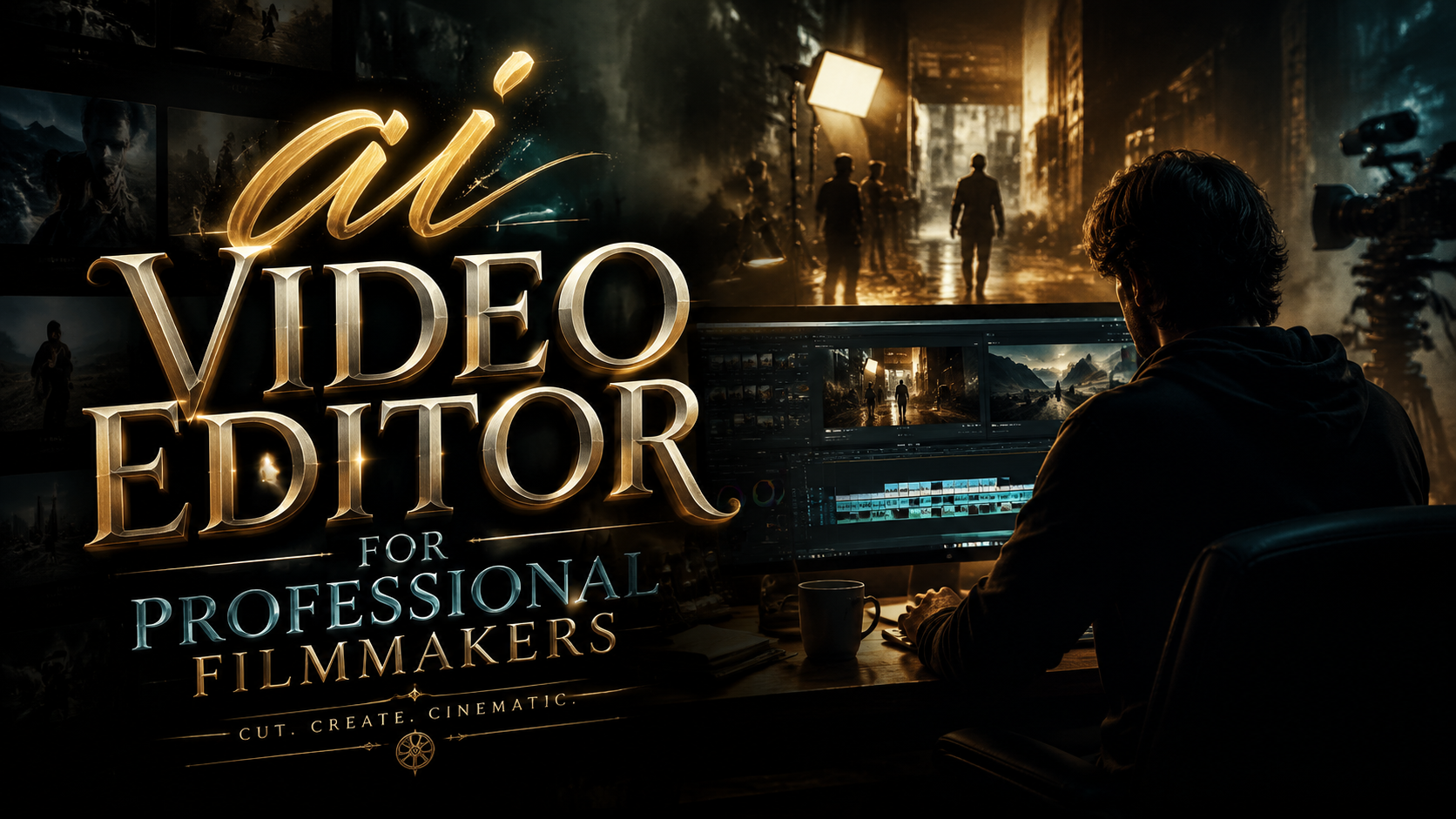
In 2026, the best AI video editor for professional filmmakers is Adobe Premiere Pro, which has been embraced by 85% of Sundance filmmakers according to the Adobe Newsroom, thanks to its deep integration of AI-powered editing, color grading, and audio tools. However, Apple's Final Cut Pro with its new Immersive Video updates announced at WWDC26 and emerging AI-native platforms are giving professionals compelling alternatives that leverage generative AI for everything from scene detection to automated storytelling.
TL;DR: The best AI video editor for professional filmmakers in 2026 is Adobe Premiere Pro, adopted by 85% of Sundance creators, with Apple Final Cut Pro and AI-native platforms as strong contenders. AI is now a core pillar of professional post-production, not a gimmick.
An AI video editor for professional filmmakers is a non-linear editing system that uses machine learning and generative AI to automate repetitive tasks, enhance creative workflows, and deliver cinematic-quality output with minimal manual intervention. In 2026, these tools have matured to handle everything from intelligent scene detection and audio cleanup to AI-driven color grading and even generative video creation.
- ✓ 85% of Sundance filmmakers choose Adobe for AI-powered editing — a dominant vote of confidence from the professional community.
- ✓ Apple's WWDC26 introduced next-gen Siri AI and immersive video tools that integrate AI directly into the editing timeline.
- ✓ Netflix is investing up to $545,000 for AI video management roles, signaling that AI is now a strategic priority in professional filmmaking.
- ✓ AI-native platforms are emerging as specialized tools for generative filmmaking, offering new workflows beyond traditional NLEs.
- ✓ Free AI video generators now offer professional-grade features, lowering the barrier to entry for indie filmmakers.
What Defines the Best AI Video Editor for Professional Filmmakers in 2026?
Professional filmmakers in 2026 demand more than just a timeline and a set of transitions. The best AI video editor for professional filmmakers must integrate artificial intelligence at every stage of the post-production pipeline — from ingest and organization to editing, color grading, audio mixing, and delivery. According to Amateur Photographer, the best video editing software in 2026 is defined by its accessibility and intelligence: "these are programs literally anyone can use," yet they pack enough depth for Oscar-caliber work.
The AI features that matter most to professionals include automatic scene detection and tagging, speech-to-text transcription for rapid logging, AI-assisted color matching and grading, intelligent audio cleanup and mixing, and generative tools that can extend clips, remove objects, or even create B-roll from text prompts. In 2026, these features are no longer experimental — they are production-ready and trusted by major studios and independent filmmakers alike.
Another critical factor is integration with existing workflows. The best AI video editor for professional filmmakers must play nicely with other tools in the ecosystem — from camera raw formats to color management pipelines, VFX software, and cloud-based collaboration platforms. According to Trend Hunter, AI-native filmmaking platforms are emerging as a new category, but traditional NLEs that embed AI deeply into their existing interfaces remain the top choice for professionals who cannot afford to disrupt their established workflows.
Adobe Premiere Pro: The Industry Standard with AI Innovation
Adobe Premiere Pro continues to dominate the professional filmmaking landscape in 2026. According to the Adobe Newsroom, 85% of Sundance filmmakers choose Adobe, and the company has released new AI video innovations alongside a $10 million Creator Grants program. This staggering adoption rate is a direct result of Adobe's relentless investment in AI features that genuinely improve the editing experience without forcing users to learn entirely new paradigms.
Key AI-powered features in Premiere Pro 2026 include Scene Edit Detection powered by Adobe Sensei, which automatically identifies cuts in imported footage and creates a multicam sequence. The Auto Reframe tool uses AI to intelligently crop footage for different aspect ratios, while the new Text-Based Editing workflow allows editors to search, select, and rearrange clips by searching the transcribed dialogue. The latest version also includes AI-driven audio cleanup with DeNoise and DeReverb, and a Color Match tool that analyzes reference frames and applies consistent grades across entire timelines.
For professional filmmakers, the most significant AI addition in 2026 is the Generative Extend tool, which uses AI to create additional frames at the beginning or end of a clip to smooth transitions or extend action. This feature, combined with the new AI-powered motion graphics templates and auto-captioning, makes Premiere Pro the most comprehensive AI video editor for professional filmmakers who need reliability, depth, and a massive ecosystem of plugins and integrations.
Apple Final Cut Pro: Next-Gen Siri AI and Immersive Video
At WWDC26, held on June 9, 2026, Apple unveiled next-generation Siri AI intelligence and new Immersive Video updates that directly impact Final Cut Pro users, as reported by No Film School. The new Siri AI is deeply integrated into the macOS and iPadOS operating systems, allowing editors to control Final Cut Pro with natural language commands — from "add a cross dissolve to the last three clips" to "create a rough cut from all the interview footage."
The Immersive Video updates are particularly exciting for filmmakers working in spatial and VR content. Final Cut Pro 2026 now includes native support for Apple's Immersive Video format, with AI-assisted spatial audio placement, automatic depth map generation, and intelligent object tracking in 3D space. This makes Final Cut Pro the go-to choice for filmmakers who are exploring Apple Vision Pro and other spatial computing platforms.
Apple's approach to AI in Final Cut Pro is more conservative than Adobe's, focusing on seamless integration rather than flashy generative features. The Magnetic Timeline with AI-assisted clip alignment, the AI-powered Voice Isolation tool, and the new Smart Conform feature for automatic multicam editing are all designed to speed up repetitive tasks while giving the editor full creative control. For professional filmmakers who work primarily in the Apple ecosystem, Final Cut Pro remains a powerful and elegant AI video editor that prioritizes speed and simplicity.
AI-Native Filmmaking Platforms: A New Category Emerges
According to Trend Hunter, AI-native filmmaking platforms are one of the most exciting developments in 2026. These are not traditional NLEs with AI features bolted on — they are built from the ground up around generative AI, offering workflows that would be impossible in conventional software. Platforms like Runway Gen-3, Pika Labs, and new entrants from major tech companies allow filmmakers to generate, edit, and manipulate video using text prompts, reference images, and semantic commands.
For professional filmmakers, these platforms are not yet replacements for Premiere Pro or Final Cut Pro, but they are becoming essential companion tools. A filmmaker might use an AI-native platform to generate B-roll, create visual effects, or produce multiple variations of a scene for client review. The ability to iterate rapidly with AI-generated content is changing the pre-visualization and pitching process, and some directors are already using these tools to create entire short films with minimal traditional shooting.
Netflix is taking this trend seriously. According to Y.M.Cinema Magazine, Netflix is paying up to $545,000 for an AI Video Manager role to shape filmmaking. This signals that the streaming giant views AI as a strategic capability rather than a passing trend. Professional filmmakers who master both traditional NLEs and AI-native platforms will have a significant competitive advantage in the coming years.
How to Choose the Right AI Video Editor for Your Professional Workflow
Selecting the best AI video editor for professional filmmakers depends on your specific workflow, team size, and the type of content you produce. For narrative filmmakers working on feature films or high-end commercials, Adobe Premiere Pro offers the most comprehensive AI toolset with the largest ecosystem of plugins and third-party integrations. The fact that 85% of Sundance filmmakers choose Adobe is a powerful endorsement of its reliability and depth.
For documentary and event filmmakers who need speed and efficiency, Apple Final Cut Pro with its new Siri AI and Magnetic Timeline offers a faster, more streamlined experience. The AI-powered transcription and text-based editing features are particularly valuable for interview-heavy projects. If you are working in spatial video or immersive content, Final Cut Pro's native support for Apple's Immersive Video format makes it the clear choice.
For indie filmmakers and small studios with limited budgets, free AI video generators have become surprisingly capable in 2026. According to Ventureburn, the 10 best free AI video generators in 2026 include tools that can produce short-form content, social media videos, and even rough cuts of longer projects. While these tools cannot yet replace a full NLE for complex professional work, they are excellent for pre-visualization, pitching, and rapid prototyping.
Comparison Table: Top AI Video Editors for Professional Filmmakers in 2026
| Feature / Platform | Adobe Premiere Pro | Apple Final Cut Pro | DaVinci Resolve | AI-Native Platforms |
|---|---|---|---|---|
| AI Scene Detection | Yes (Adobe Sensei) | Yes (Smart Conform) | Yes (Neural Engine) | Yes (generative) |
| Text-Based Editing | Yes (transcription-based) | Yes (Siri AI-assisted) | Yes (Fairlight + AI) | Limited |
| AI Color Grading | Auto Color Match | Color Balance AI | Color Slice + AI | Not available |
| Generative Video | Generative Extend | Not available | Not available | Full generative |
| Immersive / Spatial Video | Limited | Native support | Limited | Experimental |
| Sundance Adoption | 85% | ~10% | ~5% | Emerging |
| Pricing Model | Subscription ($54.99/mo) | One-time ($299) | Free / Studio $295 | Subscription or per-use |
The Future of AI in Professional Filmmaking: Trends to Watch
The rapid evolution of AI in video editing is reshaping the professional filmmaking landscape. According to Y.M.Cinema Magazine, Netflix's decision to pay up to $545,000 for an AI Video Manager role underscores the growing strategic importance of AI in content production. This role involves overseeing AI tools and workflows, training models on proprietary footage, and ensuring that AI-generated content meets the studio's quality standards.
Another major trend is the convergence of traditional NLEs and AI-native platforms. We are already seeing Adobe integrate generative AI features into Premiere Pro, and Apple's Siri AI is blurring the line between voice assistant and editing tool. By 2027, it is likely that every major video editing platform will offer some form of generative video capability, making the distinction between "AI editor" and "traditional editor" increasingly meaningless.
For professional filmmakers, the key takeaway is clear: AI is not coming to replace editors — it is coming to augment them. The best AI video editor for professional filmmakers in 2026 is the one that fits your workflow, respects your creative vision, and gives you the tools to work faster and more creatively. Whether you choose Adobe Premiere Pro, Apple Final Cut Pro, DaVinci Resolve, or an AI-native platform, the most important skill you can develop is the ability to collaborate with AI as a creative partner.
Frequently Asked Questions
What is the best AI video editor for professional filmmakers in 2026?
Adobe Premiere Pro is the leading choice, adopted by 85% of Sundance filmmakers, thanks to its comprehensive AI toolset including Scene Edit Detection, Text-Based Editing, and Generative Extend. Apple Final Cut Pro and DaVinci Resolve are strong alternatives depending on your workflow and platform preferences.
Does Adobe Premiere Pro have AI features for filmmakers?
Yes, Premiere Pro includes multiple AI-powered features such as Auto Reframe, Text-Based Editing, AI-driven audio cleanup (DeNoise and DeReverb), Color Match, and the new Generative Extend tool that creates additional frames using AI. These features are built on Adobe Sensei and are available in the 2026 version.
What AI features did Apple announce at WWDC26 for video editing?
At WWDC26 on June 9, 2026, Apple unveiled next-generation Siri AI intelligence that integrates with Final Cut Pro for natural language editing commands, as well as new Immersive Video updates with AI-assisted spatial audio placement, automatic depth map generation, and intelligent 3D object tracking.
Are AI-native filmmaking platforms replacing traditional NLEs?
Not yet, but they are becoming essential companion tools. AI-native platforms like Runway Gen-3 and Pika Labs offer generative video creation that traditional NLEs cannot match. Most professional filmmakers use both: a traditional NLE for final editing and an AI-native platform for pre-visualization, B-roll generation, and rapid prototyping.
How much does Netflix pay for AI video management roles?
According to Y.M.Cinema Magazine, Netflix is paying up to $545,000 for an AI Video Manager role. This position involves overseeing AI tools and workflows, training models on proprietary footage, and ensuring AI-generated content meets the studio's quality standards.
Can free AI video generators produce professional-quality output?
According to Ventureburn's ranking of the 10 Best Free AI Video Generators in 2026, many free tools now offer surprisingly capable output for short-form content, social media videos, and rough cuts. However, for complex professional work with multiple tracks, precise color grading, and advanced audio mixing, a full NLE like Premiere Pro or Final Cut Pro is still necessary.
Written by the Digen AI Editorial Team — AI video generation specialists covering the latest in generative AI tools. Learn more about Digen AI.
Comments ()