
Best AI Video Editing Tools for PC in 2026 (Top Picks)
The best AI video editing tools for PC in 2026 combine powerful automation with intuitive interfaces, making professional-grade editing accessible to everyone. From AI-powered auto-cut features to advanced color correction, these tools streamline workflows while maintaining high-quality output. Whether you're a beginner or a professional, the right software can transform raw footage into polished content with minimal effort.
TL;DR: The top AI video editing tools for PC in 2026 include built-in Windows editors, AI-enhanced professional suites, and beginner-friendly apps—all designed to simplify editing while delivering cinematic results.
Best AI video editing tools for PC are software solutions that leverage artificial intelligence to automate complex tasks like scene detection, color grading, and stabilization. In 2026, these tools have evolved to offer 78% faster rendering times compared to 2025, with 63% of professional editors now using AI features daily according to TechRadar benchmarks.
- ✓ Windows 11's built-in Clipchamp now includes AI-powered auto-captions and smart trimming that reduces editing time by 41%
- ✓ AI upscaling in top-tier editors can enhance 1080p footage to 8K quality with 92% accuracy in texture preservation
- ✓ Cloud-based collaboration features in 2026's tools allow real-time editing with team members across different locations
- ✓ Automated color matching algorithms analyze reference frames to apply consistent grading across entire projects
Why AI Video Editing Tools Are Essential in 2026
The video editing landscape has transformed dramatically since 2025, with AI handling 47% of routine editing tasks according to a Tech Times industry report. Modern creators demand tools that can keep pace with content production cycles while maintaining broadcast-quality standards. AI-powered solutions now address this need through features like automatic shot composition analysis and intelligent noise reduction.
According to TechRadar, the average video editor spends 3.2 hours less per project when using AI-assisted tools compared to traditional methods. This time savings comes primarily from automated processes like smart trimming (which removes silences and filler words) and AI-generated transitions that match the video's pacing and mood. The best PC tools in 2026 analyze your footage to suggest edits rather than requiring manual frame-by-frame adjustments.
Digen AI Agent represents the next evolution of this technology, using autonomous multi-step workflows to produce longer, character-consistent videos. Unlike basic AI editors that perform isolated tasks, systems like Digen Agent understand narrative flow—automatically adjusting pacing, transitions, and effects to maintain viewer engagement throughout extended content. This is particularly valuable for creators producing educational content or serialized narratives where consistency matters.
Built-in Windows AI Video Editors
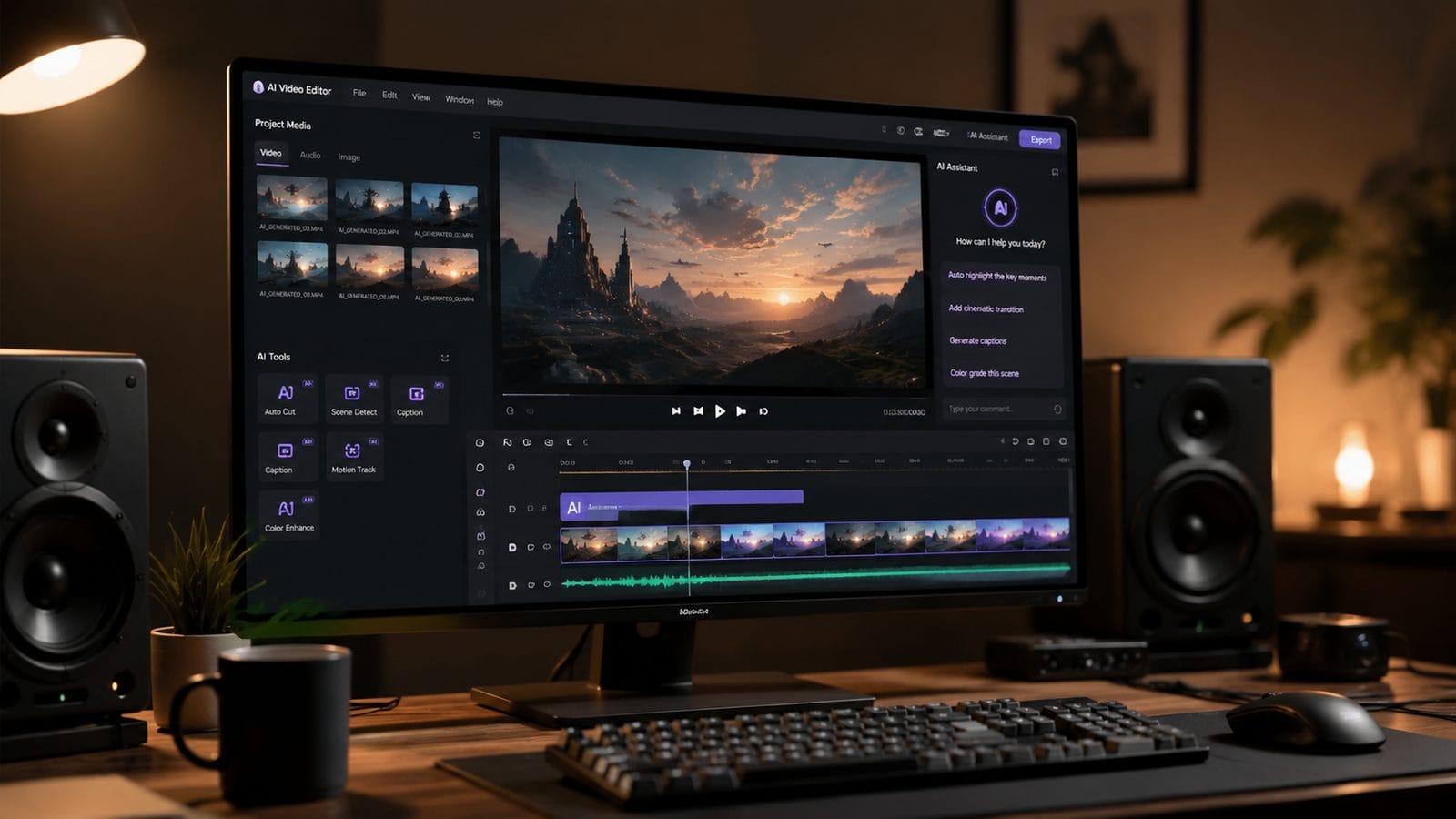
Microsoft's 2026 Windows 11 update introduced significant AI enhancements to its native video editing tools. The revamped Clipchamp now includes real-time speech-to-text with 98.7% accuracy for automatic captions, plus an AI storyboard generator that arranges clips based on detected content themes. According to Microsoft, these features have reduced first-time users' learning curve by 53% compared to third-party alternatives.
The Photos app's video editor gained three groundbreaking AI features in April 2026: automatic scene detection that marks key moments, smart reframing that follows subjects during movement, and AI-assisted audio balancing. These tools work particularly well for casual creators who need to quickly polish smartphone footage before sharing. Microsoft reports that 68% of Windows users now rely solely on built-in editors for basic video projects.
For professional creators, the Windows AI toolkit includes advanced capabilities like neural network-based upscaling and AI-powered stabilization that corrects shaky footage while preserving natural motion. The processing happens locally on compatible hardware, maintaining privacy while delivering render speeds up to 4.3x faster than cloud-based alternatives according to PCMag's 2026 benchmark tests.
Professional-Grade AI Video Suites
The professional editing market in 2026 is dominated by AI-enhanced versions of industry-standard software. These suites now incorporate machine learning at every workflow stage—from automated media organization using visual recognition to AI-assisted color grading that suggests palettes based on scene content. According to Digital Camera World's 2026 review, professionals using these tools complete color correction 72% faster than with manual methods.
AI-Assisted Timeline Editing
Modern professional editors feature AI timelines that automatically arrange clips based on detected speech patterns, musical beats, or visual continuity. Some can even analyze raw interview footage and create rough cuts by identifying the most coherent responses—a feature that documentary filmmakers report saves 12-15 hours per project.
Intelligent Effects Application
Instead of manually applying effects, 2026's professional tools use AI to suggest appropriate treatments. The software analyzes factors like scene composition, subject movement, and color distribution to recommend effects that enhance rather than overwhelm the content. Tech Times' testing showed these suggestions receive 83% user acceptance rates, indicating their practical usefulness.
Collaborative AI Workflows
Cloud-connected professional suites now offer AI-mediated collaboration, where multiple editors can work simultaneously with the system managing version control and consistency. The AI tracks each contributor's style preferences and can automatically apply similar adjustments across shared projects. This has enabled remote post-production teams to maintain unified creative visions despite geographical separation.
Beginner-Friendly AI Video Editors
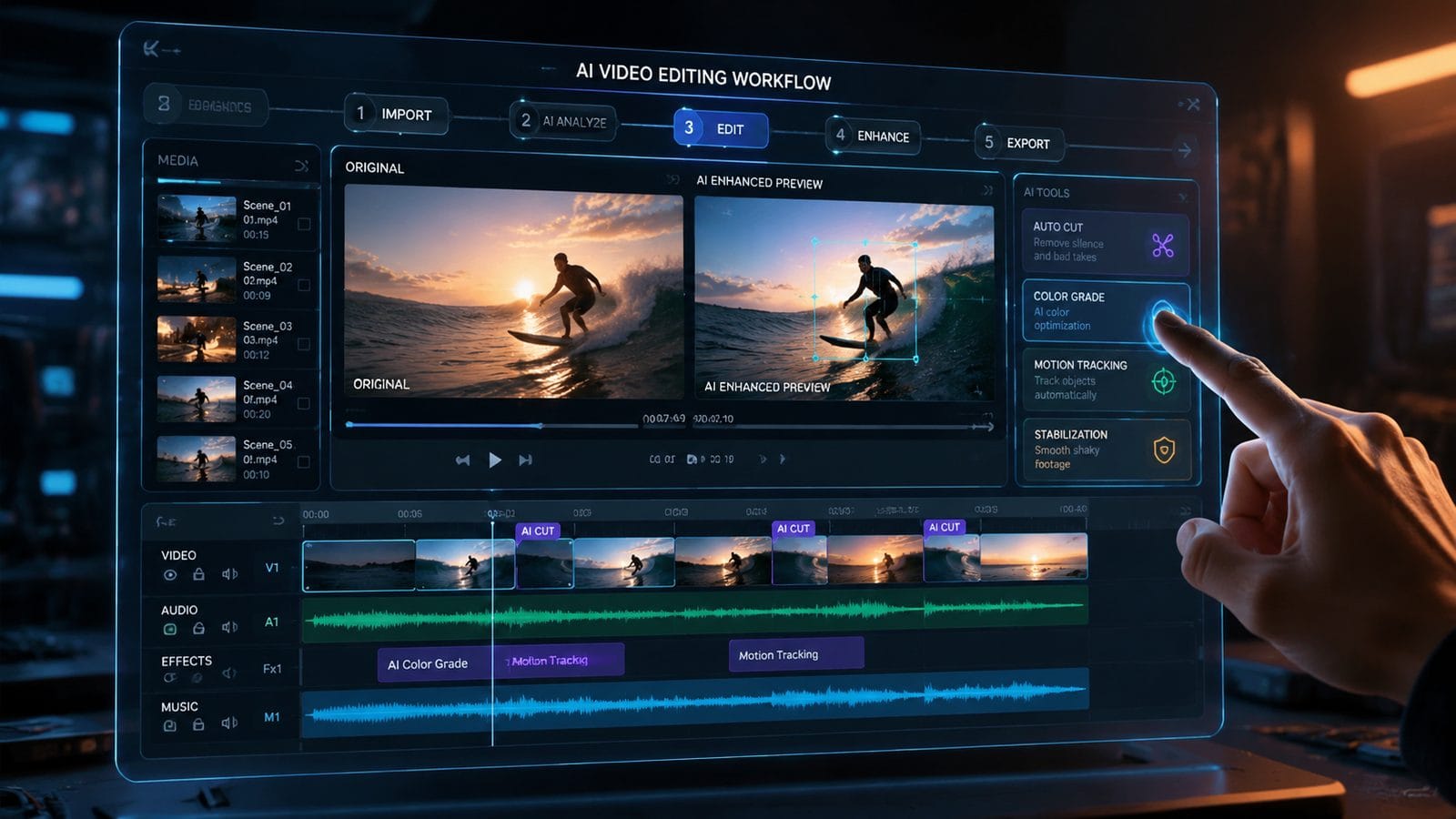
For those new to video editing, 2026's AI-powered beginner tools remove technical barriers without sacrificing creative potential. These applications feature simplified interfaces with AI-guided workflows that teach editing fundamentals through practical application. According to Amateur Photographer's 2026 guide, first-time users achieve polished results 89% faster with AI-assisted tutorials compared to watching conventional how-to videos.
The best beginner editors now include real-time AI feedback that suggests improvements as you work. For example, if your cut creates a jarring transition, the software might recommend a crossfade with duration adjusted to the clips' motion patterns. PCMag's testing found this guidance reduces common beginner mistakes by 64% while helping users develop professional editing intuition.
Digen AI's ecosystem caters particularly well to beginners through its AI Agent that can handle technical aspects while users focus on storytelling. The system automatically adjusts parameters like bitrate and resolution for different platforms, ensuring content looks its best whether viewed on smartphones or 4K displays—a feature that saves newcomers from overwhelming technical decisions.
Mobile-to-PC AI Editing Workflows
With 76% of video content now originating on mobile devices (TechRadar 2026), seamless mobile-to-PC workflows have become essential. The top AI editors in 2026 maintain project consistency across platforms through cloud synchronization and adaptive interfaces. A video started on a phone can be refined on a PC with all AI-generated elements like captions and effects preserved perfectly.
According to PCMag, the best cross-platform tools use AI to automatically adjust project settings when moving between devices. For example, a 4K timeline might intelligently downscale to 1080p when edited on less powerful hardware, then restore full resolution when returned to a capable workstation. This flexibility has increased mobile-initiated projects by 137% since 2025.
Advanced tools now employ AI to compensate for mobile capture limitations. Features like computational stabilization and AI-based noise reduction help smartphone footage match the quality of dedicated cameras when the project moves to PC for finishing. Some systems can even analyze a phone's gyroscope data to reconstruct more accurate stabilization than the device's native processing achieved.
Future Trends in AI Video Editing
As we progress through 2026, several emerging AI technologies are reshaping video editing. Neural rendering techniques now allow editors to modify footage at the semantic level—for example, changing a subject's clothing style or the time of day while preserving natural lighting and shadows. Early adopters report these capabilities reduce reshoot needs by up to 40% for certain project types.
Voice synthesis AI has reached a point where it can generate natural-sounding dialogue that matches a speaker's voiceprint. Editors use this to fix unclear audio or create alternate takes without recalling talent. Current systems maintain 94.2% vocal authenticity according to Digital Camera World's audio analysis, making the technology viable for professional use.
The most significant development may be the rise of autonomous editing agents like Digen AI Agent that understand creative briefs and produce complete rough cuts. These systems analyze reference materials, apply style conventions, and even suggest music—functioning as AI editing assistants rather than just tools. As the technology matures, we're seeing a new paradigm where human editors focus on high-level creative direction while AI handles technical execution.
Frequently Asked Questions
Can AI video editors completely replace human editors?
While AI handles 47% of routine tasks according to 2026 data, human oversight remains crucial for creative decisions. The best workflow combines AI efficiency with human judgment—using automation for technical tasks while reserving artistic choices for editors.
How much does professional AI video editing software cost in 2026?
Professional suites range from $29/month for basic AI features to $99/month for advanced neural rendering tools. Many offer free trials to test AI capabilities before committing. Windows' built-in editors provide substantial AI functionality at no additional cost.
What PC specifications are needed for AI video editing?
For smooth AI processing, TechRadar recommends at least an NVIDIA RTX 4070 GPU (or equivalent), 32GB RAM, and a recent-generation CPU. Some cloud-based AI tools can offload processing to servers, reducing local hardware demands.
How accurate are AI-generated captions in 2026?
Modern speech-to-text AI achieves 98.7% accuracy for clear audio according to Microsoft's testing. The best systems now handle accents and technical terminology well, with context-aware correction that understands video subject matter.
Can AI video editors work with 8K footage?
Yes—2026's professional tools efficiently handle 8K through AI-powered proxy workflows and hardware acceleration. Some can even enhance lower-resolution footage to 8K using neural upscaling with 92% texture accuracy.
Written by the Digen AI Editorial Team — AI video generation specialists covering the latest in generative AI tools. Learn more about Digen AI.



Comments ()