
Best AI Video Editing Software for Business in 2026

The best ai video editing software for business in 2026 utilizes generative intelligence to automate high-fidelity content creation, allowing teams to scale production without increasing headcount. By integrating features like "Link-to-Video" automation and real-time collaborative rendering, these tools enable businesses to transform product URLs into polished marketing assets in seconds. As of mid-2026, 91% of businesses have integrated video into their core marketing strategies, with AI adoption reaching record highs to meet the demand for personalized, multi-platform content.
AI video editing software for business is a category of professional creative tools that leverage machine learning to automate complex tasks such as color grading, audio cleanup, and scene assembly. In 2026, these platforms focus on generative workflows where users provide a prompt or product link, and the AI generates a finished, brand-compliant video ready for distribution.
- ✓ AI video editing software for business now allows for instant "Product Link to Video" conversions, significantly reducing production time.
- ✓ According to recent 2026 statistics, over 91% of modern businesses utilize video content as their primary engagement driver.
- ✓ Generative AI tools have evolved to support 8K resolution and complex multi-track editing with natural language commands.
- ✓ Windows and macOS have deeply integrated native AI editing suites, making entry-level professional production accessible to all staff.
The Evolution of AI Video Editing Software for Business
As we move through the second quarter of 2026, the landscape of corporate communication has shifted entirely toward a video-first approach. The latest industry data from ALM Corp indicates that the market size for video editing software has seen exponential growth, driven largely by the democratization of high-end post-production tools. Businesses no longer require a dedicated studio for every social media update; instead, they rely on ai video editing software for business to handle the heavy lifting of cutting, captioning, and formatting.
The "AI Adoption" trend highlighted in recent 2026 reports shows that the gap between amateur and professional output has virtually disappeared. Modern software now includes "context-aware" editing, where the AI understands the sentiment of the footage and suggests music, transitions, and color palettes that align with the brand’s established identity. This shift has allowed small-to-medium enterprises (SMEs) to compete with global corporations in terms of content quality and frequency.
Why Businesses are Switching to AI-First Workflows
Efficiency is the primary driver for this transition. In 2026, the speed of social media trends requires a turnaround time that traditional manual editing cannot match. DesignRush reports that since 91% of businesses now use video, the competition for attention is fiercer than ever. AI tools allow marketing teams to iterate on multiple versions of a single campaign, testing different hooks and visual styles simultaneously to see what resonates best with their target demographic.
How to Implement AI Video Editing in Your Business Workflow
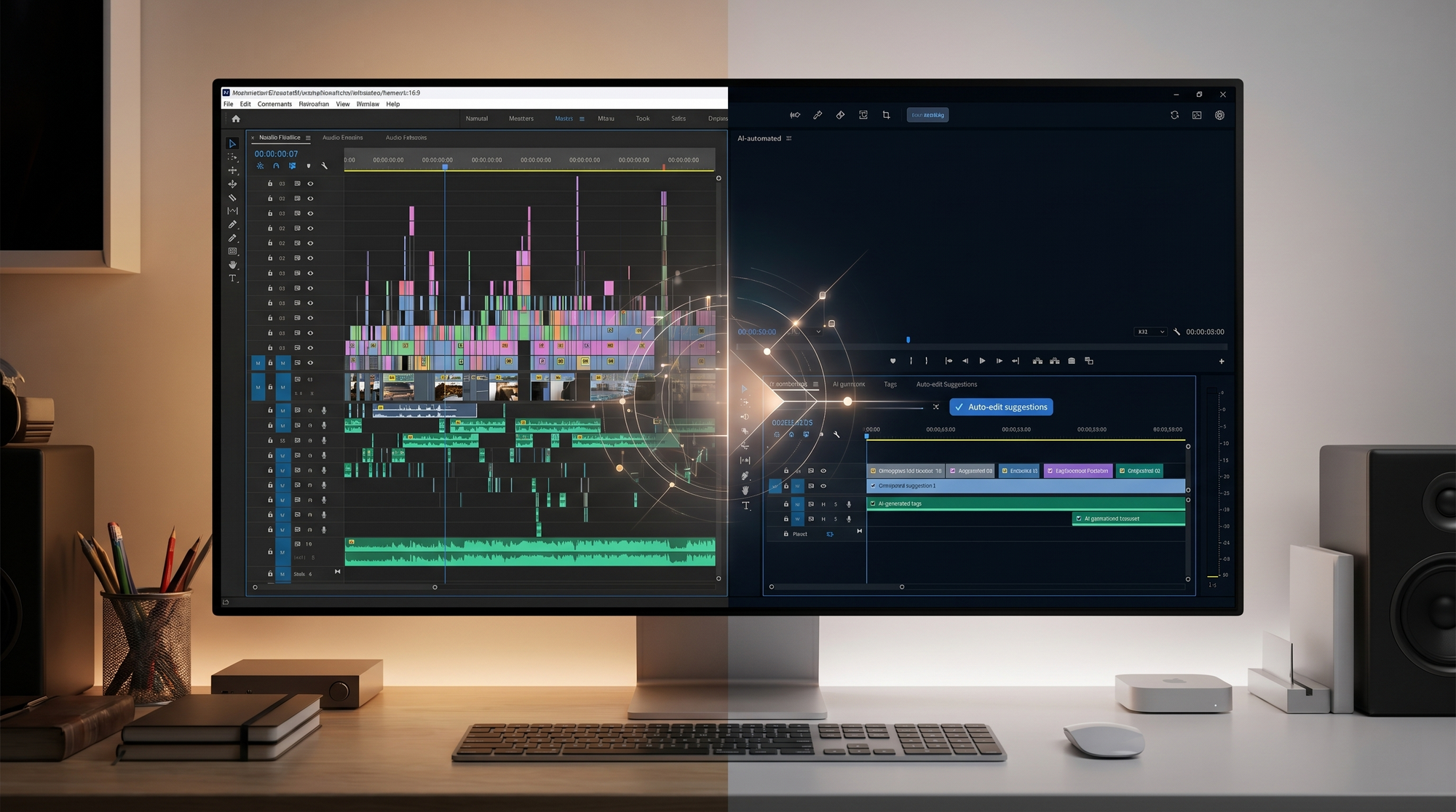
Adopting new technology can be daunting, but the current generation of AI tools is designed for seamless integration. If your organization is looking to leverage the best ai video editing software for business, follow these five steps to ensure a smooth rollout:
- Audit Your Existing Assets: Gather your brand guidelines, logos, and previous video content to "train" the AI on your specific visual style.
- Select a Link-to-Video Enabled Platform: Choose a tool that supports the latest 2026 features, such as turning product links directly into video ads.
- Define User Permissions: Set up a collaborative workspace where editors can review AI-generated drafts before they are finalized.
- Automate Localization: Use AI-driven dubbing and subtitle translation to prepare your content for global markets instantly.
- Analyze and Iterate: Use the software’s built-in analytics to see which AI-generated styles perform best and adjust your prompts accordingly.
Top Features of Business-Grade AI Video Editors in 2026
The feature set of 2026 video editors is a far cry from the basic filters of the past. Today’s professional suites are built on foundational models capable of understanding spatial depth and temporal consistency. According to TechRadar, which tested over 70 AI tools in April 2026, the most successful platforms are those that offer "one-click" solutions for complex tasks like object removal, background replacement, and voice cloning.
One of the most revolutionary updates this year is the "Link-to-Video" functionality reported by Business Review. This allows e-commerce businesses to simply paste a URL from their storefront into the editor. The AI then scrapes the images, descriptions, and pricing to create a high-energy promotional video in under sixty seconds. This automation is a cornerstone of the ai video editing software for business ecosystem, enabling rapid-fire content creation for platforms like TikTok, Reels, and YouTube Shorts.
Comparison of Leading AI Video Editing Capabilities
To help you decide which platform fits your corporate needs, we have compiled a comparison of the key metrics and features found in the top-tier software tested by PCMag and other industry leaders in May 2026.
| Feature Category | Standard AI Editor | Enterprise AI Suite (2026) | Native OS Editors (Windows/Mac) |
|---|---|---|---|
| Processing Speed | Minutes | Seconds (Cloud-based) | Real-time (Hardware accelerated) |
| Link-to-Video | Basic Template | Advanced Generative Scenes | Not Standard |
| Collaboration | Single User | Multi-user Real-time | Local Network Only |
| AI Voiceovers | Generic | Brand-Specific Voice Cloning | System Voices |
| Output Resolution | 4K | 8K / Raw Format | 4K / ProRES |
Native Integration: Windows and Microsoft’s 2026 Vision
In April 2026, Microsoft announced significant updates to the photo and video editor apps built directly into Windows. This move has made ai video editing software for business more accessible than ever, as basic professional tools are now part of the operating system's core. These native apps use local NPU (Neural Processing Unit) power to perform tasks like automatic framing and noise suppression without needing to upload sensitive corporate data to the cloud.
For many businesses, these built-in tools serve as the perfect entry point. They provide a secure environment for creating internal communications, training videos, and executive briefings. As PCMag noted in their May 2026 review, the integration of AI directly into the OS means that even employees with zero editing experience can produce content that looks like it was made by a professional agency.
Security and Privacy in Corporate AI Video Tools
With the rise of generative AI, data security has become a paramount concern for businesses. The best software providers in 2026 offer "Closed-Loop AI," ensuring that the data used to train the models or the footage uploaded for editing never leaves the company's private cloud. This is a critical requirement for sectors like finance and healthcare, where privacy regulations are stringent.
Market Trends and Economic Impact of AI Editing
The shift toward AI isn't just a technological trend; it’s an economic one. ALM Corp’s 2026 statistics show that while the demand for video editors remains high, the nature of the job has changed. Editors are now "AI Orchestrators," managing multiple automated streams rather than manually cutting clips. This has led to a 40% increase in content output for firms that have fully adopted ai video editing software for business.
Furthermore, the cost of video production has seen a significant decline. What used to cost thousands of dollars in studio time and post-production fees can now be accomplished with a monthly software subscription. This allows businesses to reallocate their budgets toward distribution and high-level creative strategy, rather than the mechanical aspects of video assembly.
The Rise of Personalized Video at Scale
In 2026, personalization is the key to conversion. AI video editors now allow for "Dynamic Creative Optimization," where a single video template can be automatically rendered into thousands of variations, each tailored to a specific viewer's interests, location, or past purchasing behavior. This level of granular marketing was impossible before the advent of sophisticated AI video software.
Future-Proofing Your Business Video Strategy
As we look toward the latter half of 2026 and into 2027, the trajectory of ai video editing software for business is clear: total automation of the technical process. Future updates are expected to include "Text-to-Movie" capabilities that can generate entire 3D environments and digital avatars that are indistinguishable from real humans. Staying ahead of these trends requires a commitment to continuous learning and a willingness to experiment with new tools as they emerge.
To remain competitive, businesses should prioritize software that offers robust API support, allowing the video editing suite to connect directly with CRM and CMS platforms. This creates a "content loop" where data from customer interactions automatically triggers the creation of personalized video follow-ups, further enhancing the customer journey and driving ROI.
What is the best AI video editing software for business in 2026?
The best software depends on your specific needs, but the top-rated tools in 2026 are those that offer "Link-to-Video" automation and enterprise-grade security. Platforms like those reviewed by PCMag and TechRadar emphasize generative AI features that can produce high-quality marketing content in seconds.
Can AI video editors really turn product links into videos?
Yes, as of May 2026, several leading AI video editors can scrape product URLs to automatically generate promotional videos. This includes extracting images, text, and pricing to create a cohesive video ad without manual intervention.
Is AI video editing software secure for corporate use?
Most enterprise-level AI video tools in 2026 offer private cloud options and "Closed-Loop" data policies. This ensures that your proprietary footage and brand data are not used to train public AI models, maintaining your company's privacy and security.
Do I need an expensive computer to run AI video software in 2026?
Not necessarily. While native apps on Windows and macOS utilize local NPU power, many of the most powerful business tools are cloud-based. This allows you to edit and render complex 8K videos on standard business laptops via a web browser.
How has the role of video editors changed with AI?
According to 2026 market statistics, video editors are transitioning into "AI Orchestrators." Rather than performing manual cuts, they now focus on prompt engineering, creative direction, and overseeing the AI’s output to ensure it meets brand standards.



Comments ()