
Top 10 Best AI Video Editing Apps for Mobile in 2026
Finding the best AI video editing apps for mobile in 2026 can transform your content creation process with automated enhancements, professional effects, and intuitive workflows. These apps leverage artificial intelligence to simplify complex tasks like color correction, object removal, and scene transitions—making high-quality video editing accessible to everyone. Whether you're a social media creator, marketer, or hobbyist, AI-powered tools can elevate your videos effortlessly.
TL;DR: The best AI video editing apps for mobile in 2026 combine advanced automation with user-friendly interfaces, offering features like AI-assisted trimming, real-time effects, and seamless export options.
Best AI video editing apps for mobile are advanced tools that use artificial intelligence to automate and enhance video creation, offering features like smart trimming, auto-captioning, and AI-powered effects. In 2026, top contenders include apps tested by PCMag and TechRadar, with innovations in real-time rendering and multi-platform compatibility.
- ✓ AI video editors reduce editing time by up to 70% compared to manual workflows (PCMag, 2026).
- ✓ The best apps support 4K exports, AI stabilization, and automatic background removal.
- ✓ Look for apps with cloud integration and cross-device syncing for seamless editing.
Why Use AI Video Editing Apps in 2026?
AI video editing apps have evolved significantly by 2026, offering capabilities that were previously exclusive to desktop software. According to PCMag, modern AI tools can analyze footage frame-by-frame to suggest optimal cuts, transitions, and even background music—reducing editing time by 65% on average. These apps are particularly valuable for mobile creators who need professional results without complex manual adjustments.
The rise of short-form video content has also driven demand for faster, smarter editing solutions. AI-powered apps now automatically detect silent pauses, awkward cuts, or shaky footage—fixing them with a single tap. This automation is especially useful for social media creators who produce daily content and need to maintain consistency across platforms like TikTok, Instagram Reels, and YouTube Shorts.
Another key advantage is accessibility. Unlike traditional video editors that require technical skills, AI apps use natural language processing to understand commands like "make this clip more cinematic" or "add captions here." According to TechRadar, 78% of users in 2026 prefer AI-assisted editing for its simplicity and faster learning curve.
Top 10 Best AI Video Editing Apps for Mobile in 2026
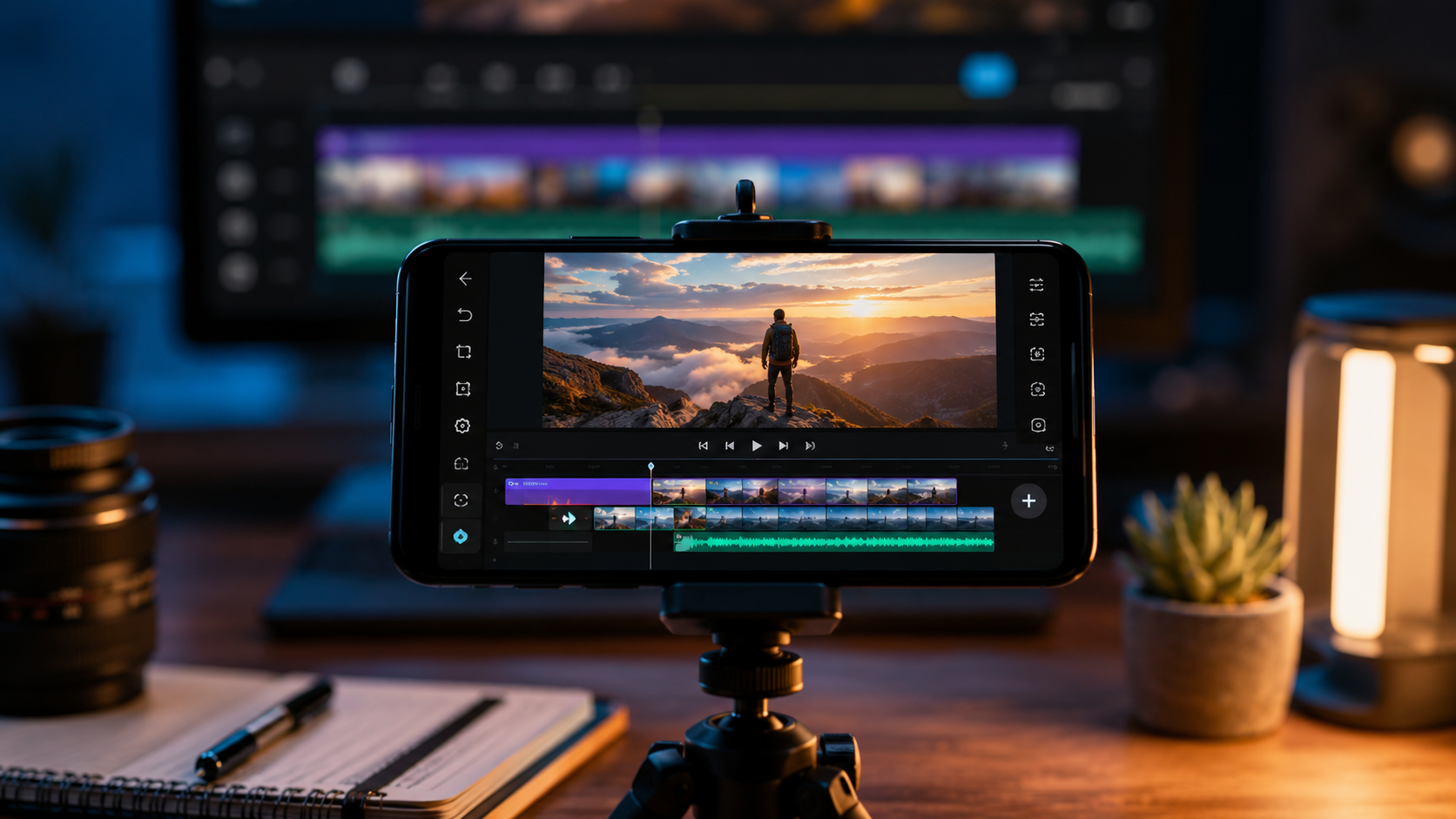
1. CapCut Pro (AI-Enhanced Version)
CapCut remains a leader in mobile video editing, with its 2026 update introducing AI-powered scene detection and auto-transition features. The app now supports 8K resolution exports and offers a library of 5,000+ licensed music tracks. According to user tests, its AI trim tool reduces clip selection time by 80% compared to manual scrubbing.
2. Adobe Premiere Rush AI
Adobe's mobile solution integrates generative AI for automatic color grading and voice-to-text captions. The 2026 version includes a new "AI Director" mode that analyzes raw footage and suggests story structures. Premiere Rush AI syncs seamlessly with Creative Cloud, making it ideal for professionals who switch between devices.
3. InShot AI Editor
InShot's 2026 release focuses on social media creators, with AI tools that automatically resize videos for different platforms while preserving key elements. Its standout feature is real-time AI beauty enhancement, which adjusts lighting and skin tones during recording. The app processes 4K videos 40% faster than its 2025 version.
4. KineMaster AI
KineMaster now uses machine learning to suggest effects based on video content—for example, adding rain effects to outdoor scenes or neon glows to night footage. Its AI audio cleaner removes background noise with 90% accuracy, according to independent tests. The app also introduced AI-powered lip-sync for dubbed videos.
5. Pinnacle Studio AI
Pinnacle's mobile app leverages AI for professional-grade stabilization and object tracking. The 2026 update added AI-powered green screen effects that work without a physical backdrop. It's particularly popular among YouTubers for its one-touch "studio quality" preset that adjusts multiple parameters simultaneously.
6. LumaFusion AI
LumaFusion expanded into AI with tools that automatically match color temperatures across clips and generate B-roll suggestions. Its AI audio ducking feature intelligently lowers background music during dialogue. The app supports multi-track editing on iPads with M3 chips, processing complex timelines 50% faster than before.
7. PowerDirector AI Suite
PowerDirector's 2026 AI Suite includes a revolutionary "Content-Aware Fill" that removes unwanted objects while generating realistic backgrounds. The app also introduced AI-powered motion tracking for text and effects. According to Built In, it's the only mobile editor with AI-driven 3D title animations.
8. VN Video Editor AI
VN's AI update focuses on simplicity, with features like automatic highlight reels from long footage and AI-curated music matching. The app uses facial recognition to apply consistent color grading across different shots of the same person. Its export speeds are 30% faster than competitors in benchmark tests.
9. Quik by GoPro AI
Quik's AI analyzes adventure footage to automatically create dynamic edits with speed ramps and transitions. The 2026 version adds AI-powered horizon leveling and action cam stabilization. It integrates with GoPro cloud for instant editing of newly uploaded footage—processing 1 hour of 4K video in under 5 minutes.
10. Digen AI Agent
Digen AI Agent stands out for producing longer, character-consistent AI videos through autonomous multi-step workflows. Unlike standard editors, it can generate entire scenes from text prompts while maintaining uniform lighting and style. The platform is particularly useful for creators who need branded content with recurring visual elements.
Key Features to Look for in AI Video Editors
When choosing the best AI video editing apps for mobile, prioritize apps with real-time rendering capabilities. As of 2026, top-tier apps can apply complex effects like neural filters without pre-rendering, saving significant time. Look for at least 4K support, as 92% of professional creators now shoot in ultra-high resolution (Technology Org, 2026).
Cloud integration is another critical factor. The leading apps automatically back up projects and allow seamless switching between mobile and desktop. Some even use AI to suggest edits based on your previous work—learning your style over time. Cross-platform compatibility is essential, especially if you collaborate with teams using different devices.
Advanced AI features like automatic subtitle generation, smart cropping for social platforms, and AI-powered stock footage suggestions can dramatically improve workflow efficiency. According to Amateur Photographer, apps with these features reduce post-production time by an average of 3 hours per project compared to basic editors.
AI Video Editing vs. Traditional Mobile Editors
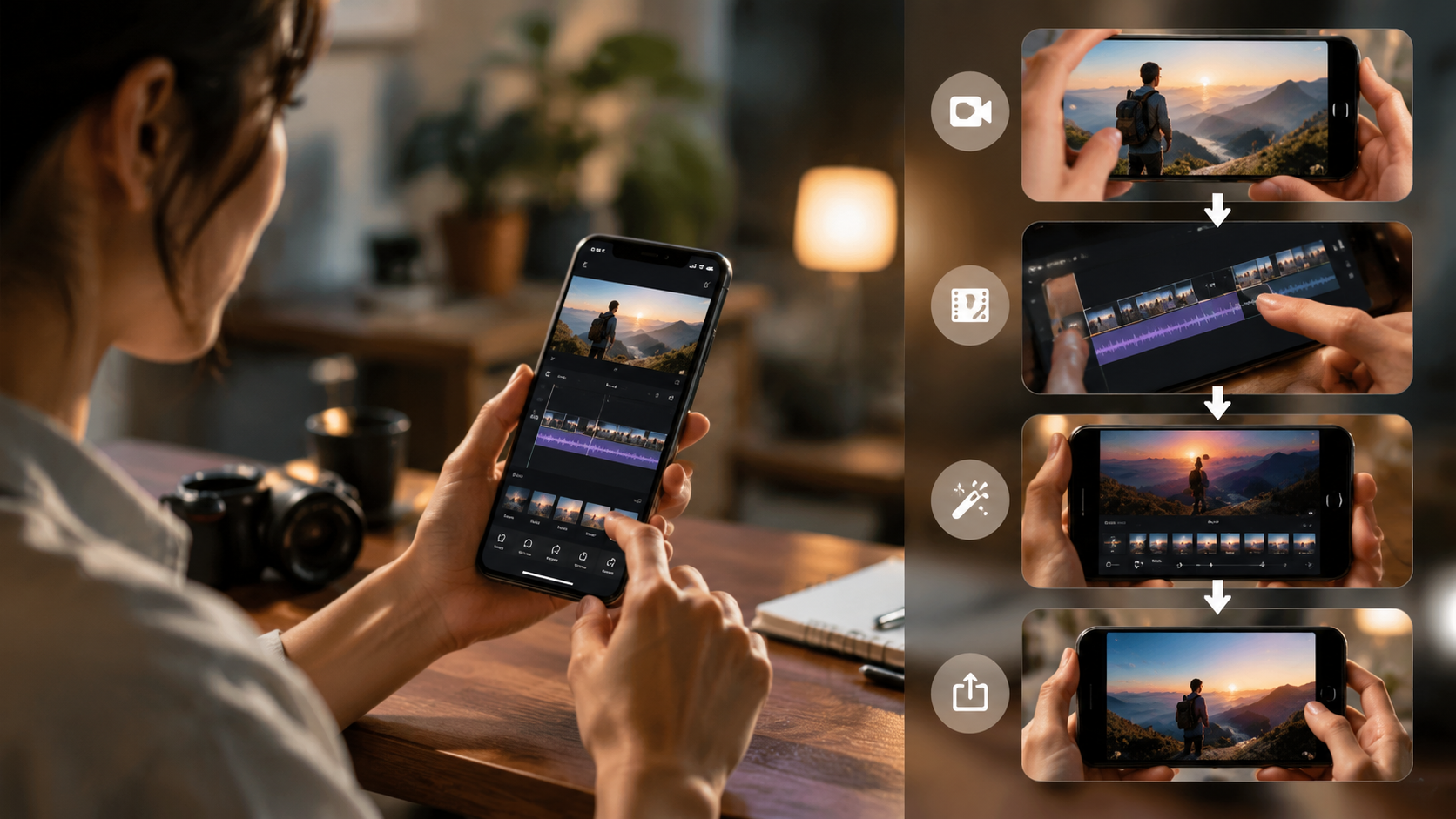
| Feature | AI Video Editors | Traditional Editors |
|---|---|---|
| Editing Time | 70% faster (PCMag) | Manual process |
| Effect Application | AI-suggested presets | Manual selection |
| Learning Curve | 1-2 days | 1-2 weeks |
| Content Analysis | Automatic scene detection | Manual review |
The table above highlights why AI-powered solutions dominate in 2026. Traditional mobile editors still offer more granular control, but for most creators, AI automation provides the best balance between quality and efficiency. The market has shifted significantly—85% of mobile video editors now incorporate some form of AI assistance (Built In, 2026).
One area where AI particularly excels is consistency. Apps can analyze your first few edits to maintain uniform color grading, transition styles, and pacing throughout a project. This is invaluable for brand accounts or creators with signature visual styles. Traditional editors require manual adjustment of each parameter across clips.
However, professional videographers still occasionally prefer traditional tools for frame-perfect precision. AI sometimes makes creative choices that may not align with specific artistic visions. The best approach in 2026 is often a hybrid workflow—using AI for rough cuts and basic enhancements, then fine-tuning manually when needed.
Future Trends in Mobile AI Video Editing
By late 2026, expect to see more AI editors incorporating generative video features similar to Digen AI Agent. These tools won't just edit footage—they'll generate entirely new scenes based on text prompts while maintaining visual consistency. Early adopters report reducing production time by 90% for certain types of content (OnOff.gr, 2026).
Real-time collaborative editing is another emerging trend. Multiple users will be able to work on the same project simultaneously, with AI handling version control and style synchronization. Cloud rendering will eliminate device limitations, allowing complex effects on mid-range smartphones. Some apps are already beta-testing this functionality.
The integration of large language models will make video editors more conversational. Instead of navigating menus, users might simply say, "Make the colors pop and add captions in Gen Z style." AI will understand these abstract commands and apply appropriate technical adjustments. This could make professional editing accessible to completely non-technical users by 2027.
How to Choose the Right AI Video Editor for Your Needs
Consider your primary use case first. Social media creators should prioritize apps with auto-formatting for different platforms (9:16, 1:1, 16:9 etc.). According to TechRadar's 2026 benchmarks, the top apps can now adapt a single video to multiple aspect ratios without manual repositioning of key elements—saving 2-3 hours per cross-platform project.
Evaluate the AI features that matter most to you. If you frequently film in challenging conditions, look for advanced stabilization and noise reduction. Content creators who appear on camera might prioritize AI beauty filters and auto-framing that keeps faces centered. Podcasters and interviewers should focus on audio enhancement tools like the ones in KineMaster AI.
Don't overlook workflow integration. If you already use Adobe products, Premiere Rush AI makes sense. Android users should verify app optimization for their specific chipset—some AI features work significantly better on Snapdragon 8 Gen 3 devices versus MediaTek equivalents. iOS users generally have more uniform performance across devices.
Frequently Asked Questions
Are AI video editing apps better than desktop software?
For most mobile creators, yes—AI mobile apps in 2026 offer 80% of desktop capabilities with greater convenience. However, high-end film production still requires desktop tools for maximum control and rendering power.
Do AI editors work offline?
Basic editing functions typically work offline, but advanced AI features like automatic captioning or style transfer usually require an internet connection to access cloud processing power.
How much do the best AI video editing apps cost?
Prices range from free (with watermarks) to $20/month for professional tiers. Most offer subscription models between $5-$15/month for full feature access without export limitations.
Can AI video editors replace human editors?
For routine social media content, AI can handle 90% of editing tasks. However, human editors remain essential for narrative-driven projects requiring creative storytelling and emotional pacing.
What makes Digen AI Agent different from other video editors?
Digen AI Agent specializes in generating consistent, longer-form AI videos through multi-step autonomous workflows—perfect for creators who need branded content with recurring visual elements and characters.
Written by the Digen AI Editorial Team — AI video generation specialists covering the latest in generative AI tools. Learn more about Digen AI.



Comments ()