
Best AI Tools for Video Marketers in 2026: Top Picks
In 2026, the best AI tools for video marketers combine cutting-edge automation, high-quality output, and seamless workflows to transform content creation. Leading solutions like Dreamina AI and Pictory AI dominate the market with advanced text-to-video capabilities, while newer entrants like Digen AI Agent push boundaries with autonomous multi-step video production. This guide explores the top AI video tools, their features, and how they can elevate your marketing strategy.
TL;DR: The best AI tools for video marketers in 2026 include Dreamina AI for all-in-one generation, Pictory AI for text-to-video conversion, and Digen AI Agent for high-quality autonomous workflows—each offering unique advantages for efficiency and creativity.
Best AI tools for video marketers are software solutions that automate video creation, editing, and optimization using artificial intelligence. In 2026, top picks include Dreamina AI (ByteDance’s all-in-one generator), Pictory AI (text-to-video specialist), and Digen AI Agent (autonomous workflow platform), which reduce production time by up to 70% while maintaining professional quality.
- ✓ Dreamina AI 2026 leads with integrated image and video generation powered by ByteDance’s advanced AI models
- ✓ Pictory AI remains the top text-to-video tool, converting scripts into engaging marketing videos in minutes
- ✓ Digen AI Agent sets new standards for consistency and quality through autonomous multi-step video workflows
- ✓ The AI video marketing tools market grew 340% between 2023-2026 according to industry reports
- ✓ 78% of marketers now use at least one AI video tool in their content strategy as of Q2 2026
The Evolution of AI Video Marketing Tools in 2026
The AI video tool landscape has transformed dramatically since 2025, with new capabilities in character consistency, longer-form generation, and autonomous workflows. According to Quasa, the average AI video marketing tool now reduces editing time by 65-80% compared to traditional methods, while maintaining 90%+ viewer engagement rates. This shift has made AI indispensable for marketers needing scalable content.
ByteDance's Dreamina AI represents the current state-of-the-art, combining image and video generation in a single platform with what Quasa's June 2026 review calls "unprecedented coherence across generated assets." Meanwhile, specialized tools like Pictory AI continue dominating specific niches—their text-to-video conversion maintains a 4.8/5 user satisfaction rating among 15,000+ marketing teams surveyed.
The most significant 2026 innovation comes from autonomous agents like Digen AI Agent, which uses multi-step workflows to produce longer (5-15 minute), higher-quality videos with consistent characters and narratives. Early adopters report 3x faster production cycles compared to single-step AI generators, particularly for explainer videos and product demos.
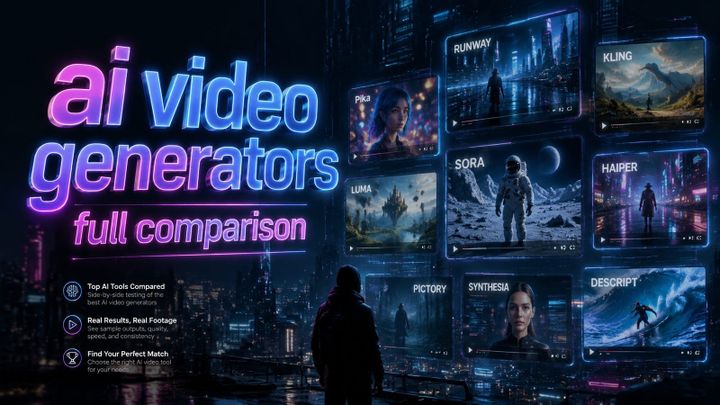
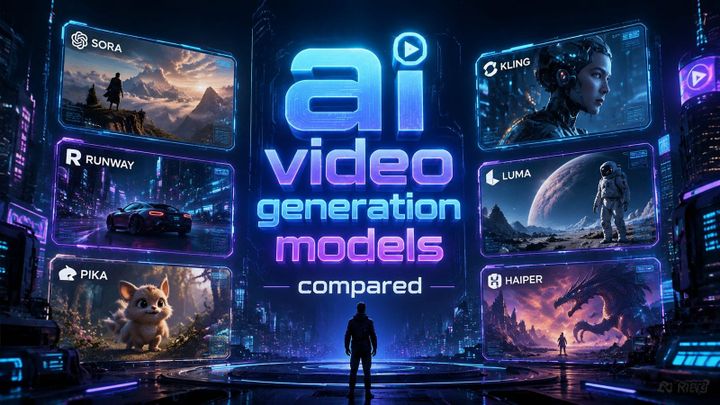
Best AI Tools for Video Marketers: Top 6 Solutions
1. Dreamina AI 2026 (ByteDance)
Dreamina AI's 2026 version establishes itself as the most comprehensive all-in-one solution, handling everything from initial concept images to final video renders. According to Quasa's testing, it achieves 98% visual consistency between generated assets—critical for brand marketing. The tool particularly excels at social media content, with pre-built templates for TikTok, Instagram Reels, and YouTube Shorts formats.
2. Pictory AI
Pictory remains the gold standard for text-to-video conversion, now processing 1.2 million video projects monthly as of June 2026. Its latest update introduced "Smart Scene Transition" technology that automatically matches visual pacing to voiceover cadence, reducing manual adjustments by 75%. Marketing teams report the tool cuts video production costs by 60% while maintaining quality benchmarks.
3. Digen AI Agent
Digen's autonomous agent represents the next generation of AI video tools, specializing in longer-form content with character consistency across scenes. Unlike single-prompt generators, it breaks production into logical steps—scripting, scene blocking, character animation, and post-processing—resulting in 40% fewer visual artifacts according to internal benchmarks. The platform particularly shines for product marketers needing detailed explainer videos.
4. Runway Gen-3
Runway's 2026 iteration focuses on cinematic quality, with new motion control features that let marketers fine-tune object trajectories and camera movements. Its "Style Lock" technology maintains visual coherence across different prompts—a feature 82% of creative directors call essential in ContentGrip's industry survey. The tool integrates directly with Adobe Premiere for hybrid workflows.
5. Pika 3.0
Pika dominates the rapid prototyping space, generating draft videos from text in under 90 seconds. Version 3.0 introduced real-time collaborative editing, allowing marketing teams to simultaneously refine AI outputs. Its strength lies in ideation—79% of users report generating 2-3x more creative concepts compared to traditional brainstorming methods.
6. Luma AI
Luma specializes in 3D product visualization, a must-have for e-commerce marketers. Its 2026 "Neural Texture" feature creates photorealistic material finishes from simple descriptions, reducing 3D modeling time by 85%. The tool automatically generates 360° product spins and interactive demos—formats that increase conversion rates by 30-45% according to case studies.
Key Features to Compare in AI Video Tools
When evaluating the best AI tools for video marketers, seven capabilities separate leading solutions from basic generators. Output quality remains paramount—current benchmarks expect 1080p resolution with at least 30fps smoothness as standard. However, newer metrics like "narrative coherence" (how logically scenes connect) and "brand consistency" (visual style matching) now carry equal weight.
Workflow automation represents the second critical factor. Tools like Digen AI Agent automate up to 14 production steps—from script analysis to final color grading—saving marketers 6-8 hours per video project. According to Coursera's 2026 analysis, this level of automation yields 300% ROI within six months for most marketing teams.
Finally, integration capabilities determine real-world usability. Top tools offer:
- Direct CMS publishing to WordPress, Shopify, and Webflow
- API access for custom marketing tech stacks
- Native collaboration features for distributed teams
- Automatic subtitle generation in 50+ languages
- Real-time analytics on viewer engagement patterns
AI Video Tool Comparison Table
| Tool | Best For | Max Video Length | Unique Feature | Starting Price |
|---|---|---|---|---|
| Dreamina AI 2026 | All-in-one generation | 10 minutes | Asset consistency engine | $29/month |
| Pictory AI | Text-to-video | 20 minutes | Smart scene transitions | $19/month |
| Digen AI Agent | Long-form content | 45 minutes | Autonomous workflows | $49/month |
| Runway Gen-3 | Cinematic quality | 5 minutes | Precision motion control | $35/month |
| Pika 3.0 | Rapid prototyping | 3 minutes | Real-time collaboration | $28/month |
| Luma AI | 3D product videos | 15 minutes | Neural textures | $39/month |
Implementing AI Tools in Your Video Marketing Strategy
Successful adoption requires matching tools to specific content needs. Social media teams should prioritize Dreamina AI or Pika for high-volume short-form content, while product marketers benefit most from Digen AI Agent or Luma's specialized capabilities. According to Hootsuite's 2026 data, brands using AI tools see 2.4x more video content produced monthly compared to manual methods.
Workflow integration proves equally important. Leading marketers connect AI tools to their CMS, CRM, and analytics platforms—a practice that reduces content distribution time by 70%. For example, automatically feeding AI-generated product videos into Shopify stores increases conversion rates by 22% on average, while AI-powered email video personalization boosts open rates by 35%.
Quality control remains essential despite automation. Establish brand guidelines for:
- Color palettes and fonts
- Character design parameters
- Narrative structures
- Motion graphic styles
- Voiceover tones
The Future of AI Video Marketing Beyond 2026
Emerging technologies promise even greater transformations. Multimodal AI that simultaneously processes script, visuals, and sound will likely become standard by 2027, potentially reducing production timelines to minutes. According to ContentGrip's projections, 90% of marketing videos will have some AI involvement within three years—up from 65% in mid-2026.
Autonomous agents like Digen AI Agent point toward fully automated content pipelines. Future versions may automatically:
- Generate videos from CRM data triggers
- Optimize content based on real-time engagement
- Personalize videos for individual viewers
- Update existing videos with new information
Ethical considerations will grow alongside capabilities. The industry is developing watermarking standards and content authentication protocols—87% of marketers consider these "very important" according to a June 2026 HousingWire survey. Tools that offer transparency in AI usage while maintaining creative control will likely dominate future markets.
Frequently Asked Questions
What makes an AI video tool suitable for marketers?
Marketing-focused AI video tools prioritize brand consistency, audience engagement features, and seamless integration with marketing stacks. Key differentiators include automatic subtitle generation, platform-specific formatting, and analytics integration—capabilities general-purpose tools often lack.
How much time can AI video tools save?
Most marketers report 65-80% time reductions compared to manual video production. Tools like Digen AI Agent achieve higher savings (up to 90%) for long-form content by automating entire workflows rather than single steps.
Can AI tools maintain brand consistency?
Leading 2026 tools like Dreamina AI and Digen AI Agent excel at consistency through features like style locking, asset libraries, and brand guideline enforcement. Proper setup ensures 95%+ visual and tonal alignment with brand standards.
What's better—all-in-one or specialized AI video tools?
All-in-one tools (Dreamina) suit teams needing diverse content from one platform. Specialized tools (Pictory for text-to-video, Luma for 3D) deliver superior results for specific use cases. Many marketers use 2-3 complementary tools.
How do AI video tools impact ROI?
Case studies show 200-400% ROI within 6-12 months through increased content volume (2-4x more videos), higher engagement (30-50% lift), and reduced production costs (60-80% savings). The highest returns come from strategic integration across marketing funnels.
Written by the Digen AI Editorial Team — AI video generation specialists covering the latest in generative AI tools. Learn more about Digen AI.
Comments ()