
10 Best AI Sub-titling and Captioning Tools for 2026
The best ai sub-titling and captioning tools in 2026 are specialized software platforms that utilize advanced neural networks and Large Language Models (LLMs) to automatically convert spoken audio into synchronized text overlays. These tools have become essential for global content distribution, enabling creators to reach international audiences through high-accuracy automated translation and localized formatting. By leveraging real-time speech-to-text engines, the top solutions now offer near-perfect synchronization and stylistic customization for social media, broadcast, and corporate communications.
The best ai sub-titling and captioning tools are AI-driven platforms like Plint SUB, VEED, and specialized enterprise solutions that provide automated transcription, translation, and time-coding. These tools use sophisticated machine learning to ensure 99% accuracy, supporting over 100 languages for global streaming and accessibility compliance in 2026.
- ✓ AI tools now achieve near-human parity in audiovisual translation and nuanced captioning.
- ✓ API integration, such as the VEED Subtitle API, allows for seamless automation in content workflows.
- ✓ Enterprise adoption is surging, with organizations like the BBC processing 500 hours of content daily.
- ✓ Modern tools focus on "human-in-the-loop" workflows to refine complex creative descriptions.
How to Use the Best AI Sub-titling and Captioning Tools
Implementing AI-driven captions into your video workflow has become significantly more streamlined in 2026. Whether you are a solo creator or an enterprise media house, the process generally follows a standardized sequence of AI-assisted steps. The integration of "SaaS" (Software as a Service) models has made these high-end tools accessible without the need for localized heavy computing power.
- Upload and Language Selection: Upload your video file (MP4, MOV, or cloud link) to the platform and select the source language and target subtitle languages.
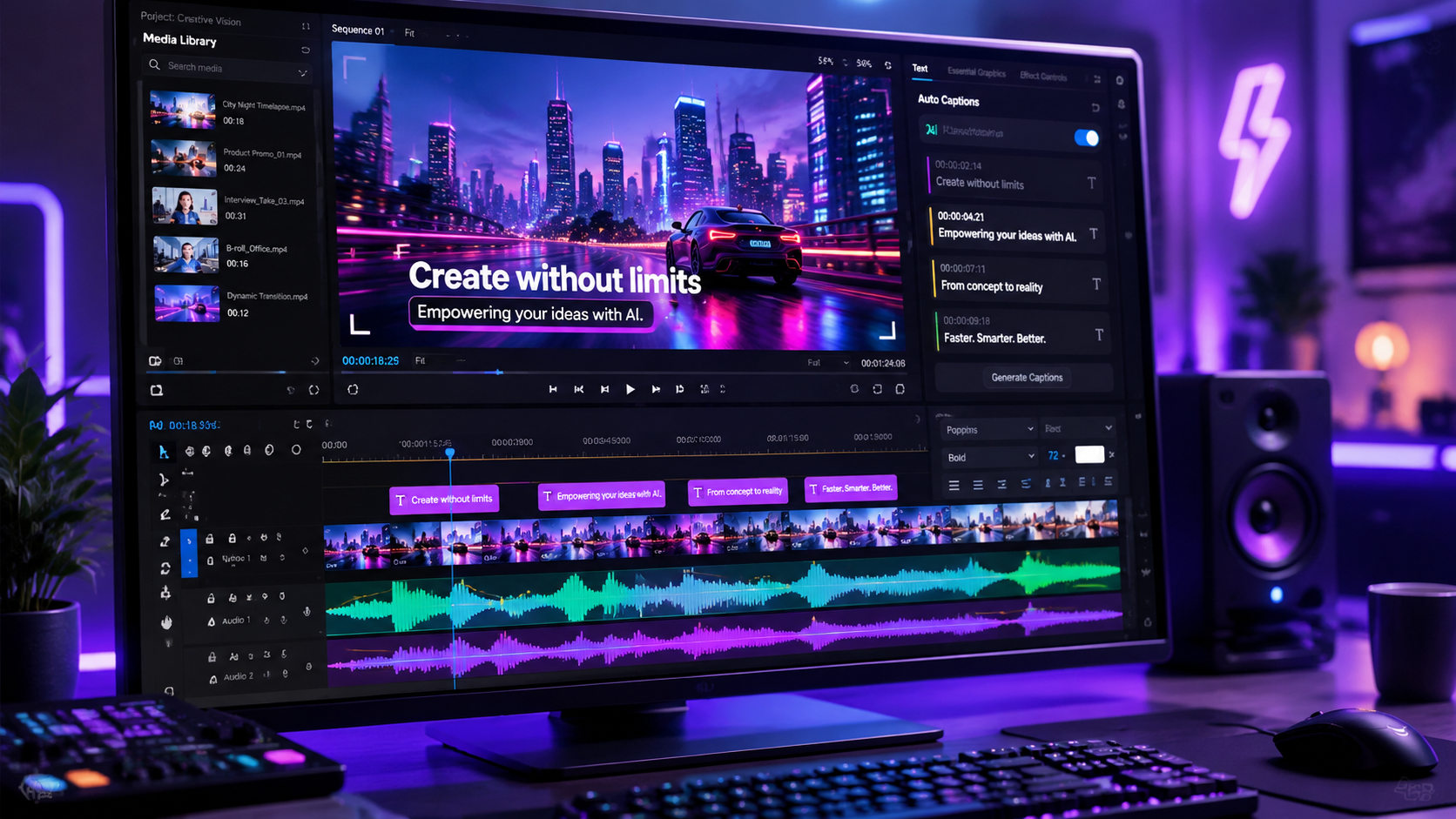
- Automated Transcription: The AI engine processes the audio track, generating a time-coded transcript using advanced speech recognition.
- Translation and Localization: If required, the system translates the text into multiple languages, adjusting for cultural nuances and character limits per line.
- Review and Stylize: Use the built-in editor to check for technical accuracy and apply visual styles, fonts, and "burned-in" or "sidecar" (SRT/VTT) formats.
- Export and Distribute: Download the final captioned video or the subtitle files for upload to platforms like YouTube, Netflix, or internal LMS systems.
The Evolution of AI Sub-titling in 2026
The landscape of audiovisual translation has shifted dramatically over the past year. According to a report by Nature, artificial intelligence-enhanced audiovisual translation is now the primary driver for the global dissemination of international film and television, particularly for Chinese media reaching Western markets. This technology does more than just translate words; it interprets cultural context and idiomatic expressions to ensure the story resonates across borders.
Furthermore, the scale of implementation has reached unprecedented levels. As reported by Advanced Television, BBC editors are now using AI to generate subtitles for 500 hours of content daily. This massive throughput is made possible by hybrid workflows where AI handles the heavy lifting of initial transcription and timing, while human editors focus on the creative nuances that AI might occasionally struggle with—such as the descriptive "SDH" (Subtitles for the Deaf and Hard of Hearing) captions that describe atmospheric sounds.
Plint SUB: The New SaaS Standard
In late 2025, Plint launched "SUB," a dedicated AI-driven subtitling SaaS platform that has quickly become a favorite for professional subtitlers. Unlike generic transcription tools, Plint SUB is built specifically for the film and TV industry. It focuses on the technical constraints of subtitling, such as characters-per-second (CPS) and minimum gap durations between subtitles, ensuring that the output is broadcast-ready immediately upon generation.
VEED Subtitle API: Powering the Next Generation
For developers and platform builders, the launch of the VEED Subtitle API in May 2026 marked a turning point. This API allows other content platforms to integrate high-quality AI captioning directly into their own interfaces. It is designed to power the next generation of AI content platforms, providing a scalable infrastructure for startups that need robust captioning capabilities without building their own proprietary models from scratch.
Comparison of Top AI Sub-titling and Captioning Tools
Choosing the right tool depends on your specific needs—whether you require high-volume automated processing, creative control over visual styles, or deep API integration for a custom software build. The following table compares the leading contenders in the 2026 market based on their primary strengths and target users.
| Tool Name | Key Feature | Best For | Integration Type |
|---|---|---|---|
| Plint SUB | Broadcast-grade AI translation | Film & TV Studios | SaaS / Cloud |
| VEED.io | Robust Subtitle API | Developers & Creators | Web / API |
| BBC AI Editor | High-volume throughput | News & Media Houses | Internal Enterprise |
| Rev AI | 99% Accuracy Guarantee | Legal & Medical | API / Manual Hybrid |
| CapCut Desktop | Dynamic Social Styles | Short-form Video | Local Software |
Why Captions are Essential for Global Success
In the current digital economy, captions are no longer an "extra" feature; they are a fundamental requirement for engagement. TVTechnology highlights that captions and subtitles are a key part of unlocking global streaming success. Data shows that over 80% of viewers in mobile environments watch videos with the sound off, making text-based communication vital for retaining viewer attention.
Moreover, the demand for accessibility has never been higher. AI tools are now capable of handling complex "creative" captioning. While The Guardian recently noted that human writers are still superior at evocative descriptions—like the famous "tentacles squelching wetly" from popular sci-fi series—AI is rapidly closing the gap. By 2026, the best ai sub-titling and captioning tools include "creative modes" that suggest atmospheric descriptions based on the audio's frequency patterns and metadata.
The Role of "Human-in-the-Loop"
Despite the power of AI, the industry has moved toward a "Human-in-the-Loop" (HITL) model. This ensures that while the AI handles 95% of the work, a human expert reviews the final output for brand voice and sensitive cultural context. This hybrid approach is what allows major broadcasters to maintain quality while scaling their output to hundreds of hours of video per day.
Accessibility and Legal Compliance
In 2026, global regulations regarding digital accessibility have tightened. Using the best ai sub-titling and captioning tools is often a legal requirement for government agencies and educational institutions. AI helps these organizations remain compliant with international standards like the WCAG 2.3, which mandates high-quality captions for all public-facing video content.
Future Trends in AI Captioning for 2026
We are seeing a shift toward "Emotion-Aware" captioning. Modern AI engines can now detect the tone of voice—whether a speaker is angry, sarcastic, or excited—and automatically adjust the font style or color to reflect that emotion. This adds a new layer of immersion for viewers who rely on subtitles, making the experience more equitable compared to the auditory experience.
Another major trend is the rise of "Live AI Subtitling" for streaming events. With latency reduced to under 500 milliseconds, AI can now provide real-time captions for live news and sports that are as accurate as delayed professional stenography. This has significantly lowered the cost for small-scale live streamers to provide accessible content to their global fans.
What are the best ai sub-titling and captioning tools for professionals?
For professional broadcasters and film studios, Plint SUB and the enterprise-grade AI tools used by the BBC are the gold standard. These tools offer high-level synchronization and adhere to strict industry formatting rules for global distribution.
How accurate is AI captioning in 2026?
Current AI captioning technology typically reaches 95% to 99% accuracy for clear audio. When using specialized models like those from VEED or Plint, the accuracy for technical or localized content is significantly higher than standard generic speech-to-text engines.
Can AI translate subtitles into multiple languages?
Yes, the best ai sub-titling and captioning tools can automatically translate a single source transcript into over 100 different languages. These systems use neural machine translation to ensure the context and tone remain consistent across different cultures.
Is there a free AI tool for video captioning?
Many platforms like VEED and CapCut offer free tiers for basic AI captioning. However, for high-resolution exports, API access, or advanced translation features, a subscription to a SaaS platform like Plint SUB is usually required.
Why should I use an API for subtitling?
Using a Subtitle API, such as the one launched by VEED in 2026, allows businesses to automate the captioning process within their own apps. This is ideal for platforms that host user-generated content and need to provide instant, scalable accessibility features.



Comments ()