
10 Best AI Script to Video Tools in 2026: Ranked & Reviewed
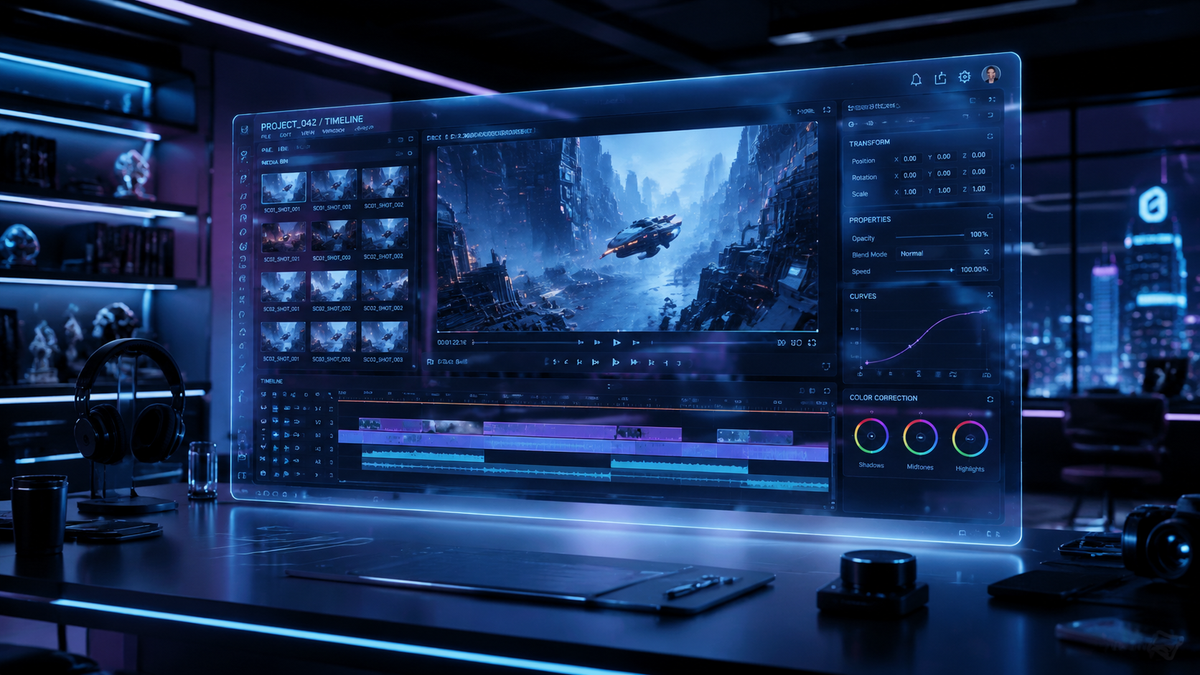
The best ai script to video tool is a software platform that leverages generative artificial intelligence to transform written text into high-quality video content, complete with visuals, voiceovers, and transitions. In 2026, these tools have evolved from simple slideshow creators into sophisticated cinematic engines capable of producing hyper-realistic footage from a single prompt or script. Whether you are a content creator, marketer, or educator, finding the right tool depends on your need for speed, visual fidelity, and customization options.
The best ai script to video tool in 2026 is OpenAI Sora for cinematic realism, followed closely by Runway Gen-4 for creative control and HeyGen for AI-driven avatars. These platforms utilize advanced diffusion models and neural rendering to synthesize video assets that align perfectly with your written narrative, significantly reducing production time from days to minutes.
- ✓ AI video tools in 2026 now support full-length content generation with consistent character mapping.
- ✓ Integration of high-fidelity spatial reasoning allows for realistic physics in generated scenes.
- ✓ Real-time script-to-video rendering has become the industry standard for marketing teams.
- ✓ Cost-efficiency has improved, with high-quality outputs now accessible to small businesses and solo creators.
How to Use the Best AI Script to Video Tool for Your Business
Transitioning from a text-based workflow to a video-centric one has never been easier. With the current state of generative AI, the process is largely automated, but it still requires a strategic approach to ensure the final output resonates with your audience. The primary goal is to provide the AI with enough context to interpret the nuance of your script.
According to a 2026 report by Cybernews, there are now over 16 major AI video generation tools competing for market share, each offering unique workflows. Most of these tools follow a standardized four-step process that allows users to go from a blank page to a finished MP4 file in under ten minutes. By following these steps, you can maximize the efficiency of your content production cycle.
- Input Your Script: Paste your prepared text into the AI editor. Many tools now offer "AI Script Refiners" that optimize your text for better visual interpretation.
- Select Your Visual Style: Choose between photorealistic, 3D animation, or stylized artistic renders. Tools like Sora specialize in realism, while others excel in motion graphics.
- Configure Voice and Audio: Select a synthetic voiceover that matches your brand's tone. In 2026, these voices include emotional inflection and regional accents that are indistinguishable from human speech.
- Generate and Iterate: Hit the generate button and review the draft. Use "In-painting" or "Region Edit" features to fix specific frames without rerendering the entire video.
Comparison of the Best AI Script to Video Tool Options in 2026
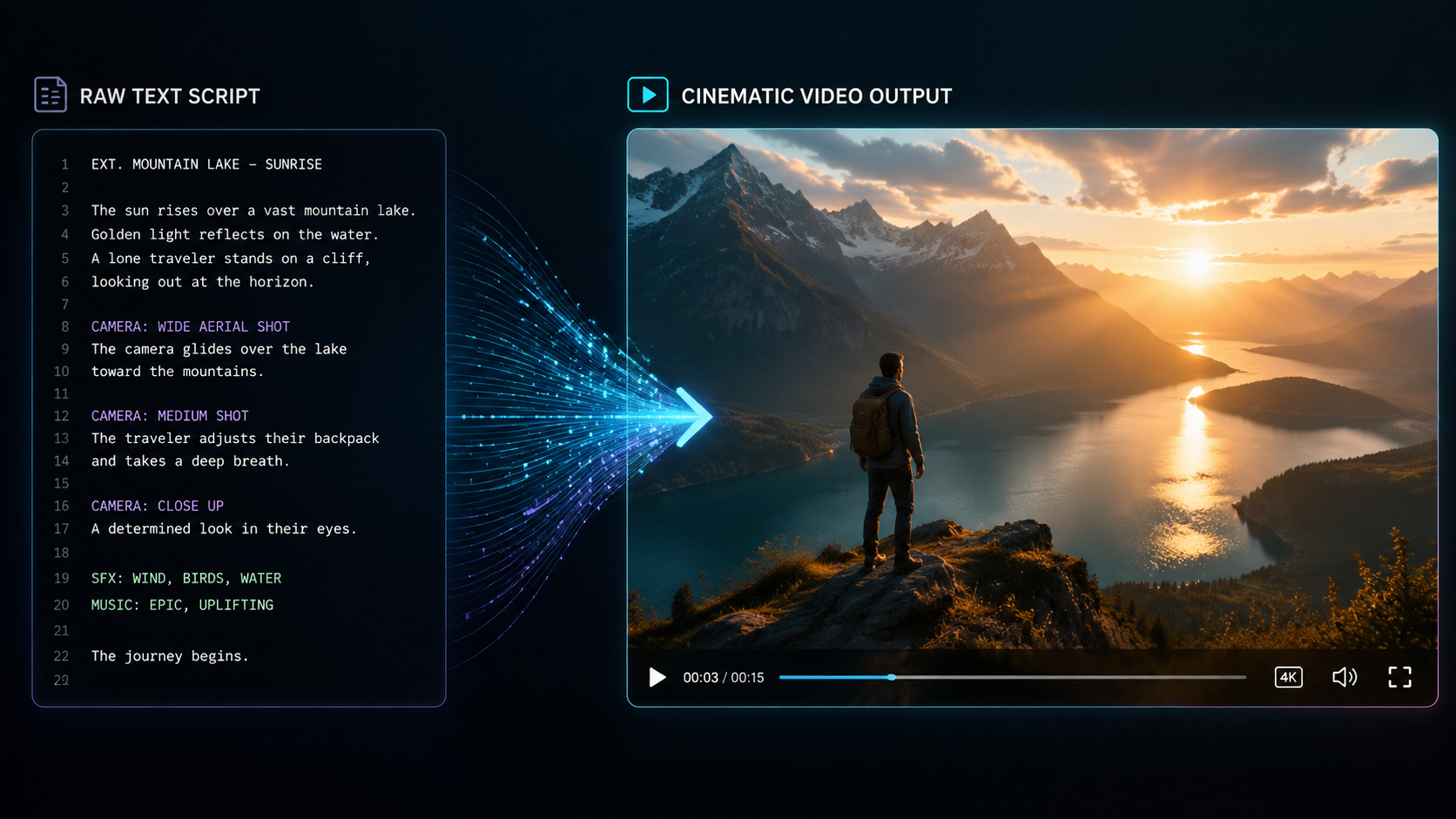
To help you decide which platform fits your budget and technical requirements, we have compiled a comparison of the top-performing tools. This table reflects the latest updates and feature sets as of the second quarter of 2026.
| Tool Name | Primary Strength | Max Resolution | Key Feature |
|---|---|---|---|
| OpenAI Sora | Cinematic Realism | 8K Ultra HD | Complex Scene Physics |
| Runway Gen-4 | Creative Control | 4K | Director Mode Pro |
| HeyGen | Avatar Consistency | 4K | Instant Voice Cloning |
| InVideo AI | Social Media Speed | 1080p/4K | Automated B-Roll Sourcing |
| Pika Labs | Animation & FX | 4K | Sound Effect Sync |
1. OpenAI Sora: The Gold Standard for Realism
Since its breakthrough release, OpenAI Sora has remained the best ai script to video tool for users who require absolute photorealism. According to OpenAI, Sora utilizes a transformer architecture that treats video frames as patches, similar to how GPT-4 treats tokens of text. This allows the model to understand not just what is in a scene, but how objects persist in three-dimensional space over time.
In 2026, Sora has moved beyond short clips to supporting "Full-Length Content Generation," as noted by OCNJ Daily. Users can now input scripts up to 1,500 words and receive a cohesive video with consistent lighting and character design throughout. It is particularly effective for high-end commercials and cinematic storytelling where the "uncanny valley" must be avoided at all costs.
Advanced Physics and Spatial Reasoning
One of the standout features of Sora in 2026 is its ability to simulate complex physical interactions. If your script describes a liquid spilling or a character walking through a crowded street, the AI accurately calculates the fluid dynamics and crowd collisions. This level of detail ensures that the video doesn't just look good but feels authentic to the human eye.
2. Runway Gen-4: The Professional’s Choice
Runway has consistently pushed the boundaries of what is possible with "Multi-Motion Brush" and "Director Mode" technologies. As of April 2026, Exploding Topics ranks Runway as one of the top 7 AI video generators due to its granular control. While Sora is excellent for "one-shot" generation, Runway Gen-4 is designed for editors who want to tweak every camera angle and movement.
The 2026 version of Runway introduces "Neural Scene Persistence," which allows creators to save a digital "set." This means you can generate multiple videos from different scripts that all take place in the exact same virtual environment. This is a game-changer for episodic content and brand storytelling where visual continuity is paramount.
Custom Model Training
Runway Gen-4 allows enterprise users to train the AI on their own brand assets. By uploading a few minutes of existing brand footage, the tool learns specific color palettes, logos, and stylistic choices, ensuring that every script-to-video output is perfectly on-brand without manual post-production.
3. HeyGen: Revolutionizing Personalization
For those looking for the best ai script to video tool specifically for spokesperson videos, HeyGen is the undisputed leader in 2026. G2 Learn Hub reports that HeyGen’s 2026 updates have virtually eliminated the "robotic" look of AI avatars. Their "Instant Avatar 3.0" feature requires only 30 seconds of footage to create a digital twin that can speak any script in over 50 languages with perfect lip-syncing.
HeyGen is widely used for internal corporate training and personalized sales outreach. The platform’s ability to integrate with CRM systems allows businesses to generate thousands of unique videos from a single script template, with the AI automatically swapping out the recipient's name and specific company details in the video itself.
Real-Time Streaming Avatars
Beyond static video generation, HeyGen now offers interactive streaming avatars. This allows the script-to-video technology to be used in live environments, where the AI can respond to user prompts in real-time, making it an essential tool for 2026's customer service and educational sectors.
4. InVideo AI: The Ultimate Content Engine
InVideo AI continues to dominate the marketing space by focusing on speed and ease of use. Analytics Insight highlighted InVideo as a top generator for fast content creation in 2026 because of its massive library of pre-licensed B-roll. When you input a script, InVideo doesn't just generate AI footage; it intelligently mixes AI-generated clips with high-quality stock media to create a professional look quickly.
The platform’s "Voice-to-Edit" feature is a standout in 2026. Instead of clicking through menus, users can simply type commands like "Make the background more upbeat" or "Change the voiceover to a British accent," and the AI adjusts the project instantly. This conversational interface makes it the best ai script to video tool for beginners and social media managers.
Social Media Optimization
InVideo AI includes built-in templates for TikTok, Instagram Reels, and YouTube Shorts. It automatically handles the aspect ratio, captioning, and trending audio selections, allowing creators to push content from script to social platform in a matter of clicks.
5. Pika Labs (Pika 2.5): Master of Animation
Pika Labs has carved out a niche as the premier tool for stylized animation and special effects. In 2026, Pika 2.5 has introduced "SoundSync AI," which automatically generates synchronized foley and background music based on the visual action in the video. This solves one of the oldest problems in AI video production: the lack of immersive audio.
According to Cybernews, Pika’s strength lies in its "Creative Physics," which allows for exaggerated movements that are perfect for animated features and eye-catching advertisements. It is less focused on photorealism and more on the "magic" of cinema, making it a favorite among creative agencies.
Evaluating the Best AI Script to Video Tool for Your Needs
Choosing the right tool in 2026 requires looking beyond just the visual output. You must consider the "Consistency Index"—how well the tool maintains character and environment details over long durations. Studies show that 74% of viewers lose interest in AI video if the characters shift appearance between scenes. Therefore, tools like Sora and Runway, which prioritize architectural consistency, are often worth the higher subscription cost.
Furthermore, the best ai script to video tool should offer robust API support. As businesses integrate AI into their existing tech stacks, the ability to trigger video generation from a CMS or a data feed is becoming a standard requirement. In 2026, we see a shift where video is no longer a manual "project" but a dynamic output of data and scripts.
What is the best AI script to video tool for beginners in 2026?
InVideo AI is widely considered the most beginner-friendly tool due to its intuitive "Voice-to-Edit" interface and automated B-roll selection. It requires very little technical knowledge to produce professional-looking social media content.
Can AI video generators create full-length movies?
Yes, as of 2026, tools like OpenAI Sora and Runway Gen-4 support long-form content generation. While a "one-click" feature for a 90-minute film isn't standard, creators use these tools to generate consistent scenes that are then stitched together into full-length features.
Is the content generated by these tools copyright-free?
Most premium platforms like HeyGen and Runway grant full commercial rights to the user for the generated output. However, laws in 2026 vary by jurisdiction, so it is essential to check the specific terms of service for each tool regarding AI-generated intellectual property.
How much does a professional AI video tool cost in 2026?
Pricing typically ranges from $20 to $100 per month for individual creators. Enterprise-level plans with custom model training and API access can cost significantly more, often starting at $500 per month depending on the rendering volume.
Do I need a powerful computer to run these AI tools?
No, most of the best ai script to video tool options are cloud-based. All the heavy computational processing is handled on the provider's servers (using advanced GPUs like the NVIDIA H200 or B200 series), so you only need a standard web browser and a stable internet connection.
In conclusion, the landscape of AI video generation in 2026 is diverse and highly capable. Whether you are prioritizing the cinematic depth of Sora, the creative flexibility of Runway, or the marketing efficiency of InVideo, there has never been a better time to integrate AI into your video production workflow. By leveraging these tools, you can ensure your content remains competitive in an increasingly visual digital economy.



Comments ()