
Best AI Script to Video Maker: 2026 Creative Guide
An ai script to video maker is a generative artificial intelligence tool that transforms written text into fully realized video content, including visuals, voiceovers, and music. Finding the best ai script to video maker in 2026 involves evaluating tools that can synthesize high-fidelity cinematic shots or realistic avatars directly from a text-based prompt or a structured script. These platforms have revolutionized digital marketing and storytelling by reducing production times from weeks to minutes.
The best ai script to video maker is a tool that integrates LLM-driven scriptwriting with advanced diffusion models like OpenAI’s Sora or specialized avatar platforms. In 2026, these tools leverage multimodal AI to ensure visual consistency, provide high-quality synthetic voices, and offer automated editing features that align cinematic b-roll with the narrative flow of your input text.
- ✓ Modern AI video tools now support high-definition cinematic output up to 60fps with consistent character rendering.
- ✓ Integration with Large Language Models (LLMs) allows for instant script generation and storyboarding from a single concept.
- ✓ Leading platforms in 2026 offer hyper-realistic "digital twins" that can narrate scripts with human-like emotional inflection.
- ✓ Cost-efficiency has improved, with many professional-grade tools offering tiered pricing for creators and enterprises alike.
How to Use an AI Script to Video Maker
The process of generating video from text has become remarkably streamlined in 2026. Most professional-grade platforms follow a logical workflow that allows both novices and experts to produce high-quality results. By leveraging cloud-based rendering and neural networks, these tools handle the heavy lifting of animation and sound design.
According to research from Simplilearn, the primary use cases for these tools now span across corporate training, social media marketing, and educational content. The ability to iterate quickly means that a script can be tested and refined in real-time, ensuring the final video resonates with the intended audience. Below is the standard process for creating your first AI-generated video.
- Input Your Script: Paste your pre-written text or use the built-in AI assistant to generate a script based on a specific topic or keyword.
- Select a Visual Style: Choose between photorealistic cinematic footage, 3D animation, or digital avatars depending on the goal of your video.
- Customize Audio: Select a synthetic voiceover that matches the tone of your content. You can adjust pitch, speed, and emotional emphasis in most 2026 platforms.
- Review Storyboard: The AI will automatically pair your script segments with relevant visuals. You can swap out clips or upload your own branded assets at this stage.
- Generate and Export: Once satisfied, hit the generate button. In 2026, most 1-minute videos are rendered in under three minutes, ready for 4K export.
The Evolution of AI Script to Video Maker Technology in 2026
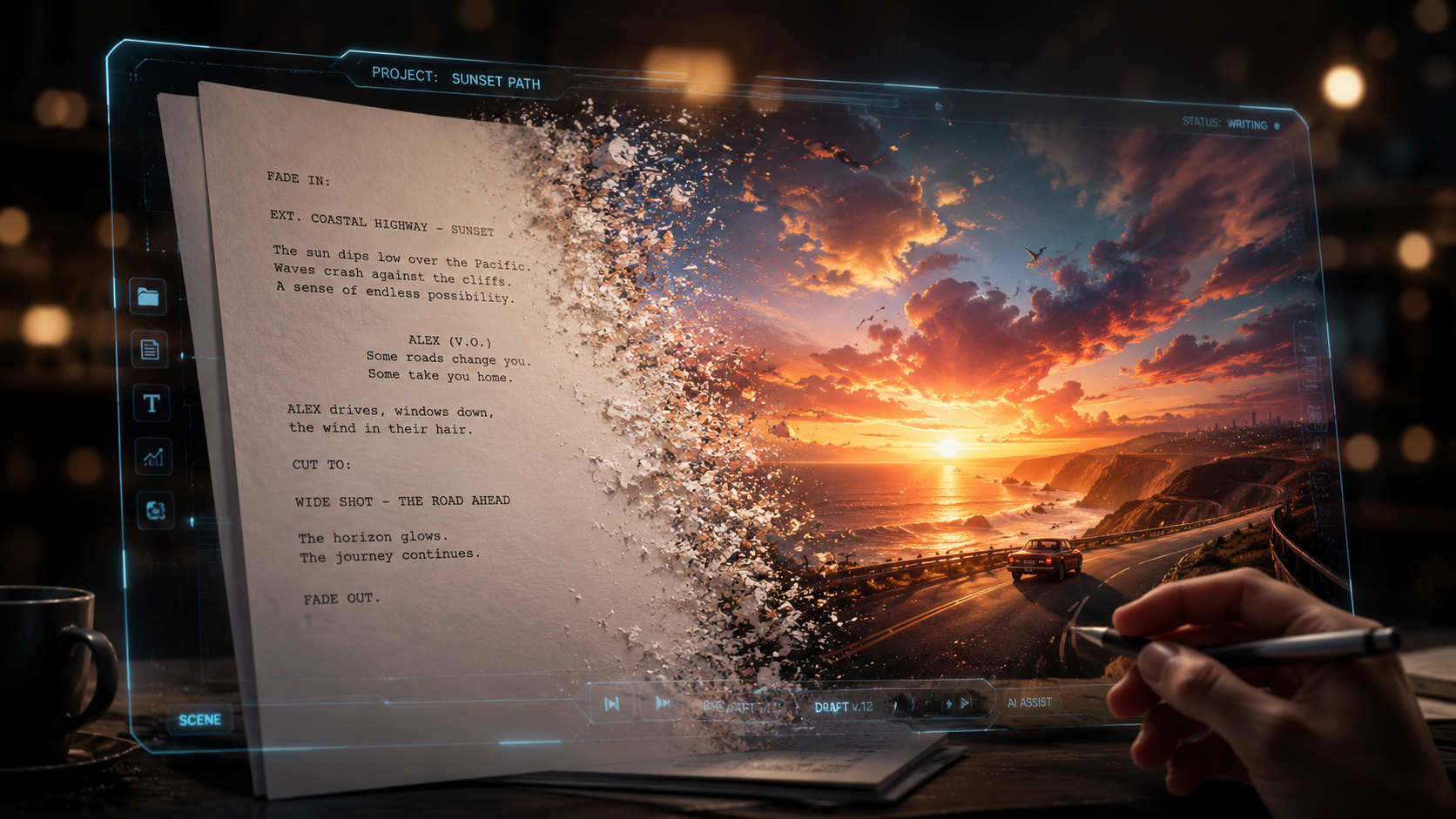
The landscape of video generation has shifted dramatically since the early experiments of previous years. We are now seeing the maturation of "world models" where the AI understands physics and spatial relationships. As noted by OpenAI regarding their Sora model, the focus has shifted toward creating video from text that respects the laws of motion and lighting, making the "uncanny valley" a thing of the past.
Furthermore, the integration of multimodal capabilities means that an ai script to video maker no longer just "finds" stock footage. Instead, it generates every pixel from scratch, allowing for infinite customization. This level of control is what separates the top-tier tools of 2026 from the basic template-based editors of the past.
Cinematic Realism and Physics
One of the most significant breakthroughs in 2026 is the ability for AI to maintain visual consistency across different "camera angles." When you input a script describing a character in a specific environment, the AI remembers the layout of that environment. This allows for complex storytelling where the camera can move through a digital space while keeping the subjects and lighting perfectly consistent.
Personalization and Digital Avatars
For business and educational purposes, the use of digital avatars has reached a peak. These avatars are no longer static; they possess micro-expressions and body language that react to the sentiment of the script. This makes the ai script to video maker an essential tool for personalized messaging at scale, where one script can be automatically translated and performed by an avatar in dozens of different languages.
Top AI Video Generators Compared
With so many options available, choosing the right tool depends on your specific needs—whether it's high-end cinematic art or quick social media explainers. According to Cybernews, there are now over 16 major AI video generation tools dominating the market in 2026, each with unique strengths in pricing and feature sets.
| Platform Type | Primary Strength | Best For | Output Quality |
|---|---|---|---|
| Generative Diffusion (e.g., Sora) | Photorealistic Physics | Cinematic Shorts, Ads | Ultra HD / 4K |
| Avatar-Based Platforms | Lip-Sync Accuracy | Training, Sales Pros | 1080p / 4K |
| Stock-Integrated Editors | Speed and Templates | YouTube, Social Media | 1080p |
| Hybrid Creative Suites | Full Post-Production | Professional Filmmaking | ProRes / RAW AI |
Key Features to Look for in an AI Script to Video Maker
When selecting a platform, you must look beyond the initial "wow" factor of the generated clips. A professional ai script to video maker should offer deep integration with your existing workflow. This includes the ability to import brand kits, specific color palettes, and custom fonts. As highlighted by eWeek, the top 7 AI video generators for 2026 all prioritize user control over purely automated output.
Another critical factor is the ethical framework of the tool. In 2026, copyright transparency and the use of licensed training data have become industry standards. The best tools provide "Content Credentials" or digital watermarks that verify the AI's origin and ensure the content is safe for commercial use without legal repercussions.
Advanced Script Analysis
The best tools don't just read your text; they analyze the "intent." If your script is a high-energy product launch, the AI should automatically suggest fast-paced cuts and vibrant lighting. Conversely, a script for a meditation app should trigger slow, sweeping shots and soft color grading. This semantic understanding is a hallmark of the 2026 generation of AI tools.
Multi-Language and Global Localization
Global reach is a priority for modern creators. Leading AI script to video makers now offer "one-click localization." This means you can write a script in English, and the tool will not only translate the text but also re-generate the voiceover and adjust the lip-syncing of the characters to match the new language perfectly. This feature has significantly reduced the cost of global marketing campaigns.
The Impact of AI on Creative Workflows
There is a common misconception that AI will replace creators; however, the data suggests otherwise. According to Built In, which tracks 17 popular AI video generators, these tools are primarily being used to augment human creativity. By handling the tedious aspects of video production—like masking, rotoscoping, and basic assembly—creators are free to focus on the "big picture" strategy and emotional resonance of their stories.
In 2026, the role of a "video editor" has evolved into that of an "AI Director." Instead of manually cutting clips, the director interacts with the ai script to video maker to refine the aesthetic, adjust the pacing, and ensure the brand voice is consistent. This shift has democratized high-quality video production, allowing small businesses to compete with large agencies in terms of visual output.
Cost Efficiency and ROI
The return on investment for AI-driven video is undeniable. Traditional video production often costs thousands of dollars per finished minute. With modern AI tools, that cost has plummeted. Organizations can now produce a library of video content for the price of a single traditional shoot. This allows for much more aggressive A/B testing in digital advertising, as multiple versions of a video can be generated from slightly different scripts to see which performs best.
Future Trends: Real-Time Interactivity
As we look toward the latter half of 2026 and into 2027, the trend is moving toward real-time interactivity. We are seeing the first iterations of videos that can change based on the viewer's input or data. Imagine a script that adapts its visuals based on the time of day the viewer is watching or their geographic location—all powered by the underlying script-to-video engine.
What is the best AI script to video maker in 2026?
The "best" tool depends on your needs, but OpenAI's Sora is widely considered the gold standard for cinematic realism. For business and avatar-based content, platforms reviewed by G2 and eWeek offer the most robust features for corporate communication and training.
Can I use AI-generated videos for commercial purposes?
Yes, most professional AI video platforms in 2026 provide commercial usage rights. However, it is essential to use tools that utilize ethically sourced training data and provide content credentials to ensure compliance with global advertising standards.
How long does it take to generate a video from a script?
In 2026, most platforms can generate a high-definition 60-second video in approximately 2 to 5 minutes. Higher resolution 4K exports or complex cinematic scenes may take slightly longer depending on the server load and the complexity of the prompt.
Do I need expensive hardware to run these AI tools?
No, most modern AI script to video makers are cloud-based. All the heavy processing is handled on the provider's servers, meaning you only need a standard web browser and a stable internet connection to create professional videos.
Can AI video tools create content in different languages?
Absolutely. Most leading tools in 2026 support over 50 languages, offering both text translation and automated voiceover dubbing with synchronized lip-movements for digital characters.



Comments ()