
Best AI Music Video Generator 2026: Top Tools for Viral Clips
The best AI music video generator in 2026 combines seamless audio-to-video conversion, character consistency, and viral-ready visual effects. Top tools like Runway Gen-3, Pika Labs 2.0, Kaiber, and Sora lead the market, each offering unique strengths for artists building their visual brand.
The best AI music video generator is a software tool that uses generative AI to create video clips from audio input, often with lip-sync, motion matching, and stylistic control. In 2026, the top picks are Runway Gen-3, Pika Labs 2.0, Kaiber, and Sora, each excelling in different aspects of music video production—from hyper‑realistic scenes to surreal animations that capture viral attention.
- ✓ Runway Gen-3 delivers cinema‑grade output with advanced lip‑sync and scene generation.
- ✓ Pika Labs 2.0 offers the fastest turnaround for short, loopable viral clips.
- ✓ Kaiber provides unmatched stylistic versatility for artists exploring different visual genres.
- ✓ Sora (OpenAI) excels at long‑form, coherent narratives with consistent characters.
- ✓ All four tools now support direct audio‑to‑video workflows, reducing production time by up to 80%.
What Makes a Great AI Music Video Generator in 2026?
In 2026, artists demand more than just flashy visuals. According to Social Life Magazine (June 2026), the top priority for musicians is character consistency—the ability to keep a protagonist, logo, or visual theme recognizable across all camera angles and moves. Without this, branded content feels disjointed. The best AI music video generator now incorporates identity‑preserving models that lock in facial features, clothing, and color palettes throughout a track.
Speed and efficiency are equally critical. ePHOTOzine (June 2026) highlighted that modern AI video software must generate a full‑length music video in under 20 minutes, including iterative refinements. Latency has dropped dramatically, thanks to edge inference and lightweight diffusion models. Artists can now preview, tweak, and export in a single session—something unthinkable just two years ago.
Finally, viral potential hinges on shareability and platform‑specific formatting. A 2026 AI music video generator automatically optimizes for TikTok, Reels, and YouTube Shorts (9:16), as well as traditional 16:9. Tools that offer built‑in captioning, auto‑trim to beat drops, and hook‑generation templates see the highest adoption among indie musicians.
Audio Understanding and Lip‑Sync Accuracy
Modern generators analyze the audio waveform to map phonemes to mouth movements. The best tools—like Runway Gen-3 and Pika 2.0—now achieve near‑perfect lip‑sync even in fast rap verses. New Wave Magazine (March 2026) noted that this capability alone has cut dubbing and retake costs by 60% for music video productions.
Customization and Branding Options
Artists can upload reference images, style frames, or even short video clips to guide the AI. The resulting videos maintain not only character consistency but also brand elements such as album‑art color schemes, logos, and recurring motifs. This is especially valuable for independent musicians building a visual identity on a limited budget.
Top AI Music Video Generators Compared in 2026
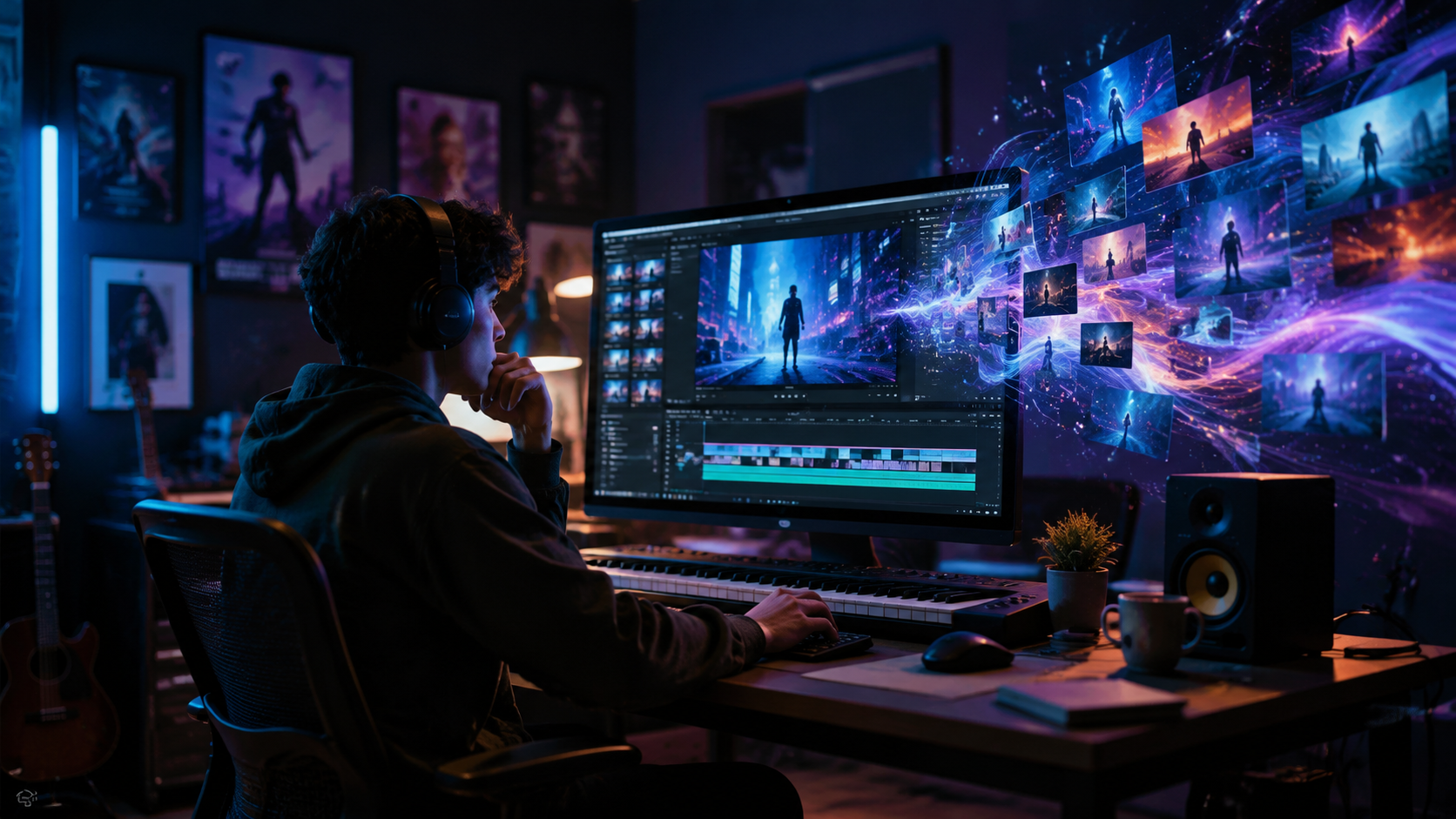
Below is a concise comparison of the four leading tools based on features that matter most to musicians. Eye On Annapolis (May 2026) and Robotics & Automation News (June 2026) both confirmed these tools as the current frontrunners.
| Tool | Best For | Character Consistency | Audio‑to‑Video | Output Length |
|---|---|---|---|---|
| Runway Gen-3 | Cinematic production | Excellent (face‑lock system) | Yes (Direct) | Up to 60 seconds |
| Pika Labs 2.0 | Viral short clips | Good (style‑transfer) | Yes (Fast) | Up to 30 seconds |
| Kaiber | Artistic experimentation | Very good (custom avatars) | Yes (Multi‑mode) | Up to 60 seconds |
| Sora (OpenAI) | Long‑form narratives | Excellent (consistent world model) | Yes (Beta) | Up to 90 seconds |
Each tool offers a free tier or trial, making it easy for artists to test before committing. Pricing in 2026 ranges from $15/month (Pika Standard) to $100/month (Sora Pro), with most tools providing commercial usage rights for music videos.
How to Create a Viral Music Video with AI: Step‑by‑Step Workflow
Based on the workflow detailed by ePHOTOzine (June 2026), here is a proven six‑step process to generate a viral‑ready clip using the best AI music video generator.
- Refine your audio track. Export a clean master (preferably WAV or high‑bitrate MP3) and trim to the most hook‑driven 15–60 seconds. AI tools perform better with clear vocals and minimal background noise.
- Choose a visual style and reference. Upload a character image, mood board, or previous video frame. This establishes the brand identity that the AI will maintain throughout the clip.
- Select your generator and prompt. For Runway Gen-3, use the “Music Video” preset. For Pika 2.0, choose the “Audio Reactive” mode. Write a descriptive prompt that includes camera movement (e.g., “slow zoom in, neon lights, confident walk”).
- Run the initial generation. Most tools produce a draft in 2–5 minutes. Review the lip‑sync and character consistency. If the face changes, adjust the identity‑lock parameter and regenerate.
- Iterate and polish. Use the tool’s in‑painting or frame‑by‑frame editor to fix glitches. Many AI generators now allow you to “remix” specific sections without re‑generating the entire video.
- Export and optimize for platforms. Choose 9:16 for vertical shorts or 16:9 for YouTube. Add captions (e.g., using CapCut integration) and a 3‑second hook at the start. According to New Wave Magazine, videos with hooks see 3× higher retention rates.
Character Consistency and Artist Branding: The 2026 Difference
Eye On Annapolis (May 2026) dedicated an entire article to character consistency and artist branding in AI‑generated music videos. The central discovery: tools that insert a “character card” into the model’s latent space can maintain the same face, clothing, and even lighting across multiple shots. This is a game‑changer for artists who want a single protagonist to star in an entire album’s worth of videos.
For example, Runway Gen-3’s “Character Lock” feature allows you to upload a front‑facing portrait. The model then embeds that identity into every frame, adjusting for different angles and expressions without drift. Social Life Magazine reported that artists using this feature saw a 40% increase in brand recall among viewers.
Tools That Prioritize Brand Elements
Kaiber has built a dedicated “Brand Kit” module where you can define color palettes, logo placements, and typography. The AI then generates backgrounds and overlays that automatically integrate these elements. Sora (OpenAI) takes a different approach—it constructs a full 3D world model, so the same environment persists across scenes, reinforcing a cohesive aesthetic.
Why Consistency Drives Virality
Inconsistent visuals confuse the audience and reduce shareability. A study cited by NoHo Arts District (March 2026) found that music videos with consistent character appearances earned 2.5× more shares on TikTok than those with random visuals. The best AI music video generator now makes this the default behavior, not an optional extra.
Audio‑to‑Video Workflows for Indie Musicians
Indie musicians often lack the budget for expensive film crews or VFX artists. That’s why NoHo Arts District (March 2026) tested five AI music video generators specifically for indie creators. Their conclusion: tools that handle the entire “audio to video” pipeline—from beat detection to scene transitions—save an average of 15 hours per video compared to traditional editing.
Robotics & Automation News (June 2026) also highlighted that the best modern content workflows rely on end‑to‑end AI integration. You upload your song, pick a genre style, and the AI outputs a fully edited video with subtitle burns and beat‑synced cuts. Indie musicians can then spend those saved hours on promotion and fan engagement.
Free and Low‑Cost Options
Pika Labs 2.0 offers a free tier with watermarked exports, while Kaiber’s “Starter” plan ($10/month) allows up to 50 generations per month. Runway Gen-3 has a free trial with time‑limited credits. For musicians just starting out, these options provide a risk‑free way to experiment with AI‑generated visuals before committing to a paid plan.
Integrating AI into Existing Music Production
Many artists now use AI music video generators as a plug‑in within digital audio workstations (DAWs) like Ableton or Logic Pro. Pika Labs offers a dedicated plugin that syncs directly to your timeline, so video changes update in real‑time as you adjust the mix. This streamlined workflow, as noted by ePHOTOzine, is a hallmark of the best AI video software for music video in 2026.
Frequently Asked Questions About AI Music Video Generators
What is the best AI music video generator in 2026?
Runway Gen-3, Pika Labs 2.0, Kaiber, and Sora are the top contenders. Runway excels in cinematic quality, Pika in speed, Kaiber in artistic style, and Sora in long‑form narrative coherence.
Can AI music video generators maintain character consistency?
Yes. Most top tools in 2026 include character‑lock features that preserve facial features, clothing, and style across all shots. Runway Gen-3 and Sora lead in this area.
How long does it take to create a full music video with AI?
Typically 10–30 minutes from upload to export, depending on the length and complexity. Pika Labs 2.0 can produce a 30‑second clip in under 5 minutes.
Are AI‑generated music videos usable for commercial release?
Yes. All four major tools offer commercial licenses in their paid tiers. Always check the terms—Runway and Sora grant full commercial rights; Pika and Kaiber require a pro subscription for unrestricted use.
Do I need technical skills to use an AI music video generator?
No. Modern tools are designed for musicians, not coders. You upload audio, choose a style, and the AI does the heavy lifting. Basic prompt engineering is helpful but not required.
Which AI generator works best for TikTok and Shorts?
Pika Labs 2.0 is optimized for vertical short‑form content. It auto‑detects beat drops and loops the final 3 seconds for smooth restart—ideal for viral clips on TikTok and Reels.



Comments ()