
Best AI for Short Films in 2026: Top Tools for Filmmakers
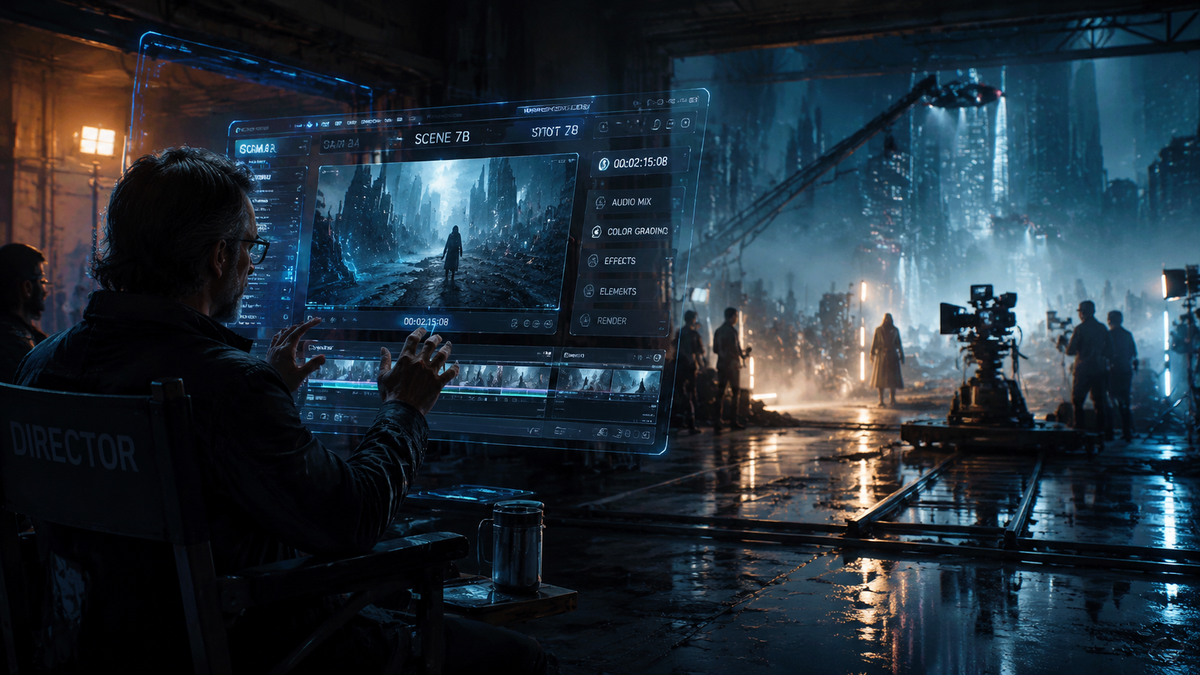
Finding the best AI for short films in 2026 involves selecting a suite of generative tools that handle everything from temporal consistency in video to high-fidelity spatial audio. As of mid-2026, the landscape has shifted from experimental clips to professional-grade production pipelines, allowing independent creators to compete with major studios by leveraging advanced neural rendering and real-time physics engines. The industry standard now focuses on multi-modal integration, where text-to-video, image-to-video, and consistent character modeling work in a unified ecosystem to produce cinematic results.
The best AI for short films in 2026 is a combination of advanced video generation models like Sora 2.0 and Runway Gen-4 for visuals, paired with ElevenLabs for voice synthesis and ElevenLabs SFX for immersive audio. These tools allow filmmakers to maintain visual continuity, generate hyper-realistic textures, and automate complex post-production tasks like rotoscoping and color grading with unprecedented speed.
- ✓ Neural rendering has reached a "cinematic parity" where AI-generated footage is indistinguishable from 35mm film in controlled environments.
- ✓ Festivals like the Reply AI Film Festival and the Frame Forward AI Animated Film Festival are now major industry benchmarks for quality.
- ✓ Directorial control is the primary focus of 2026 tools, moving away from "random" generation toward precise camera and lighting manipulation.
- ✓ Hybrid workflows—mixing live-action footage with AI-augmented backgrounds—are the most common technique among award-winning creators.
The Evolution of AI Filmmaking in 2026
The year 2026 marks a definitive turning point in the history of cinema. As highlighted by creative leaders at the recent AI Filmmaking Summit, the conversation has shifted from "can AI make a movie?" to "how can AI make my movie better?" This transition is fueled by the democratization of high-end visual effects, which were once the exclusive domain of billion-dollar franchises. Today, independent creators are using generative models to produce short films that rival Hollywood productions in visual complexity and emotional depth.
According to Creative Bloq, industry professionals who attended the 2026 AI Filmmaking Summit reported a significant shift in perception, noting that AI is now viewed as a sophisticated "digital camera" rather than a replacement for the director’s vision. This sentiment is echoed by the rise of dedicated showcases, such as the third edition of the Reply AI Film Festival, which specifically honors the best short films generated with artificial intelligence. These festivals prove that the best AI for short films is one that empowers the human artist to iterate faster and explore narratives that were previously too expensive to film.
How to Create a Short Film Using AI in 2026
- Conceptualization and Scripting: Use Large Language Models (LLMs) to refine your screenplay and generate detailed shot lists with specific "camera" movements and lighting prompts.
- Character Design: Create consistent 360-degree character references using specialized "identity-lock" models to ensure your protagonist looks the same in every scene.
- Scene Generation: Utilize high-fidelity video models to generate base footage, or use AI-driven motion capture to translate your own movements into digital characters.
- Audio Synthesis: Generate a full spatial audio mix, including voice cloning for dialogue and generative foley for sound effects.
- Final Assembly: Edit your clips in an AI-native NLE (Non-Linear Editor) that can automatically color-match clips and upscale resolution to 8K.
Top Video Generation Tools for Short Films
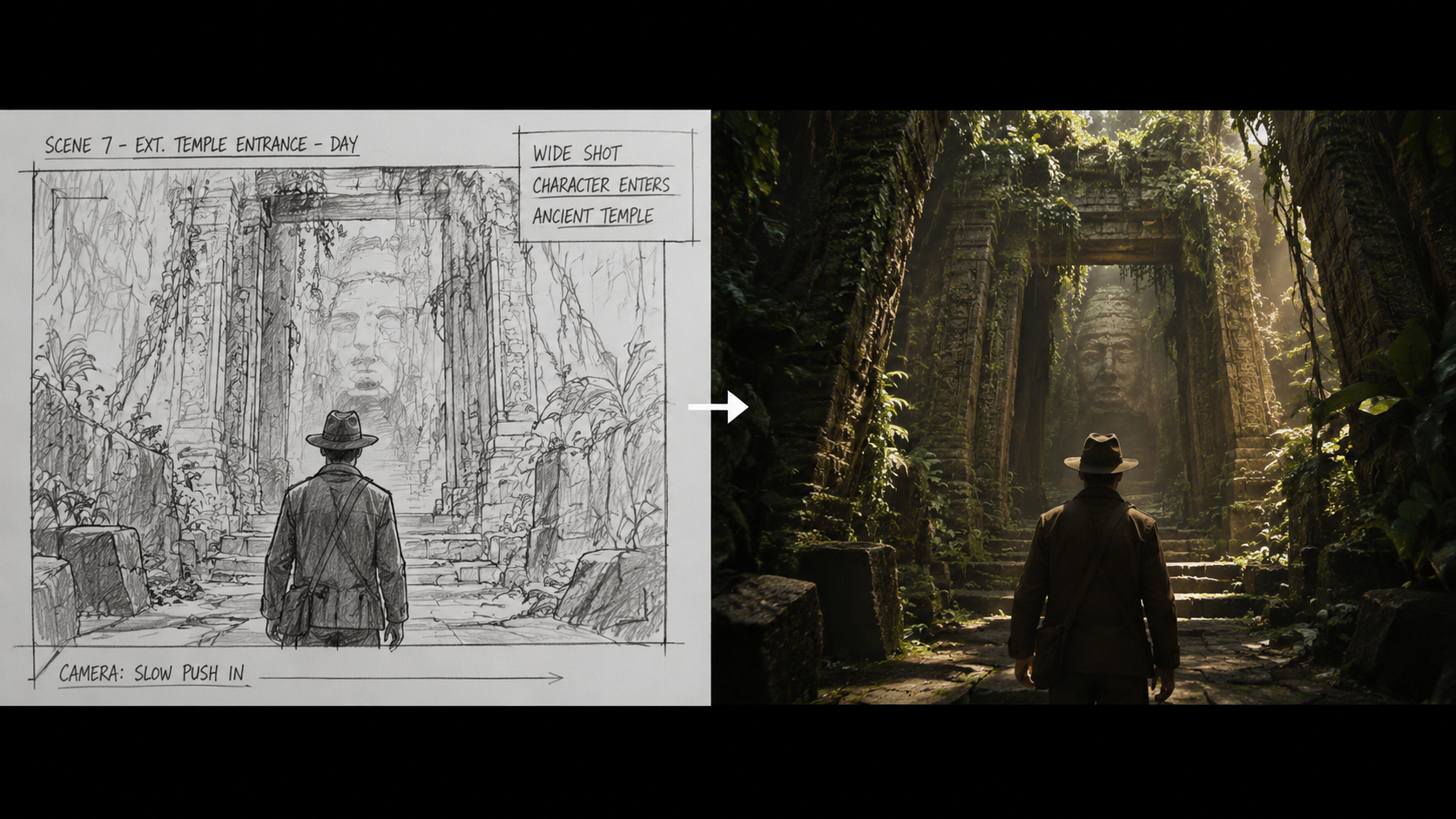
When searching for the best AI for short films, video quality is the most critical factor. In 2026, the leading tools have moved beyond 4-second loops to generating full 60-second scenes with perfect temporal consistency. This means that if a character walks behind a tree, they emerge on the other side with the same clothing, hairstyle, and facial features. This level of reliability has allowed films like Igor Alferov’s ‘Thanksgiving Day’ to win prestigious awards, such as the inaugural Frame Forward AI Animated Film Festival in February 2026.
The current market leaders provide granular control over virtual cinematography. Features like "Director Mode" allow users to set specific focal lengths, adjust aperture settings, and even simulate specific film stocks like Kodak Vision3 or Fujifilm Eterna. This precision is what separates professional AI filmmaking from hobbyist experimentation. As Ryan Hassan noted in The Free Press, filmmakers are now using these tools to "beat Hollywood" by producing high-concept sci-fi and fantasy shorts at a fraction of the traditional cost.
| Tool Name | Primary Use Case | Key 2026 Feature | Output Quality |
|---|---|---|---|
| Sora 2.0 | Hyper-realistic Cinematography | Physics-Engine Integration | 8K / 60fps |
| Runway Gen-4 | Experimental & Stylized Video | Multi-Motion Brush 2.0 | 4K / ProRes 422 |
| Luma Dream Machine Pro | Rapid Prototyping | Instant 3D-to-Video | 4K / High Dynamic Range |
| Kling AI (Global) | Long-form Narrative | 10-Minute Continuous Gen | 1080p / 24fps |
The Best AI for Short Films: Audio and Post-Production
A film is only as good as its sound, and 2026 has seen a revolution in generative audio. The best AI for short films must include a robust audio pipeline. Tools like ElevenLabs have expanded their repertoire to include "Atmospheric Generation," which creates a layered soundscape based on the visual content of a scene. For example, if a scene takes place in a rainy Tokyo street, the AI automatically generates the sound of tires on wet pavement, distant neon hums, and localized chatter in the correct dialect.
Post-production has also been streamlined. According to IndieWire, the Academy’s recent changes to International Feature eligibility reflect a broader acceptance of diverse production methods, including those utilizing advanced digital tools. AI-driven rotoscoping now allows filmmakers to remove or add elements to a frame in seconds, a task that used to take weeks of manual labor. This efficiency is driving community empowerment, as seen with the Inspiring Asia Micro Film Festival 2026, where local filmmakers in Indonesia are using AI to tell high-quality stories with minimal budgets.
Key Audio Tools for Filmmakers
- ElevenLabs Voice 3.0: Offers emotionally resonant voice acting with adjustable "breathiness" and "vocal fry" for realistic dialogue.
- Suno V5: Generates full cinematic scores that adapt to the pacing and emotional beats of your edited video.
- SoundRaw Pro: Allows for real-time manipulation of background tracks, enabling directors to change the mood of a scene instantly.
The Impact of AI Film Festivals on the Industry
The rise of the best AI for short films is best observed through the lens of international competitions. In April 2026, the announcement of the jury for the third Reply AI Film Festival showcased a mix of traditional cinematographers and AI pioneers. This blend of expertise ensures that the films are judged not just on technical wizardry, but on narrative structure, pacing, and emotional resonance. These festivals serve as the "Sundance" for the AI era, launching the careers of creators who may never have had access to traditional film equipment.
Furthermore, the Frame Forward AI Animated Film Festival has highlighted how AI is reviving the art of animation. Winning films like ‘Thanksgiving Day’ demonstrate that AI can handle complex character interactions and subtle facial expressions that were previously difficult for generative models. This success is encouraging a new generation of "micro-studios"—small teams of 1-3 people who produce content that previously required a staff of 50. Studies show that AI-assisted workflows have reduced production timelines by up to 70% for short-form narrative content in 2026.
Future Trends: What’s Next for AI Filmmaking?
Looking toward the latter half of 2026 and into 2027, the focus is shifting toward "Interactive Cinema." The best AI for short films will soon allow for real-time rendering, where the viewer can influence the direction of the story. This is already being piloted in micro-film festivals across Asia, where audience engagement is a key metric for success. The integration of AI with VR and AR is also expected to create immersive short films that allow viewers to walk through the set while the story unfolds around them.
Ethical AI usage remains a cornerstone of the 2026 landscape. Leading tools now come with "C2PA" watermarking as standard, ensuring that AI-generated content is transparent and that original artists used in training data are compensated through licensing pools. As Tanoto Foundation noted during the launch of the #InspiringIndonesia campaign, the goal is to use these tools to drive community empowerment, ensuring that the power of high-end storytelling is available to everyone, regardless of their geographic or financial situation.
Frequently Asked Questions
What is the best AI for short films in 2026?
The current industry leader is Sora 2.0 for its unmatched physical accuracy, though Runway Gen-4 is preferred by many for its artistic flexibility and advanced editing tools. The "best" tool depends on whether you prioritize photorealism or stylistic expression.
Can AI-generated short films win major awards?
Yes, in 2026, several dedicated festivals like the Frame Forward AI Animated Film Festival and the Reply AI Film Festival recognize excellence in AI cinema. Additionally, major bodies like the Academy are increasingly acknowledging the role of AI in the broader filmmaking process.
How much does it cost to make an AI short film?
While costs vary, a high-quality AI short film can be produced for the price of monthly subscriptions to key tools (approx. $100–$300), significantly lower than the thousands of dollars required for traditional equipment and labor.
Do I need a powerful computer to use these AI tools?
Most of the best AI tools for filmmaking in 2026 are cloud-based, meaning the heavy processing is done on remote servers. You only need a stable internet connection and a standard computer or tablet to direct the AI and edit the results.
Is AI footage consistent enough for narrative storytelling?
Yes, 2026 models feature "Character Consistency" and "World Lock" functions that ensure actors and environments remain stable across different shots, solving the flickering issues seen in earlier versions of the technology.



Comments ()