
Best AI for Realistic Human Videos: 2026 Top Picks Ranked

The best ai for realistic human videos in 2026 is defined by the emergence of ultra-high-fidelity temporal consistency and skin-texture rendering that makes digital humans indistinguishable from real footage. Leading the market are Runway Gen-4.5, Seedance 2.0, and OpenAI’s latest iterations, which have collectively bridged the "uncanny valley" through advanced diffusion-transformer architectures. These tools allow creators to generate lifelike human movement, complex emotional expressions, and photorealistic lighting with simple text prompts or image references.
The best AI for realistic human videos in 2026 is Runway Gen-4.5, which sets the industry standard for temporal stability and micro-expression accuracy. Other top-tier contenders include Seedance 2.0 for cinematic storytelling and Sora’s commercial-grade updates, offering unparalleled realism in skin pore detail, hair physics, and naturalistic human interaction within digital environments.
- ✓ Runway Gen-4.5 is currently ranked as the most realistic tool, with founders admitting even experts struggle to distinguish its output from reality.
- ✓ Seedance 2.0 has emerged as a major 2026 disruptor, offering superior cinematic lighting and frame-rate consistency for long-form content.
- ✓ Temporal Consistency has been solved in 2026, meaning AI humans no longer "flicker" or change appearance between frames.
- ✓ Deepfake Detection remains a challenge; while AI models can spot static image fakes, humans are currently more reliable at catching subtle video inconsistencies.
The Evolution of the Best AI for Realistic Human Videos in 2026
As of early 2026, the landscape of generative video has shifted from experimental playthings to professional-grade production tools. The primary driver of this change has been the transition to more sophisticated multimodal models that understand the physics of human motion. According to TechRadar, the release of Runway’s Gen-4.5 model in January 2026 marked a turning point where the co-founder himself noted that separating reality from AI-generated humans has become nearly impossible for the naked eye. This level of fidelity is no longer just about high resolution; it is about the "micro-physics" of how light hits human skin and how muscles move under the surface.
The demand for the best ai for realistic human videos has skyrocketed across industries ranging from Hollywood film production to personalized corporate training. While 2025 was the year of "good enough" video, 2026 is the year of "perfect" video. We are seeing models that can handle complex occlusions—such as a person walking behind a tree and reappearing—without losing their visual identity or skeletal structure. This leap in technology has caused significant ripples in traditional media, with Futurism reporting that the latest AI video generators are "scaring Hollywood" due to their ability to produce high-budget visuals at a fraction of the traditional cost.
Furthermore, the democratization of these tools means that high-fidelity human synthesis is no longer restricted to those with massive server farms. Cloud-based rendering and optimized weights have allowed creators to generate 4K, 60fps realistic humans from standard consumer interfaces. As we rank the top picks for 2026, we look at factors like motion fluidity, facial nuance, and the ability to follow complex directorial prompts without "hallucinating" extra limbs or distorted backgrounds.
How to Create Realistic AI Human Videos
- Select a High-Fidelity Model: Choose a platform like Runway Gen-4.5 or Seedance 2.0 that supports "High-Consistency" mode.
- Define the Human Subject: Use descriptive prompts including age, ethnicity, lighting conditions (e.g., "golden hour rim lighting"), and specific clothing textures.
- Apply Motion Brushes: Utilize localized motion controls to dictate specific movements, such as a hand wave or a subtle head tilt, to ensure the AI doesn't over-animate the scene.
- Upscale and Refine: Run the initial output through a temporal denoiser or the platform's native 4K upscaler to sharpen skin textures and eye reflections.
- Review for Artifacts: Check the video for "morphing" in the background or unnatural eye blinking, which are common signs of AI generation.
Top Picks Ranked: Comparing the Best AI for Realistic Human Videos
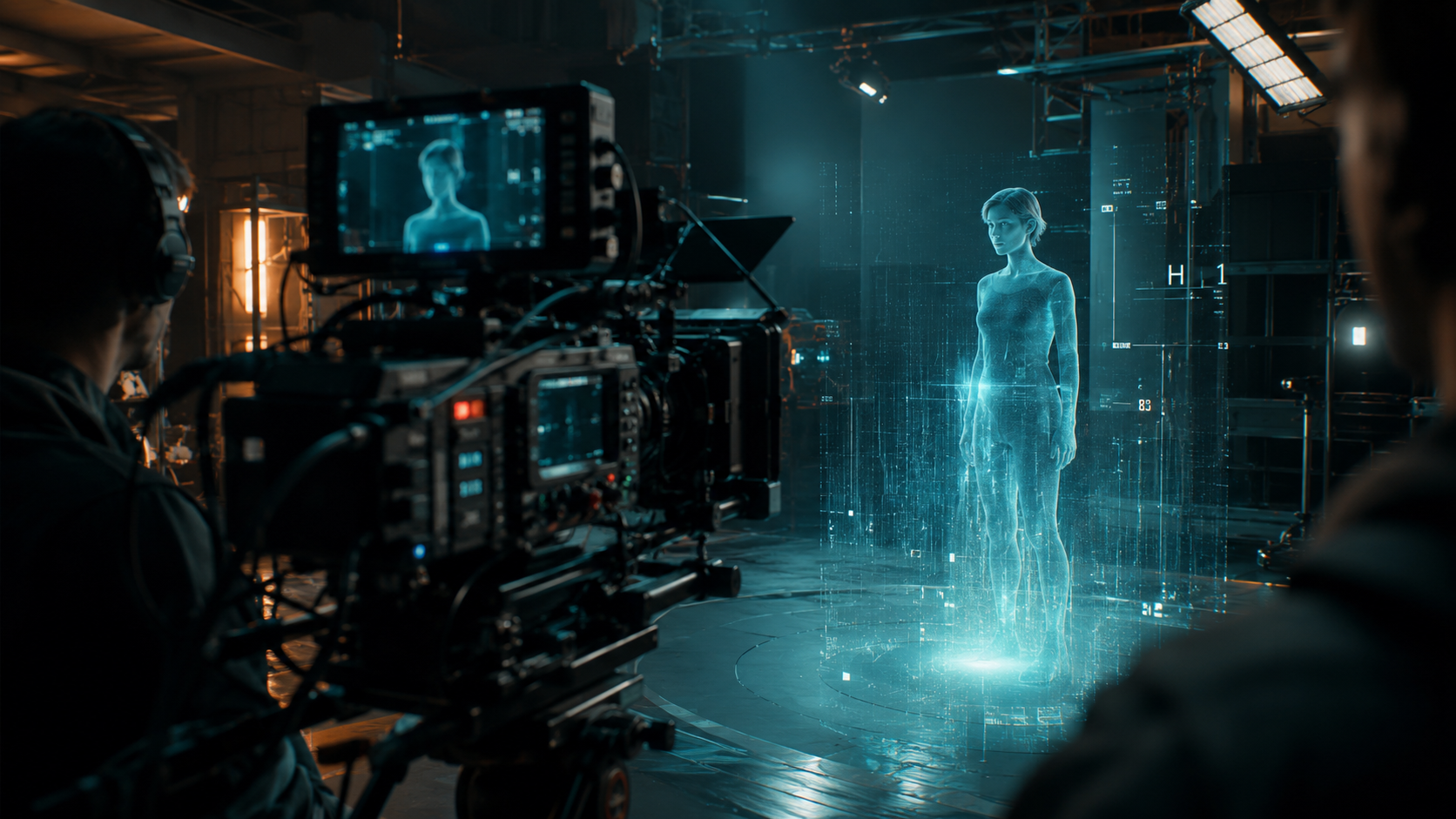
Choosing the right tool depends heavily on your specific use case. Whether you are looking for a "talking head" for a marketing presentation or a full-body cinematic character for a short film, the requirements for realism vary. The 2026 market is divided between "Generative World" models and "Digital Avatar" models. The former creates the entire scene from scratch, while the latter focuses on mapping human speech onto a specific persona with perfect lip-syncing.
In a recent review by Cybernews regarding Seedance 2.0, researchers highlighted that the upgrade is significantly more stable than its predecessor, particularly in how it handles "global consistency"—the ability for a character to look exactly the same in the first second as they do in the tenth. This is a critical metric for realism. If a person's ear shape changes slightly during a turn, the illusion is broken. The top picks for 2026 have largely eliminated these "glitches," focusing instead on the subtle imperfections that make humans look real, such as stray hairs and uneven skin tones.
| AI Model | Primary Strength | Max Resolution | Realistic Human Score (1-10) |
|---|---|---|---|
| Runway Gen-4.5 | Unmatched Skin Textures | 8K (Upscaled) | 9.8 |
| Seedance 2.0 | Cinematic Lighting/Motion | 4K | 9.5 |
| Sora (Pro) | Complex Scene Physics | 4K | 9.3 |
| Pika Art v3 | Creative Character Stylization | 2K | 8.7 |
| HeyGen 2026 | Perfect Lip-Sync & Avatars | 4K | 9.6 |
Deep Dive: Runway Gen-4.5 and the Peak of Realism
Runway has maintained its lead in the "best ai for realistic human videos" category by focusing on the nuances of human expression. The Gen-4.5 model utilizes a proprietary "Neural Skin" engine that simulates how blood flow affects skin color during different emotions. For example, if a generated character is prompted to look "embarrassed," the model subtly increases the reddish hues in the cheeks. This level of detail is why TechRadar reported that even the co-founder of Runway struggled to identify the AI-generated clips in a blind test conducted in early 2026.
The tool’s "Director Mode" has also seen a massive overhaul. Users can now control the focal length of the virtual camera, allowing for shallow depth-of-field shots that make the human subject pop against a blurred background. This mimics the look of high-end cinema cameras like the Arri Alexa. By treating the AI as a virtual cinematographer rather than just a pixel generator, Runway has created a system where the "human" elements feel grounded in a physical space, avoiding the "floating" look that plagued earlier AI video versions.
Seedance 2.0: The Dark Horse of 2026
Seedance 2.0 has quickly become a favorite for those who find other models too "clean." Realism often lies in the imperfections. Seedance 2.0 introduces "Natural Jitter" and "Micro-Blinks" by default, which prevents the "staring into your soul" effect that many AI humans previously exhibited. Cybernews noted in their March 2026 review that the software’s ability to handle complex hand movements—long the Achilles' heel of AI—is finally at a professional standard. It can now render a person tying their shoelaces or playing a piano without the fingers merging into the objects.
The Ethics and Detection of Realistic AI Humans
With great realism comes great responsibility. As AI videos become indistinguishable from reality, the focus on detection has intensified. Interestingly, a study cited by Science News in February 2026 found a fascinating paradox: while AI models are excellent at spotting deepfake static images, human observers are currently better at catching fake videos. This is because humans are evolutionarily tuned to notice "unnatural" biological rhythms, such as an irregular pulse visible in the neck or a breathing pattern that doesn't match the pace of speech.
The rise of viral deepfakes, such as the one mentioned by Fortune featuring Musk, Bezos, and Altman, highlights the social impact of this technology. The creator of that viral video noted that "the best jokes tell the truth," suggesting that the power of realistic AI isn't just in the visual fidelity, but in the narrative's ability to mimic a person's persona. This has led to the implementation of "C2PA" watermarking across all major 2026 tools, which embeds metadata into the video file to prove it was generated by an AI, providing a layer of transparency for viewers.
The Best AI for Realistic Human Videos: Industry Standards
To be considered the "best" in 2026, a model must meet three criteria: temporal consistency, anatomical accuracy, and environmental interaction. Environmental interaction refers to how the human subject interacts with their surroundings—for instance, their feet should leave actual indentations in the grass, and their shadow should match their movements perfectly. PCMag Australia’s latest report on the best AI video generators of 2026 emphasizes that "immersion" is the new metric for success. If a viewer forgets they are watching an AI within the first three seconds, the model has succeeded.
Future Outlook: What’s Next for AI Video?
Looking toward the latter half of 2026 and into 2027, the focus is shifting toward real-time interactivity. We are already seeing the first glimpses of "Live-Gen" technology, where a realistic AI human can react to a user's voice in real-time with virtually zero latency. This will revolutionize customer service and digital companionship. However, for the current year, the gold standard remains high-resolution, pre-rendered content that can be used in film, advertising, and social media.
The competition between Runway, Seedance, and OpenAI is driving innovation at a breakneck pace. As Futurism pointed out, the fear in Hollywood isn't just about losing jobs, but about the total shift in how stories are told. When anyone can generate a realistic human performance from their bedroom, the value of a "production" shifts from the technical ability to film a scene to the creative ability to prompt and curate a vision. The best ai for realistic human videos is ultimately a tool that empowers that creativity without the technical hurdles of the past.
What is the most realistic AI video generator in 2026?
Runway Gen-4.5 is widely considered the most realistic AI video generator in 2026 due to its advanced skin-texture rendering and temporal consistency. It excels at creating humans that are visually indistinguishable from real people in high-definition footage.
Can AI generate realistic human speech and lip-syncing?
Yes, tools like Seedance 2.0 and HeyGen have perfected lip-syncing in 2026. They use neural audio-to-video mapping to ensure that mouth movements, jaw tension, and even tongue placement match the phonetic output of the audio perfectly.
Is it legal to use AI to create videos of real people?
The legality varies by jurisdiction, but in 2026, many regions have passed "Digital Replica" laws. These generally require the explicit consent of an individual (or their estate) to create a realistic AI likeness for commercial purposes.
How can you tell if a human video is AI-generated?
While visual artifacts are disappearing, you can often spot AI by looking for "micro-inconsistencies," such as a lack of natural pulse in the neck, slightly mismatched eye reflections, or shadows that don't perfectly align with complex movements. Many platforms also now include digital watermarks.
Does Seedance 2.0 require a powerful computer?
No, Seedance 2.0 is primarily cloud-based. While it requires a stable internet connection to process the complex diffusion models, the actual rendering happens on remote servers, making it accessible via a standard web browser or mobile app.



Comments ()