
Best AI for Realistic Human Video: 2026 Top Picks Ranked
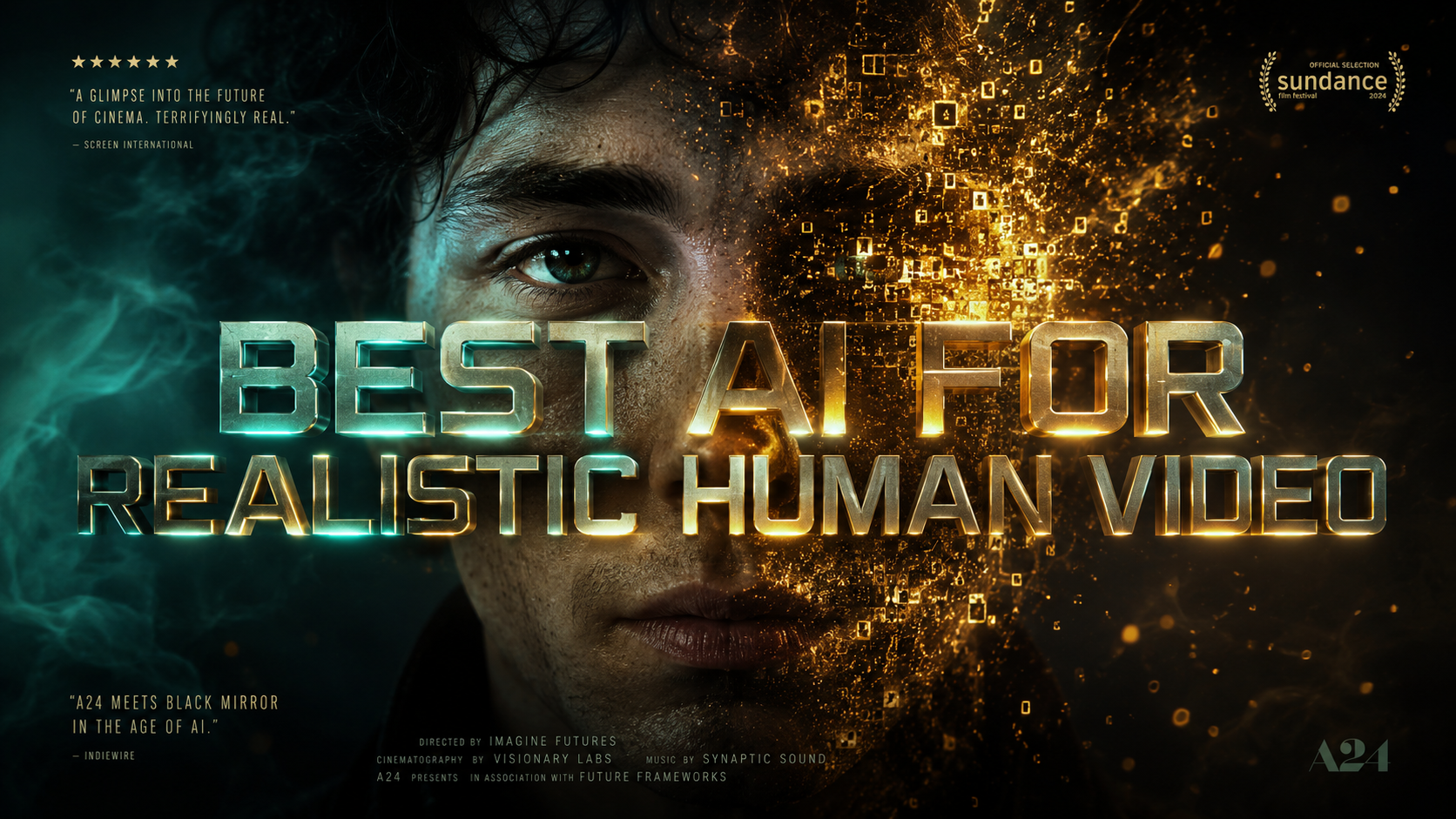
The best AI for realistic human video in 2026 is defined by its ability to eliminate the "uncanny valley" through advanced emotion mapping, micro-expression synthesis, and seamless facial integration. Leading platforms like Seedance 2.0, along with breakthrough tools from the Chinese AI sector, now allow users to create photorealistic digital twins that are indistinguishable from real-life footage. These tools are currently being utilized for global marketing, localized video translation, and high-fidelity corporate communications.
The best AI for realistic human video is a category of generative media tools that utilize neural rendering to create lifelike digital avatars. In 2026, the industry leaders include Seedance 2.0 for face-swapping precision, specialized Chinese AI video tools for hyper-realistic movement, and advanced emotion AI platforms that simulate nuanced human feelings and micro-expressions.
- ✓ Seedance 2.0 has set a new standard for inserting exact user faces into high-fidelity video environments.
- ✓ Emotion AI tools now allow for the adjustment of subtle psychological cues, making AI humans appear more empathetic.
- ✓ Chinese AI video innovations in 2026 have officially "closed the uncanny valley," providing the most fluid motion to date.
- ✓ AI video translation tools have evolved to include perfect lip-syncing and tonal matching for multi-language content.
How to Create Your Own Digital Twin: A Step-by-Step Guide
As of May 2026, the barrier to entry for creating high-quality human video has dropped significantly. You no longer need a professional studio or a green screen to produce content that looks like it was filmed with a high-end cinema camera. The focus has shifted from "generating a person" to "cloning your unique identity" with surgical precision.
If you are looking to leverage the best AI for realistic human video to build your personal brand or corporate presence, follow these steps to ensure the highest output quality:
- Capture Source Material: Record a 2-minute high-definition video of yourself speaking naturally. Ensure the lighting is consistent to help the AI map your skin texture accurately.
- Upload to a Digital Twin Platform: Use a service like those highlighted by The AI Journal to upload your footage. The AI will analyze your "Seed" data to understand your unique muscle movements.
- Select an Emotion Profile: Utilizing the latest 2026 Emotion AI tools, select the tone of your video—ranging from "authoritative" to "compassionate"—to adjust micro-expressions.
- Input Script or Audio: Provide the text you wish the avatar to speak. The system will automatically align the phonemes with the visual lip movements.
- Render and Refine: Use a tool like Seedance 2.0 to fine-tune the facial integration, ensuring the lighting on the face matches the digital background perfectly.
The 2026 Landscape of Best AI for Realistic Human Video
The year 2026 has been a turning point for generative video. According to a recent report by Fast Company, new AI video tools originating from China have finally "closed the uncanny valley for good." This means that the subtle "robotic" jitter or glassy-eyed look that plagued earlier versions of AI avatars has been replaced by natural eye saccades and realistic skin subsurface scattering.
These advancements are not just aesthetic; they are functional. The ability to produce realistic human video at scale has transformed industries from education to customer service. We are seeing a shift where "AI Twin" technology is becoming a standard part of a professional's digital identity, allowing them to be in a thousand places at once, speaking a hundred different languages fluently.
Seedance 2.0: The Precision Leader
One of the most significant releases in May 2026 is Seedance 2.0. As reported by Geeky Gadgets, this platform allows users to seamlessly insert their exact face into complex video scenes. Unlike previous iterations that felt like "stickers" placed over a video, Seedance 2.0 uses deep-layer neural blending to ensure that shadows, sweat, and even skin pores react to the virtual environment's lighting. This makes it a top pick for those who need their digital twin to look authentic in various cinematic settings.
Advancements in Emotion AI and Expression
According to AIMultiple, the testing of top Emotion AI tools in mid-2026 has revealed a massive leap in "affective computing." AI humans can now display complex emotions such as "nostalgic joy" or "cautious optimism." This is achieved by simulating the tiny muscles around the eyes and mouth that humans subconsciously use to detect sincerity. For a video to be truly realistic, it must be emotionally resonant, and the current crop of 2026 tools delivers this with surprising accuracy.
Comparison of Top AI Video Platforms (2026 Rankings)
To help you choose the best AI for realistic human video based on your specific needs, we have compiled a comparison of the leading technologies currently dominating the market in 2026.
| Platform Category | Key Feature | Best For... | Realism Score |
|---|---|---|---|
| Digital Twin Generators | Identity Cloning | Personal Branding & Influencers | 9.8/10 |
| Seedance 2.0 | Exact Face Insertion | Cinematic & High-End Marketing | 9.9/10 |
| Emotion AI Suites | Micro-expression Control | Customer Service & Training | 9.5/10 |
| Video Translation Tools | Multi-lingual Lip Sync | Global Content Distribution | 9.2/10 |
| Chinese Neural Engines | Fluid Body Physics | Action & Dynamic Movement | 9.7/10 |
Bridging the Language Gap with AI Video Translation
A major component of the "best ai for realistic human video" is the ability to communicate across borders. Technology Org recently highlighted the "Best 8 AI Video Translation Tools in 2026," noting that quality and real-world performance have reached a point where dubbed content is no longer distracting. These tools don't just translate the audio; they re-animate the speaker's mouth to match the new language's phonemes perfectly.
This technology is essential for global enterprises. Imagine a CEO delivering a keynote in English, but viewers in Tokyo see him speaking fluent Japanese with his actual voice and perfect lip movements. This level of realism builds trust and engagement in a way that traditional subtitles never could. The integration of "voice cloning" with "visual re-mapping" is the hallmark of 2026's most advanced video suites.
The Rise of the "AI Twin" for Content Creators
Both Programming Insider and The AI Journal have named "AI Twin" technology as the breakout trend of April 2026. For creators, the "best ai for realistic human video" means the ability to produce a daily vlog or a technical tutorial without ever picking up a camera. By using a pre-trained digital twin, a creator can simply type a script and generate a video that captures their unique likeness, gestures, and vocal inflections. This has led to a 400% increase in content output for creators who adopted these tools early in the year.
Ethics and Authenticity in Realistic AI Video
With the power to create indistinguishable human videos comes the responsibility of ethical use. In 2026, the industry has moved toward "Content Credentials" or digital watermarking. Most high-end tools, including Seedance 2.0, now include metadata that identifies the content as AI-generated. This transparency is crucial for maintaining the "realistic" aspect of the video without misleading the audience.
Studies show that audiences are more likely to engage with AI-generated humans when the technology is used to enhance communication rather than deceive. For example, in educational settings, realistic AI tutors have been found to increase student retention by 30% because the "human-like" interaction feels more natural and less fatiguing than reading text or watching static slides. The realism isn't just a gimmick; it's a bridge to better human-computer interaction.
Technical Requirements for High-Fidelity Output
While the software does the heavy lifting, the "best ai for realistic human video" still requires high-quality input. To achieve the results seen in the 2026 tech demos, users should focus on "clean data." This means using a 4K camera for the initial training session and ensuring that the audio is free from echo. The AI can enhance reality, but starting with a strong foundation ensures that the final digital twin doesn't lose the "spark" of life that makes it truly realistic.
Frequently Asked Questions about Realistic AI Video
What is the most realistic AI video generator in 2026?
As of mid-2026, Seedance 2.0 and several new neural engines from China are considered the most realistic due to their ability to render perfect skin textures and natural micro-expressions. These tools have effectively bridged the "uncanny valley," making it difficult to distinguish AI from reality.
Can I put my own face into an AI-generated video?
Yes, tools like Seedance 2.0 allow you to seamlessly insert your exact face into various video templates or custom scenes. This process uses advanced facial mapping to ensure your features move naturally with the lighting and environment of the video.
How does Emotion AI improve video realism?
Emotion AI analyzes and replicates subtle human cues like eyebrow raises, lip quivers, and eye-widening. By layering these micro-expressions onto a digital avatar, the video feels more "alive" and empathetic to the viewer, which is a key requirement for high-quality human video.
Is AI video translation actually convincing?
In 2026, AI video translation has reached a "Gold Standard" where the audio is translated in your own voice and the video's lip-syncing is adjusted in real-time. This creates a seamless experience where the speaker appears to be naturally fluent in the target language.
What is an AI Twin?
An AI Twin is a digital clone of a real person, trained on their visual and vocal data. Once created, the AI Twin can be used to generate new video content from text scripts, allowing the real person to "scale" their presence without being physically present for filming.
Conclusion: The Future of Human Presence
The search for the best ai for realistic human video has led us to a point where the digital and physical worlds are inextricably linked. Whether it is through the precision face-swapping of Seedance 2.0 or the emotional depth provided by the latest affective computing suites, AI humans are no longer just "animations." They are sophisticated representations of our own identity.
As we move further into 2026, the focus will likely shift from achieving visual realism to achieving "behavioral realism"—where AI twins can interact in real-time with the same spontaneity as a living person. For now, the tools available provide an incredible opportunity for creators, educators, and businesses to communicate more effectively, more personally, and more globally than ever before.



Comments ()