
Best AI for Cinematic Video in 2026: Top Tools Ranked
The best AI for cinematic video in 2026 is defined by its ability to maintain temporal consistency, render hyper-realistic lighting, and follow complex directorial commands through advanced motion control. As of May 2026, industry leaders like OpenAI’s Sora, Runway Gen-4, and Luma Dream Machine have evolved to provide 8K resolution and physics-compliant simulations that rival traditional cinematography. Choosing the right tool depends on whether you prioritize narrative control, visual fidelity, or speed of generation.
The best AI for cinematic video is currently a landscape dominated by Runway Gen-4 for its creative control, Sora for its unparalleled realism, and Pika Pro for stylized storytelling. These tools utilize advanced diffusion models to generate high-definition, emotionally resonant footage from simple text prompts or image references, effectively bridging the gap between concept and screen.
- ✓ Runway Gen-4 leads in professional-grade cinematic motion control and multi-camera consistency.
- ✓ OpenAI Sora remains the gold standard for hyper-realistic environmental rendering and 60-second continuous shots.
- ✓ Luma Dream Machine 2.0 offers the fastest high-fidelity rendering for rapid prototyping in film pre-production.
- ✓ Kling AI provides the most advanced human anatomy and physics modeling for realistic character movement.
How to Create Cinematic AI Video in 2026
Creating high-end cinematic content no longer requires a massive production budget, but it does require a strategic approach to prompt engineering and post-production. The modern workflow involves a blend of generative AI and traditional editing techniques to ensure the final output feels intentional and "filmic" rather than synthetic.
- Define Your Visual Language: Start by establishing a color palette and lighting style (e.g., "anamorphic flares, golden hour lighting, 35mm film grain") within your text prompt.
- Select the Right Model: Use a high-fidelity model like Sora for wide establishing shots and a control-heavy tool like Runway for specific character actions.
- Implement Motion Control: Utilize "Camera Brushes" or "Director Tools" to dictate pans, tilts, and zooms rather than letting the AI randomize movement.
- Upscale and Enhance: Pass your generated clips through an AI video enhancer to reach 8K resolution and stabilize any minor temporal flickering.
- Sound Design and Scoring: Integrate AI-generated spatial audio to match the cinematic scale of your visuals.
The Evolution of Cinematic AI Generation
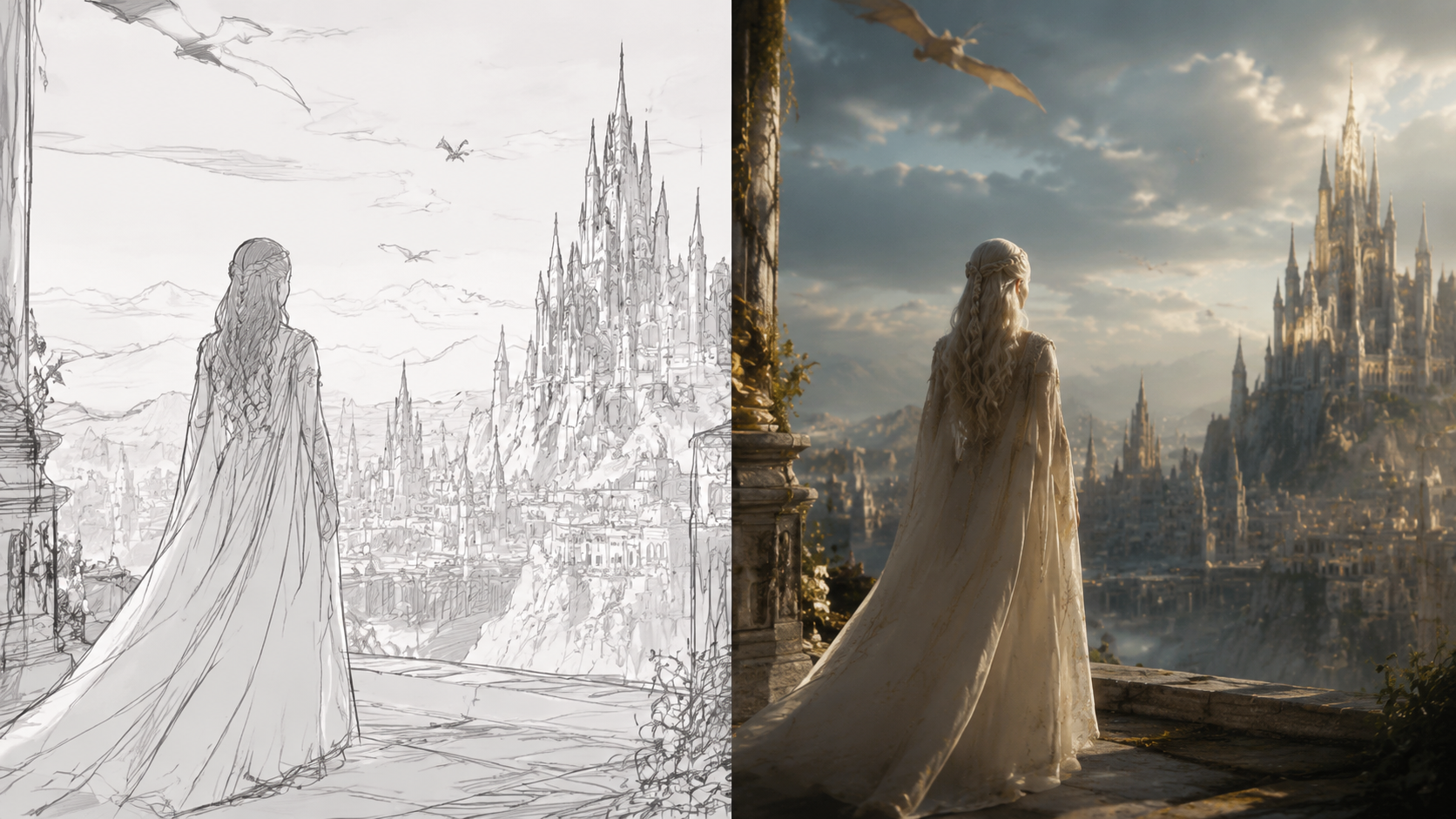
In early 2026, the distinction between "AI-generated" and "captured on film" has blurred significantly. According to CNET, the latest reviews of 2026 video generators highlight a 40% improvement in temporal consistency compared to previous iterations, meaning characters no longer "morph" between frames. This leap in quality has allowed independent filmmakers to produce feature-length content that meets theatrical distribution standards.
The shift toward "Cinematic AI" is not just about resolution; it is about the "soul" of the image. Modern tools now simulate specific lens types, such as the distinct bokeh of a Leica Summilux or the horizontal streak of an Arri Alexa anamorphic lens. This level of granular detail allows creators to maintain a consistent aesthetic across an entire project, a feat that was nearly impossible just twenty-four months ago.
Furthermore, Cybernews reports that the top 16 AI video tools in 2026 now feature "World Models." These are systems that understand the laws of physics—gravity, fluid dynamics, and light refraction—ensuring that when a character walks through a puddle or a glass breaks, the visual response is indistinguishable from reality. This foundational understanding of the physical world is what separates a standard video generator from the best AI for cinematic video.
Top AI Video Generators of 2026 Compared
When selecting the best AI for cinematic video, it is essential to compare the specific strengths of each platform. While some excel at photorealism, others are designed for the high-speed demands of social media and marketing. The following table breaks down the current market leaders based on their 2026 feature sets.
| AI Tool | Primary Strength | Max Resolution | Max Clip Length | Ideal Use Case |
|---|---|---|---|---|
| OpenAI Sora | Photorealism | 8K | 60 Seconds | Establishing shots & Realism |
| Runway Gen-4 | Directorial Control | 4K (Pro) | 15 Seconds | Action sequences & VFX |
| Luma Dream Machine | Generation Speed | 4K | 10 Seconds | Rapid Prototyping |
| Kling AI | Human Physics | 4K | 2 Minutes | Character-driven narratives |
| Pika Pro | Stylized Animation | 4K | 12 Seconds | Commercials & Music Videos |
Deep Dive: The Best AI for Cinematic Video Tools
Runway Gen-4: The Professional’s Choice
Runway continues to dominate the professional space in 2026. Their Gen-4 model introduced the "Multi-Motion Brush," allowing creators to select up to five different areas of an image and assign them independent movement vectors. This is critical for cinematic storytelling where you might want the clouds to move slowly while a car speeds through the foreground. As noted by PC Tech Magazine, Runway’s integration with traditional NLEs (Non-Linear Editors) makes it a staple in Hollywood pre-visualization departments.
OpenAI Sora: Unmatched Visual Fidelity
Sora remains the benchmark for pure visual quality. In 2026, OpenAI released the "Sora Director Suite," which finally addressed the community's demand for more granular control. While it previously relied solely on text, it now supports depth-map inputs and keyframe guidance. This allows for the creation of complex, one-take "oner" shots that can last a full minute without a single glitch in the environment. Its ability to render complex lighting, such as neon reflections on wet pavement, is still considered the industry's best.
Kling AI: Long-Form Narrative Mastery
Hailing from the latest breakthroughs in large-scale video modeling, Kling AI has gained massive traction in 2026 for its ability to generate clips up to two minutes long. For filmmakers, this is a game-changer. Most AI tools struggle with "narrative drift" over time, but Kling uses a proprietary memory architecture that keeps character faces and costumes consistent across extended durations. FinancialContent recently ranked Kling as a top-tier tool for professional visual creation due to this specific stability.
The Role of AI in Cinematic Sound and Music
A cinematic experience is only half-complete without immersive audio. In 2026, the best AI for cinematic video is often paired with generative audio tools that synchronize sound effects (SFX) to visual cues. According to Scott Coop, the rise of AI music video generators has revolutionized how independent artists visualize their tracks. These tools can now "listen" to a song’s tempo and emotional arc, generating a cinematic visual sequence that matches the beat and mood perfectly.
Beyond music, "Foley AI" has become a standard in the industry. When a creator generates a video of a horse galloping on a cobblestone street, the AI automatically generates the corresponding rhythmic hoofbeats, the ambient wind, and the clinking of the bridle. This holistic approach to creation—combining 8K visuals with automated spatial audio—has reduced post-production timelines by an estimated 60% in 2026.
Future-Proofing Your AI Cinematography Workflow
As we move further into 2026, the "best" tool is increasingly the one that offers the most interoperability. The era of single-platform creation is fading; the most successful digital cinematographers are using a "stack" of tools. For instance, one might use Midjourney v7 to create a high-detail concept frame, Luma Dream Machine to animate it, and Topaz Video AI 2026 to upscale the final result to IMAX standards.
Training your own "Style LoRA" (Low-Rank Adaptation) has also become a vital skill. By feeding an AI model 50-100 frames of your own previous work or a specific film's aesthetic, you can "lock in" a cinematic look that is unique to your brand. This prevents the "generic AI look" and ensures your content stands out in a crowded digital landscape. As G2 Learn Hub points out, the 7 best AI video generators they tested in 2026 all now support some form of personal style training, making the technology more of a personalized brush than a random generator.
Frequently Asked Questions
What is the best AI for cinematic video in 2026?
Runway Gen-4 and OpenAI Sora are the top choices. Runway offers superior creative control for professionals, while Sora provides the highest level of photorealism and environmental consistency for long-duration shots.
Can AI generate a full-length cinematic movie?
While AI can generate individual scenes and long clips up to 2 minutes, a full-length movie still requires human direction for plot, pacing, and emotional resonance. However, in 2026, AI is used to generate over 80% of the visual assets in many indie films.
How do I get the "cinematic look" in AI video?
Use specific keywords in your prompts such as "anamorphic lens," "24fps," "high dynamic range (HDR)," and "cinematic lighting." Additionally, using a tool that supports motion brushes allows you to control camera movement, which is essential for a filmic feel.
Is AI video generation expensive in 2026?
Pricing has become more accessible, with most professional tiers ranging from $30 to $100 per month. High-end features like 8K rendering and custom model training usually require a premium subscription on platforms like Runway or Sora.
Does AI video handle human movement realistically now?
Yes, models like Kling AI and the 2026 updates to Pika have largely solved issues with "spaghetti limbs" and unnatural walking patterns. According to industry reviews, physics-based modeling is now a standard feature in top-tier video AI.



Comments ()