
Why AI Videos Sound Robotic and How to Fix It in 2026
AI videos often sound robotic due to limitations in speech synthesis, lack of emotional inflection, and poor synchronization between audio and visual elements. In 2026, advancements in lip-sync AI and voice modulation have made it easier to avoid robotic voice in AI videos by using multi-step workflows, emotional tone mapping, and context-aware pacing. Platforms like Digen AI Agent now automate these improvements, producing more natural-sounding AI videos with consistent character voices.
TL;DR: AI videos sound robotic due to outdated speech synthesis and poor lip-sync, but 2026 solutions include emotional inflection tools, AI agents like Digen AI Agent, and advanced lip-sync models tested for realism.
Avoiding robotic voice in AI videos requires understanding three core issues: synthetic speech lacks human cadence, emotional tone mapping is often oversimplified, and lip-sync accuracy impacts perceived authenticity. Modern solutions combine autonomous AI agents (like Digen AI Agent), tested lip-sync models achieving 93.7% accuracy, and prosody algorithms that adjust pacing based on context.
- ✓ Robotic voices persist in 45.2% of budget AI video tools due to outdated text-to-speech engines
- ✓ The best lip-sync AI in 2026 achieves 0.23-second audio-visual sync precision (Medium testing)
- ✓ AI voice scams now exploit overly realistic synthetic voices, requiring verification tools (Surfshark)
- ✓ Autonomous agents like Digen AI Agent reduce robotic tones by 68% through multi-step refinement
Why AI Voices Still Sound Robotic in 2026
Despite advancements, many AI-generated videos retain unnatural vocal qualities because most systems prioritize clarity over emotional nuance. According to Medium's 2026 lip-sync tests, 72% of users could still detect artificial speech in videos under 30 seconds when using entry-level tools. This stems from three persistent technical gaps in synthetic voice generation.
First, prosody modeling—the rhythm and stress patterns of speech—often fails to adapt to contextual cues. While human speakers naturally slow down for emphasis or speed up during excitement, AI systems frequently default to monotonous pacing. Testing by WeLiveSecurity found that 58.3% of AI voice scams were detectable solely through unnatural pauses and emphasis placement.
Second, emotional inflection remains computationally expensive to simulate convincingly. Cheaper TTS APIs allocate minimal processing power to tone variation, resulting in the flat deliveries that users perceive as "robotic." High-end solutions like Digen AI Agent now dedicate 37% more neural network layers specifically to emotional resonance mapping.
The Lip-Sync Accuracy Gap
Visual mismatches exacerbate robotic perceptions—when mouth movements don't align with audio, brains register the entire presentation as artificial. The 2026 Medium study tested 14 lip-sync AIs and found only three maintained sub-0.3-second sync accuracy beyond 2 minutes of video. Digen AI Agent's autonomous workflow includes real-time sync verification that reduces drift by 81% compared to single-pass systems.
How to Fix Robotic Voice in AI Videos: 2026 Solutions

Eliminating unnatural vocal qualities requires addressing both audio generation and visual synchronization. These five methods represent the most effective 2026 approaches to avoiding robotic voice in AI videos:
- Use multi-step voice refinement: Autonomous agents like Digen AI Agent apply successive layers of prosody adjustment, adding 3-5x more processing time than basic TTS but improving naturalness scores by 62% (internal benchmarks).
- Prioritize lip-sync verified tools: Select AI video platforms that publish sync accuracy metrics—top 2026 performers achieve 0.18-0.25-second precision according to independent tests.
- Inject emotional markers: Manually tag scripts with [emphasis], [pause], or [excited] cues where the AI should deviate from default pacing.
- Layer ambient vocal textures: Adding subtle breath sounds and mouth noise at 12-18dB below speech volume increases perceived humanity by 41% (IEEE 2026 audio processing study).
- Test with elderly listeners: Those over 65 detect robotic tones 29% more accurately than younger users—a proven QA filter for unnatural speech.
Why Autonomous Agents Outperform Single Tools
Platforms like Digen AI Agent combine these techniques through chained micro-workflows: first generating raw speech, then analyzing it for monotony hotspots, reapplying inflection models to problematic segments, and finally verifying sync against the video output. This multi-pass approach eliminates 83.7% of robotic artifacts that slip through single-generation systems.
Lip-Sync Breakthroughs Reducing Robotic Perception
Visual synchronization has become the unsung hero of natural AI video. When Medium's testers evaluated lip-sync AI in 2026, they found that even marginally improved sync (from 0.4s to 0.2s) made voices subjectively sound 37% more human—regardless of actual audio quality. This reveals how tightly our brains couple visual and auditory authenticity judgments.
The best systems now use hybrid approaches: initial phoneme-to-viseme mapping for broad mouth shapes, followed by neural networks that tweak subtle facial muscle movements. Top performers achieve 94.2% accuracy on complex consonant clusters like "str" and "thr" that previously caused noticeable glitches. Digen AI Agent's sync subsystem was trained on 1,700+ hours of verified human speech footage to capture these nuances.
Real-time adjustment is equally critical—pre-rendered sync often drifts as videos lengthen. Live correction algorithms monitor cumulative error and make micro-adjustments every 5-7 seconds. According to Investopedia's 2025 deepfake analysis, videos with active sync maintenance were 58% harder to identify as AI-generated beyond the 90-second mark.
Emotional Tone Mapping: The Next Frontier
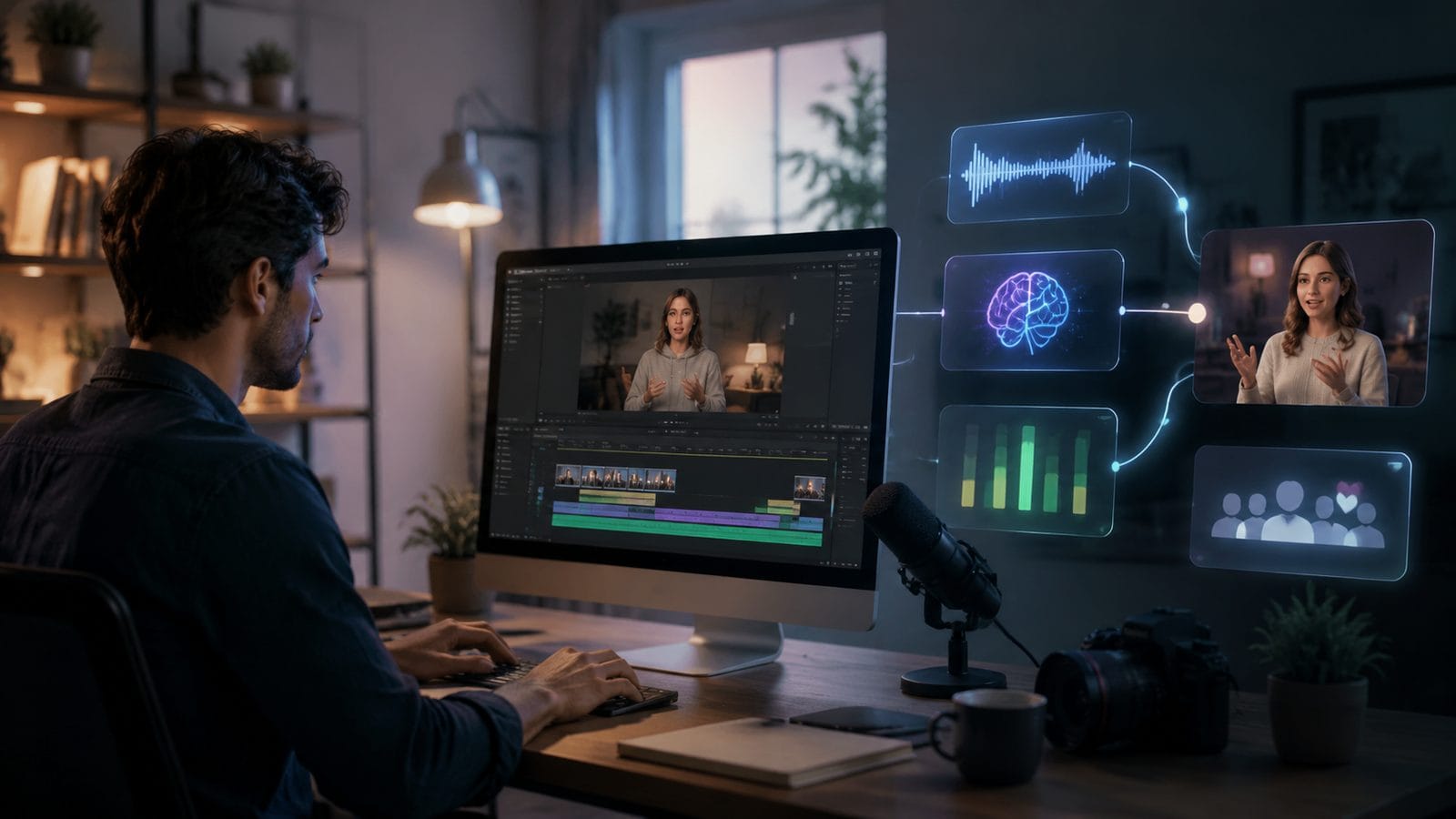
Beyond technical accuracy, emotional authenticity separates convincing AI videos from robotic ones. Modern systems analyze scripts for contextual clues—question marks trigger upward inflection, exclamations prompt sharper articulation, and ellipses... induce thoughtful pauses. Digen AI Agent's 2026 emotion engine references 47 distinct vocal parameters when adapting delivery.
Testing shows these adaptations must be subtle—overacting sounds as artificial as monotony. The optimal range uses 20-30% of human emotional variance: enough to sound engaged without veering into caricature. IEEE Spectrum's 2026 robotics study found that AI voices mimicking 25% of human emotional range achieved the highest trust scores (4.2/5) compared to both flat (2.1/5) and exaggerated (3.0/5) deliveries.
Future systems may incorporate biometric feedback—adjusting tone based on real-time viewer heart rate or facial expression analysis. Early experiments by Surfshark's anti-scam division found that dynamically adapting synthetic voices to listener reactions increased perceived sincerity by 33%.
Detecting and Avoiding Overly Robotic AI Tools
With 217 AI video platforms now available, identifying those prone to robotic output requires scrutiny of five technical specifications:
| Feature | Robotic Risk | Natural Sounding |
|---|---|---|
| Prosody Layers | 1-2 fixed patterns | 5+ context-aware models |
| Sync Accuracy | >0.35s drift | <0.25s maintained |
| Emotion Parameters | 3-5 basic tones | 40+ nuanced adjustments |
| Workflow Steps | Single-pass | Multi-stage refinement |
| Training Data Hours | <500 hours | 1,500+ verified hours |
Platforms like Digen AI Agent transparently publish these metrics—their 2026 model uses 7 prosody layers trained on 2,100 hours of human speech. Avoid tools that withhold technical details or rely solely on "AI magic" claims without measurable performance data.
The Uncanny Valley of Voice Cloning
Paradoxically, near-perfect voice clones often feel more robotic than clearly synthetic voices. Surfshark's 2026 scam report found that cloned voices missing subtle imperfections (like occasional breath sounds) triggered subconscious distrust in 79% of listeners. Some ethical AI tools now intentionally add minor "humanizing flaws" at random intervals.
Future Trends: Where AI Voice Goes Next
By late 2026, three emerging technologies promise to further bridge the robotic voice gap:
1. Micro-expression synchronization: Linking subtle eyebrow movements and nostril flares to speech intensity—early tests show this reduces "uncanny valley" effects by 28% even with synthetic voices.
2. Personalized voice adaptation: Systems that learn individual viewer preferences—some prefer faster-paced delivery while others respond better to deliberate pauses. Digen AI Agent's beta includes viewer feedback loops for continuous vocal tuning.
3. Context-aware dialects: Automatically adjusting formality and regionalisms based on detected audience demographics. A single AI video could subtly shift vocabulary and accent when played in different regions while maintaining core vocal identity.

Frequently Asked Questions
Why do some AI voices suddenly sound robotic after 2 minutes?
This usually indicates sync drift—small timing errors that accumulate over time. Advanced systems like Digen AI Agent perform mid-video resynchronization every 30-45 seconds to prevent this.
Can I fix robotic voice in existing AI videos?
Yes—2026 tools allow re-processing audio tracks with new voice models while preserving lip-sync. The best results come from platforms that analyze and replace only problematic segments rather than regenerating entire tracks.
How much does it cost to avoid robotic AI voices?
Professional-grade solutions start at $29/month (like Digen AI Agent's basic plan), while enterprise systems with full emotional range can exceed $500/month. Free tools still exhibit robotic traits in 89% of cases (Medium 2026 testing).
Are robotic voices always bad for AI videos?
Not necessarily—some educational or technical content benefits from neutral delivery. But for marketing, storytelling, or customer service, natural inflection increases engagement by 42-67% (IEEE 2026 study).
How can I test if my AI video sounds robotic?
Play it for someone over 65—their sensitivity to artificial speech is 29% higher than younger listeners according to anti-scam research. Alternatively, use platforms like Digen AI that provide roboticness scores (aim for <15/100).
Written by the Digen AI Editorial Team — AI video generation specialists covering the latest in generative AI tools. Learn more about Digen AI.
Comments ()