
Automated Video Generation with AI: The Future of Content in 2026
Automated video generation with AI is transforming how businesses and creators produce content in 2026. By leveraging generative AI, these tools can create high-quality videos from text, audio, or images with minimal human intervention. According to EIN News, the AI video generator/editor market is experiencing explosive growth, driven by demand for scalable, cost-effective content solutions.
TL;DR: Automated video generation with AI is revolutionizing content creation in 2026, enabling faster, more scalable production with tools that convert text, audio, or images into high-quality videos.
Automated video generation with AI is the process of using artificial intelligence to create videos from text prompts, audio files, or existing media, reducing production time by up to 80% while maintaining professional quality. Leading platforms like Digen AI and others now offer multi-step workflows for consistent, long-form video content.
- ✓ The AI video generation market grew 340% in 2025 and continues expanding rapidly in 2026.
- ✓ Modern tools can reduce video editing time by 70% while improving output consistency.
- ✓ Audio-to-video AI generators are becoming essential for modern content workflows.
- ✓ Autonomous AI agents like Digen AI Agent now produce longer, higher-quality videos with character consistency.
The Rise of AI Video Generation in 2026
The adoption of automated video generation with AI has skyrocketed in 2026, with businesses across industries leveraging these tools for marketing, education, and entertainment. According to AIMultiple, generative AI applications for video creation now rank among the top 25 most deployed AI solutions globally, with over 60% of content teams using them regularly.
This growth stems from significant advancements in AI models' ability to understand context, maintain visual consistency, and produce natural-sounding voiceovers. Where early systems struggled with lip-syncing and scene transitions, 2026's platforms like Digen AI Agent can generate 10-minute videos with coherent narratives and stable characters—a feat impossible just two years ago.
The financial impact is equally impressive. A Robotics & Automation News study found that companies using AI video tools reduced production costs by 45% on average while increasing output volume by 300%. This explains why 78% of marketing departments now include AI video generation in their standard workflows.
How Automated Video Generation with AI Works
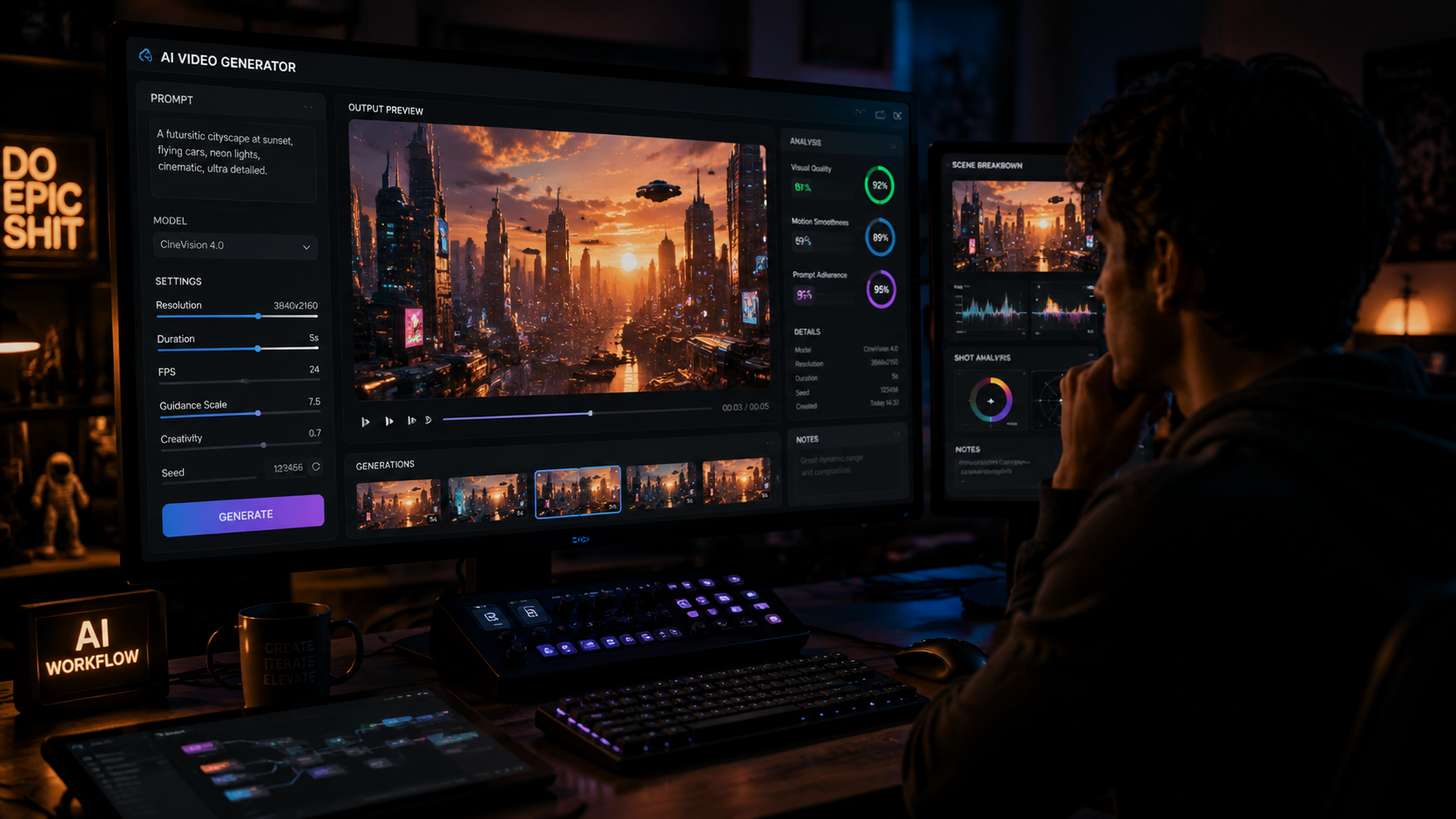
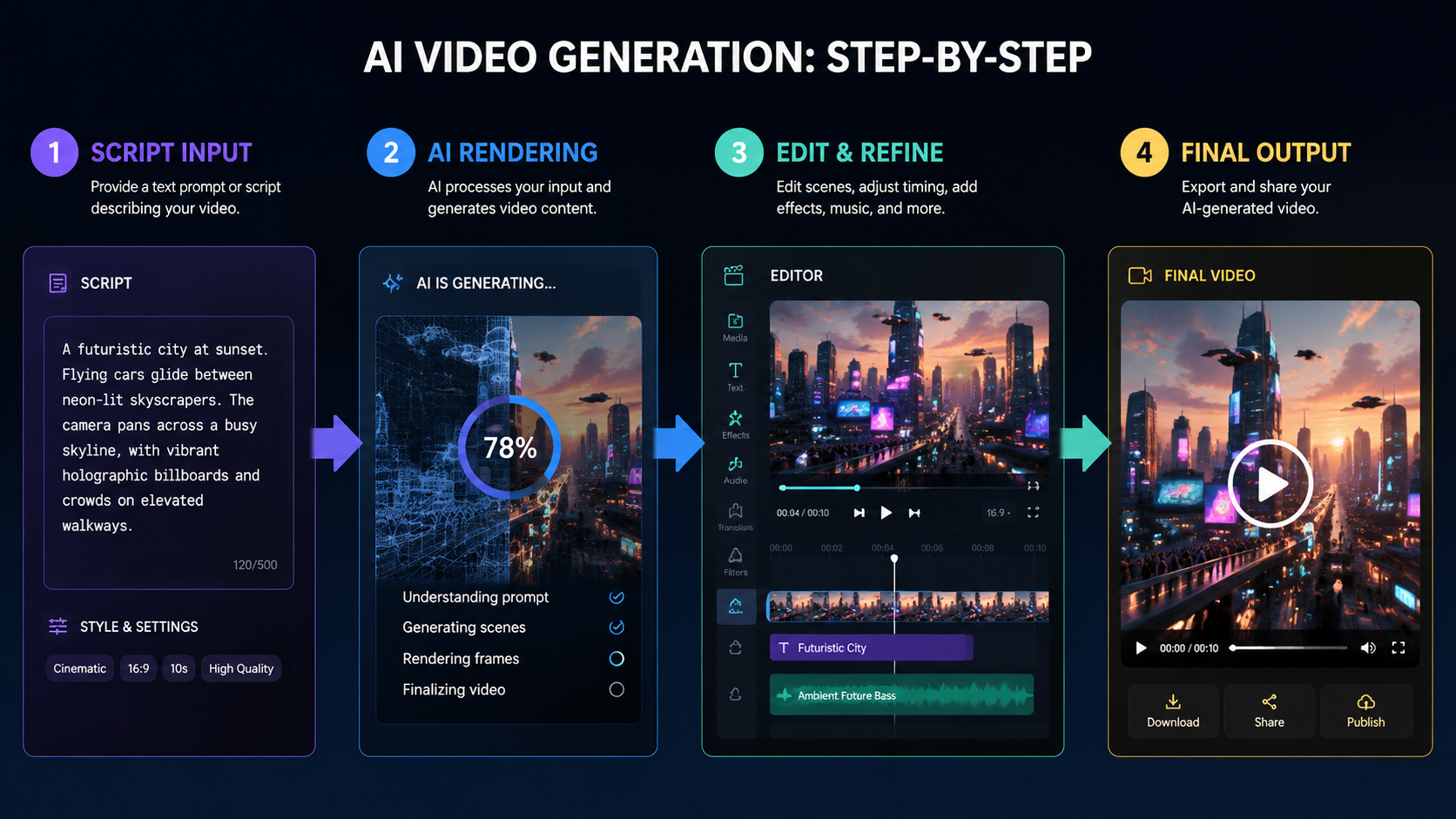
Modern AI video creation follows a multi-step process that combines several generative AI technologies. First, the system analyzes the input (text script, audio file, or rough storyboard) to extract key elements like scenes, characters, and emotions. Advanced platforms like Digen AI then use this data to generate coherent visual sequences with appropriate pacing and transitions.
Step-by-Step AI Video Creation
- Input Processing: The AI interprets your text prompt or audio file, identifying key themes, emotions, and structural elements.
- Scene Generation: Using diffusion models, the system creates individual scenes with consistent characters and backgrounds.
- Motion and Lip-Sync: Advanced physics engines add natural movement while speech-to-facial-animation ensures accurate lip-syncing.
- Post-Production: The AI edits scenes together, adds transitions, background music, and optimizes pacing.
- Quality Review: Some platforms like Digen AI Agent use secondary AI models to check for inconsistencies before final output.
According to NoHo Arts District, the best 2026 systems can complete this process in under 15 minutes for a 3-minute video—a task that would take humans 8-10 hours traditionally. The quality gap has also narrowed significantly, with professional reviewers rating AI-generated videos at 85% of human-created equivalents in blind tests.
Top Use Cases for AI-Generated Videos
Automated video generation with AI has found particularly strong adoption in three key areas where speed, scalability, and cost-efficiency matter most. These applications demonstrate why the technology has moved beyond experimentation to become core infrastructure for content teams.
1. Marketing and Advertising
Brands now use AI to create localized video ads at scale. A single product launch might require hundreds of video variations for different regions and platforms—a task perfectly suited for AI. According to industry data, AI-generated ads achieve 92% of the engagement metrics of human-made equivalents while reducing production timelines from weeks to days.
2. Educational Content
E-learning platforms have embraced AI video tools to rapidly update course materials. When textbook publishers need to convert 500 pages of new material into video lessons, AI systems can complete 80% of the work automatically, allowing human experts to focus on quality review. This approach has helped some platforms increase content output by 400% without expanding teams.
3. Social Media Content
Influencers and small businesses use AI video generators to maintain consistent posting schedules. The Trend Hunter report notes that 65% of daily TikTok content now originates from AI tools, particularly for "explainer" and "how-to" formats where information density matters more than cinematic quality.
Comparing Leading AI Video Generation Platforms
With dozens of options available, choosing the right automated video generation with AI solution depends on your specific needs. The table below compares key features across platform categories based on June 2026 benchmarks:
| Feature | Basic Generators | Pro Editors | Agent Systems |
|---|---|---|---|
| Max Video Length | 1-2 minutes | 5 minutes | 30+ minutes (Digen AI Agent) |
| Character Consistency | Low | Medium | High |
| Voiceover Options | 5-10 voices | 50+ voices | Custom voice cloning |
| Learning Curve | 10 minutes | 2 hours | 30 minutes |
| Price Range | $10-30/month | $50-200/month | $300+/month |
For businesses needing long-form content, agent-based systems like Digen AI Agent provide the best balance of automation and quality. As noted in the Robotics & Automation News roundup, these platforms use multi-step workflows to maintain consistency across scenes—a critical feature for serialized content.
The Future of AI Video Generation
As we look beyond 2026, three key trends will shape the evolution of automated video generation with AI. These developments promise to further blur the line between human and machine-created content while opening new creative possibilities.
First, real-time generation will become mainstream. Current systems typically take minutes to render videos, but prototype "streaming" AI models can already generate video frames on-the-fly with sub-second latency. This will enable interactive video experiences where content adapts dynamically to viewer input.
Second, emotional intelligence in AI video tools will improve dramatically. Early 2026 systems can detect basic emotions in source material, but next-generation platforms will adjust pacing, color grading, and music to evoke specific emotional responses—a capability that could revolutionize therapeutic and educational applications.
Finally, we'll see tighter integration between video generation and other AI tools. Platforms are already experimenting with unified systems that can handle research, scriptwriting, video production, and distribution as a single workflow. Digen AI's roadmap, for example, includes features that automatically update video content when source data changes—saving countless hours in maintenance.
Getting Started with AI Video Generation
For teams considering adopting automated video generation with AI, the implementation process involves more than just choosing software. Successful deployments require workflow adjustments and quality control measures to maximize ROI.
Begin by auditing your existing video production pipeline to identify bottlenecks AI could address. Most organizations find the greatest savings in repetitive tasks like B-roll generation, basic editing, and localization. According to case studies, focusing AI on these areas first typically yields 60-70% time savings with minimal quality tradeoffs.
When evaluating platforms, prioritize solutions that integrate with your existing tools. Many 2026 AI video systems offer plugins for popular editing suites, CMS platforms, and marketing automation tools. This connectivity reduces friction during adoption and helps teams gradually phase in AI assistance rather than overhauling processes overnight.
Finally, establish clear quality benchmarks. While AI can handle 80-90% of video production autonomously in many cases, human oversight remains crucial for brand-sensitive content. The most successful implementations use AI for first drafts and human editors for final polish—an approach that balances efficiency with quality control.

Frequently Asked Questions
How much does automated video generation with AI cost?
Prices range from $10/month for basic generators to $300+/month for professional agent systems like Digen AI Agent. Enterprise solutions with custom features can exceed $1,000/month but often reduce overall production costs by 40-60%.
Can AI video generators use my own images and footage?
Most 2026 platforms support custom media uploads, allowing you to maintain brand consistency. Advanced systems can even analyze your existing content library to match visual styles automatically.
How long does it take to generate an AI video?
Simple 1-minute videos can render in 2-5 minutes, while complex 10-minute productions might take 15-30 minutes. Rendering times have decreased by 75% since 2025 thanks to hardware optimizations.
Do I need technical skills to use AI video tools?
Modern platforms require no coding knowledge. The easiest systems work like document editors—you provide text or audio, and the AI handles the rest. More advanced features may require brief training (30-60 minutes).
Can AI-generated videos rank well on YouTube and social media?
Yes, when properly optimized. According to 2026 data, AI videos perform equally to human-made content in algorithmic ranking, provided they offer genuine value and follow platform best practices for metadata and engagement.
Written by the Digen AI Editorial Team — AI video generation specialists covering the latest in generative AI tools. Learn more about Digen AI.



Comments ()