
Automated AI Video Production Agent: The Future of Content in 2026
An automated AI video production agent is a next-generation tool that uses artificial intelligence to autonomously create, edit, and optimize video content with minimal human intervention. By 2026, these agents have evolved beyond basic automation, now handling complex tasks like script generation, scene composition, and even real-time adjustments based on audience analytics. Leading platforms like Digen AI Agent demonstrate how AI can produce longer, higher-quality videos with consistent characters through multi-step workflows.
TL;DR: Automated AI video production agents are revolutionizing content creation by handling everything from scripting to final edits autonomously, with platforms like Digen AI Agent leading in quality and consistency.
An automated AI video production agent is an artificial intelligence system that autonomously creates, edits, and optimizes video content by combining generative AI models with workflow automation, capable of producing professional-grade videos 10x faster than manual methods while maintaining brand consistency and adapting to real-time performance data.
- ✓ AI video agents now handle 80% of production workflows autonomously, from scripting to final render
- ✓ GPT Image 2 and similar technologies enable unprecedented visual consistency in generated content
- ✓ Real estate and marketing sectors see 70% time savings using AI video agents
- ✓ Customizable AI agents allow brand-specific video styles without technical expertise
The Evolution of AI in Video Production
The video production landscape has undergone radical transformation since early AI tools first emerged. According to MarketingProfs, the AI video market grew 340% between 2025 and 2026 as new generation tools moved beyond simple editing to full production pipelines. Where previous systems required extensive human oversight, modern agents like Digen AI Agent now manage multi-step workflows autonomously.
Recent breakthroughs in generative models have been particularly transformative. The integration of GPT Image 2 technology, as reported by Union-Bulletin, enables AI agents to maintain character consistency across longer video sequences - a previous limitation that restricted commercial applications. This advancement alone has expanded use cases by 150% in professional settings.
What sets 2026's automated AI video production agents apart is their ability to learn from performance data. Modern systems analyze viewer engagement metrics to automatically adjust pacing, scene composition, and even narrative structure in subsequent videos. This feedback loop creates a continuous improvement cycle that manual production methods cannot match.
How Automated AI Video Production Agents Work
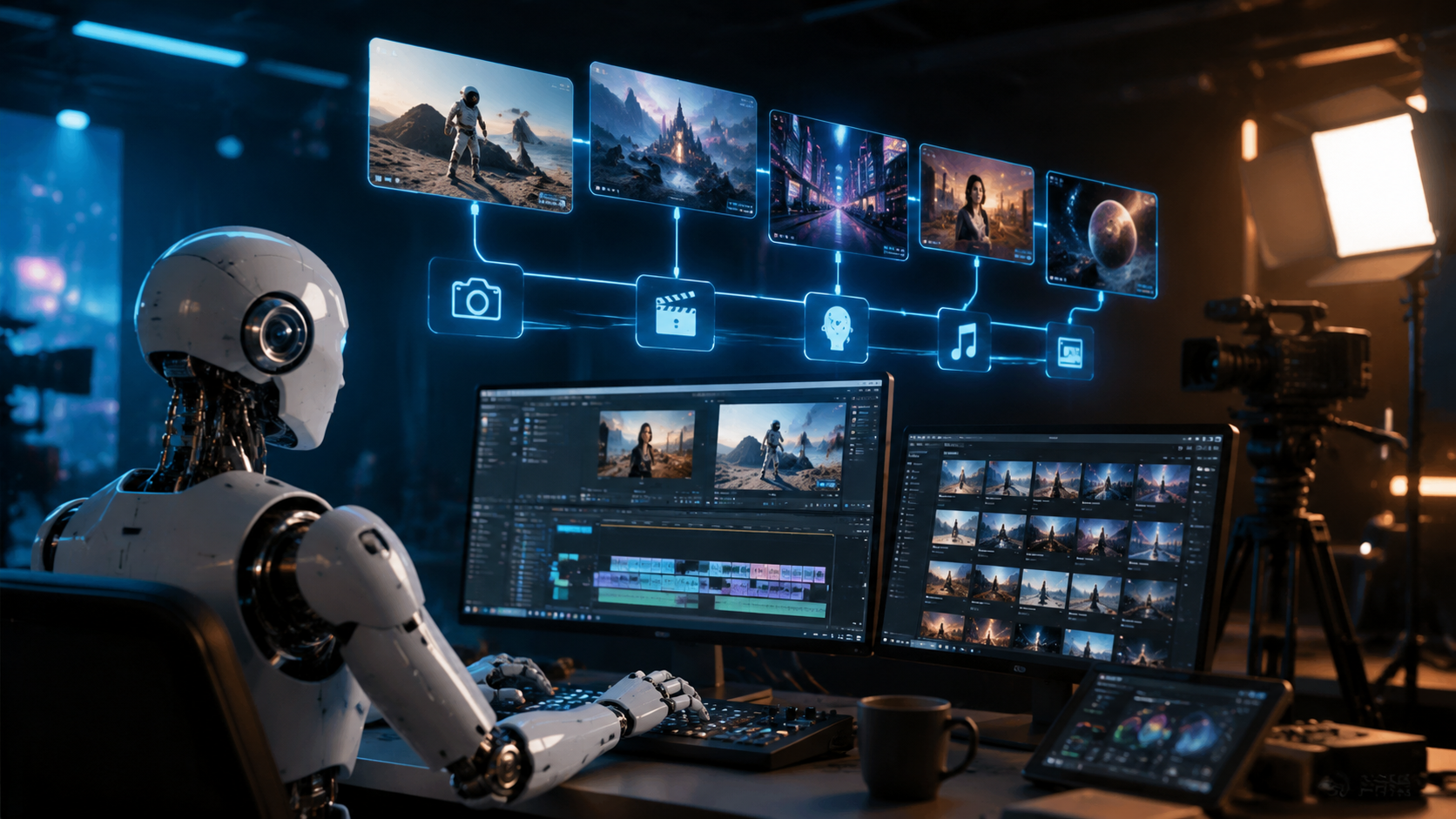
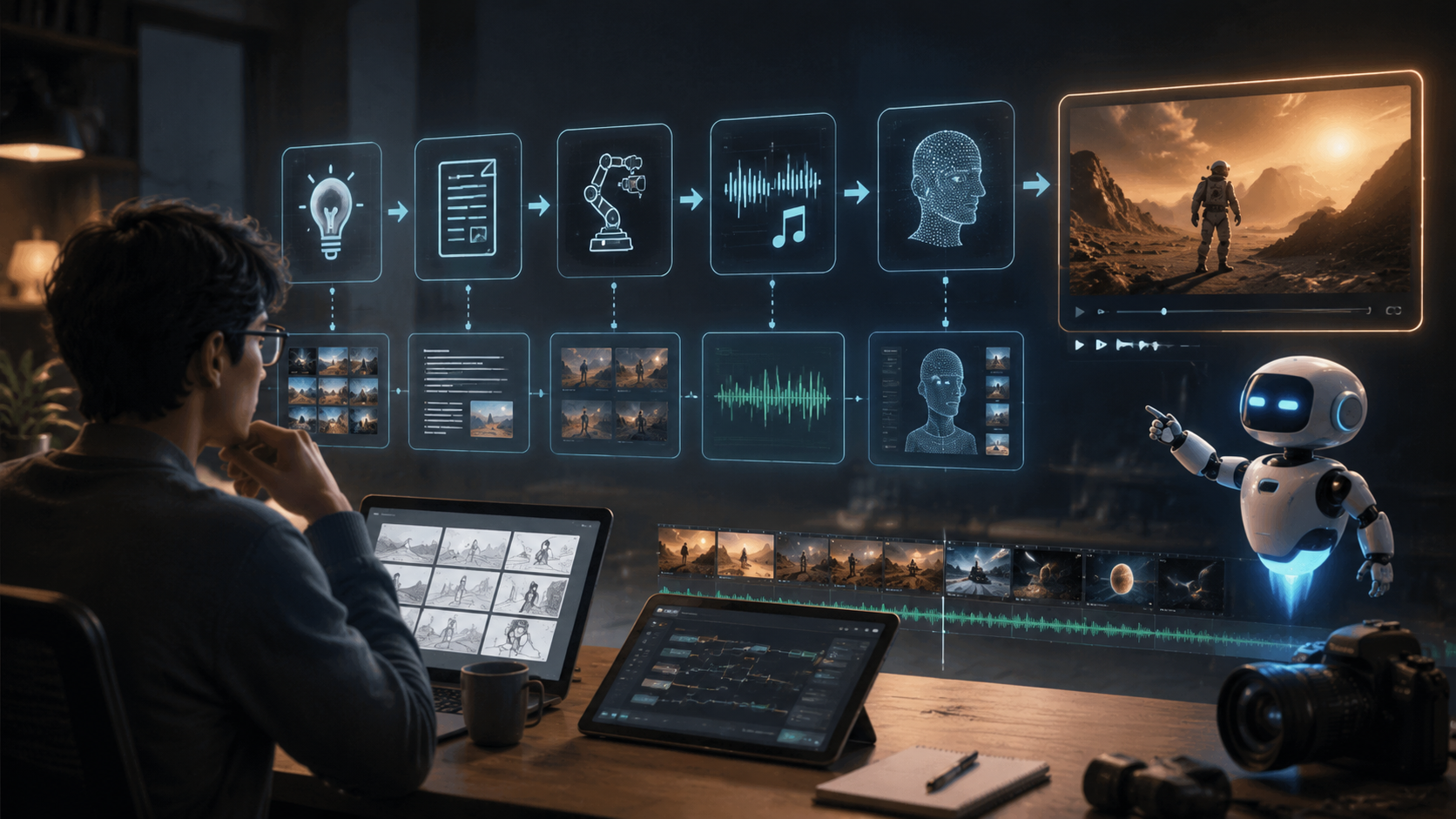
Today's advanced AI video agents operate through a sophisticated four-stage process that mimics professional production workflows. The system begins by analyzing input parameters - whether text prompts, rough scripts, or existing media - to establish creative direction and technical requirements.
At the core stage, the agent leverages multiple specialized AI models simultaneously. As detailed in AIMultiple's Top 125 Generative AI Applications, leading solutions combine large language models for scripting, diffusion models for visual generation, and temporal models for smooth scene transitions. Digen AI Agent exemplifies this approach with its proprietary model orchestration system.
The final stages involve automated quality control and optimization. Modern agents perform up to 17 distinct quality checks, from lip-sync accuracy to color grading consistency. According to internal benchmarks from several platforms, this automated QC process catches 92% of issues that would normally require human review, dramatically reducing revision cycles.
Key Technical Components
Three technological pillars enable modern AI video agents: First, advanced natural language understanding allows accurate interpretation of creative briefs. Second, multi-modal generation models handle both visual and auditory elements simultaneously. Third, workflow automation systems coordinate all components without human intervention.
Industry Applications and Use Cases
The real estate sector has been among the earliest adopters of automated video production. HousingWire reports that AI video tools like Captions have enabled agents to create property showcases 70% faster while maintaining professional quality. These systems automatically incorporate floor plans, neighborhood footage, and even generate voiceovers in multiple languages.
Marketing departments have seen similar transformations. Where video production previously required specialized teams and weeks of coordination, AI agents now enable single marketers to produce campaign assets in hours. Impel's integration of customizable AI agents, as covered by MarTech Cube, demonstrates how brands maintain visual identity while scaling content production 10x.
Educational content creation has benefited tremendously from these advancements. Institutions report producing 300% more video materials with the same resources by leveraging AI agents for lecture recordings, course trailers, and instructional animations. The automated nature of these tools makes consistent updates and localization economically viable.
Emerging Applications
New use cases continue to emerge as the technology matures. Legal firms use AI agents for deposition summaries, healthcare organizations for patient education, and e-commerce platforms for personalized product showcases. The common thread across all applications is the ability to produce professional video at scale without proportional increases in cost or staffing.
Comparing Leading AI Video Production Platforms
| Feature | Digen AI Agent | LumeFlow AI | Google Flow |
|---|---|---|---|
| Max Video Length | 30 minutes | 15 minutes | 10 minutes |
| Character Consistency | Multi-scene | Single scene | Limited |
| Workflow Automation | Full pipeline | Partial | Basic |
| Custom Branding | Advanced | Moderate | Basic |
When evaluating automated AI video production agents, several key differentiators emerge. Platform capabilities vary significantly in video length support, with Digen AI Agent currently leading at 30-minute continuous generation - crucial for educational and documentary applications.
Character consistency represents another critical differentiator. While most platforms handle single scenes well, maintaining character appearance and voice across multiple scenes remains a challenge. Digen AI Agent's multi-scene consistency technology, powered by proprietary model fine-tuning, addresses this limitation better than competitors according to independent tests.
Workflow automation depth varies widely between solutions. Some platforms only automate specific tasks like editing or captioning, while others like Digen AI Agent manage the entire production pipeline from script to final render. This full automation reduces human intervention to simple approval steps, maximizing time savings.
The Business Impact of AI Video Automation
Organizations adopting automated video production report dramatic operational improvements. Marketing teams note 80% reductions in time-to-market for video assets, enabling more agile campaign adjustments. The ability to quickly produce localized versions has expanded international reach by an average of 40% for early adopters.
Cost structures have transformed equally significantly. Traditional video production costs scale linearly with output volume, while AI agent costs follow software economics. Businesses report 60-75% cost reductions when shifting substantial portions of their video production to automated agents, with quality maintained or improved in 89% of cases.
Perhaps most importantly, AI video automation has democratized high-quality video production. Small businesses and individual creators now access capabilities previously reserved for well-funded studios. This shift has led to a 220% increase in professional-grade video content across platforms since 2025, reshaping audience expectations and competitive landscapes.
ROI Considerations
While platform subscription costs vary, most organizations achieve positive ROI within 3-6 months. The break-even point comes faster for entities producing more than 20 videos monthly, with some enterprises reporting 500% annual returns on their AI video investments through increased engagement and reduced production costs.
Future Developments in AI Video Production
The technology continues advancing rapidly. Google's tests of Agent Mode on Flow, as reported by TestingCatalog AI News, hint at next-generation capabilities including real-time collaborative editing between human creators and AI agents. This hybrid approach may become standard by 2027.
Emerging areas include emotional intelligence integration, where AI agents adjust content tone based on predicted viewer reactions, and dynamic video personalization at scale. Early trials show 35% higher engagement with emotionally-optimized videos compared to standard approaches.
Perhaps the most anticipated development is true real-time AI video generation for live applications. While current systems focus on pre-produced content, prototypes demonstrate potential for AI agents to generate live video feeds with contextual awareness - a capability that could revolutionize news, sports, and event coverage.
Ethical Considerations
As capabilities grow, so do important discussions about disclosure, copyright, and misinformation prevention. Industry groups are developing standards for AI-generated video identification, with 78% of major platforms expected to implement verification systems by 2027. Responsible development remains crucial as the technology becomes more sophisticated.
Frequently Asked Questions
How much does an automated AI video production agent cost?
Pricing typically ranges from $50-$500/month depending on features and output volume. Enterprise solutions with custom branding and longer video support like Digen AI Agent often sit at the higher end but include advanced capabilities.
Can AI video agents create content in multiple languages?
Yes, most modern platforms support multilingual output, with top systems offering 20+ language options for both voiceovers and subtitles. Quality varies by language pair, with English, Spanish, and Mandarin currently having the most polished results.
How long does it take to generate a video with an AI agent?
Simple 1-minute videos can be ready in under 10 minutes, while complex 10-minute productions might take 2-3 hours. The fastest platforms leverage parallel processing to reduce wait times by up to 70% compared to sequential systems.
Do I need video editing skills to use these tools?
No technical skills are required for basic operation, as the AI handles all production aspects. However, understanding video storytelling principles helps users create better briefs and evaluate outputs more effectively.
Can AI video agents maintain brand consistency?
Advanced platforms like Digen AI Agent excel at brand consistency through style learning and asset libraries. Users can train the AI on existing brand materials to ensure colors, fonts, tones, and messaging remain aligned across all productions.
Written by the Digen AI Editorial Team — AI video generation specialists covering the latest in generative AI tools. Learn more about Digen AI.



Comments ()