
Best Automated AI Video Editing Software 2026: Top Tools
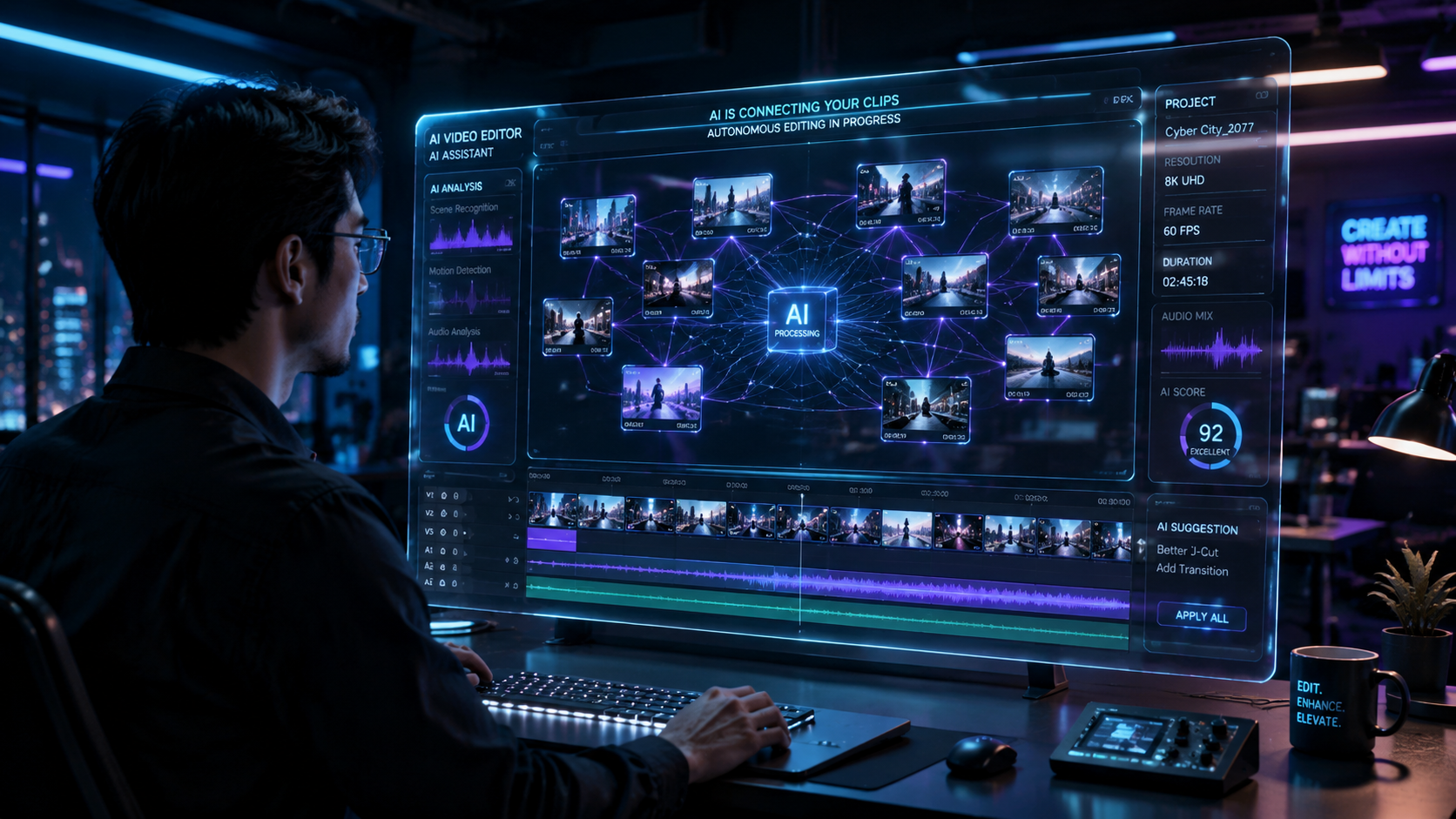
The automated ai video editing software 2026 landscape has reached a transformative milestone, where manual timeline scrubbing is largely being replaced by generative intelligence and neural scene detection. In 2026, the best tools prioritize "intent-based editing," allowing creators to input a script or raw footage and receive a polished, color-graded, and subtitled video in seconds. These platforms, led by innovations like Adobe Firefly’s Quick Cut and specialized Web3 content engines, have made professional-grade production accessible to beginners and enterprise teams alike.
Automated AI video editing software is a category of tools that utilizes machine learning algorithms to perform complex editing tasks—such as scene selection, object removal, audio leveling, and captioning—without manual intervention. In 2026, these tools leverage generative AI to create seamless transitions and context-aware cuts, significantly reducing production time for digital creators.
- ✓ AI video tools now offer "Quick Cut" features that automatically sync footage to the rhythm of background music.
- ✓ Generative platforms can produce high-fidelity video clips from text prompts in under three minutes.
- ✓ Mobile AI editing is seeing massive growth, with the market projected to expand through 2034.
- ✓ Web3 and blockchain creators are increasingly using automated AI to scale content volume for decentralized platforms.
How to Use Automated AI Video Editing Software in 2026
Modern video editing has shifted from a technical hurdle to a creative oversight process. With the latest updates released in May 2026, the workflow has been streamlined into a few high-level steps. Whether you are using a desktop powerhouse or a mobile-first application, the underlying logic remains consistent: the AI acts as your assistant editor, handling the "grunt work" while you make the final creative decisions.
- Upload and Analyze: Import your raw footage into the AI editor. The software will perform a "Deep Scan" to identify key moments, faces, and speech patterns.
- Select Your Template or Style: Choose the output format (e.g., 9:16 for social media or 16:9 for YouTube). Apply an AI style transfer if you want a specific cinematic look.
- Prompt the Edit: Use natural language commands such as "Remove all filler words" or "Highlight the most exciting action sequences and sync them to an upbeat track."
- Review and Refine: The AI generates a draft. You can then use tools like Adobe Firefly Quick Cut to swap specific clips or adjust the AI-generated subtitles.
- Export and Optimize: Save your video in resolutions up to 8K. Many 2026 tools also offer "Auto-SEO" metadata generation for your titles and descriptions.
Top Automated AI Video Editing Software 2026 Comparison
Choosing the right automated ai video editing software 2026 depends on your specific needs, whether you are a professional filmmaker or a social media influencer. According to recent testing by PCMag in May 2026, the market is currently split between traditional suites that have integrated AI and "born-in-the-cloud" generative platforms.
| Platform | Key AI Feature | Best For | Platform Support |
|---|---|---|---|
| Adobe Firefly (Quick Cut) | Neural Scene Stitching | Professional Creators | Desktop & Cloud |
| Analytics Insight Featured Tools | Text-to-Video Generation | Marketing & Social Media | Web-based |
| BBN Times Top Desktop Picks | One-Click Object Removal | Beginners | Windows/Mac |
| Quasa Web3 Engine | High-Volume Scaling | Web3 & Crypto Content | Cloud-native |
| Straits Research Mobile Picks | Real-time AR Filters | Mobile Influencers | iOS & Android |
The Rise of Generative AI in Professional Video Production
As of May 2026, generative AI has moved beyond simple filters. Software now has the capability to "hallucinate" missing frames, extend backgrounds (out-painting), and even change the lighting of a scene after it has been filmed. This level of automation is why PCMag recently rated the 2026 crop of editors as the most significant jump in technology since the move from linear to non-linear editing. The integration of "Quick Cut" technology within Adobe Firefly, launched in February 2026, allows editors to describe a sequence, and the AI will search the library to find the best matching shots.
According to Analytics Insight, the speed of content creation has increased by over 400% for teams using AI video generators. These platforms are not just editing existing footage; they are creating "stunning clips in minutes" from scratch. This is particularly useful for news organizations and marketing agencies that need to react to trending topics in real-time. The ability to generate high-quality b-roll on the fly ensures that no story goes unillustrated, regardless of budget constraints.
Furthermore, the automated ai video editing software 2026 ecosystem is increasingly focused on "semantic understanding." This means the software doesn't just see pixels; it understands that a person is smiling or that a specific product is being shown. This allows for automated "Product Highlight" reels that are essential for e-commerce. As BBN Times notes, these desktop AI editors are becoming the standard for beginners because they eliminate the steep learning curve traditionally associated with software like Premiere Pro or DaVinci Resolve.
Scaling Content for the Web3 and Decentralized Era
The year 2026 has seen a surge in decentralized media, and the demand for content has never been higher. Creators within the Web3 space are utilizing automated video creation AI to maintain a constant presence across multiple platforms. According to quasa.io, the integration of AI allows small teams to produce the volume of content previously only possible for major studios. By using AI to automate the versioning of videos for different social channels, creators can focus more on community engagement and less on the technicalities of rendering.
This scaling is supported by the massive growth in the mobile video editing applications market. A study by Straits Research indicates that the mobile editing market will continue its aggressive growth through 2034, driven by AI features that were once exclusive to high-end workstations. In 2026, mobile apps are now capable of handling multi-track AI editing, including real-time rotoscoping and voice cloning for dubbing in multiple languages. This global reach is essential for creators looking to expand their audience across borders without hiring expensive translation teams.
The synergy between Web3 and AI editing also includes the use of smart contracts to manage licensing. When an automated ai video editing software 2026 tool pulls a piece of stock footage or music, the blockchain can automatically handle the micro-payment to the original creator. This creates a transparent and efficient ecosystem where AI tools respect intellectual property while maximizing creative output.
The Impact of AI on Beginner and Desktop Editing
For those just starting their journey, the "Best Desktop AI Video Editors for Beginners in 2026" list by BBN Times highlights a shift toward "invisible" interfaces. Instead of a complex timeline with hundreds of buttons, many new tools use a chat-based interface. You talk to your editor, and it performs the tasks. This democratization of video production means that the quality of the idea is now more important than the technical skill of the editor.
Desktop applications are also leveraging local NPU (Neural Processing Unit) power to ensure that privacy is maintained. While cloud-based generators are popular, many professionals prefer desktop AI editors that process data locally. This is a crucial trend in 2026 as data privacy regulations become more stringent. These desktop tools can perform complex tasks like "Deep Fake" correction—where the AI fixes eye contact or lip-sync issues—without ever uploading the raw footage to a third-party server.
According to PCMag, the testing of these tools in early 2026 showed that the most successful software combines high-level automation with "manual overrides." While the AI can do 90% of the work, the best automated ai video editing software 2026 allows the human editor to fine-tune the final 10%. This hybrid approach ensures that the final product doesn't feel "robotic" and retains the unique creative voice of the filmmaker.
Future Trends: What to Expect Beyond 2026
While we are currently enjoying the peak of 2026 technology, the roadmap for the future suggests even deeper integration between AI and the physical world. We are seeing the beginning of "Volumetric AI Editing," where software can take 2D video and reconstruct it into a 3D space, allowing the editor to move the camera angle after the footage has been shot. This is an evolution of the "Quick Cut" technology seen in the Adobe Firefly February 2026 update.
The mobile market, as highlighted by Straits Research, will likely dominate the casual creator space. By 2030, the distinction between "filming" and "editing" may vanish entirely, with AI performing real-time edits as the camera rolls. For now, the automated ai video editing software 2026 provides the perfect balance of power, speed, and creative control. As we move further into the decade, those who embrace these AI-driven workflows will be the ones who lead the digital conversation.
What is the best automated AI video editing software in 2026?
According to PCMag and other industry leaders, Adobe Firefly with its Quick Cut feature and various specialized generative platforms are currently the top-rated tools. The "best" tool depends on whether you need text-to-video generation or AI-assisted editing of existing footage.
Can AI video editors really replace human editors?
In 2026, AI is viewed as a powerful assistant rather than a total replacement. While it handles repetitive tasks like cutting, captioning, and color grading, human oversight is still required for emotional storytelling and high-level creative direction.
Is there a free AI video editor available in 2026?
Many platforms offer "freemium" models where you can generate a limited number of clips or use basic AI features for free. However, professional features like 8K export and advanced neural scene detection usually require a subscription.
How fast can AI generate a finished video?
Most modern AI video generators can produce a 60-second high-quality clip in under three minutes, according to reports from Analytics Insight. Editing existing footage using "Quick Cut" features can reduce a day's worth of manual work to just a few minutes.
Is mobile AI video editing as good as desktop?
While desktop software still holds the edge for complex, multi-layered projects, the mobile video editing market is growing rapidly. By 2026, mobile apps are highly capable of professional-grade AI tasks like background removal and automated social media formatting.



Comments ()