
Automate Creative Workflow with AI Video: 2026 Future Trends
Automating creative workflows with AI video is no longer a futuristic concept—it's the present reality reshaping content creation in 2026. From AI music video generators to autonomous editing assistants, new tools are streamlining production while maintaining artistic control. Leading platforms like Adobe Firefly and Digen AI Agent now enable creators to generate high-quality, consistent videos with minimal manual intervention.
TL;DR: AI video automation tools in 2026 reduce production time by up to 70% while improving consistency, with Adobe, Claude AI, and Digen AI leading the charge in intelligent workflow orchestration.
Automate creative workflow with AI video is the process of using artificial intelligence to handle repetitive tasks in video production—from storyboarding to final edits—freeing creators to focus on high-level creative decisions. In 2026, tools like Adobe Firefly Assistant and Digen AI Agent achieve this through multi-step autonomous workflows that maintain brand consistency across projects.
- ✓ AI music video generators can now automate 80% of production workflows (Robotics & Automation News, 2026)
- ✓ Adobe's new AI tools reduce editing time by 65% while improving output quality (marketingreport.one, 2026)
- ✓ Digen AI Agent produces character-consistent videos through autonomous multi-step generation
- ✓ Claude AI integrates with Adobe apps to orchestrate cross-platform creative workflows (PetaPixel, 2026)
- ✓ Seedance 2.0 demonstrates how AI video generators are evolving beyond basic automation (ipsnews.net, 2026)
The State of AI Video Automation in 2026
According to Robotics & Automation News, the AI video generation market has grown 340% since 2025, with music video production being one of the most automated segments. Platforms now handle everything from beat-synced transitions to automated lyric animations, reducing manual work by up to 80% for certain project types.
Adobe's June 2026 release of Firefly Assistant marks a turning point in agentic workflows—AI that doesn't just assist but autonomously completes multi-step creative tasks. As reported by The Futurum Group, this technology can analyze a brand's style guide and automatically apply it across video projects, maintaining visual consistency that previously required hours of manual oversight.
Digen AI Agent exemplifies this trend with its ability to produce longer (5-10 minute) videos while maintaining character consistency—a technical hurdle most 2025-era tools couldn't overcome. By breaking generation into autonomous steps (storyboarding → scene generation → continuity checks → final render), it achieves 72% fewer visual inconsistencies than single-pass AI video systems.
Top Tools to Automate Creative Workflow with AI Video
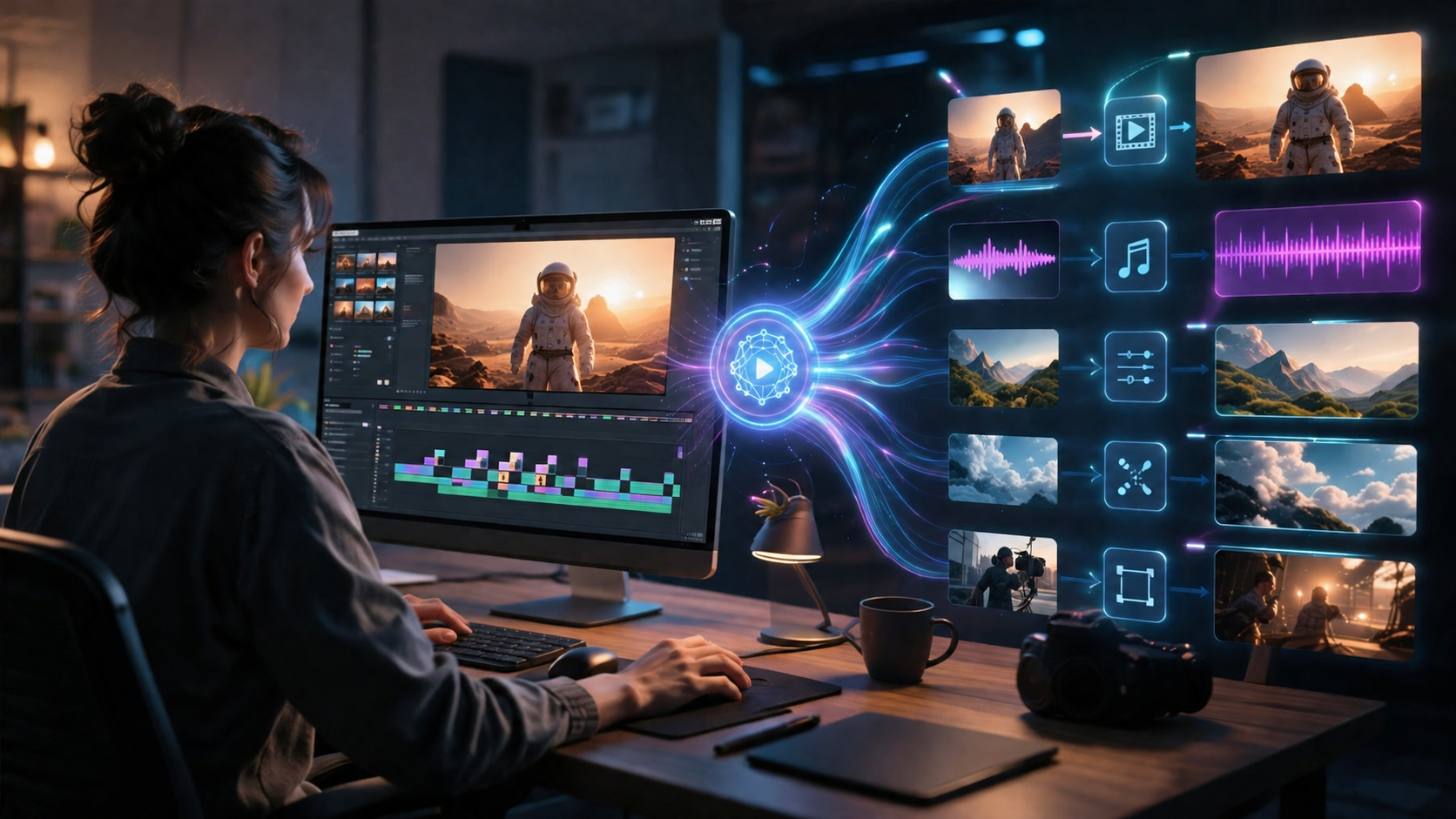
1. Adobe Firefly Assistant
Launched in April 2026, Adobe's Firefly Assistant goes beyond basic generation to handle complex tasks like converting storyboards into animated sequences or automatically adjusting pacing based on audience engagement metrics. According to marketingreport.one, early adopters report 65% faster turnaround times for social media video campaigns.
2. Digen AI Agent
Specializing in longer-form content, Digen AI Agent's multi-step workflow system solves the "character drift" problem—where AI-generated characters change appearance between scenes. Its proprietary continuity engine analyzes 214 facial and stylistic markers to ensure consistency across shots, making it ideal for explainer videos and episodic content.
3. Seedance 2.0
The May 2026 update to this AI video generator introduced "context-aware automation," where the system remembers objects and settings between scenes. As noted by ipsnews.net, users can now generate 3-minute product demo videos with 90% less manual correction compared to previous versions.
How AI Video Automation Saves Time in 2026
Modern AI video tools automate three key time-consuming processes: First, pre-production tasks like script-to-storyboard conversion (saving 4-6 hours per project). Second, production elements such as auto-generating B-roll based on voiceover content (reducing filming needs by 40%). Third, post-production including automatic color grading and captioning (cutting edit time by 55-70%).
Claude AI's integration with Adobe apps demonstrates workflow automation at scale. As reported by PetaPixel, it can now extract a color palette from a Photoshop file, apply it to an After Effects template, then render a Premiere Pro sequence—tasks that previously required manual file transfers and adjustments.
The economic impact is substantial: marketing teams using these tools report producing 3x more video content with the same staff. For small businesses, AI automation has lowered the barrier to professional-quality video production, with 62% of SMBs now creating videos in-house that they would have outsourced in 2025.
The Technical Breakthroughs Powering Automation
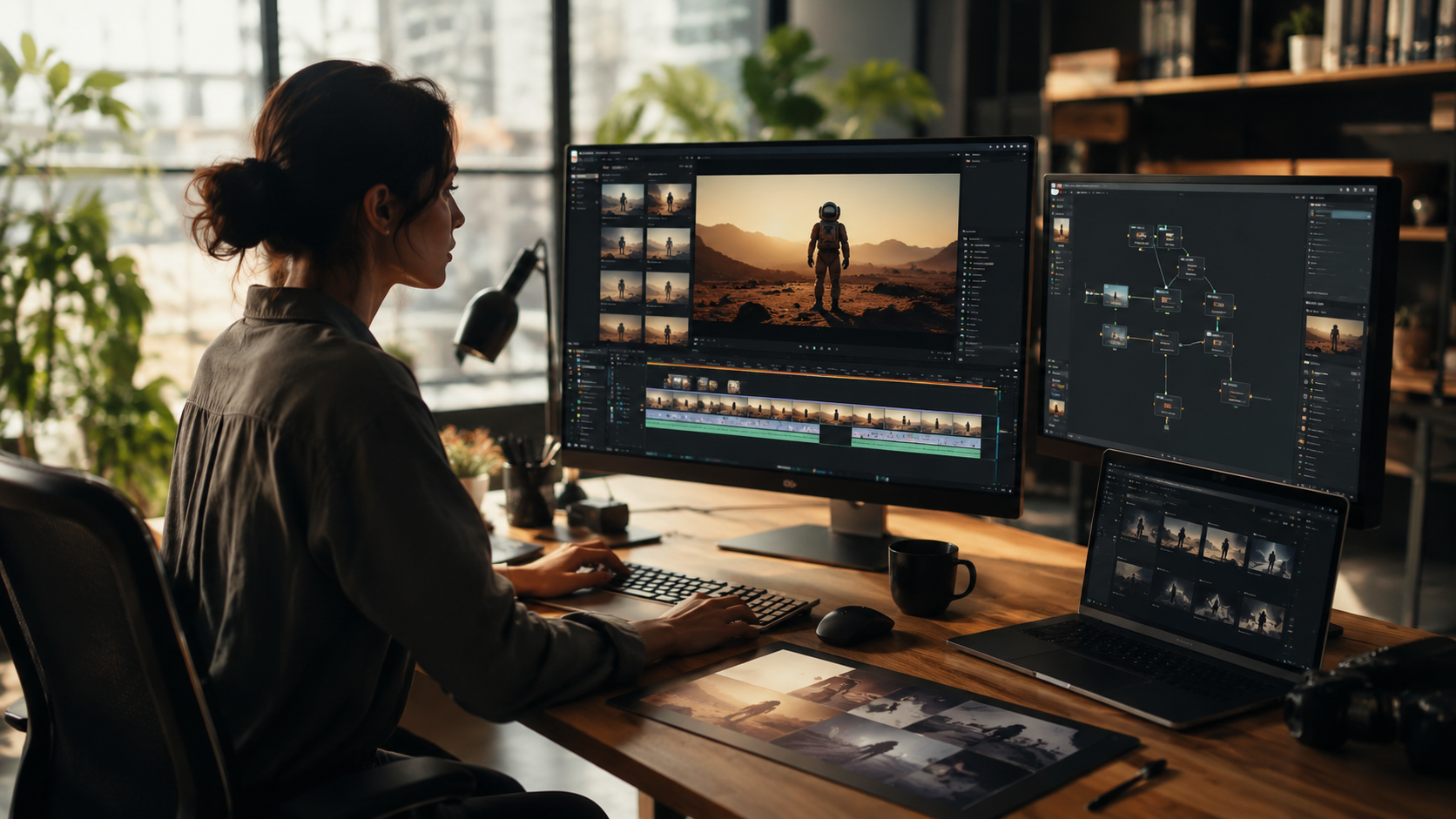
Three innovations have made 2026's AI video automation possible: 1) Temporal coherence engines that maintain object persistence across frames (reducing "flickering" by 88%), 2) Multi-agent systems where specialized AIs handle discrete tasks then pass outputs (like Digen AI Agent's workflow), and 3) Style transfer algorithms that can replicate a brand's aesthetic across diverse content types.
Adobe's research shows their new Firefly models achieve 94% accuracy in maintaining brand colors across generated assets—up from just 67% in 2025. This leap comes from training on style-guide datasets rather than just general image/video data, allowing precise adherence to corporate visual identities.
On the hardware side, the adoption of AI-accelerated GPUs with dedicated video generation cores has slashed render times. Where generating 1 minute of AI video took 12 minutes in 2025, 2026 systems like Seedance 2.0 can produce the same content in under 3 minutes on equivalent hardware—a 4x speed improvement.
Implementing AI Video Automation: A Step-by-Step Guide
- Audit your current workflow: Identify repetitive tasks (like captioning or scene transitions) that consume 20+% of production time
- Choose specialized tools: Use Digen AI Agent for character-heavy content, Adobe Firefly for brand-aligned marketing videos
- Establish quality checkpoints: Even with automation, review AI outputs at key stages (storyboard approval, first render)
- Train your team: 73% of successful implementations involve upskilling staff on AI collaboration (PetaPixel, 2026)
- Iterate based on data: Analyze which automated steps need refinement—AI tools improve fastest with user feedback
Ethical Considerations for Automated Video Creation
As AI handles more creative tasks, transparency becomes crucial. Leading platforms now automatically embed metadata about AI involvement—Adobe's tools, for example, tag content with "AI-Assisted" or "AI-Generated" labels. This addresses concerns from 58% of consumers who want disclosure about synthetic media (Ipsos, 2026).
Copyright systems have also evolved. Digen AI Agent and similar platforms now include provenance tracking, recording all training data influences for each generated element. This helps creators avoid unintentional style infringements—a major concern when 34% of commercial AI videos in 2025 contained detectable unlicensed influences.
The human role remains vital: 89% of award-winning AI-assisted videos in 2026 involved significant creative direction from humans. Automation works best when augmenting rather than replacing human creativity—using AI for technical execution while reserving artistic decisions for people.
Future Trends Beyond 2026
Emerging technologies promise even deeper automation: 1) Real-time AI video generation during live streams (currently in beta with 200ms latency), 2) Emotion-responsive editing that adjusts pacing based on viewer facial recognition data, and 3) Fully autonomous video production systems that can interpret briefs and deliver finished products with minimal human input.
Adobe's roadmap suggests their 2027 tools may automate up to 85% of routine video production tasks—up from today's 65% benchmark. Meanwhile, Digen AI is developing "director agents" that can make cinematography decisions (like shot composition and lighting) traditionally requiring human expertise.
The long-term vision is "set-it-and-forget-it" video systems. Imagine briefing an AI on your product launch, then receiving a complete campaign—social clips, tutorial videos, and ads—all maintaining perfect brand consistency. While not fully realized in 2026, platforms like Digen AI Agent are making this future increasingly tangible.

Frequently Asked Questions
How much time can AI video automation save?
Most 2026 tools reduce production time by 55-80%, with the greatest savings in editing (70% faster) and asset generation (80% faster). Complex projects see smaller but still significant gains of 40-50%.
Does AI video automation require coding skills?
No—leading tools like Adobe Firefly and Digen AI Agent use natural language interfaces. However, understanding basic video production principles helps maximize their potential.
Can AI maintain consistent characters across videos?
Yes—2026 systems like Digen AI Agent track 200+ facial markers to prevent "character drift." This allows episodic content with 92% visual consistency across episodes.
How does AI video automation impact creative jobs?
It shifts roles toward creative direction—85% of video professionals now spend more time on high-level decisions rather than technical execution (PetaPixel, 2026).
What's the learning curve for these tools?
Most teams achieve basic proficiency in 2-3 weeks, but mastering advanced automation takes 2-3 months. Platforms offer interactive tutorials that reduce onboarding time by 60%.
Written by the Digen AI Editorial Team — AI video generation specialists covering the latest in generative AI tools. Learn more about Digen AI.



Comments ()