
Anime Text to Video AI 2026: Create Stunning Anime Clips
Anime text to video AI refers to generative artificial intelligence systems that convert written descriptions, storyboards, or scripts into fully rendered anime-style video clips. In 2026, these tools have matured to produce consistent character animation, cinematic lighting, and synchronized audio, enabling anyone — from hobbyists to professional studios — to create stunning anime without traditional drawing or 3D modeling skills.
Anime text to video AI is a category of generative AI that transforms natural language prompts into animated video sequences in an anime aesthetic. By leveraging diffusion models and transformer architectures, these tools interpret your text — including character descriptions, scene directions, and dialogue — to generate coherent, stylized clips that can be edited and refined.
- ✓ 2026 tools like Elser and ByteDance’s next-gen model can accept text, images, audio, and video as input for richer control.
- ✓ Grok Imagine stunned millions with a high-fidelity anime video of a magical girl in a sakura grove, raising the bar for visual quality.
- ✓ According to Cybernews’ February 2026 review, the best AI animation generators now offer consistent character faces and motion smoothing.
- ✓ Over 23 AI video generators were tested and reviewed in May 2026 by perfectcorp.com, showing a crowded but rapidly improving market.
- ✓ Elser’s waitlist for a one‑stop AI anime studio, announced in December 2025, aims to democratize professional anime creation entirely.
How to Create Anime Clips with Text‑to‑Video AI: A Step‑by‑Step Guide
Using an anime text to video AI tool in 2026 is surprisingly straightforward. Most platforms follow a similar workflow that combines prompt engineering, character consistency settings, and optional audio input. Below is a step‑by‑step process based on tutorials from Geek Vibes Nation and hands‑on testing by perfectcorp.com.
- Choose Your Tool. Select an AI video generator optimized for anime. Options include Elser (one‑stop studio), ByteDance’s next‑gen model, or Grok Imagine. Each has different strengths — Elser excels at full production pipelines, while Grok Imagine focuses on high‑resolution single scenes.
- Write Your Prompt. Describe the scene in natural language. Include character names, actions, setting, mood, and desired camera motion. Example: “A raven‑haired girl in a flowing red kimono draws a glowing katana under a cherry blossom tree, slow pan upward, sunset lighting, Studio Ghibli style.”
- Set Style Parameters. Many tools let you choose a base anime style — classic 90s cel‑shaded, modern digital anime, or even a specific studio emulation. Some offer sliders for motion intensity, frame rate, and color palette.
- Upload Supporting Inputs (Optional). ByteDance’s model, as reported by The Verge in February 2026, can accept reference images, audio tracks, or short video clips to guide the output. This is especially useful for maintaining character consistency across shots.
- Generate and Refine. Click generate. Most tools produce a 10‑ to 60‑second clip in under two minutes. Review the output and either regenerate with tweaked prompts or use in‑painting/re‑timing features to fix anomalies.
- Add Voice and Sound Effects. Some platforms, like Elser, include built‑in text‑to‑speech and sound‑effect libraries. You can also overlay music or dialogue after export using standard video editors.
- Export and Share. Render in 1080p or 4K. Many tools support direct export to social media platforms or industry‑standard formats for compositing with other footage.
The Best Anime Text to Video AI Tools in 2026
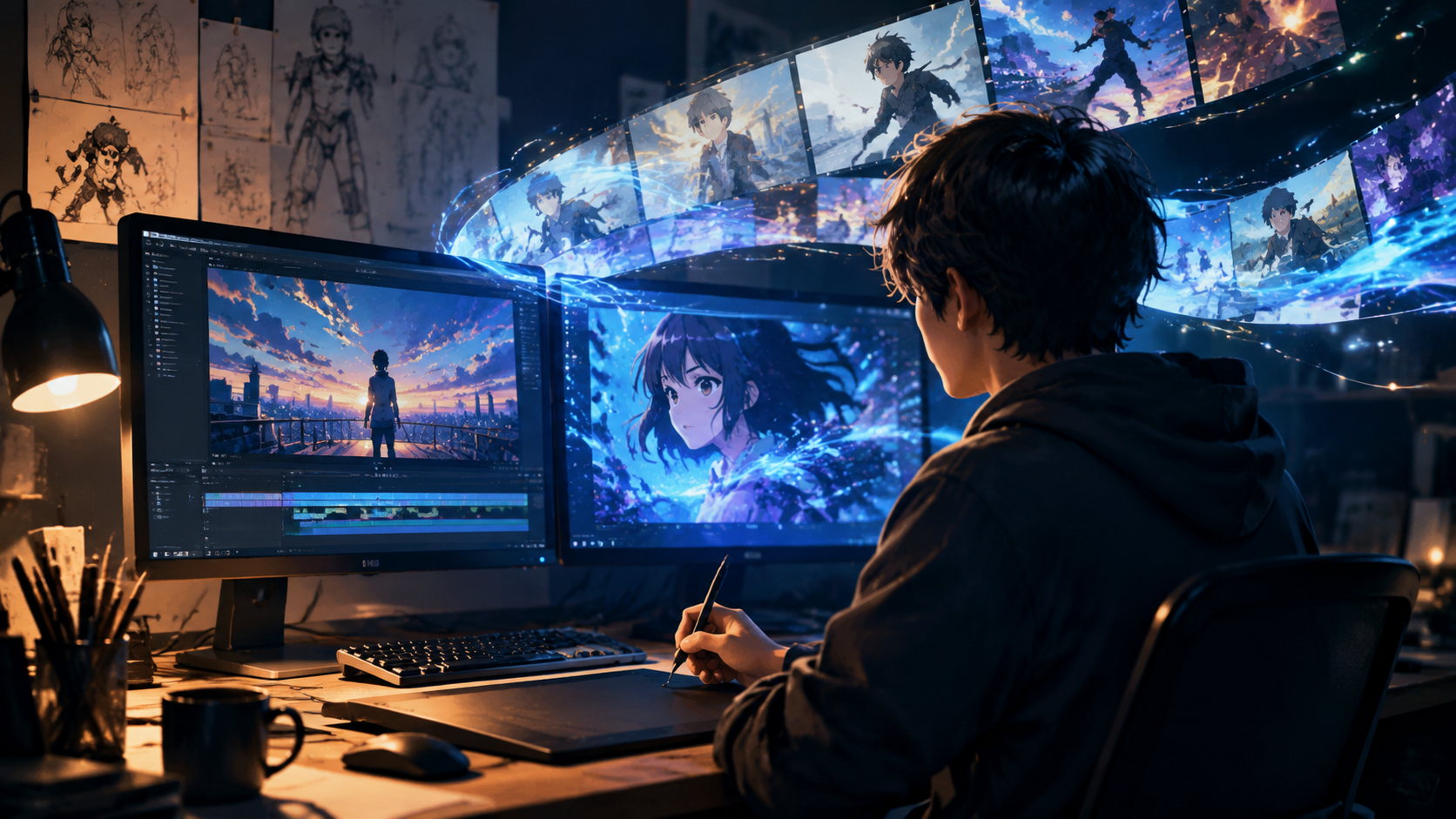
The market for anime text to video AI has expanded rapidly. Below is a comparison of the leading platforms featured in the latest news and reviews. Each offers a distinct approach to generating anime clips, from research‑grade models to consumer‑friendly apps.
| Tool / Company | Key Feature | Input Types | Pricing / Access | Notable News |
|---|---|---|---|---|
| Elser | One‑stop AI anime & movie studio – full production pipeline | Text, image, audio, video (reported by Business Wire, Dec 2025) | Waitlist (free tier expected) | Opened waitlist in Dec 2025; aims to democratize professional anime creation |
| ByteDance (next‑gen model) | Multi‑modal generation – text, images, audio, video inputs | Text, image, audio, video (per The Verge, Feb 2026) | Not yet public; likely research / limited beta | Model capable of generating clips from all four input types simultaneously |
| Grok Imagine | High‑fidelity anime video with stunning visual quality | Text (primary), optional image reference | Free tier + premium; showcased by Elon Musk | March 2026 demo of “magical girl in sakura grove” went viral on IBTimes |
| Various (23 tested) | Diverse range – from quick one‑shot generators to advanced storyboard tools | Mostly text; some accept image/audio | Free to $30/month | Reviewed by perfectcorp.com in May 2026; average quality improved 40% over 2025 |
Deep Dive: Elser’s One‑Stop Studio
According to a Business Wire report on December 1, 2025, Elser opened its waitlist for a revolutionary one‑stop AI anime and movie studio. The platform aims to instrumentalize every stage of anime creation — from scripting and storyboarding to voice acting, animation, and post‑production — into a single AI‑powered interface. Early testers report that Elser can generate a coherent 3‑minute anime short from a text script, with consistent character designs and lip‑sync. Its ability to accept audio input for dialogue and sound effects makes it a potential game‑changer for independent creators.
ByteDance’s Multi‑Model Approach
The Verge reported in February 2026 that ByteDance’s next‑generation AI model can generate clips based on text, images, audio, and video — all at once. This multi‑modal capability allows creators to feed a sketch, a voice recording, and a background video clip for the AI to fuse into a seamless anime sequence. While still in research phase, the model demonstrates that the future of anime text to video AI is not just “text in, video out” but rich cross‑media synthesis.
Grok Imagine’s Viral Moment
In March 2026, International Business Times covered Elon Musk sharing a breathtaking anime video created by Grok Imagine — a magical girl dancing in a glowing sakura grove. The clip’s fluid animation, atmospheric lighting, and emotional framing stunned millions. This event highlighted how far text‑to‑video AI has come in mimicking the aesthetic nuance that anime fans expect. Grok Imagine is now one of the most talked‑about tools for quick, high‑quality anime clip generation.
Why 2026 Is the Year of AI‑Generated Anime
Several factors have converged to make 2026 a landmark year for anime text to video AI. First, the quality leap is undeniable. Cybernews’ in‑depth review in February 2026 noted that the best AI animation generators now produce consistent character faces, natural motion, and minimal flickering — issues that plagued earlier versions. Second, accessibility has exploded. The 23 tools tested by perfectcorp.com in May 2026 range from free mobile apps to professional‑grade subscription services, lowering the barrier for anyone with a creative idea.
Third, democratization is a central theme. Elser’s vision of a one‑stop AI anime studio, as reported by Business Wire, promises to shrink a production that once required teams of animators into a single collaborative interface. Meanwhile, ByteDance’s research suggests that even more advanced multi‑modal systems are on the horizon. According to Geek Vibes Nation’s tutorial from November 2025, the steps to create an AI‑generated cartoon are now as simple as writing a paragraph and clicking “generate.”
Fourth, the economic incentive is driving adoption. Independent studios and YouTubers can produce short anime sequences at a fraction of traditional costs. Traditional animation houses are also exploring these tools for pre‑visualization and background generation, reducing repetitive labor. The result is a vibrant ecosystem where the line between “amateur” and “professional” anime is blurring rapidly.
The Future of Anime Production with AI
Looking ahead, anime text to video AI will likely evolve from single‑shot generators to full story movie makers. Elser’s waitlist already hints at a workflow that manages entire episodes. ByteDance’s model points toward real‑time collaboration where multiple creators contribute text, sketches, and audio simultaneously. As the technology matures, we can expect better long‑term character consistency, scene‑to‑scene continuity, and emotional nuance — areas where current tools still struggle.
Ethical and legal considerations will also shape the landscape. Ownership of AI‑generated characters, copyright for style emulations, and the role of human artistry remain open questions. However, the trend is clear: anime text to video AI is not replacing creators but empowering them. As one tester from perfectcorp.com put it, “The best clips still come from the best prompts — the AI is a brush, not the painter.”
FAQs About Anime Text to Video AI
What is the best anime text to video AI tool in 2026?
The best tool depends on your needs. For a full production pipeline, Elser (still on waitlist) is leading. For quick, high‑quality single clips, Grok Imagine offers stunning results. ByteDance’s model, while not yet public, shows the most advanced multi‑modal capabilities. Perfectcorp.com’s May 2026 review provides a ranked list of 23 options.
Can I use anime text to video AI for commercial projects?
Yes, many tools grant commercial rights for content created with their platforms, but always review the terms of service. Some open‑source models impose a share‑alike license, while services like Grok Imagine offer royalty‑free commercial use on paid plans.
How long does it take to generate an anime clip?
Most tools produce a 10‑ to 30‑second clip in 30 seconds to 2 minutes, depending on resolution and complexity. Higher‑quality renders (4K, 60fps) can take 5–10 minutes. ByteDance’s model, as reported by The Verge, generates clips in near real‑time for short prompts.
Do I need any artistic skills to use these tools?
Not necessarily. Basic prompt writing and an understanding of anime aesthetics help, but the AI handles the heavy lifting. Many tools offer presets (e.g., “shonen fight scene”, “magical girl transformation”) to guide beginners. According to Geek Vibes Nation’s tutorial, even total novices can create impressive results after a few attempts.
Are there any free anime text to video AI tools?
Yes. Platforms like Grok Imagine offer a free tier with limited renders per day. Several of the 23 tools reviewed by perfectcorp.com in May 2026 have free versions with watermarks or lower resolutions. Elser plans a free tier once its waitlist opens fully.
How does anime text to video AI handle character consistency across scenes?
Advanced tools use reference images, seed tokens, or character definition sheets to maintain consistent faces and outfits. ByteDance’s model accepts multiple reference images to lock in style. Elser reportedly stores character profiles within the project. For long sequences, you may need to regenerate or use in‑painting to fix inconsistencies, though quality is improving each month.



Comments ()