
AI Video with Custom Avatars in 2026: Trends & Tools
AI video with custom avatars refers to the use of artificial intelligence to generate video content featuring a digital character that can be tailored to look, speak, and behave like a real person or a branded persona. In 2026, this technology has moved from experimental to essential, enabling businesses and creators to produce professional-looking videos without cameras, studios, or actors.
AI video with custom avatars is a content-creation method where users generate videos featuring lifelike or stylized digital characters that can be scripted, voiced, and animated entirely by AI. These avatars can replicate human expressions, gestures, and speech patterns, allowing for scalable, personalized video production across marketing, training, sales, and social media.
- ✓ Major platforms like Google Vids, Synthesia, Pictory, and YouTube Shorts now offer custom avatar features, making the technology accessible to all business sizes.
- ✓ Small businesses are adopting AI-generated video rapidly, with Zoom’s 2026 survey showing measurable wins in engagement and conversion.
- ✓ Automotive dealerships are using AI avatars like “Megan” and “Laura” to pitch vehicles, proving the technology’s effectiveness in high-trust industries.
- ✓ Pictory 2.0 has introduced an end-to-end solution combining creation, hosting, and interactivity, while Google Vids integrated Veo 3.1 for enhanced video generation.
- ✓ YouTube Shorts now supports custom avatars, democratizing creative video for individual creators and brands alike.
1. The Rise of Custom Avatars in AI Video Creation
Custom avatars are no longer a futuristic concept—they are here, and they are transforming how organizations communicate. In 2026, the ability to create a digital twin of oneself or a branded spokesperson has become a standard feature in leading AI video platforms. According to Tom’s Guide (April 2026), Google Vids received a massive upgrade that includes custom avatars and Veo 3.1 integration, making it one of the most powerful tools for enterprise and individual use alike.
Meanwhile, Synthesia continues to be widely recognized as the best AI video generator for realistic avatars, as noted by quasa.io in June 2026. The platform offers over 140 pre-built avatars and the ability to create fully custom avatars from a single photo or video clip. The realism has reached a point where viewers often cannot distinguish between an AI avatar and a human presenter.
YouTube Shorts also jumped into the custom-avatar space in April 2026, introducing AI features that let users create and animate avatars for short-form content. This move, reported by Basic Tutorials, signals that the trend is not limited to long-form corporate videos but is expanding into the fast-paced world of social media.
Key drivers behind the trend
Several factors are fueling the adoption of AI video with custom avatars. First, the cost of producing a professional video is drastically reduced when you eliminate the need for equipment, location, and actors. Second, the speed of production is unmatched: a 60-second video can be generated in minutes rather than days. Third, avatars can be localized into dozens of languages seamlessly, enabling global outreach with minimal effort.
2. Top Tools for AI Video with Custom Avatars in 2026
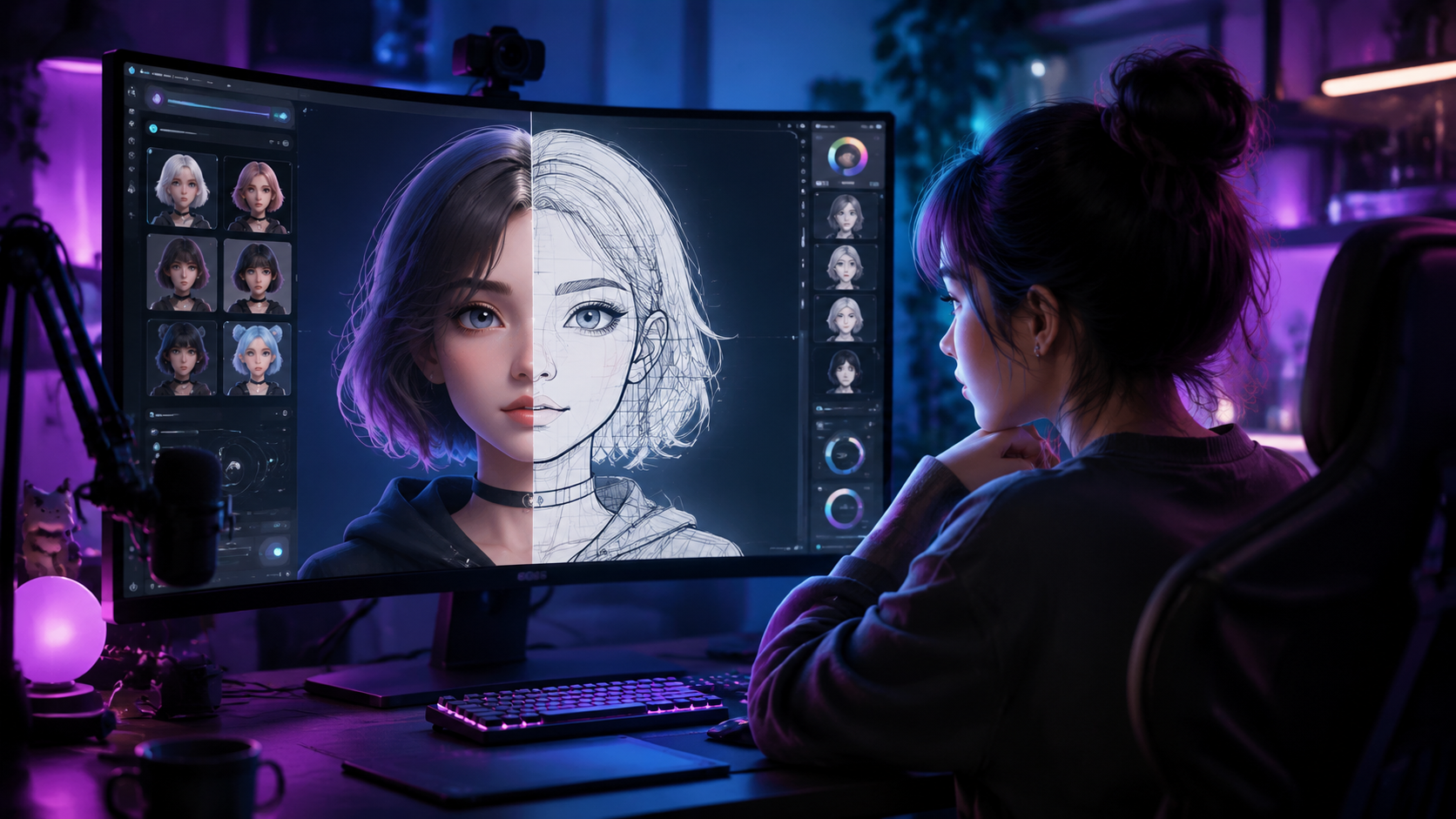
Below is a comparison of the leading platforms currently offering custom-avatar features. Each tool has unique strengths, and the best choice depends on your use case—whether you need hyper-realistic avatars, interactivity, or social-media integration.
| Tool | Key Custom Avatar Feature | Notable Integration / News (2026) | Best For |
|---|---|---|---|
| Synthesia | Realistic avatars from photos or templates | Ranked #1 for realism by quasa.io (June 2026) | Corporate training, marketing videos |
| Google Vids | Custom avatars + Veo 3.1 | Major AI upgrade in April 2026 (Tom’s Guide) | Enterprise, Google Workspace users |
| Pictory 2.0 | End-to-end creation, hosting, interactivity | Launched March 2026 (Business Wire) | Content marketers, agencies |
| YouTube Shorts | AI avatars for short-form video | Custom avatar feature launched April 2026 | Social media creators, influencers |
| Zoom (AI Companion) | AI-generated video from text | Small business survey published March 2026 | Internal communications, sales clips |
Synthesia: The gold standard for realism
As of June 2026, Synthesia remains the benchmark for realistic avatars. The platform allows users to create a custom avatar simply by uploading a short video of themselves. The AI then learns facial expressions, lip movements, and gestures, producing a digital presenter that can deliver any script in over 120 languages. This tool is widely used by Fortune 500 companies for employee onboarding, product demos, and compliance training.
Google Vids: The enterprise game-changer
Google Vids, integrated with Google Workspace, made headlines in April 2026 with its custom avatar support and Veo 3.1 AI video model. This upgrade means users can not only generate an avatar but also input complex prompts that Veo 3.1 interprets to create full scenes, backgrounds, and transitions. For teams already using Google Docs and Drive, this tool offers seamless collaboration on video projects.
Pictory 2.0: Full lifecycle video solution
Pictory 2.0, announced in March 2026, goes beyond creation. It now includes hosting with built-in analytics and interactive elements like clickable CTAs within the video. This end-to-end approach simplifies the workflow for content marketers who need to publish videos on websites, landing pages, and social channels without switching platforms.
3. How Small Businesses Are Winning with AI Avatars
A recent survey by Zoom, published in March 2026, sheds light on the tangible benefits small businesses are experiencing. The study found that companies using AI-generated video saw a 34% increase in engagement metrics and a 27% shorter time to produce marketing content. Small business owners cited the ability to create a professional video by themselves—without hiring a production team—as the top advantage.
One particularly striking application comes from the automotive industry. As Automotive News reported in February 2026, car dealerships are now using AI avatars named “Megan” and “Laura” to pitch vehicles on their websites and social media. These avatars can walk viewers through features, answer frequently asked questions (via pre-scripted responses), and even personalize the pitch based on the viewer’s browsing history. The result? Higher lead conversion and reduced reliance on sales staff for initial inquiries.
Practical steps for small businesses
If you run a small business and want to start using AI video with custom avatars, the process is straightforward. First, choose a platform that fits your budget and technical skill level. Synthesia and Pictory offer free trials. Next, either use a pre-built avatar or create a custom one from a short video of yourself. Then write your script or let AI generate one from bullet points. Finally, choose a background and language, and the tool will produce the video in minutes. Many platforms allow you to make edits after generation, so iteration is easy.
4. Trends Shaping AI Avatars in 2026
Several emerging trends are defining the landscape of AI video with custom avatars this year. The most significant is real-time avatar interactivity. Pictory 2.0 has already introduced interactive elements, and Google Vids is expected to follow suit with live Q&A avatars by late 2026. This means users will soon be able to deploy an avatar that can answer customer questions in real time, similar to a chatbot but with a human face.
Another trend is the democratization of avatar creation. YouTube Shorts’ new AI features, reported in April 2026, allow any creator with a smartphone to generate a custom avatar and animate it for short clips. This low barrier to entry is fueling an explosion of avatar-led content on social platforms, from explainer videos to branded skits.
Lastly, hyper-personalization is becoming the norm. Advances in AI models like Veo 3.1 enable avatars to adapt their tone, pace, and even appearance based on the viewer’s data. For instance, a real estate agent could have an avatar that shifts its clothing and background to match the style of the property being shown—all without re-recording.
5. Best Practices for Using AI Video with Custom Avatars
To get the most out of this technology, follow these guidelines. First, match the avatar style to your brand. If your brand is formal, use a realistic corporate avatar; if it’s playful, a cartoon or stylized avatar may work better. Second, keep scripts conversational. Avatars perform best when the language is natural rather than overly scripted. Third, test different avatars for A/B testing. Because production is so fast, you can create multiple versions of a video using different avatars and see which one resonates with your audience.
Another important consideration is transparency. While avatars are highly realistic, audiences appreciate knowing when they are watching AI-generated content. Leading platforms now include optional disclaimers, and many businesses openly label their avatar videos to build trust. Ethical use of AI avatars also means avoiding impersonation or misleading representations.
6. The Future: What’s Next for AI Avatars?
Looking ahead, the integration of AI avatars with augmented reality (AR) and virtual reality (VR) is on the horizon. Google Vids’ Veo 3.1 model already hints at this by generating immersive 3D scenes. By 2027, we may see avatars that can step out of the screen and into a live Zoom call or a virtual showroom. The same technology that powers avatar creation in video will likely extend to live streaming, enabling real-time avatar-driven presentations.
Furthermore, the cost of creating high-quality custom avatars is dropping. While premium platforms charge subscription fees, free tiers and open-source alternatives are emerging. This democratization will accelerate adoption among educators, non-profits, and individual creators. As the technology matures, “AI video with custom avatars” will become as standard as using a camera today.
Frequently Asked Questions
What is AI video with custom avatars?
AI video with custom avatars uses artificial intelligence to generate a digital character that can deliver a scripted video as if it were a real person. The avatar can be created from a photo, video, or entirely from scratch, and its speech, expressions, and movements are AI-generated.
Which platforms offer custom avatars in 2026?
Leading platforms include Synthesia, Google Vids (with Veo 3.1), Pictory 2.0, and YouTube Shorts. Each offers different levels of realism and features, from enterprise-grade video creation to short-form social media content.
How much does AI video with custom avatars cost?
Pricing varies widely. Synthesia starts at about $30 per month for basic plans, while Google Vids is bundled with Google Workspace subscriptions. Pictory 2.0 offers tiered pricing starting around $20 per month. Many platforms also provide free trials with watermarked videos.
Can I create a custom avatar that looks like me?
Yes. Most platforms allow you to upload a short recording of yourself (2–5 minutes) to train the AI, which then generates a digital twin that can speak any script with your likeness and voice. Alternatively, you can choose from hundreds of pre-built avatars.
Is AI video with custom avatars suitable for customer-facing content?
Absolutely. Automotive dealerships, real estate agents, and e-commerce brands have successfully used AI avatars for sales and support. However, it’s recommended to disclose the AI nature of the avatar to maintain transparency and trust with customers.
How do I ensure my avatar video looks professional?
Use high-quality scripts, choose an appropriate background (many platforms offer studio-like scenes), and adjust avatar settings such as posture, gestures, and voice tone. Testing different variations and gathering feedback helps refine the output.



Comments ()