
AI Video Upscaling Software for Beginners: 2026 Guide
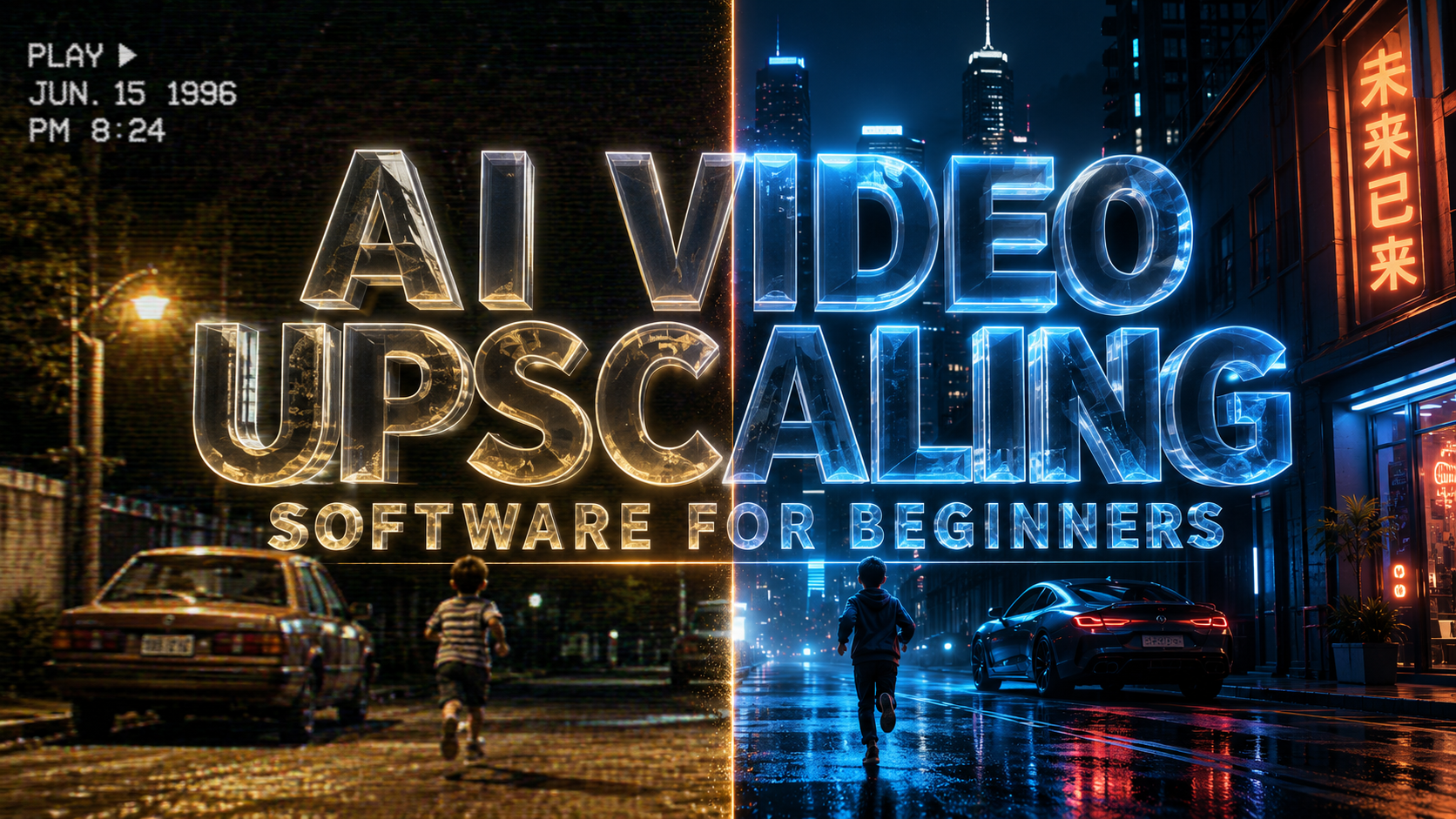
AI video upscaling software for beginners is a specialized category of video enhancement tools that uses machine learning models to intelligently increase the resolution and visual quality of low-quality footage. By analyzing existing pixels and predicting missing data, these tools can transform grainy or blurry videos into crisp 4K or 8K content with minimal manual effort. In 2026, the best ai video upscaling software for beginners has become more accessible than ever, moving from complex desktop environments to user-friendly cloud platforms and automated mobile apps.
AI video upscaling software for beginners is a technology that uses artificial intelligence to enlarge video frames while simultaneously reducing noise and sharpening details. Unlike traditional scaling, which stretches pixels, AI enhancement fills in gaps using neural networks to create high-definition results from low-resolution sources like old home movies or web-compressed clips.
- ✓ AI upscaling can transform 480p or 720p footage into realistic 4K resolution.
- ✓ Modern software in 2026 offers "one-click" presets specifically designed for non-technical users.
- ✓ Cloud-based solutions like Higgsfield AI now allow high-end upscaling without powerful local hardware.
- ✓ Subscription models are becoming the industry standard, replacing perpetual licenses for many top-tier tools.
How to Use AI Video Upscaling Software for Beginners
Starting your journey into video enhancement can seem daunting, but the 2026 generation of tools focuses heavily on automation. Most beginners are looking for a way to save old memories or improve social media content without learning the intricacies of frame rates and bitrates. The primary goal of these tools is to bridge the gap between amateur recording and professional-grade output using sophisticated algorithms.
According to research from The AI Journal, the market for consumer-grade AI video enhancers has expanded significantly in 2026, with a focus on "smart" automation. This means the software can now automatically detect the type of noise in your video—whether it is film grain, digital compression, or motion blur—and apply the specific correction model needed without user intervention.
- Import Your Media: Open your chosen AI upscaler and drag your low-resolution video file into the interface.
- Select an AI Model: Choose a preset based on your content type (e.g., "Old Home Movie," "Animation," or "Low-Light Restoration").
- Choose Output Resolution: Select your desired final size, such as 1080p, 4K, or even 8K.
- Preview the Results: Use the "Side-by-Side" preview feature to see a few seconds of the enhanced footage before committing to the full process.
- Export and Save: Click the "Enhance" or "Export" button and let the AI process the frames into a new, high-quality file.
Choosing the Best AI Video Upscaling Software for Beginners in 2026
When selecting the right ai video upscaling software for beginners, the most important factors are the user interface and the processing location. In 2026, the industry is split between "Local Processing," which uses your computer's graphics card, and "Cloud Processing," which happens on a remote server. For beginners with standard laptops, cloud-based options are often the most effective route.
As reported by Macworld, the latest AI video upscalers for Mac have been optimized for the newest silicon chips, making true 4K enhancement possible in a fraction of the time it took just a year ago. However, for those on older hardware, the shift toward web-based platforms has been a game-changer. For instance, the partnership between Higgsfield AI and Topaz technology has brought industry-leading upscaling to the web, removing the need for expensive hardware.
Top Software Options Compared
To help you decide which tool fits your specific needs, we have compared the leading options available in 2026 based on their ease of use, pricing structure, and primary platform.
| Software Name | Best For | Platform | Pricing Model (2026) |
|---|---|---|---|
| VideoProc Converter AI | Cost-Effectiveness | Windows / Mac | Subscription / Lifetime |
| Higgsfield AI | Cloud-Based Ease | Web Browser | Monthly Subscription |
| Topaz Video AI | Professional Results | Desktop | Annual Subscription |
| TechPluto AI Enhancer | Quick 4K Upscaling | Web / Mobile | Freemium |
The Shift in Licensing and Accessibility
A significant trend in 2026 is the transition of major players toward subscription-based models. According to CG Channel, Topaz Labs recently ended its long-standing perpetual license model. This shift reflects the high cost of maintaining and constantly updating the neural network models that power these tools. For beginners, this means a lower entry cost (monthly vs. a large upfront fee), but it requires an ongoing commitment to access the latest AI improvements.
Furthermore, the integration of AI upscaling into standard video conversion tools has made the technology more approachable. SLR Lounge highlights that tools like VideoProc Converter AI are now marketed as "all-in-one" solutions. These tools allow beginners to not only upscale their videos but also stabilize shaky footage and convert file formats within the same simple interface. This "smart yet cost-effective" approach is ideal for hobbyists and photographers who need high-quality video without a steep learning curve.
Key Features to Look For
When browsing for ai video upscaling software for beginners, look for features like "Batch Processing," which allows you to enhance multiple videos overnight. Another essential feature is "Frame Interpolation," which can take a choppy 24fps video and smooth it out to 60fps, making it look like it was filmed on a modern high-end camera.
Advanced Technology Made Simple
While the underlying technology involves complex convolutional neural networks, the 2026 user experience is remarkably simple. TechPluto notes that the latest workflows for upscaling low-quality videos to 4K now involve "AI-driven auto-detection." This means the software analyzes the video bitstream to determine if the source was originally analog or digital, applying the correct restoration path automatically.
For beginners, this removes the guesswork. You no longer need to know if your video has "interlacing issues" or "macroblocking." The AI sees these artifacts and cleans them up. This level of automation is why 2026 is considered the golden age of video restoration for the general public. Whether you are working on a legacy project or trying to improve a grainy Zoom recording, the software does the heavy lifting.
The Role of Cloud Computing
The emergence of Higgsfield AI bringing Topaz-level quality to the web (as reported by PetaPixel) is a landmark moment for beginners. Previously, a beginner would need a $2,000 computer with a high-end GPU to upscale a 10-minute video in a reasonable amount of time. Now, you can upload the file to a website, and the server's powerful hardware processes it for you. This democratizes high-fidelity video, making it accessible to anyone with a stable internet connection.
Future-Proofing Your Video Library
Investing time into ai video upscaling software for beginners today ensures that your digital memories remain viewable on the displays of the future. As 8K televisions and high-resolution VR headsets become standard in 2026 and beyond, standard definition (SD) and even 1080p content can look blurry or "pixel-hunted" on large screens. Upscaling serves as a bridge, preserving the emotional value of the footage while upgrading its technical specifications.
Modern AI models are also getting better at "hallucinating" detail—a technical term for creating realistic textures where none existed in the original. For example, if a person's eyes are just a few dark pixels in an old 360p video, a 2026-era AI can reference millions of other images to reconstruct a lifelike iris and eyelashes. This level of detail restoration was science fiction only a few years ago but is now a standard feature in beginner-friendly software.
Is AI video upscaling better than traditional upscaling?
Yes, AI upscaling is significantly better because it uses neural networks to generate new pixels based on learned patterns. Traditional upscaling simply stretches existing pixels, which often results in a blurry or "blocky" image, whereas AI creates sharpness and detail.
Does upscaling a video to 4K make it look like real 4K?
While it won't be identical to a video shot natively in 4K with a professional camera, 2026 AI technology can get remarkably close. It removes noise and adds believable texture, making the video look native to high-resolution screens.
How long does it take to upscale a video with AI?
Processing time depends on your hardware or the cloud service speed. On a modern Mac or PC, a 10-minute video might take 30 to 60 minutes to upscale to 4K. Cloud-based services may vary based on your subscription tier and server load.
Do I need an expensive graphics card for AI upscaling?
In 2026, you no longer strictly need an expensive GPU. While local software like Topaz Video AI runs faster with a good graphics card, web-based tools like Higgsfield AI handle the processing on their own servers, allowing you to use a basic laptop.
Can AI upscaling fix very blurry or out-of-focus footage?
AI can significantly improve clarity and reduce "softness," but it cannot perfectly fix a completely out-of-focus shot. It works best on footage that is low-resolution but generally in focus, or footage suffering from digital compression artifacts.



Comments ()