
AI Video Translation with Lip-Sync: 2026 Global Tech Guide
AI video translation with lip-sync is a transformative technology that uses generative artificial intelligence to translate spoken dialogue into different languages while simultaneously re-animating the speaker's mouth movements to match the new audio. In 2026, this technology has evolved beyond simple dubbing to provide frame-accurate synchronization that preserves the original speaker's tone, emotion, and facial expressions. By leveraging neural networks and deep-learning algorithms, creators can now localize content for global audiences instantly, ensuring that the visual and auditory experience remains seamless across over 150 languages.
AI video translation with lip-sync is a multi-layered process where AI identifies speech, translates it via Large Language Models (LLMs), clones the original voice, and applies generative "face-swapping" or "lip-morphing" to align mouth movements with the translated phonemes. This technology eliminates the "uncanny valley" effect, making dubbed content feel natural and authentic to native speakers worldwide.
- ✓ Advanced lip-syncing now supports over 150 languages, including complex dialects and tonal variations.
- ✓ Real-time translation capabilities have been integrated into major social platforms like Meta for global creator reach.
- ✓ Industry leaders are moving toward "all-in-one" suites that handle transcription, cloning, and visual re-animation in a single workflow.
- ✓ High-fidelity AI dubbing is now a standard tool for game creators and enterprise localization teams to reduce costs by up to 80%.
How to Use AI Video Translation with Lip-Sync in 2026
The process of localizing video content has been streamlined significantly since the early innovations of the mid-2020s. Today, the workflow is largely automated, requiring minimal manual intervention while maintaining high-quality output. Whether you are a solo content creator on social media or a large-scale enterprise, the steps to achieve professional-grade results remain consistent across the top-tier platforms.
According to a 2026 report from Technology Org, the best AI video translation tools now focus on "Real-World Performance," meaning they prioritize the nuances of human speech over robotic literal translations. This shift ensures that cultural idioms and emotional weight are preserved, which is essential for viewer retention in international markets.
- Upload and Analyze: Import your source video (MP4, MOV, or direct link) into the AI suite. The system performs an initial "diarization" to identify different speakers and their unique vocal characteristics.
- Language Selection: Choose your target language. Leading platforms like AI Studios now support a 150-language AI dubbing suite, allowing for massive scale in a single click.
- Script Refinement: Review the AI-generated transcript and its translation. Most tools allow you to tweak specific technical terms or brand names before the final lip-sync rendering begins.
- Voice Cloning and Synthesis: The AI clones the original speaker's voice to ensure the translated audio sounds exactly like the person in the video, maintaining brand consistency.
- Lip-Sync Rendering: The generative engine modifies the video frames around the mouth area. This "lip-morphing" aligns the visual phonemes with the new audio track.
- Export and Distribute: Download the localized video or use API integrations to push the content directly to platforms like YouTube, Meta, or internal Learning Management Systems (LMS).
The Evolution of AI Video Translation with Lip-Sync Technology
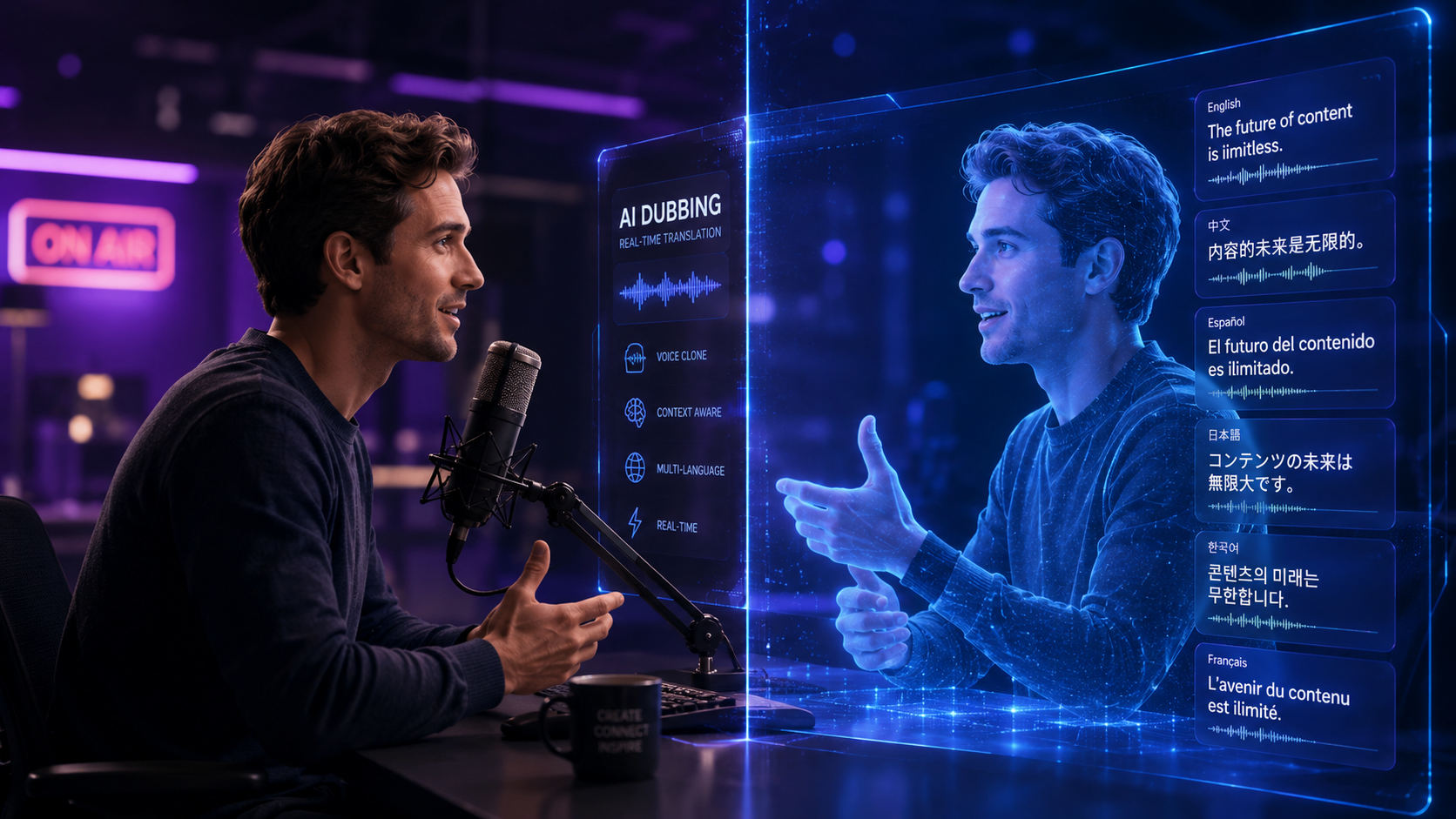
The landscape of digital communication changed forever in late 2025 and early 2026. A significant milestone occurred when Meta rolled out AI-powered translations to creators globally, starting with English and Spanish. This move democratized access to high-end dubbing tools that were previously reserved for film studios with massive budgets. As reported by TechCrunch in August 2025, this rollout was the catalyst for the "Global Content Era," where language is no longer a barrier to viral success.
Solving the Challenges of AI Dubbing
Earlier versions of AI dubbing often felt disjointed because the audio and video did not perfectly align. However, as Slator noted in late 2025, innovations in AI dubbing have solved the "quirky challenges" of lip-syncing. These include handling occlusions (when a hand passes in front of the mouth), side-profile shots, and rapid speech patterns. Modern engines use predictive modeling to ensure the jawline and cheek movements also react to the sounds being produced, not just the lips.
Enterprise-Scale Localization
For businesses, the stakes are even higher. Business Insider recently highlighted how AI Studios has disrupted enterprise localization by offering an all-in-one suite. This is particularly vital for corporate training and internal communications where a CEO’s message needs to be delivered to a global workforce in their native tongues. By using ai video translation with lip-sync, companies can maintain the human element of leadership while scaling their operations across 150 different regions simultaneously.
Comparing Top AI Video Translation Tools in 2026
When choosing a platform for your localization needs, it is important to compare features such as language support, processing speed, and visual fidelity. The following table summarizes the key players in the 2026 market based on recent industry performance reviews.
| Feature | Enterprise Suites (e.g., AI Studios) | Social Platforms (e.g., Meta AI) | Creative Tools (e.g., Game-Focused AI) |
|---|---|---|---|
| Language Support | 150+ Languages | Expanding (Global Rollout) | Specialized Dialects |
| Lip-Sync Precision | High (Frame-Accurate) | Standard (Optimized for Mobile) | Ultra-High (High Resolution) |
| Primary User Base | Corporations & Educators | Social Media Creators | Game Developers & Animators |
| Processing Speed | Near-Instant (Batch Processing) | Real-Time / Instant | Variable (High Detail) |
| Key Advantage | Scalability and Security | Native Platform Integration | Creative Control & Immersion |
How AI Video Translation with Lip-Sync Empowers Game Creators
The gaming industry has been one of the fastest adopters of advanced dubbing technology. According to GameTyrant, the 2026 best AI video translators and dubbing tools for game creators have revolutionized how "Let's Play" videos and cinematic trailers are produced. In the past, game developers had to hire dozens of voice actors for every localized version of a game. Now, AI can take the original performance and adapt it perfectly to any language.
This is particularly important for narrative-driven games where the emotional resonance of a character's performance is tied to their facial expressions. If the lip-sync is off, the immersion is broken. By utilizing ai video translation with lip-sync, developers can ensure that a character’s grief, joy, or anger is communicated visually and aurally in perfect harmony, regardless of whether the player is in Tokyo, Berlin, or New York.
Furthermore, indie developers who previously could not afford localization are now entering international markets. Programming Insider reports that tools allowing users to "Translate Any Video Instantly" have leveled the playing field, allowing small studios to compete with AAA titles on a global stage. The ability to localize marketing materials and in-game cutscenes instantly has led to a 40% increase in global sales for independent titles in the first half of 2026.
Advanced Features of AI Video Translation with Lip-Sync
As we move through 2026, several "next-generation" features have become standard in the industry. These go beyond simple translation and focus on the holistic experience of the viewer. Understanding these features can help you choose the right tool for your specific project.
Contextual Awareness and Cultural Adaptation
Modern AI doesn't just translate words; it translates meaning. If a speaker uses a metaphor that doesn't exist in the target language, the AI suggests a culturally relevant alternative. This ensures the ai video translation with lip-sync feels like it was originally scripted in that language. This "Transcreation" capability is what separates 2026 tools from the more primitive versions seen in previous years.
Multi-Speaker Diarization
One of the most difficult tasks for AI used to be handling multiple people talking at once or in quick succession. Current technology uses advanced diarization to assign specific voice clones and lip-sync profiles to each individual in the frame. This is essential for interviews, podcasts, and panel discussions where several voices are interacting simultaneously.
Emotion Preservation and Vocal Range
According to research highlighted by Technology Org, the latest AI models can now replicate the "prosody" of the original speech. This includes the pitch, pace, and volume of the speaker. If a speaker whispers or shouts, the translated audio—and the corresponding lip-sync—reflects that intensity. This level of detail is what makes ai video translation with lip-sync truly indistinguishable from human dubbing.
The Future of Global Communication
The implications of this technology extend far beyond entertainment and marketing. We are entering an era of "borderless video." Education is being transformed as the world's best professors can now lecture to students in every country without a language barrier. Medical professionals can share life-saving information across borders with the assurance that their instructions are being understood clearly and accurately.
The ethical considerations have also matured. In 2026, most reputable AI translation platforms have implemented strict "Digital Watermarking" and consent protocols. This ensures that a person's voice and likeness cannot be translated or manipulated without their explicit permission, addressing concerns regarding deepfakes and misinformation. As Slator points out, the industry is now focused on "responsible innovation," balancing the incredible power of AI with the need for authenticity and security.
What is AI video translation with lip-sync?
It is a technology that uses artificial intelligence to translate the audio of a video while simultaneously modifying the speaker's lip movements to match the new language. This creates a natural-looking dubbed video where the visual and audio components are perfectly synchronized.
Which languages are supported by AI video translation in 2026?
Most professional platforms, such as AI Studios, now support over 150 languages. This includes major global languages like English, Spanish, Mandarin, and Hindi, as well as various regional dialects and less common languages.
Is AI lip-syncing expensive for small creators?
No, the cost has dropped significantly. While enterprise-grade suites offer premium features for a fee, platforms like Meta have integrated basic AI translation tools directly into their apps for global creators, making the technology highly accessible.
How long does it take to translate a video with lip-sync?
In 2026, many tools offer near-instant or real-time translation for shorter clips. For longer, high-definition videos, the rendering process typically takes only a few minutes, which is a massive improvement over traditional manual dubbing that took weeks.
Does the AI-translated voice sound like the original speaker?
Yes, modern AI video translation uses sophisticated voice cloning technology. It analyzes the original speaker's vocal characteristics—such as tone, pitch, and emotion—to create a translated version that sounds remarkably like the original person speaking the new language.



Comments ()