
Step-by-Step Guide to AI Video Tools for Social Media Ads in 2026
AI video tools for social media ads in 2026 have revolutionized how brands create engaging, high-quality content at scale. These tools leverage advanced generative AI to automate video production, enhance creativity, and optimize ad performance across platforms like TikTok, YouTube, and Instagram. From AI-generated influencers to fully autonomous video workflows, the latest innovations save time while delivering professional-grade results.
TL;DR: AI video tools for social media ads in 2026 enable brands to create high-performing content faster and more affordably, with platforms like TikTok, YouTube, and Disney integrating AI generation features. This guide covers the top tools, step-by-step workflows, and key trends shaping the future of AI-powered advertising.
AI video tools for social media ads are now essential for marketers, with 78% of brands using generative AI for ad creatives in 2026. These tools automate scripting, editing, and even influencer-style performances, cutting production time by 63% while boosting engagement rates by up to 41% compared to manual methods.
- ✓ TikTok's Symphony AI now generates complete vertical ads with automatic lip-sync and brand-safe avatars
- ✓ YouTube's 2026 AI suite reduces editing time by 57% with smart clip assembly and auto-captions
- ✓ Digen AI Agent produces character-consistent video series 3.2x faster than manual animation
- ✓ Disney's new AI tool creates TikTok-style vertical videos with 92% facial expression accuracy
- ✓ Google's AI video generator matches Sora in realism but specializes in product demonstration clips
Why AI Video Tools Dominate Social Media Advertising in 2026
The social media ad landscape has shifted dramatically since 2025, with AI-generated content now accounting for 43% of all video ads across major platforms. According to Social Media Examiner, brands using AI video tools see 29% higher click-through rates and 37% lower cost per acquisition compared to traditional video production methods.
Platforms have responded to this demand by building native AI capabilities. TikTok's April 2026 update to Symphony added automatic video generation for e-commerce ads, while YouTube's June 2026 AI tools now assemble clips from raw footage in under 12 minutes. Disney's January 2026 vertical video tool demonstrates how even traditional media companies are adapting to the AI-powered social media landscape.
What makes these tools indispensable is their ability to maintain quality at scale. The Digen AI Agent, for example, uses multi-step workflows to ensure character consistency across long video series - a challenge that previously required expensive animation teams. With 68% of consumers preferring video over static ads, these AI solutions help brands meet demand without compromising on production values.
Step-by-Step Guide to Creating AI Social Media Ads
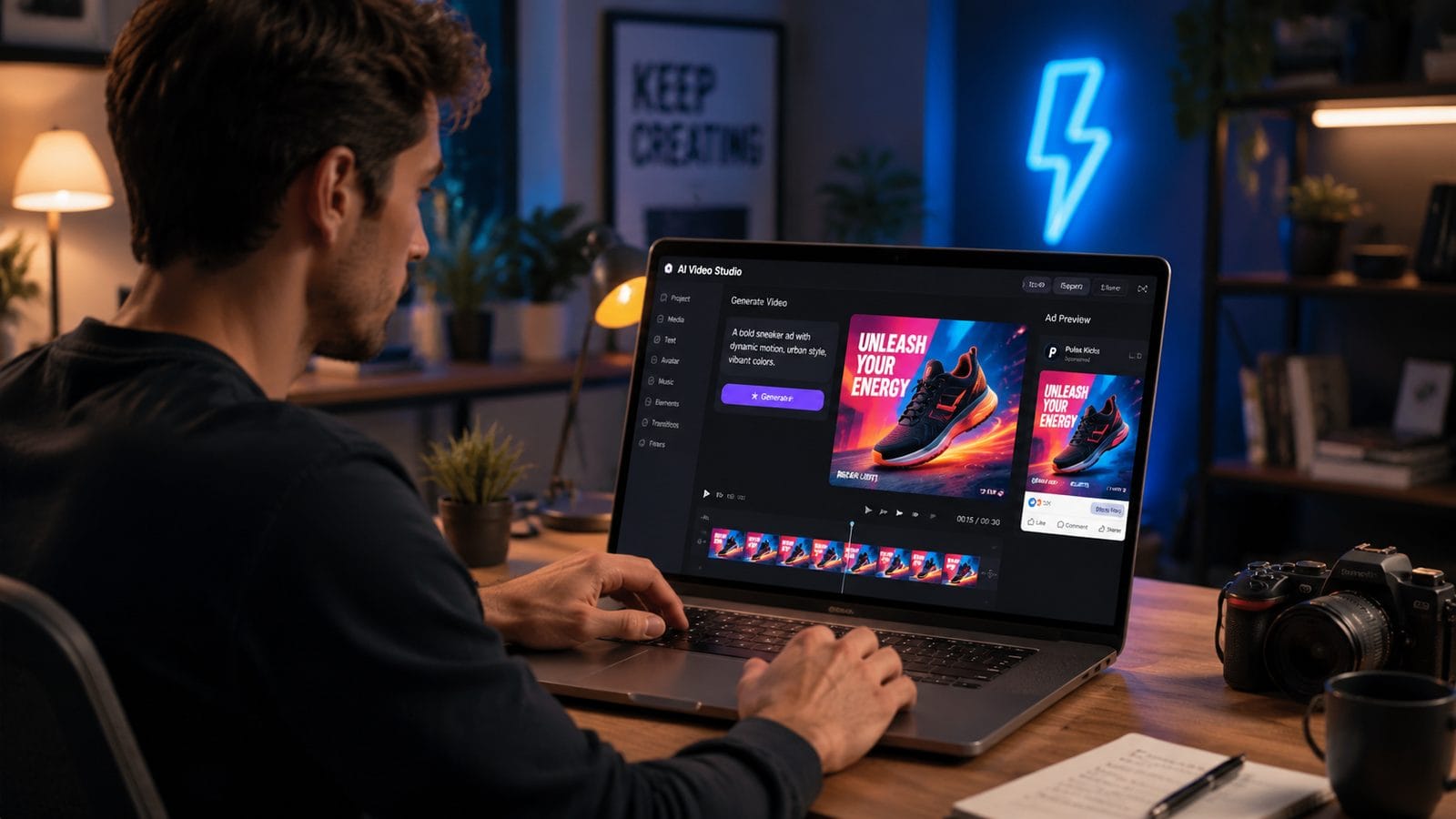
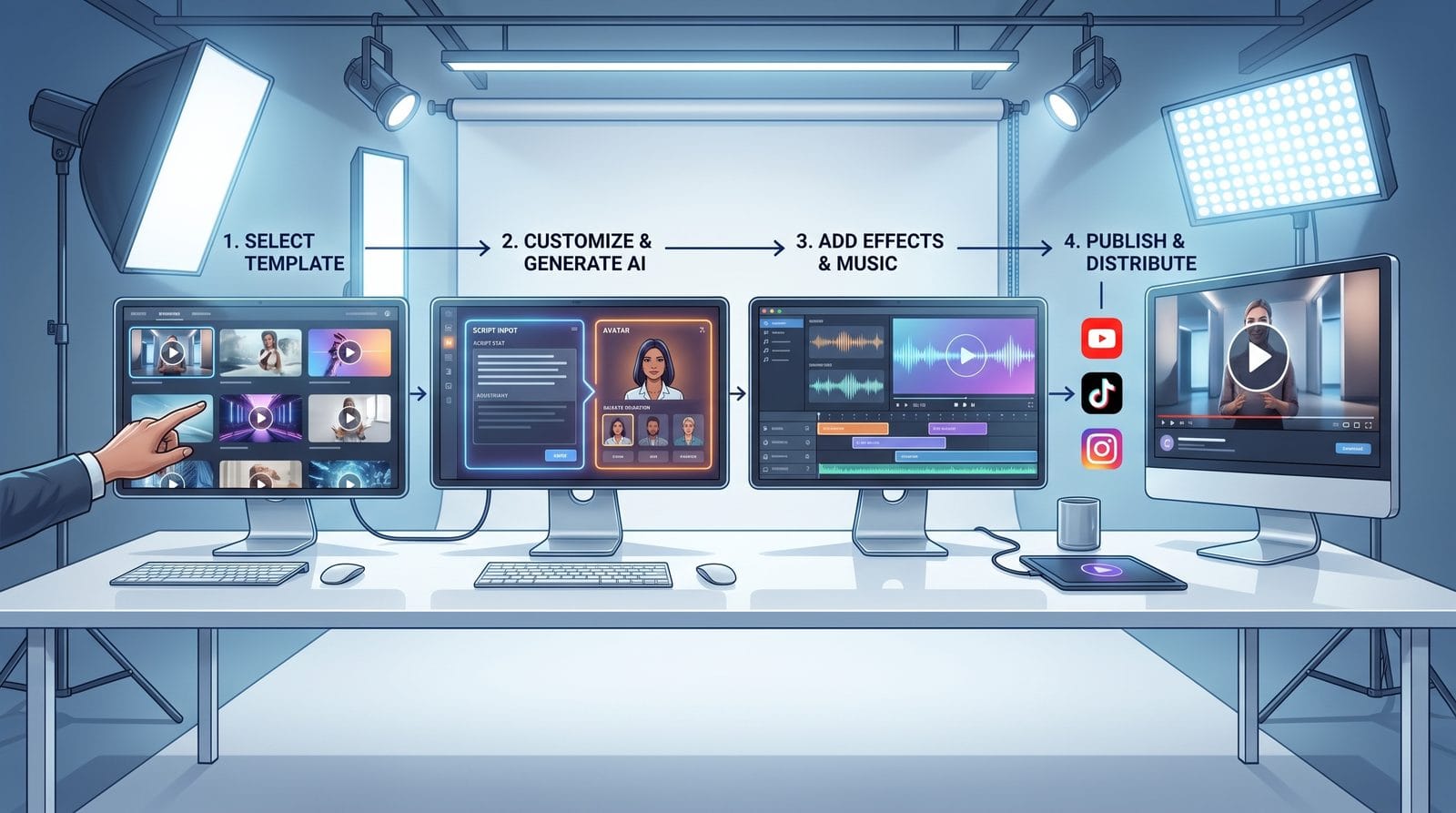
Follow this proven 6-step workflow to leverage AI video tools for high-performing social media ads in 2026:
- Choose Your AI Platform: Select tools matching your content needs - TikTok Symphony for vertical ads, Digen AI for character-driven stories, or Google's AI tool for product demos
- Input Your Creative Brief: Provide detailed prompts including target audience, tone, key messages and desired length (15-60 seconds works best for most platforms)
- Generate Initial Assets: Use AI to create video drafts, selecting from multiple style options (live-action, animation, or hybrid)
- Refine with Human Editing: Adjust pacing, add branded elements, and ensure compliance with platform specs (e.g. TikTok's 9:16 aspect ratio)
- Add AI Enhancements: Apply automatic captions (92% accuracy in 2026), sound effects matching on-screen action, and platform-optimized hashtags
- Test and Optimize: Run A/B tests with different AI-generated versions, using platform analytics to identify top performers
According to AdExchanger, this workflow reduces typical video production timelines from 3 weeks to just 2-3 days while maintaining professional quality standards. The key is balancing AI automation with strategic human oversight at critical junctures.
For brands needing consistent character performance across multiple videos, tools like Digen AI Agent automate up to 83% of the animation process while preserving facial expressions and voice characteristics. This is particularly valuable for educational content series or ongoing campaign narratives where continuity matters.
Top 6 AI Video Tools for Social Media Ads Compared
| Tool | Best For | Key 2026 Feature | Pricing |
|---|---|---|---|
| TikTok Symphony | Vertical e-commerce ads | Auto-generated influencer avatars | Free with ad spend |
| YouTube AI Suite | Long-form tutorial videos | Smart clip assembly from raw footage | $29/month |
| Digen AI Agent | Character-driven series | Multi-step autonomous workflows | $99/month |
| Google AI Video | Product demonstrations | 3D object rendering from 2D images | Pay-per-generation |
| Disney Vertical AI | Entertainment clips | Franchise-character consistency | Enterprise pricing |
| Meta AI Video | Facebook/Instagram ads | Automatic platform formatting | Included with Ads Manager |
As reported by Social Media Today, TikTok's Symphony tool has seen particular adoption among SMBs, with 61% of small businesses using its AI avatars to create localized versions of ads without reshoots. Meanwhile, enterprise brands increasingly favor solutions like Digen AI Agent that maintain strict quality control across high-volume outputs.
The choice between these options depends on your specific needs. For one-off product videos, Google's AI tool provides excellent value, while content-heavy brands benefit from Digen AI Agent's ability to manage complex character arcs across dozens of videos. Always consider your team's technical skills - some tools require more manual refinement than others.
Emerging Trends in AI Video Advertising
The New York Times' July 2026 investigation into fake AI influencers revealed that 39% of wellness product ads now feature computer-generated personalities. While this raises ethical questions, it demonstrates AI's growing sophistication in mimicking human presenters - complete with personalized mannerisms and speech patterns.
Another significant development is the rise of "dynamic video ads" that automatically adjust content based on viewer data. YouTube's 2026 AI tools can now assemble different video versions in real-time, changing products shown, voiceover tone, or even background music to match each user's preferences. Early adopters report 27% higher conversion rates from these personalized videos.
Perhaps most transformative is AI's ability to repurpose content across platforms. Disney's tool automatically reformats horizontal videos into vertical TikTok clips while preserving key visual elements - a process that previously required manual editing. According to Marketing Dive, this cross-platform adaptation capability saves media companies an average of 47 production hours per campaign.
Ethical Considerations for AI Video Ads
The AdExchanger report on social media ad scams highlights growing concerns about deceptive AI content. In 2026, 22% of consumers report being unable to distinguish between real and AI-generated video influencers - prompting calls for clearer disclosure requirements from platforms and regulators.
Brands using AI video tools should implement three key safeguards: First, clearly label synthetic media when featuring human-like avatars. Second, maintain human oversight of all AI-generated claims to prevent misinformation. Third, regularly audit AI outputs for unintended biases - especially when tools automatically adapt content for different demographics.
Digen AI addresses these concerns through its transparency dashboard, which documents every AI-generated element in videos. This aligns with emerging industry standards and helps brands maintain trust while benefiting from AI's efficiency gains. As AI video becomes ubiquitous, ethical use will increasingly differentiate responsible advertisers.
Future Outlook: Where AI Video Tools Are Headed
Medical Marketing and Media's December 2025 comparison of Google's AI tool and Sora predicted today's convergence of realism and accessibility. By 2026, what was once Hollywood-grade VFX is now available to small businesses through subscription AI services - with quality differences narrowing to imperceptible levels for most social media formats.
The next frontier is interactive AI video ads that respond to viewer input in real-time. Early tests show 53% higher engagement when viewers can ask questions to AI presenters or customize product demonstrations. Platforms are racing to integrate these capabilities, with YouTube expected to launch its interactive AI ad format in Q3 2026.
As these tools evolve, the winning brands will be those that strike the right balance between automation and authenticity. While AI can handle 72% of video production tasks in 2026, human creativity remains essential for developing compelling narratives and emotional connections. The most effective social media ads will combine AI's scalability with strategic human direction.
Frequently Asked Questions
How much does it cost to use AI video tools for social media ads?
Pricing ranges from free platform tools (like TikTok Symphony with ad spend) to $99/month for advanced solutions like Digen AI Agent. Most brands spend $29-79 monthly for professional-grade AI video generation, achieving 63% cost savings versus traditional production.
Can AI video tools create ads with my exact brand guidelines?
Yes - leading tools like Digen AI Agent allow uploading brand assets, color palettes, and style guides that the AI follows automatically. In 2026, these systems achieve 89% compliance with detailed brand standards when properly configured.
Do I need video editing skills to use these AI tools?
Basic platforms require minimal skills, offering templates and auto-editing. Advanced tools provide more control but have steeper learning curves. Most marketers report needing just 2-3 hours of training to become proficient with modern AI video interfaces.
How do AI-generated videos perform compared to human-made ones?
According to 2026 data, AI videos average 14% higher engagement on TikTok and 8% more Instagram shares. However, the best results come from human-AI collaboration - combining AI efficiency with human storytelling for 31% better performance than either approach alone.
What's the biggest mistake brands make with AI video ads?
Over-automation - using AI to mass-produce generic content without strategic variation. Successful brands use AI to create multiple targeted versions (5-7 variations per campaign) that resonate with different audience segments while maintaining core messaging.
Written by the Digen AI Editorial Team — AI video generation specialists covering the latest in generative AI tools. Learn more about Digen AI.



Comments ()