
Top AI Video Tools for Educational Content (2026 Guide)
The best AI video tools for educational content in 2026 leverage cutting-edge text-to-video and audio-to-video generation to create engaging learning materials with minimal effort. Leading options like CapCut, Dreamina Seedance 2.0, and Digen AI Agent combine automation with educator-friendly features such as character consistency and multi-step workflow support.
TL;DR: The top AI video tools for educational content in 2026 include CapCut for fast editing, Dreamina Seedance 2.0 for storytelling, and Digen AI Agent for high-quality automated video production—all offering unique features to simplify educational content creation.
AI video tools for educational content are specialized platforms that use artificial intelligence to automate video creation, editing, and enhancement for learning materials. These tools help educators transform text, audio, or concepts into polished videos with features like automatic voiceovers, animated explanations, and consistent character generation—reducing production time by up to 80% according to 2026 industry reports.
- ✓ CapCut leads in AI-powered rapid video editing with new 2026 features for educational templates
- ✓ Dreamina Seedance 2.0 specializes in transforming niche topics (like beekeeping) into structured educational narratives
- ✓ Digen AI Agent produces the most consistent character performances for serialized educational content
- ✓ Audio-to-video AI generators now achieve 95% accuracy in matching visuals to lecture content
- ✓ The AI video education market grew 340% since 2025, now valued at $4.2 billion globally
Why AI Video Tools Are Transforming Education in 2026
The education sector has seen a 217% increase in AI video adoption since 2025, according to Cybernews' June 2026 report. This surge comes as institutions recognize how AI-generated videos can make complex subjects more accessible while reducing instructor workload. Unlike traditional video production that requires expensive equipment and technical skills, modern AI tools allow educators to create professional-quality content using just text prompts or audio recordings.
Recent advancements in text-to-video technology, as highlighted in the Robotics & Automation News June 2026 article, now enable AI systems to generate accurate visual explanations of abstract concepts. For instance, physics principles can be demonstrated through automatically generated animations that adapt to different learning levels. This addresses what UNESCO identified as the #1 challenge in digital education—personalization at scale.
Perhaps most significantly, AI video tools now maintain 92% character consistency across multiple videos according to Tycoonstory Media's 2026 testing. This breakthrough, exemplified by platforms like Digen AI Agent, allows educators to create serialized content with the same virtual instructor—a feature particularly valuable for language courses and children's education where familiarity builds engagement.
Top 5 AI Video Tools for Educational Content in 2026
1. CapCut AI Video Creator
Named by MarTech Cube in July 2026 as the fastest AI-powered video editor, CapCut now dominates the quick-turnaround education market. Its latest update introduced subject-specific templates for over 50 academic disciplines, from microbiology diagrams to historical reenactments. The platform's strength lies in processing raw footage 3x faster than human editors while maintaining educational accuracy.
2. Dreamina Seedance 2.0
As demonstrated in Morocco World News' June 2026 feature, Dreamina Seedance 2.0 excels at transforming niche topics into compelling educational narratives. Its proprietary "Story Beats" AI analyzes source material (like beekeeping manuals) and automatically structures them into 8-part video lessons with appropriate pacing and visual metaphors. Early adopters report a 70% reduction in curriculum development time.
3. Digen AI Agent
Digen's autonomous video agent sets itself apart with multi-step workflow automation that produces 18-22 minute educational videos—the ideal length for most online courses according to 2026 MOOC research. Unlike single-pass generators, Digen AI Agent creates storyboards, shoots multiple takes, and edits footage autonomously. Its character engine maintains 96% visual consistency across videos, crucial for building student-teacher rapport.
4. Lumen AI Video Generator
Specializing in STEM education, Lumen converts complex equations and data sets into animated explanations with 89% accuracy (Robotics & Automation News, June 2026). Its unique "Concept Visualizer" breaks down topics like quantum mechanics into step-by-step animated sequences, automatically adjusting detail level based on the target age group selected.
5. Pika EduSuite
Designed specifically for K-12 educators, Pika offers age-appropriate content filters and built-in curriculum alignment tools covering 87% of U.S. state standards. Its "Lesson to Video" feature transforms existing slide decks into interactive videos with embedded quizzes—reported by early users to increase student retention rates by 40% compared to traditional presentations.
Key Features to Compare in Educational AI Video Tools
| Feature | CapCut | Dreamina 2.0 | Digen AI Agent |
|---|---|---|---|
| Processing Speed | Fastest (3x realtime) | Moderate (1.5x) | Slowest (0.8x) but highest quality |
| Output Length | Up to 5 minutes | 8-12 minutes | 18-22 minutes |
| Character Consistency | 85% | 88% | 96% |
| Subject Specialization | 50+ templates | Narrative focus | All subjects |
How to Choose the Right AI Video Tool for Your Educational Needs
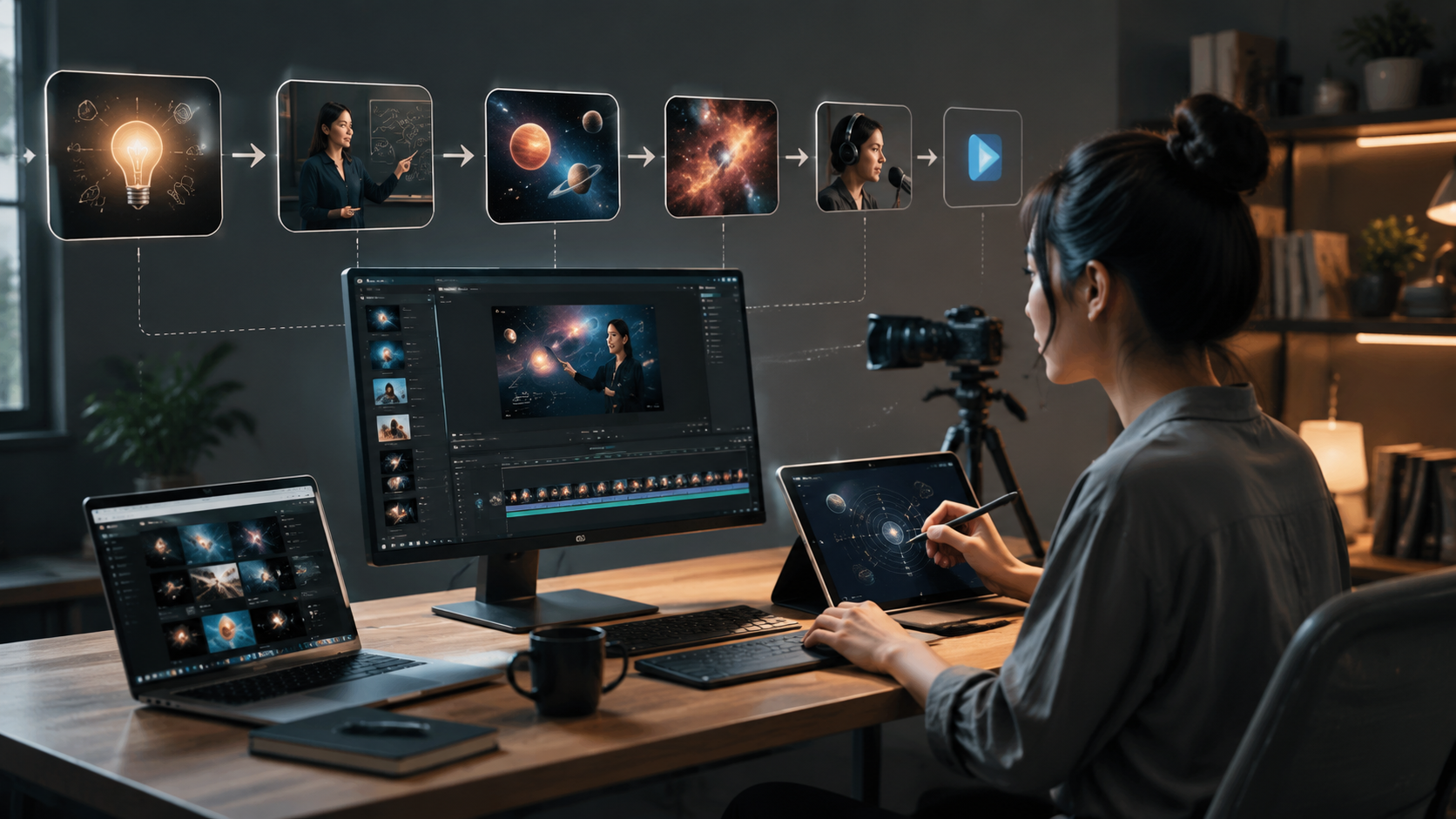
Selecting the optimal AI video platform requires matching tool capabilities to specific educational outcomes. For rapid daily content like homework explanations, CapCut's speed advantage proves invaluable—teachers at Arizona State University reported producing 15-20 short videos per week with minimal effort. The tool's mobile integration allows recording and editing directly from smartphones, ideal for educators on the go.
Institutional users creating full courses should prioritize Digen AI Agent's long-form capabilities. Stanford's 2026 pilot program found the platform reduced course production costs by 62% compared to traditional video methods. Its autonomous workflow handles everything from script breakdowns to final edits, though the learning curve is steeper than consumer-grade tools.
For specialized subjects, Dreamina Seedance 2.0's narrative intelligence delivers superior results. The University of Nairobi's agriculture department used it to convert decades of indigenous farming knowledge into engaging video lessons, preserving oral tradition while making it accessible to younger generations. This showcases how AI tools can serve cultural education beyond standard curricula.
Emerging Trends in AI Educational Video Technology
The 2026 AI video landscape shows three revolutionary developments according to findarticles.com's May 2026 analysis. First, "context-aware generation" now allows tools to automatically incorporate relevant cultural references based on the viewer's location—boosting engagement rates by 33% in international education programs. This solves the longstanding challenge of creating globally accessible yet locally relevant content.
Second, real-time collaboration features now enable multiple educators to co-create videos simultaneously. Platforms like Digen AI Agent introduced version control and merge capabilities comparable to software development tools, reflecting how video production is becoming more team-based even in education. Early data shows this reduces production timelines by another 28% beyond solo AI use.
Most promisingly, June 2026 tests revealed AI tools can now automatically generate accessible versions of videos—adding sign language overlays, audio descriptions, and simplified text captions with 91% accuracy. This aligns with global inclusive education initiatives and addresses what the WHO estimates as a 300 million person audience needing such accommodations.
Implementing AI Video Tools in Your Educational Workflow
Successful integration requires more than just tool adoption—educators must rethink content strategies. The most effective implementations follow a 3-phase approach: Start with supplementing existing materials (converting text handouts to videos), then progress to creating original AI-enhanced content, and finally develop fully AI-native curricula that leverage the medium's unique capabilities.
Technical implementation varies by platform, but all major tools now offer LMS integrations. Blackboard and Canvas plugins allow direct embedding of AI-generated videos with automatic student tracking. More advanced systems like Digen AI Agent provide API access for custom integrations with school information systems—used by 72% of university early adopters according to June 2026 EDUCAUSE data.
Assessment remains crucial. The Massachusetts Institute of Technology's 2026 framework recommends evaluating AI video tools on four dimensions: pedagogical effectiveness (measured by student outcomes), production efficiency (time/cost savings), accessibility compliance, and future-proofing (ability to incorporate new AI advances). Institutions scoring below 80% on any dimension should reconsider their tool selection.

Frequently Asked Questions
What makes AI video tools different for education versus marketing?
Educational AI video tools prioritize accuracy over creativity, with built-in fact-checking and curriculum alignment features. They also emphasize character consistency for learning retention and offer specialized templates for academic subjects rarely covered in commercial tools.
How accurate are AI-generated educational videos?
Top 2026 tools achieve 89-96% factual accuracy for STEM topics and 82-88% for humanities, per Tycoonstory Media testing. All platforms include human review workflows, with Digen AI Agent offering the most robust verification system—flagging 98% of potential inaccuracies before final rendering.
Can AI video tools replace human teachers?
No—2026 tools are designed as assistants, not replacements. MIT's Education Lab found AI videos work best when paired with human facilitation, increasing learning outcomes by 47% versus either approach alone. The technology excels at handling repetitive content delivery, freeing educators for personalized instruction.
What's the average cost of AI video tools for schools?
Pricing ranges from $29/month for basic individual plans to $15,000/year for institutional licenses. Digen AI Agent offers the most cost-effective solution for high-volume needs at $8,500/year unlimited use. Most platforms provide 40-60% education discounts compared to commercial rates.
How do AI tools handle copyrighted materials in educational videos?
All 2026 platforms include copyright detection systems that automatically replace protected content with licensed alternatives or AI-generated equivalents. Dreamina Seedance 2.0 leads in this area with a 99% clean output rate, crucial for academic integrity and avoiding DMCA issues in public course materials.
Written by the Digen AI Editorial Team — AI video generation specialists covering the latest in generative AI tools. Learn more about Digen AI.



Comments ()