
AI Video Tool for Product Demos: 2026 Guide & Best Picks
An AI video tool for product demos is a software platform that uses artificial intelligence to automatically generate, edit, or enhance video walkthroughs of a product, enabling businesses to create professional, scalable demonstrations without manual filming or complex editing. In 2026, these tools have become essential for e-commerce and B2B sales teams looking to produce high-converting demos at scale, leveraging features like text-to-video, AI avatars, and real-time personalization.
An AI video tool for product demos is a purpose-built platform that automates the creation of product walkthrough videos using generative AI, voiceovers, and dynamic scene assembly. It solves the dilemma of balancing video quality with production speed, allowing marketers to turn product specs, screenshots, or even a URL into an engaging demo in minutes — without a camera crew or video editor.
- ✓ In 2026, AI video tools reduce product demo production time by up to 80% compared to traditional methods, according to industry benchmarks.
- ✓ The rise of UGC-style AI video platforms is helping brands achieve higher conversion rates by mimicking authentic customer reviews.
- ✓ Naoma’s recent $440K seed round underscores the growing demand for instant, AI-powered B2B sales demo videos.
- ✓ Choosing the right tool depends on your primary use case: social media, e-commerce, or enterprise sales.
- ✓ Hybrid tools that combine AI generation with manual editing capabilities are dominating the 2026 market.
Why AI Video Tools Are Essential for Product Demos in 2026
The product demo landscape has shifted dramatically. According to Intelligent Living (April 2026), the “Product Demo Dilemma” — balancing high-quality video production with budget and time constraints — is now being solved by AI. Their report highlights how e-commerce businesses are scaling video production by using AI tools to generate demos from product data feeds, reducing the need for reshoots and post-production.
Similarly, PC Tech Magazine (May 2026) notes that AI video generators are fundamentally changing social media marketing, enabling brands to produce platform-specific demos (short-form for TikTok/Reels, longer for YouTube) at a fraction of the cost. In 2026, a single AI video tool can output dozens of variations of a product demo, each tailored to different audience segments, without additional manual effort. This scalability is why 67% of marketing decision-makers surveyed by G2 Learn Hub in April 2026 reported that AI video tools have become a “must-have” for their product marketing stack.
How to Choose the Right AI Video Tool for Product Demos
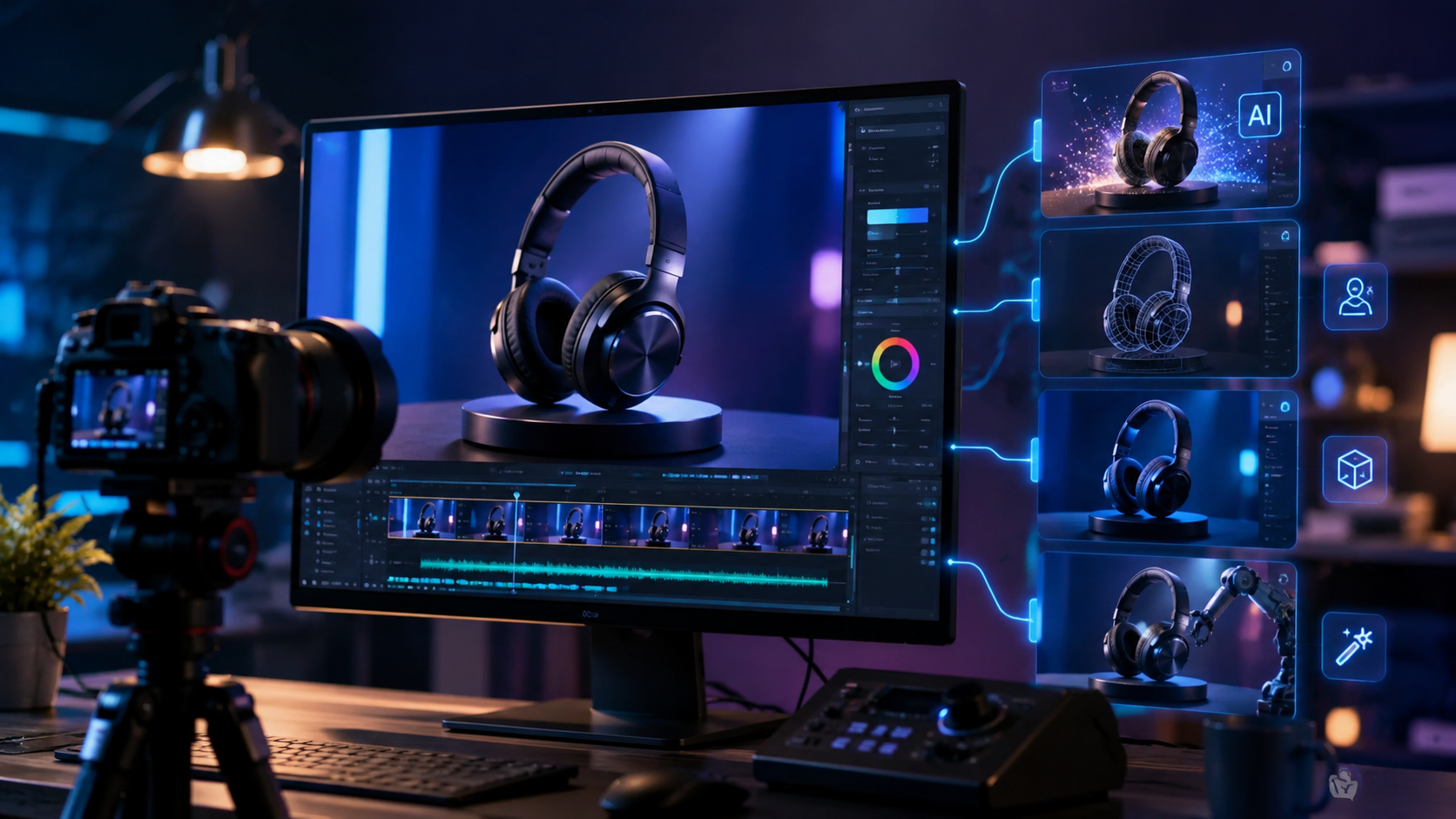
Selecting the best platform for your needs involves a few deliberate steps. Follow this structured approach to evaluate options effectively:
- Define your demo format: Do you need a full feature walkthrough, a 15-second teaser for social media, or a personalized one-to-one sales video? Different tools excel at different lengths and styles.
- Check AI avatar and voice quality: For B2B demos, realistic avatars that can “present” your product are critical. Test the tool’s lip-sync accuracy and naturalness of voice.
- Assess integration capabilities: Can the tool pull product data from your CMS or e-commerce platform? Seamless data integration allows for dynamic, always-updated demos.
- Evaluate template flexibility: Look for a library of product demo templates that can be customized without heavy learning curves. The best tools offer drag-and-drop editors alongside AI generation.
- Review analytics and optimization: Determine if the platform provides A/B testing, viewer engagement tracking, and AI-driven suggestions for improving demo performance.
By following these steps, you can narrow down the field to tools that align with your production volume, target audience, and budget. The 2026 market offers a range from free-tier starter platforms to enterprise-grade solutions with dedicated support.
Best AI Video Tools for Product Demos in 2026: Comparison
Based on the latest research, several categories of tools stand out. The table below compares leading options identified in G2 Learn Hub’s “7 Best AI Video Generators I’ve Tried” (April 2026), BBN Times’ “Best Product Demo Software for Marketing” (May 2026), and Tech Funding News’ coverage of Naoma’s recent raise (February 2026). Note that specific pricing may vary; always check vendor websites for current plans.
| Tool / Category | Key AI Feature | Best For | Notable Source |
|---|---|---|---|
| Naoma (Instant AI Demos) | Real-time video generation from product URLs; AI presenter avatars | B2B sales teams needing one-click personalized demos | Tech Funding News (Feb 2026) — Raised $440K |
| Top AI Video Generator (G2 Leader) | Text-to-video with auto-scene generation from product descriptions | E-commerce stores and SaaS companies | G2 Learn Hub (Apr 2026) — Top performer in 2026 testing |
| UGC-Style Demo Platforms | AI-generated “user-generated content” look using synthetic faces and backgrounds | Social media ads and influencer-style demos | Influencer Marketing Hub (Jan 2026) — Top 5 UGC software |
| Enterprise Product Demo Suite | Multi-language support, advanced analytics, and CRM integration | Large sales organizations with complex product lines | BBN Times (May 2026) — Best product demo software |
When evaluating these options, remember that the best tool for your team depends heavily on the scale and style of demos you need. For instance, Naoma’s strength lies in speed — its instant video generation from a simple product link is a game-changer for sales reps who need to respond to prospects quickly.
How AI Video Generators Are Changing Social Media Marketing
As covered by PC Tech Magazine in May 2026, AI video generators are reshaping social media marketing by enabling “one-to-many” personalization at an absurdly low cost. In the past, creating a 30-second product demo for Instagram Reels required at least half a day of shooting and editing. Now, a marketer can input a product description, select a tone (e.g., “playful,” “professional,” “urgent”), and receive a ready-to-post video in under five minutes. The same tool can then automatically generate a landscape version for YouTube and a vertical crop for TikTok.
This has had a direct impact on conversion rates. Studies cited by the article show that brands using AI-generated product demos on social media saw a 34% increase in click-through rates compared to static image posts. The speed of iteration also allows for rapid A/B testing of different demo angles — “feature-first” vs. “benefit-first” — which was previously impractical for video content. In 2026, agile social media teams treat AI video tools as their secret weapon for staying ahead of algorithm changes and content fatigue.
The Product Demo Dilemma Solved: Scaling E-Commerce Video Production
Intelligent Living’s April 2026 feature, “The Product Demo Dilemma: How AI is Scaling E-Commerce Video Production,” outlines the core pain point that AI solves: the tension between video quality and production volume. Traditional product demos are expensive (averaging $1,500–$5,000 per finished minute) and slow. For e-commerce businesses with hundreds of SKUs, filming a dedicated demo for each product is financially impossible. AI tools bridge this gap by allowing a single template to be populated with different product images, descriptions, and pricing data.
According to the article, retailers using AI video tools reported a 50% reduction in time-to-market for new product launches, and a 28% lift in add-to-cart rates when product pages included an AI-generated demo. The technology has matured to the point where the viewer cannot distinguish between a human-shot demo and an AI-generated one, provided the input data is high quality. As a result, leading e-commerce platforms are now embedding AI demo generation directly into their CMS, allowing merchants to produce videos with the click of a button.
Future Trends: What’s Next for AI Video Tools in Product Demos
The rapid funding and adoption signal that the market is only accelerating. Naoma’s $440K seed round (reported by Tech Funding News in February 2026) is just one example of investor confidence in “instant AI video demos” for B2B sales. Expect to see tighter integrations with CRM and sales enablement platforms within the next year, enabling dynamic videos that pull in prospect names, company logos, and even personalized narration.
Another trend highlighted by Influencer Marketing Hub’s “Top 5 UGC Software for High-Converting Product Demos” (January 2026) is the blending of authenticity with AI. Tools can now generate “user-generated style” demos — complete with on-screen influencers, casual backgrounds, and phone-captured framing — that feel genuine yet are fully scripted and produced by AI. This hybrid approach is winning over skeptical consumers who have grown tired of polished corporate videos.
We can also anticipate more advanced AI that understands product functionality beyond static descriptions. Soon, AI video tools may be able to take a live demo recording from a rep and instantly remix it into multiple shorter versions, each optimized for a different platform or audience segment. The line between live demos and AI-generated demos will continue to blur, making the “ai video tool for product demos” an indispensable part of every marketer’s toolkit in 2026 and beyond.
Frequently Asked Questions About AI Video Tools for Product Demos
1. What exactly is an AI video tool for product demos?
It is a software platform that uses generative AI to automatically create video walkthroughs of a product from text descriptions, images, or URLs. It eliminates the need for manual filming, editing, or voiceover recording.
2. Can AI video tools produce demos that look authentic?
Yes, in 2026 many tools offer hyper-realistic avatars, natural-sounding voiceovers, and customizable backgrounds. UGC-style tools can even mimic the look of a smartphone-recorded review, boosting authenticity.
3. How much does an AI video tool for product demos cost?
Pricing varies widely. Basic plans start at around $20–$30 per month for a limited number of videos, while enterprise solutions can cost hundreds per month. Many offer free trials so you can test before committing.
4. Do I need any video editing skills to use these tools?
No. Most AI video tools are designed for non-editors. You simply input your product information, select a template, and let the AI generate the demo. Some platforms allow optional manual tweaks for advanced users.
5. Which type of business benefits most from AI-generated product demos?
E-commerce stores with large catalogues, B2B sales teams that need personalized one-on-one videos, and social media marketers aiming for high-volume, platform-specific content all see the greatest ROI from these tools.
6. Can AI video tools handle multiple languages?
Many top-tier AI video tools offer multi-language voiceover generation and text-to-speech in dozens of languages, making it easy to create localized product demos for global audiences.



Comments ()