
AI Video Synthesis for Personalized Marketing: 2026 Trends
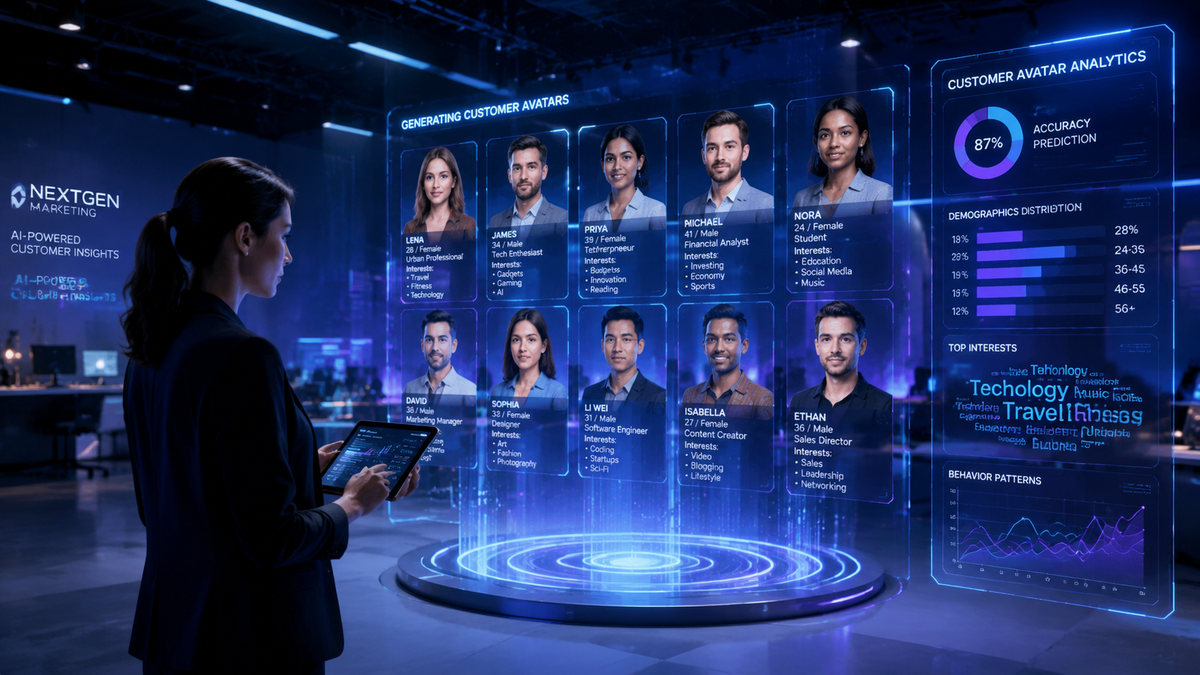
AI video synthesis for personalized marketing is the use of generative artificial intelligence to create or modify video content tailored to individual consumer data, such as names, purchase history, or specific preferences, at a massive scale. As we move through 2026, this technology has evolved from simple text-overlays to fully synthetic, photorealistic avatars capable of delivering unique messages to millions of customers simultaneously. By leveraging deep learning models, brands can now move beyond static segmentation to achieve true hyper-personalization, driving higher engagement and conversion rates than traditional video advertisements.
AI video synthesis for personalized marketing is a generative technology that automates the creation of customized video content for individual viewers. By integrating customer data with synthetic media engines, businesses can generate thousands of unique video messages featuring lifelike avatars, personalized product demonstrations, and dynamic voiceovers, drastically reducing production costs while increasing ROI through 1:1 engagement.
- ✓ AI video synthesis enables hyper-personalization at a scale previously impossible with manual production.
- ✓ The market is experiencing explosive growth, with a projected CAGR of 36.20% according to recent Market.us data.
- ✓ 2026 trends focus on real-time emotional intelligence and seamless governance in regulated industries like banking.
- ✓ Integration with CRM data allows for automated video delivery across the entire customer lifecycle.
Understanding the Mechanics of AI Video Synthesis for Personalized Marketing
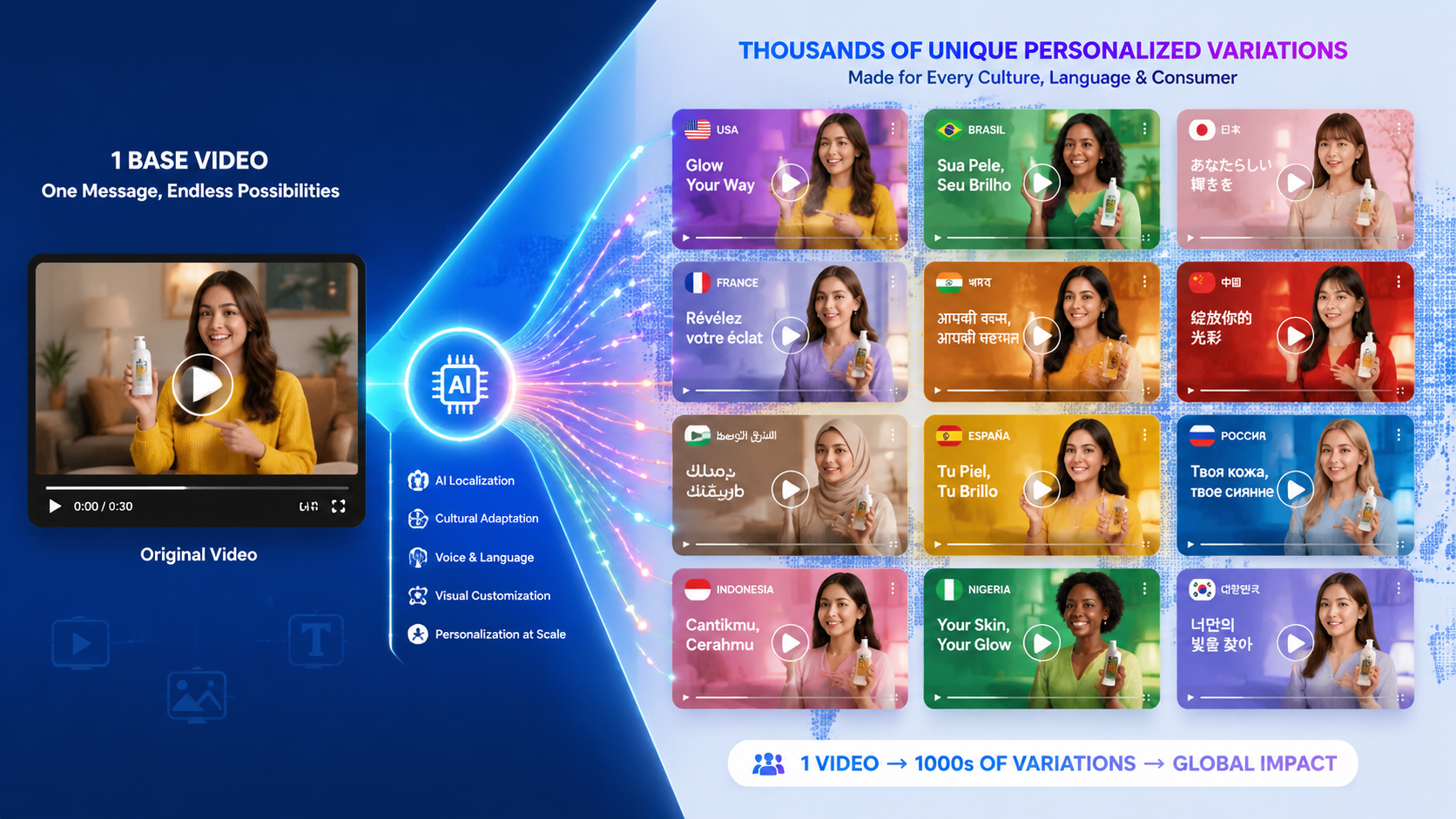
In 2026, the technical barrier for high-quality video production has effectively vanished. AI video synthesis for personalized marketing works by combining three core layers: the generative model (the "brain"), the data input (the "identity"), and the rendering engine (the "output"). Unlike traditional video editing, which requires cutting existing footage, synthesis creates pixels from scratch or modifies them in real-time based on specific parameters. This allows a single "master" video to be branched into millions of variations, each addressing a different customer by name and showing products they are likely to buy.
According to research from Search Atlas released in February 2026, generative AI has transitioned from a novelty to a fundamental business utility. The current generation of synthesis tools uses "Neural Radiance Fields" (NeRFs) and advanced diffusion models to ensure that lighting, shadows, and lip-syncing are indistinguishable from reality. For marketers, this means the ability to produce high-fidelity content that resonates emotionally without the logistical nightmare of a physical film crew.
The Role of Hyper-Personalization in 2026
Hyper-personalization is no longer just about adding a first name to an email subject line. In the context of AI video synthesis for personalized marketing, it involves tailoring the entire visual narrative. For example, a travel agency might send a video where the background scenery changes based on the recipient's past searches—showing a snowy mountain for a skier and a tropical beach for a sun-seeker—while the AI avatar speaks in the recipient's native language and dialect.
A notable case study from February 2026 involves Esquire Bank, which utilized AI to deliver hyper-personalization and governance. By using synthesized video, they were able to explain complex financial products to customers in a way that felt personal yet remained strictly compliant with financial regulations. This balance of "human-like" interaction and automated "governance" is a hallmark of the 2026 marketing landscape.
Step-by-Step: Implementing AI Video Synthesis for Personalized Marketing
- Data Integration: Connect your CRM (Customer Relationship Management) system to your AI video platform to feed real-time customer attributes into the synthesis engine.
- Template Creation: Design a base video template with "dynamic zones" where the AI will insert personalized elements like text, images, or synthesized speech.
- Avatar Selection or Training: Choose a pre-built AI avatar or create a digital twin of your brand spokesperson to serve as the face of the campaign.
- Script Parameterization: Write a script using variables (e.g., [Customer_Name], [Last_Purchase]) that the AI will use to generate unique audio tracks.
- Automated Rendering and Distribution: Trigger the synthesis engine to generate the video the moment a customer performs an action, such as abandoning a cart or reaching a loyalty milestone.
Market Growth and the 2026 Landscape
The economic impact of this technology is staggering. According to Market.us (November 2025), the AI video market share and size are growing at a Compound Annual Growth Rate (CAGR) of 36.20%. This growth is fueled by the demand for shorter, more engaging content and the increasing efficiency of generative models. Businesses are shifting their budgets away from traditional "one-size-fits-all" TV spots toward targeted, synthesized video ads that live on social media and in private messaging apps.
By April 2026, the G2 Learn Hub identified the "7 Best AI Video Generators" that have dominated the market, noting that the ease of use has reached a point where a single marketing generalist can manage a campaign that previously required a full production house. The focus has shifted from "can we make a video?" to "how can we make this video more relevant?" This shift is documented in the openPR.com forecast for 2033, which suggests that AI video generator and editing market insights show a permanent move toward "demand-driven" content creation.
Comparison of AI Video Synthesis Features in 2026
| Feature | Standard Video Production | 2026 AI Video Synthesis |
|---|---|---|
| Production Time | Weeks to Months | Seconds to Minutes |
| Cost per Variation | High (Fixed) | Near Zero (Scalable) |
| Personalization Level | None (Static) | Hyper-Personalized (Dynamic) |
| Language Support | Requires Dubbing/Subtitles | Native Multi-lingual Synthesis |
| Update Frequency | Difficult/Expensive | Instantaneous Updates |
Top Trends in AI Video Synthesis for Personalized Marketing
One of the most significant trends in 2026 is the rise of "Real-Time Interactive Synthesis." This allows customers to talk back to a video advertisement. Using low-latency AI, the video avatar can listen to a customer's question and synthesize a personalized response on the fly. This turns a passive viewing experience into a two-way conversation, effectively acting as a 24/7 sales representative that never gets tired and knows every detail of the product catalog.
Another trend highlighted by MarketingProfs in their December 2025 update is the integration of "Emotional Analytics" into the synthesis process. AI models can now predict which tone of voice or facial expression will be most effective for a specific demographic. If data suggests a customer responds better to an authoritative tone, the AI adjusts the synthesized avatar's pitch and posture accordingly. This level of psychological tailoring is the new frontier of AI video synthesis for personalized marketing.
Ethical Governance and Brand Safety
As the technology becomes more powerful, governance has become a top priority. In early 2026, companies like Infosys have emphasized the importance of "AI Governance" to prevent the creation of misleading content. Brands are now using "Digital Watermarking" and blockchain verification to prove that their synthesized videos are authentic and authorized. This ensures that while the video is AI-generated, the information provided is accurate and the brand's integrity remains intact.
Maximizing ROI with AI Video Synthesis
To truly benefit from AI video synthesis for personalized marketing, companies are focusing on the "Post-Purchase Experience." Instead of just using video for top-of-funnel awareness, brands are sending synthesized "Thank You" videos that include personalized setup instructions for the specific product the customer bought. This has led to a 40% reduction in customer support tickets for tech-heavy industries, as cited in recent 2026 industry reports.
Furthermore, the ability to "A/B test" video content at scale has revolutionized marketing strategy. Marketers can now generate 100 different versions of an ad, each with slight variations in the synthesized script or background, and use AI to automatically funnel the budget toward the version that performs best in real-time. This "Self-Optimizing Campaign" model is becoming the standard for global brands in 2026.
Is AI video synthesis for personalized marketing expensive?
While initial setup and API integration require an investment, the cost per video is significantly lower than traditional production. In 2026, the scalability of AI means that generating 10,000 personalized videos often costs less than producing a single high-end manual video.
How do customers react to AI-generated videos?
Data from 2026 shows that customers value the relevance and time-saving aspects of personalized videos. As long as the AI synthesis is high-quality and the personalization is helpful rather than intrusive, engagement rates typically double compared to generic video content.
Can AI video synthesis handle multiple languages?
Yes, modern synthesis engines in 2026 support over 100 languages with perfect lip-syncing and regional accents. This allows global brands to localize their marketing instantly without the need for international film crews or expensive dubbing services.
What data is needed for AI video personalization?
Most campaigns utilize basic CRM data such as name, location, and purchase history. More advanced 2026 strategies incorporate real-time behavior, such as current weather conditions or recent website interactions, to make the video content even more timely.
Is there a risk of "Deepfakes" in marketing?
While the technology is similar, legitimate "AI video synthesis for personalized marketing" uses consented avatars and clear brand disclosures. In 2026, strict governance frameworks and digital signatures are used to distinguish professional marketing synthesis from unauthorized deepfakes.
The Future Beyond 2026
Looking toward the end of the decade, the line between video and reality will continue to blur. We are already seeing the beginnings of "Volumetric Synthesis," where personalized videos can be viewed in 3D through augmented reality (AR) glasses. In this scenario, a personalized brand ambassador doesn't just appear on a screen but "stands" in the room with the consumer to demonstrate a product.
As the CAGR of 36.20% suggests, the market is nowhere near its ceiling. For businesses, the message is clear: adopting AI video synthesis for personalized marketing is no longer an optional "innovation" project—it is a core requirement for staying competitive in a world where consumers expect every piece of content to be created specifically for them. By leaning into these 2026 trends, brands can build deeper connections, foster loyalty, and achieve unprecedented growth in an increasingly digital-first economy.



Comments ()