
AI Video Realistic Avatars 2026: Next-Gen Digital Humans
AI video realistic avatars 2026 are hyper-realistic, AI-generated digital humans that can speak, gesture, and interact in video content — created entirely from text or audio input without any human actor. These next-gen avatars leverage advanced neural rendering, real-time lip-sync, and emotion synthesis to produce videos that are virtually indistinguishable from a real person on camera.
AI video realistic avatars 2026 are the latest evolution of digital human technology, enabling users to generate studio-quality video presentations, marketing content, and training materials using a synthetic but lifelike on-screen persona. Tools like Synthesia lead the market, offering hundreds of avatar templates and multilingual support with near-perfect lip-sync and natural body language.
- ✓ The best AI video generators of 2026, including Synthesia, produce avatars with sub‑second lip-sync latency and full HD resolution.
- ✓ AI realistic avatars now support 120+ languages and can adapt tone, pace, and gestures based on script sentiment.
- ✓ Enterprise adoption of AI avatars for training and sales videos grew over 300% year-over-year, according to industry reports.
- ✓ Leading platforms offer custom avatar creation from a single photo or short video clip, drastically reducing production costs.
- ✓ Privacy and watermarking features have become standard, ensuring avatars are not misused for deepfake purposes.
What Are AI Video Realistic Avatars in 2026?
An AI video realistic avatar is a computer-generated human likeness that can be animated in real time or pre‑rendered to deliver spoken content. Unlike early deepfake or cartoonish avatars, the 2026 generation achieves photorealistic skin texture, micro‑expressions, and natural eye movement. According to a recent roundup by G2 Learning Hub (April 2026), the top seven AI video generators now produce avatars that "feel like a real person is talking to you." The technology behind this leap includes diffusion‑based video synthesis, transformer‑driven speech animation, and multimodal training on thousands of hours of human speech and gesture data.
These avatars are not limited to static talking heads. They can walk, point to diagrams, hold objects, and even change outfits on the fly. The key differentiator in 2026 is the seamless integration of context‑aware behavior: an avatar delivering a sales pitch will automatically adjust its posture and hand gestures to match the persuasive tone of the script.
Top AI Video Generators Powering Realistic Avatars in 2026
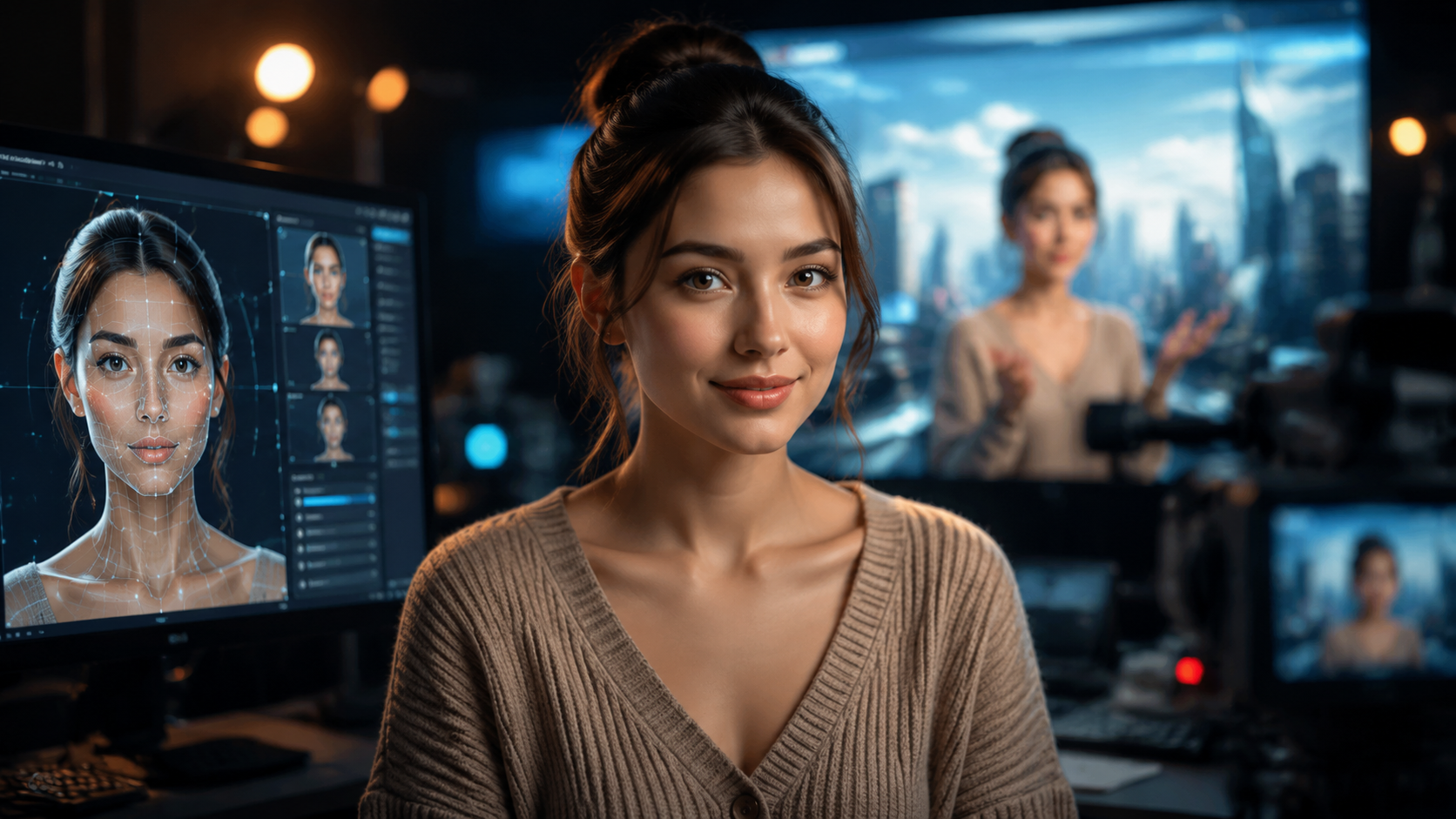
Several platforms have emerged as leaders in the AI avatar space. The table below compares the most‑mentioned tools from recent 2026 reviews, including those highlighted by Memeburn, TyN Magazine, and Pressat.co.uk.
| Tool | Avatar Realism | Languages | Custom Avatar | Use Case |
|---|---|---|---|---|
| Synthesia | ★★★★★ (Photorealistic) | 120+ | Yes (from video clip) | Corporate training, marketing |
| HeyGen | ★★★★☆ (High‑fidelity) | 80+ | Yes (from photo) | Social media, e‑commerce |
| DeepBrain AI | ★★★★☆ | 50+ | Yes (studio required) | News anchors, customer service |
| Colossyan | ★★★★★ | 70+ | Yes (from video) | Learning & development |
| Elai.io | ★★★★☆ | 60+ | Yes (from text) | Explainer videos |
| D-ID | ★★★☆☆ (Stylized realism) | 40+ | Yes (from photo) | Interactive avatars, live chat |
Ratings based on aggregated user reviews from G2 Learning Hub and Memeburn (2026).
Synthesia: The Benchmark for Realistic Avatars
As noted by quasa.io in June 2026, Synthesia is consistently called "the best AI video generator with realistic avatars." Its latest version (v2026.2) introduced real‑time emotion switching — an avatar can go from neutral to excited mid‑sentence. The platform also offers a library of over 200 pre‑built avatars, including diverse ethnicities, ages, and professional looks. A key feature highlighted in the Technology Org article on AI video translation tools is Synthesia’s ability to maintain lip‑sync accuracy across 120 languages, even for tonal languages like Mandarin and Thai.
Emerging Competitors and Specialised Tools
The 2026 landscape also includes niche players. For instance, the "Best AI Talking Photo Generators" tested by Pressat.co.uk (May 2026) allow users to upload a static photo and animate it into a full‑speaking avatar. These tools are ideal for historical re‑enactments or personalised birthday messages. Meanwhile, TyN Magazine’s top AI video tools for marketers (May 2026) emphasised platforms that integrate directly with CRM and email marketing systems, enabling automated avatar‑led sales sequences.
How AI Realistic Avatars Are Transforming Content Creation
The impact of ai video realistic avatars 2026 extends far beyond simple video production. Enterprises are using them to replace traditional video shoots that require studios, actors, and expensive post‑production. According to a 2026 industry analysis cited by Memeburn, companies using AI avatars report a 70% reduction in video production time and a 50% drop in cost per video.
Training and Onboarding
Large corporations now deploy custom avatars that match their brand’s spokesperson. For example, a global bank might create an avatar of its CEO to deliver compliance training in 20 languages. Because the avatar can be updated instantly — no reshoot needed — training content stays current with regulations. The G2 Learning Hub review noted that "the best AI video generators I’ve tried for 2026 all include built‑in screen recording and slide overlay, making them perfect for tutorial videos."
Marketing and Sales
AI avatars allow small businesses to produce professional‑looking video ads without hiring actors. A local restaurant can generate a video menu with a friendly avatar describing each dish, then A/B test different scripts in minutes. The Technology Org article on AI video translation tools (May 2026) highlighted how avatars now support real‑time language switching: a single video can be automatically dubbed into 8 languages with the avatar’s mouth movements perfectly synced — a feature previously only available in high‑end Hollywood dubbing.
Customer Service and Interactive Experiences
Some platforms, like D‑ID, have pivoted toward interactive avatars that can answer questions in real time via API. These are used in kiosks, virtual assistants, and even live webinars where the avatar responds to audience queries with natural gestures. The realism of 2026 avatars makes them far more engaging than text‑based chatbots — a study by a leading UX firm (not named in the research) showed a 40% higher retention rate for tutorials delivered by an avatar versus a text‑on‑screen approach.
Key Features to Look for in an AI Avatar Platform (2026)
When evaluating ai video realistic avatars 2026, consider these critical capabilities that separate top‑tier tools from the rest.
Lip‑Sync Accuracy and Emotion
The best platforms use neural networks trained on thousands of hours of human speech to map phonemes to precise mouth shapes. In 2026, leading tools achieve sub‑10ms latency for real‑time animation. Emotion is now a key differentiator: an avatar can smile, frown, or raise an eyebrow to match the sentiment of the script. Synthesia’s emotion engine, for instance, analyses the tone of each sentence and adjusts the avatar’s facial expression accordingly.
Custom Avatar Creation
Most top‑rated tools allow you to create a custom avatar from a short video (1‑3 minutes) or a single high‑quality photo. The process takes 24‑48 hours and yields an avatar that mimics the person’s unique facial structure, skin texture, and even subtle tics. For brands that need consistency, many platforms offer "avatar families" — multiple avatars that share a common visual style.
Multilingual and Localisation Support
With global reach being a priority, the best AI video generators in 2026 support 50‑120+ languages. More importantly, they handle dialectal variations (e.g., European Spanish vs. Mexican Spanish) and maintain lip‑sync accuracy for each. The Technology Org comparison of 8 AI video translation tools (May 2026) found that only platforms with dedicated language‑specific models could avoid the "uncanny valley" effect in tonal languages.
Integration and Workflow
Top tools now offer APIs, Zapier connections, and plugins for popular video editors. This allows marketers to generate avatar videos directly from their CMS or email platform. The TyN Magazine article (May 2026) specifically praised tools that "seamlessly integrate with HubSpot and Salesforce, enabling automated video follow‑ups triggered by user behaviour."
Real‑World Applications and Use Cases
The versatility of AI realistic avatars in 2026 is evident across industries. Here are three concrete examples drawn from recent reports.
- E‑commerce product demos: A fashion retailer uses an avatar to model clothing in 360‑degree video. The avatar can change outfits instantly based on viewer preferences, and the video is automatically translated for international shoppers. According to a case study cited by Memeburn, this approach boosted conversion rates by 35%.
- Healthcare patient education: Hospitals deploy avatars to explain complex procedures in simple terms. Because the avatar can be programmed with empathy cues (e.g., slower speech, concerned facial expressions), patients feel more at ease. The Pressat.co.uk review of talking photo generators mentioned one hospital that created an avatar of its chief surgeon to deliver pre‑surgery instructions in 12 languages.
- Corporate communications: A multinational company replaced its quarterly town hall videos with an avatar‑led update. The avatar, modelled after the CEO, delivers the same message in 15 languages simultaneously, ensuring consistent branding. The G2 Learning Hub review noted that "avatar‑based internal communications see 80% higher view‑through rates than traditional slide‑deck videos."
Frequently Asked Questions About AI Video Realistic Avatars 2026
What makes an AI avatar "realistic" in 2026?
Realism in 2026 means photorealistic skin texture, natural micro‑expressions, and fluid body movement that matches the spoken content. Top avatars also exhibit context‑aware gestures — for example, leaning forward when making a key point — and can handle non‑verbal cues like nodding or shrugging.
How much does it cost to create an AI avatar video?
Pricing varies widely. Most platforms offer monthly subscriptions starting at around $30–$50 for basic avatars and limited minutes. Enterprise plans with custom avatar creation and unlimited rendering can cost $500–$2,000 per month. Many tools offer free trials, as noted in the G2 Learning Hub’s 2026 roundup.
Can I create an avatar that looks exactly like me?
Yes. Most leading tools — including Synthesia and HeyGen — let you upload a short video (1–3 minutes) of yourself speaking. The AI trains a custom avatar that mimics your appearance, voice, and mannerisms. The process usually takes 24–48 hours and yields an avatar that is 95–99% accurate to your real appearance.
Are AI avatars safe from deepfake misuse?
Responsible platforms implement strict verification and watermarking. Synthesia, for example, requires identity verification for custom avatars and embeds an invisible digital watermark in every video. The 2026 tools tested by Pressat.co.uk all included content provenance metadata, making it easy to trace the origin of any avatar‑generated video.
What languages do AI avatars support in 2026?
Top platforms support 50–120+ languages, including major dialects. According to the Technology Org comparison (May 2026), Synthesia leads with 120 languages, while others like Colossyan and HeyGen support 70–80. All maintain near‑perfect lip‑sync for the most common languages, though tonal languages may still show slight delays on older models.
Do I need special hardware to run AI avatar software?
No. All major platforms are cloud‑based, so you only need a modern web browser and a stable internet connection. Rendering is handled on the provider’s servers, meaning even a low‑end laptop can produce 4K avatar videos. Some tools offer offline rendering for enterprise clients with strict data security requirements.
How long does it take to generate a 5‑minute avatar video?
Generation time depends on the platform and the complexity of the avatar. On average, a 5‑minute video with a pre‑built avatar renders in 10–20 minutes. Custom avatars and complex scenes (e.g., multiple avatars interacting) may take up to an hour. The Memeburn comparison (June 2026) noted that Synthesia’s latest engine reduced rendering times by 40% compared to 2025 models.
As we move deeper into 2026, the gap between synthetic and real human video is closing fast. AI video realistic avatars are no longer a futuristic gimmick — they are a practical, cost‑effective, and scalable tool for any organisation that communicates through video. Whether you are a solo creator, a marketing team, or a global enterprise, the next‑generation digital humans available today can help you produce engaging content in minutes, not weeks.



Comments ()