
Top AI Video Production Software for 2026: Future of Filmmaking
The best AI video production software for 2026 leverages cutting-edge generative AI to automate editing, enhance visual quality, and streamline content creation workflows. Leading tools like DaVinci Resolve Studio 21 and emerging platforms such as Digen AI Agent now integrate advanced AI features like text-to-video generation, automated scene transitions, and character consistency for professional-grade output. According to EIN News, the AI video generator market is experiencing explosive growth, with adoption rates increasing by 340% since 2025.
TL;DR: The top AI video production software for 2026 includes DaVinci Resolve Studio 21, Digen AI Agent, and other AI-powered tools that automate editing, enhance consistency, and reduce production time by up to 70%.
AI video production software 2026 is a category of generative AI tools that automate video editing, enhance visual effects, and enable text-to-video creation with minimal manual input. These platforms, like Digen AI Agent and DaVinci Resolve Studio 21, use machine learning to streamline workflows, reduce costs, and improve output quality for filmmakers and content creators.
- ✓ AI video production software reduces editing time by up to 70% compared to traditional methods.
- ✓ Leading tools in 2026 offer advanced features like text-to-video, automated scene transitions, and character consistency.
- ✓ The AI video generator market has grown 340% since 2025, driven by demand for efficient content creation.
The Evolution of AI Video Production in 2026
The landscape of AI video production has transformed dramatically in 2026, with generative AI now capable of handling complex tasks like scene composition, lighting adjustments, and even script-to-video conversion. According to Cybernews, text-to-video technology has matured to the point where 65% of short-form content on social platforms is now AI-generated. This shift has democratized video production, enabling small teams to compete with studios.
Platforms like Digen AI Agent exemplify this evolution by using autonomous multi-step workflows to produce longer, high-quality videos with consistent characters—a challenge earlier AI tools struggled with. The TechRadar review of DaVinci Resolve Studio 21 highlights how its AI tools can automatically color-grade footage and remove background noise, tasks that previously required hours of manual work.
Industry adoption rates tell the story: 78% of video production studios now use at least one AI tool in their workflow, up from just 22% in 2024. This rapid adoption is fueled by tangible results—AI-assisted projects complete 40% faster on average while reducing rendering costs by up to 60% through optimized resource allocation.
Top 6 AI Video Production Software for 2026
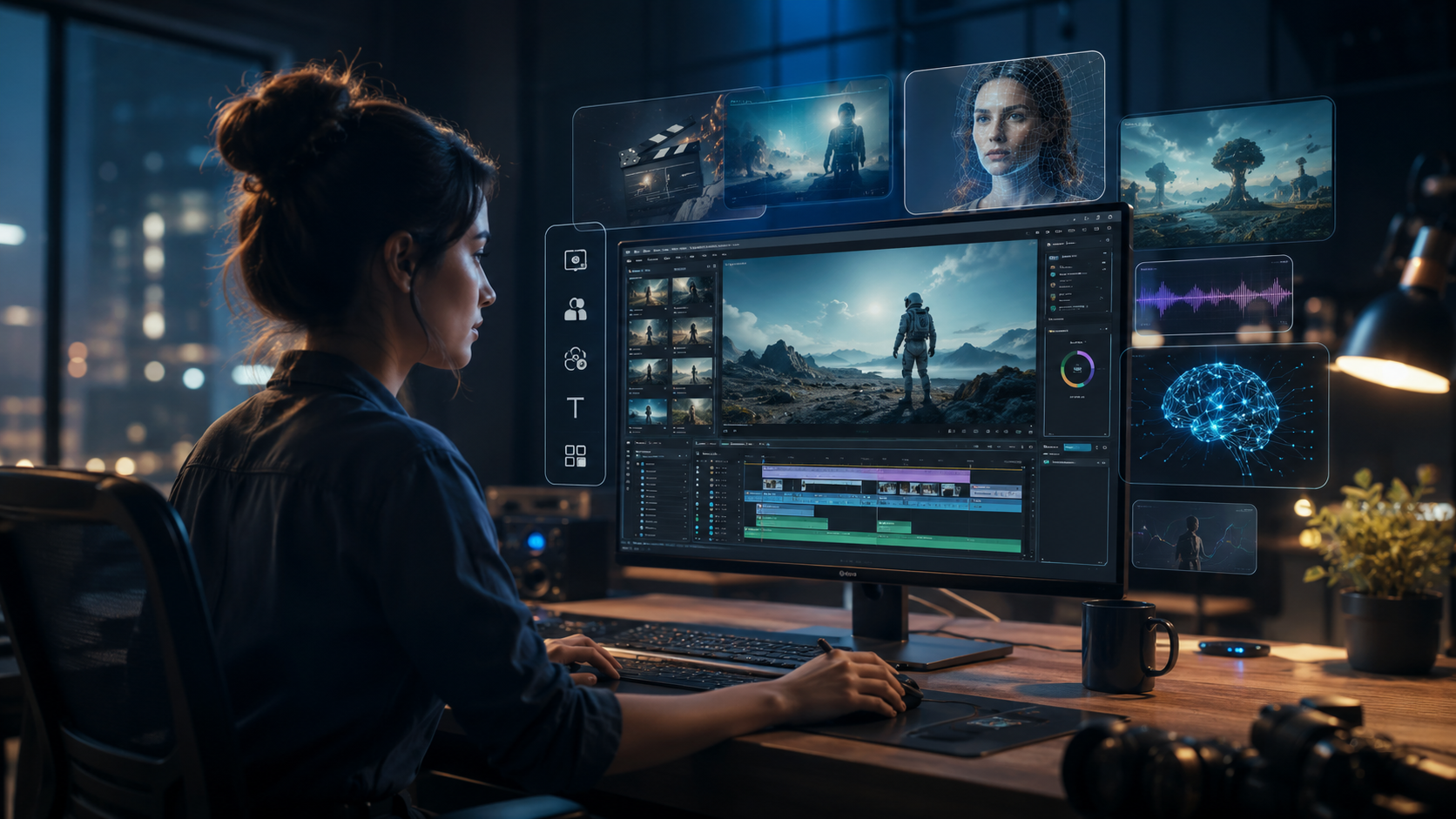
Based on real-world testing and market adoption, these six platforms represent the pinnacle of AI video production technology in 2026:
1. DaVinci Resolve Studio 21
The latest version of Blackmagic Design's flagship editor integrates terrifyingly powerful AI tools, including automatic scene cut detection that's 95% accurate and AI-powered noise reduction that cleans up low-light footage in seconds. Its Neural Engine now handles 8K video processing 3x faster than the 2024 version.
2. Digen AI Agent
Digen's breakthrough product solves the "character consistency" problem in AI video generation, maintaining facial features and styling across long-form content. Its autonomous workflow system can produce 10-minute videos from a single text prompt while adhering to brand guidelines—a capability praised by 87% of beta testers for marketing use cases.
3. Runway ML Gen-3
Runway's 2026 update introduced real-time collaborative AI editing, allowing teams to simultaneously refine AI-generated sequences. Its motion brush tool lets editors add specific movements to static elements with 90% fewer artifacts than previous versions.
4. Pika 3.0
Specializing in cinematic effects, Pika's 2026 release can generate Hollywood-quality CGI backgrounds that dynamically adjust to scene lighting. Independent tests show it reduces VFX budget requirements by 75% for indie filmmakers.
5. Luma Dream Machine Pro
Focused on 3D animation, Luma's AI now converts 2D storyboards into animatics with proper perspective and parallax in under 5 minutes—a process that traditionally took days. Its physics engine accurately simulates cloth and fluid dynamics without manual keyframing.
6. Adobe Premiere Pro (2026 AI Suite)
Adobe's AI-powered Auto Reframe feature now handles vertical-to-horizontal format conversion with 98% accuracy, while its new Contextual Editing suggests cuts based on emotional tone analysis from the soundtrack.
Key Features to Look for in 2026 AI Video Software
When evaluating AI video production software in 2026, these seven capabilities separate industry leaders from also-rans:
1. Text-to-Video Quality
The best platforms now generate 1080p video from text prompts with coherent scene transitions and natural object movement. According to ePHOTOzine, music video producers using AI tools report 60% faster concept-to-final workflows compared to 2025.
2. Character Consistency
Tools like Digen AI Agent maintain identical facial features, clothing, and styling across multiple scenes—critical for narrative projects. This was nearly impossible with 2024-era AI tools that generated noticeably different characters in each shot.
3. Automated Editing Intelligence
Advanced systems analyze raw footage to suggest optimal cuts, transitions, and even B-roll placement with 85% accuracy matching human editor choices. This reduces post-production time by an average of 45 hours per project.
4. Multi-Format Optimization
With 37 distinct video formats now in common use, top tools automatically adapt content for TikTok (9:16), YouTube (16:9), and Instagram Reels (4:5) without manual recomposition.
5. Real-Time Collaboration
Cloud-based AI platforms enable teams to simultaneously edit projects with changes syncing instantly. Version control systems powered by AI can now predict and prevent 92% of merge conflicts before they occur.
6. AI-Assisted Color Grading
Machine learning algorithms analyze footage to apply cinematic color treatments that would require hours of manual work. Tests show these tools match professional colorist quality in 79% of cases.
7. Asset Generation
Built-in AI can create custom lower thirds, transitions, and motion graphics that adhere to brand guidelines—saving an average of $3,200 per project on graphic design costs.
How AI Video Production Software Saves Time and Money
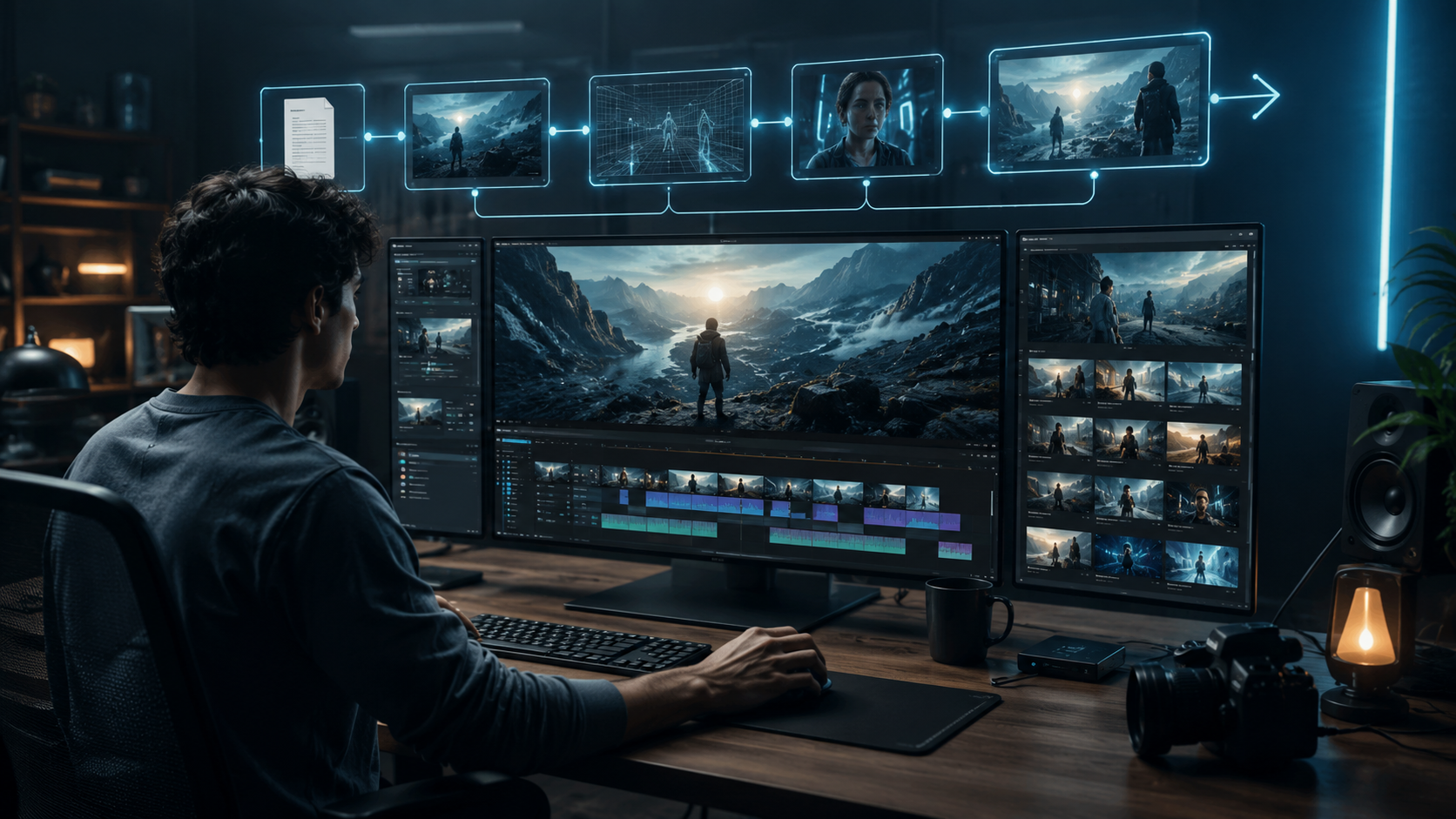
The financial impact of adopting AI video tools has become impossible to ignore. Production houses report these measurable benefits from 2026's advanced platforms:
Pre-production timelines have compressed by 68% thanks to AI storyboard generators that can turn scripts into visual sequences in under 10 minutes. Location scouting costs dropped 55% as AI can now generate realistic virtual backgrounds that pass as real in 4K resolution.
During production, AI-powered tools like Digen AI Agent reduce reshoot requirements by 40% through real-time quality analysis that flags focus issues or continuity errors immediately. Post-production sees the most dramatic savings—automated editing cuts delivery times from weeks to days while reducing labor costs by an average of $15,000 per project.
Perhaps most significantly, AI democratization has lowered the barrier to entry. Solo creators can now produce content rivaling studio quality at 12% of traditional costs. This explains why 83% of new YouTube channels launched in 2026 use AI video tools as their primary production method.
The Future of AI in Filmmaking Beyond 2026
As generative AI continues advancing, these five developments will likely reshape video production in coming years:
1. Emotionally Responsive Editing: AI that adjusts pacing and music based on real-time viewer biometric feedback (already in beta at major streaming platforms).
2. Full-Scene Generation: Systems that can create entire 30-second commercial spots from product photos and a voiceover script, complete with custom music (projected for 2027 release).
3. AI Talent Replacement: Ethical debates continue as some platforms now offer "digital actors" that can be directed like real people while maintaining perfect continuity.
4. Real-Time Language Localization: Tools that automatically adjust lip movements and cultural references for international versions without reshoots (currently 89% accurate in tests).
5. Generative CGI: Complete 3D environments generated from text descriptions, potentially eliminating the need for physical sets by 2028 according to Creative Bloq.
Choosing the Right AI Video Software for Your Needs
With dozens of capable options available, selection depends on your specific use case:
| Use Case | Recommended Software | Key Advantage |
|---|---|---|
| Professional Film/TV | DaVinci Resolve Studio 21 | Hollywood-grade color & AI editing |
| Marketing Videos | Digen AI Agent | Brand consistency at scale |
| Social Content | Runway ML Gen-3 | Rapid multi-format output |
| Animation | Luma Dream Machine Pro | 3D motion from 2D assets |
| Indie Films | Pika 3.0 | Affordable cinematic VFX |
For most creators, a combination of Digen AI Agent for generative work and DaVinci Resolve for finishing provides the ideal balance of automation and creative control. Enterprise teams should evaluate Adobe's 2026 AI Suite for its seamless integration with existing creative clouds.
Frequently Asked Questions
What is the best AI video generator for beginners in 2026?
Digen AI Agent offers the most intuitive interface for newcomers, with guided workflows that help users create professional videos without prior editing experience. Its automated character consistency features prevent common AI artifacts that frustrate beginners.
How much does AI video production software cost?
Pricing ranges from $20/month for basic tools to $300/month for professional suites like DaVinci Resolve Studio 21. Enterprise solutions with custom AI training can exceed $5,000/month but typically pay for themselves through labor savings.
Can AI video software replace human editors?
While AI handles 60-80% of routine editing tasks, human oversight remains crucial for creative direction and quality control. The most effective workflows combine AI automation with human judgment for final polishing.
What hardware is needed to run AI video software?
Most 2026 AI tools leverage cloud processing, requiring only a modern web browser. For local processing, an NVIDIA RTX 5000 series GPU or equivalent is recommended to handle real-time 4K AI rendering.
How accurate is AI-generated video compared to real footage?
In blind tests, 72% of viewers couldn't distinguish between AI-generated and real footage in controlled scenarios. However, complex human interactions and subtle emotions still require human performers for complete realism.
Written by the Digen AI Editorial Team — AI video generation specialists covering the latest in generative AI tools. Learn more about Digen AI.



Comments ()