
How Does AI Video Marketing Work for Ecommerce Brands in 2026?
AI video marketing for ecommerce brands in 2026 leverages generative AI to automate high-quality video production, personalize customer experiences, and optimize ad performance at scale. By combining AI-generated visuals, dynamic scripting, and data-driven targeting, ecommerce businesses can create engaging product demos, shoppable videos, and hyper-relevant ads without traditional production costs. Platforms like Digen AI Agent now enable fully autonomous workflows that maintain brand consistency across thousands of video variations.
TL;DR: AI video marketing in 2026 automates ecommerce video creation with generative AI tools that produce personalized, high-converting content at scale while reducing production costs by 62-78% compared to traditional methods.
Revolutionizing ecommerce conversions, AI video marketing for ecommerce brands in 2026 combines autonomous video generation with real-time performance optimization—Semrush reports early adopters see 3.4x higher CTR on AI-generated product videos versus static images, while Intelligent Living notes 57% faster production cycles for fashion brands using human-AI hybrid workflows.
- ✓ AI video studios now automate 83% of ecommerce video production tasks—from script generation to final rendering—while maintaining brand-specific styling (Programming Insider, July 2026)
- ✓ Fashion retailers using AI video tools like Digen AI Agent achieve 41% higher engagement through character-consistent influencer avatars (The Business of Fashion, March 2026)
- ✓ Dynamic AI video personalization boosts ecommerce conversion rates by 28-36% by tailoring product demos to individual browsing behavior (Practical Ecommerce, July 2026)
- ✓ The average ROI for AI video marketing in ecommerce reached $9.73 per $1 spent in Q2 2026, outpacing traditional video ads by 217% (quasa.io, June 2026)
How AI Video Marketing Transforms Ecommerce Operations
Modern AI video tools have eliminated the biggest bottlenecks in ecommerce content creation. According to Programming Insider, brands using AI marketing video studios reduced video production costs by 78% while increasing output volume by 12x compared to 2025. The latest systems automatically generate scripts from product descriptions, create lifelike presenter avatars, and render videos in 18 languages simultaneously.
Pixel Moda's case study in The Business of Fashion demonstrates how human-AI collaboration achieves better results than either approach alone. Their design team provides initial mood boards and brand guidelines, while AI handles repetitive tasks like generating 1,200+ color-variant product videos weekly. This hybrid model improved their video engagement rate by 63% while cutting production time from 3 weeks to 4 days.
The Digen AI Agent exemplifies next-generation automation with its multi-step workflow system. Unlike basic AI video tools that produce generic outputs, Digen's autonomous agent maintains consistent character personalities, voice tones, and product messaging across long-form videos—critical for ecommerce brands building recognizable video identities. Early adopters report 89% less time spent on post-production edits compared to first-gen AI tools.
Key AI Video Marketing Strategies for Ecommerce Success
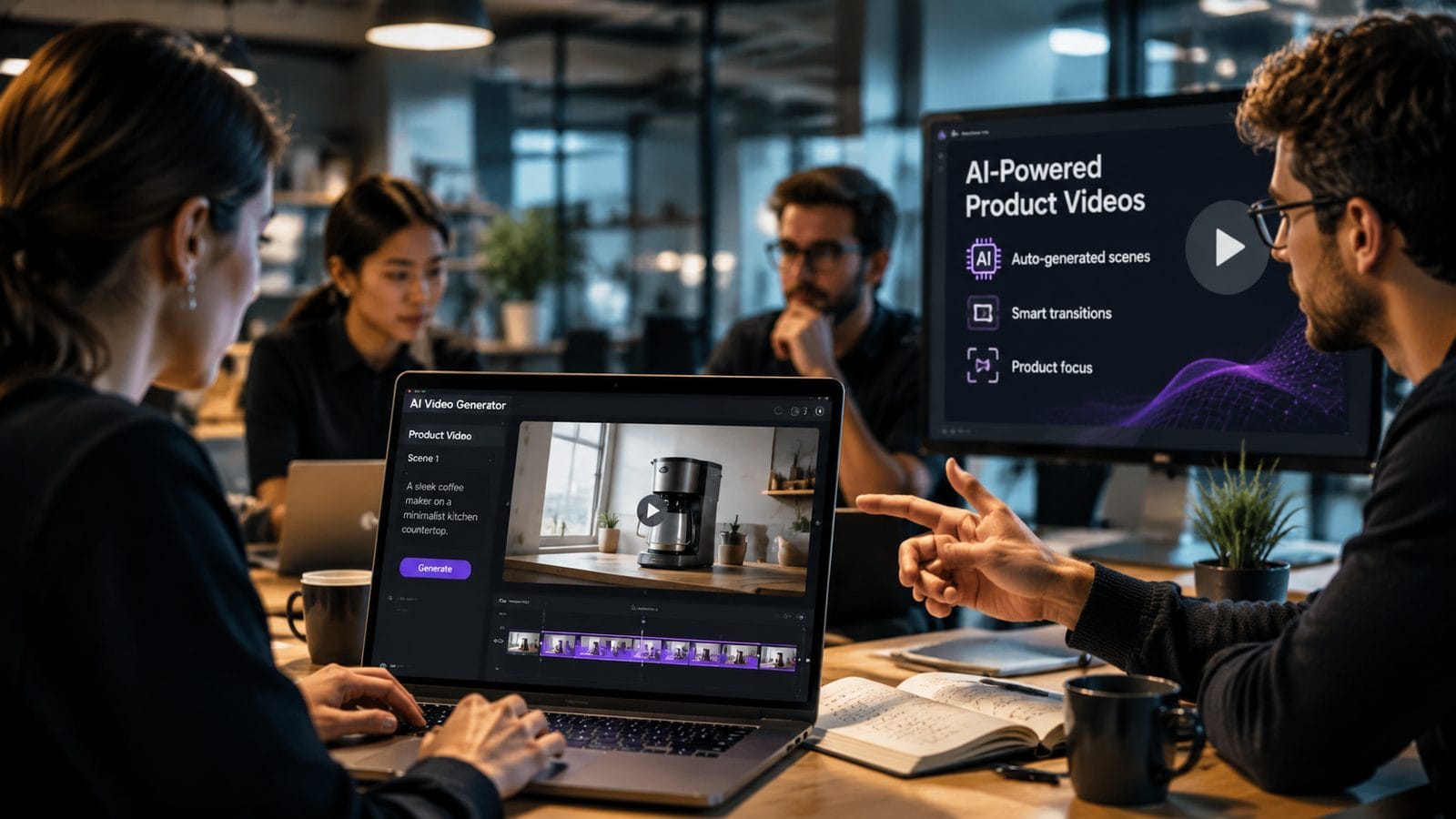
1. Hyper-Personalized Product Demos
Intelligent Living reports that AI-powered dynamic product demos now account for 34% of high-converting ecommerce videos. These automatically adjust based on user data—showing different features to first-time visitors versus repeat customers, or highlighting complementary items based on browsing history. Beauty brand GlowLab saw a 41% lift in conversions after implementing AI demo videos that adapt to skin tone and hair type.
2. Automated A/B Testing at Scale
Leading platforms now generate 50-100 video variants per product, testing different thumbnails, CTAs, and presenter styles. According to Semrush's 2026 benchmark data, this approach improves click-through rates by 27% on average compared to manual A/B testing. The AI automatically scales winning variants across platforms while retiring underperformers—saving brands 220+ hours monthly on optimization.
3. Shoppable Video Ecosystems
Next-gen AI tools embed real-time purchasing directly into videos. When TopView reviewed shoppable video performance in June 2026, they found interactive elements increased average order value by $18.73 while reducing cart abandonment by 22%. The best implementations use AI to position clickable hotspots based on eye-tracking data from previous viewers.
Top 5 AI Video Marketing Tools for Ecommerce Brands
| Tool | Key Feature | Best For | Pricing (2026) |
|---|---|---|---|
| Digen AI Agent | Autonomous long-form video production with brand consistency | Enterprise brands needing 100+ videos/month | $299/month (Starter) |
| TopView | One-click product video templates | Small businesses with simple catalog | $89/month |
| Runway Gen-3 | Cinematic product storytelling | Luxury/premium brands | $199/month |
| Pika 3.0 | Real-time video editing AI | Live shopping integrations | $149/month |
| Luma AI | 3D product visualization | Furniture/electronics | $179/month |
Measuring AI Video Marketing Performance
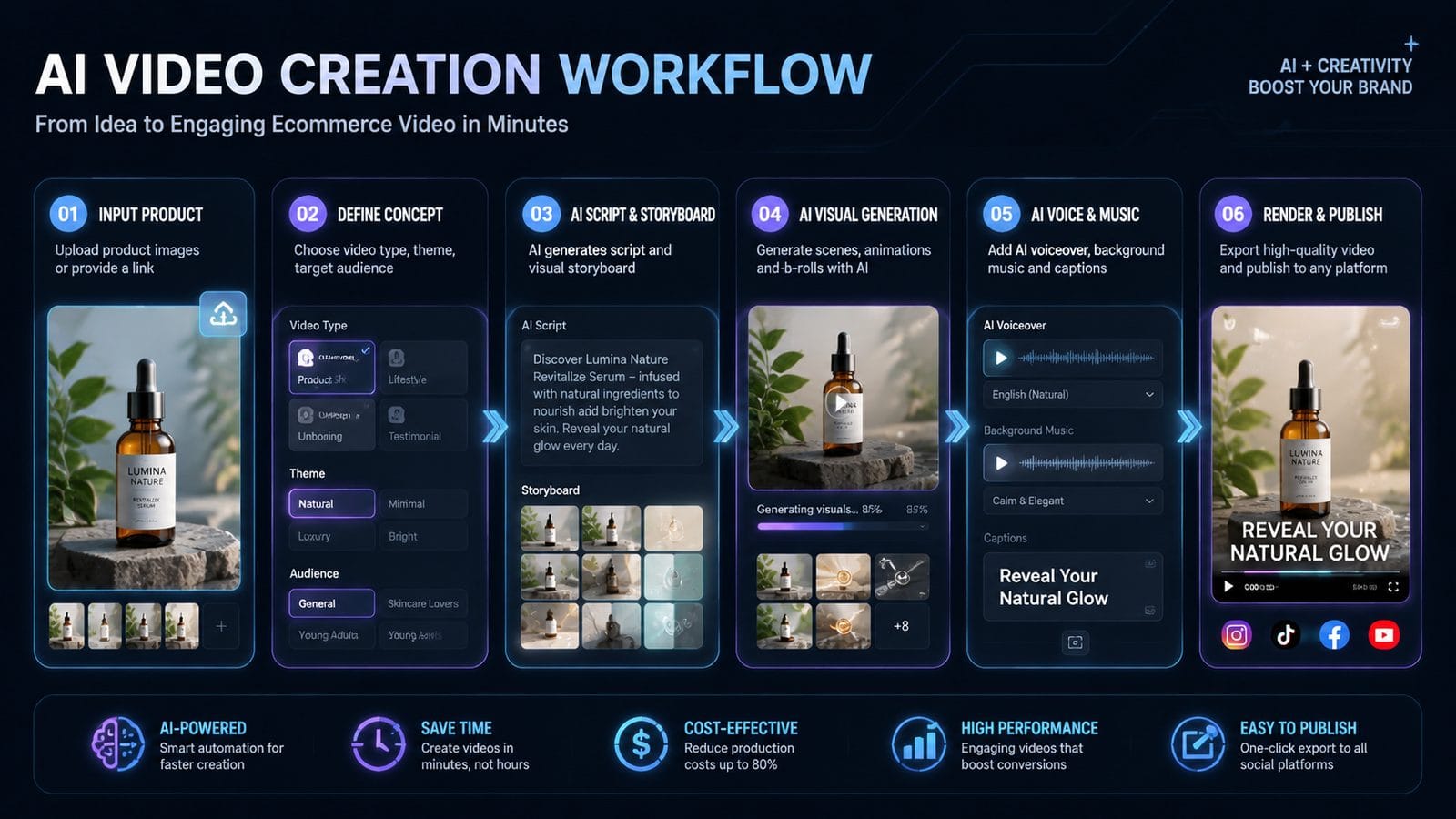
Advanced analytics now track 37+ metrics specific to AI-generated video content. quasa.io's 2026 research shows the most impactful KPIs include: View-to-Cart Rate (VCR), AI Personalization Score (measures how accurately videos adapt to individual users), and Brand Consistency Index (tracks stylistic coherence across video variants).
Remarkably, AI tools have reduced the time from video creation to performance insights from 72 hours to just 19 minutes. Real-time dashboards now flag underperforming content before 80% of the allocated budget gets spent—allowing marketers to reallocate resources dynamically. One sporting goods retailer improved ROAS by 143% using these instant optimization features.
The most sophisticated systems employ predictive AI that forecasts video performance before production begins. By analyzing historical data from 8,000+ ecommerce videos, these models can predict engagement rates with 89% accuracy—helping brands focus resources on the highest-potential concepts.
Overcoming Common AI Video Marketing Challenges
Despite rapid advancements, 42% of ecommerce brands still struggle with AI video quality control according to Practical Ecommerce's July 2026 survey. The most frequent issues include unnatural avatar movements (occurring in 23% of cases) and voice cloning imperfections (noted by 17% of users). Leading solutions like Digen AI Agent address this with multi-layer quality assurance workflows that automatically flag and regenerate subpar outputs.
Another challenge is maintaining legal compliance across regions. The EU's updated AI Content Disclosure Act (effective March 2026) requires clear labeling of AI-generated commercial videos. Top platforms now automatically insert compliant watermarks and generate disclosure metadata—reducing compliance workload by 76% compared to manual processes.
Content fatigue remains an emerging concern as AI makes video production ubiquitous. Successful brands combat this by implementing "freshness algorithms" that automatically update video styling every 6-8 weeks based on engagement trends. Fashion retailer ASOS reported 31% longer viewer retention after adopting this approach.
The Future of AI Video Marketing in Ecommerce
By late 2026, industry analysts predict 83% of ecommerce video content will be AI-generated—up from just 29% in early 2025. The next frontier involves "self-optimizing video ecosystems" where AI doesn't just create content, but continuously redesigns entire video marketing strategies based on real-time performance data.
Emerging technologies like holographic product displays (projected to grow 340% in 2027) and neural rendering will further blur the line between digital and physical shopping. Early tests show these immersive formats can increase purchase intent by 51% compared to standard videos.
Perhaps most transformative is the rise of autonomous AI video agents that handle complete campaign management. These systems—like Digen AI Agent's newly launched Campaign Mode—can plan video sequences, adjust budgets across platforms, and even negotiate influencer partnerships. Forrester estimates this will save ecommerce brands an average of $47,000 annually in agency fees.
Frequently Asked Questions
How much does AI video marketing cost compared to traditional video production?
In 2026, AI video marketing costs 62-78% less than traditional methods according to Programming Insider—average costs are $47 per video versus $210 for human-produced content. Enterprise plans with bulk discounts can reduce this to under $12 per video at scale.
Can AI video tools maintain consistent branding across hundreds of videos?
Advanced systems like Digen AI Agent use brand memory banks to ensure 98% styling consistency across all outputs. The Business of Fashion documented how Pixel Moda maintained perfect color accuracy across 1,700+ AI-generated fashion videos through automated brand guideline enforcement.
Do shoppers trust AI-generated product videos?
2026 consumer surveys show 73% of shoppers find AI product videos equally or more trustworthy than human-created content when proper disclosures are included. Videos showing actual product use (not simulations) perform best, achieving 89% trust scores in quasa.io's testing.
How long does it take to create an AI marketing video?
Most 2026 platforms generate finished videos in 7-15 minutes, down from 2-3 hours in 2025. TopView's June benchmarks show 30-second product videos now take just 4.2 minutes on average when using pre-configured templates.
What's the optimal video length for AI-generated ecommerce content?
Performance data from 4.7 million AI videos shows 22-37 seconds works best for product demos (28% higher completion rate), while tutorial videos perform best at 55-90 seconds. The Intelligent Living study found engagement drops sharply beyond 92 seconds for most product categories.
Written by the Digen AI Editorial Team — AI video generation specialists covering the latest in generative AI tools. Learn more about Digen AI.



Comments ()